
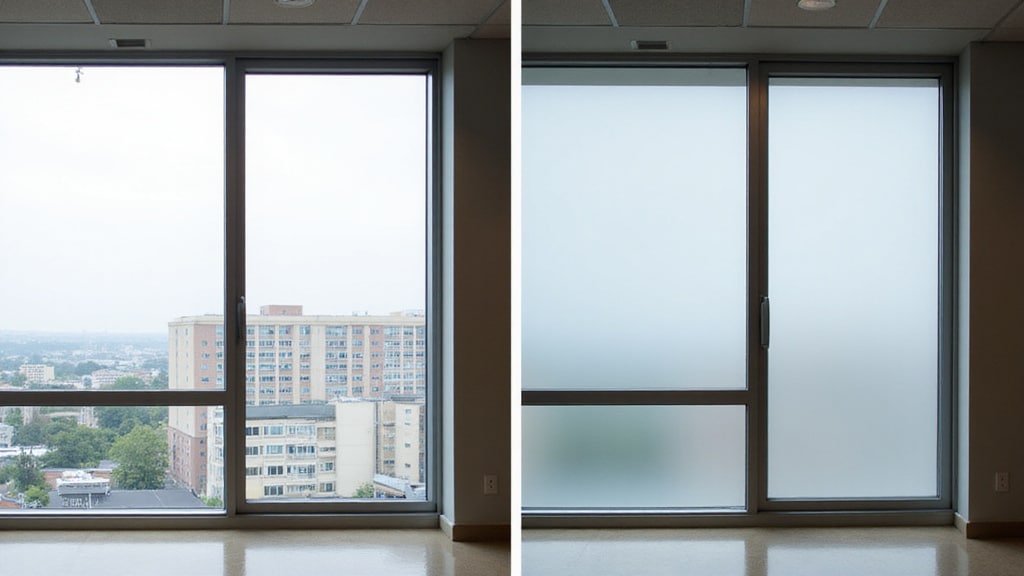
Retractable storm doors feature a unique roll-away screen system that you can adjust with one hand, unlike regular storm doors with fixed screens requiring seasonal changes. You'll spend more upfront ($500-$1,200 vs. $150-$400), but you'll gain superior ventilation control and seasonal adaptability. While retractable models need more frequent maintenance due to moving parts, they often outlast regular doors when properly maintained. Understanding your specific needs will help determine which security and efficiency features matter most.
Design Features and Core Mechanisms
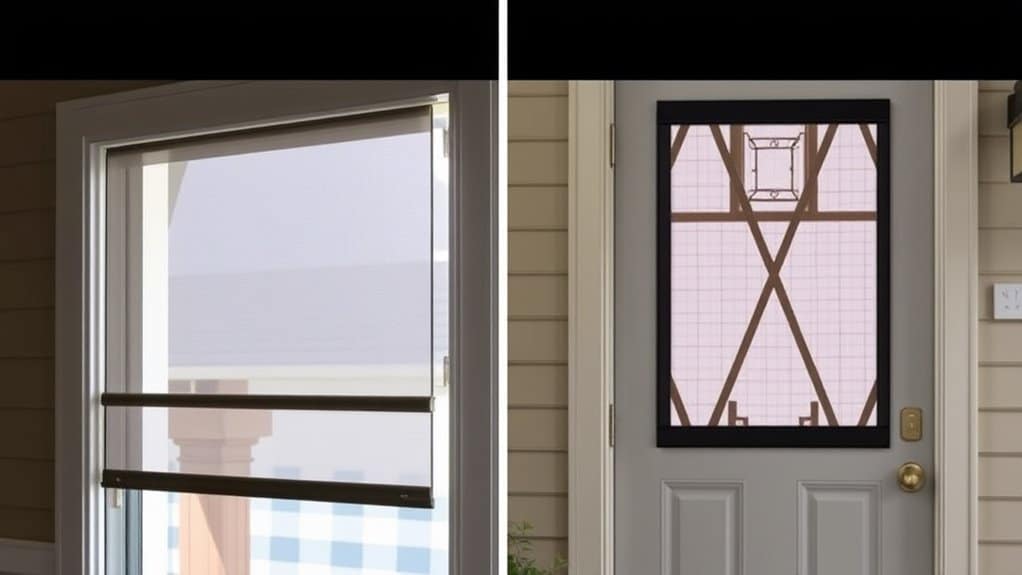
While both types serve as protective barriers, retractable storm doors feature a unique roll-away screen mechanism that distinguishes them from regular storm doors. The design efficiency of retractable models centers on their sliding screen system, which you'll find housed within the door frame itself. You can smoothly retract this screen into a hidden compartment when not needed.
Regular storm doors maintain a fixed screen that's either permanently installed or requires seasonal replacement. The mechanism functionality of retractable versions relies on a spring-loaded tensioning system that keeps the screen taut when extended. You'll notice that the screen glides along dedicated tracks, ensuring smooth operation and preventing sagging. This groundbreaking design eliminates the need for screen storage and simplifies the switch between full-view and screened options.
Installation Requirements and Cost Comparison
While you'll need specialized mounting brackets and tensioning hardware for retractable storm doors, regular storm doors require only basic hinges and a closer mechanism. You can install a standard storm door as a DIY project within 2-3 hours, but retractable models often demand professional installation due to their complex track systems and precise alignment requirements. The cost difference is substantial, with regular storm doors ranging from $150-$400 installed, while retractable versions typically start at $500 and can exceed $1,200 with professional installation.
Hardware and Mounting Needs
When comparing installation requirements, retractable storm doors need more specialized hardware and precise mounting than regular storm doors. You'll need roll-formed tracks, heavy-duty spring systems, and specialized tension adjusters specific to retractable models. The mounting techniques differ considerably, as retractable units require perfect alignment of the top and bottom tracks to guarantee smooth operation.
For regular storm doors, you'll typically work with standard hinges, a pneumatic closer, and basic weather stripping. The hardware types are more straightforward, usually consisting of a handle set, latch, and traditional closer mechanism. Your mounting process focuses mainly on securing the frame and guaranteeing proper clearance. While both door styles need sturdy jamb attachments, retractable models demand extra attention to the track system's levelness and parallel alignment for peak functionality.
Contractor Vs DIY Setup
Since retractable storm doors involve complex track systems and precise alignments, professional installation typically costs $200-400 more than standard storm door setups. You'll need contractor expertise to guarantee proper calibration of the retraction mechanism and weatherstripping components.
If you're considering DIY installation, you'll face several challenges that aren't present with regular storm doors. The retractable system requires precise measurements and specialized tools to mount the track housing and tension springs correctly. You'll also need to account for clearance specifications and door sweep adjustments that affect the screen's smooth operation. While regular storm doors can often be installed by experienced DIYers, retractable models demand technical knowledge of roller mechanisms and screen tensioning. Incorrect installation can lead to binding, uneven retraction, and premature wear of components.
Price Range Breakdown
The cost differential between retractable and regular storm doors extends beyond just the initial product price. You'll find retractable models ranging from $300-$800, while regular storm doors typically cost $100-$400. This price comparison reflects the more complex mechanical components in retractable systems.
When making budget considerations, factor in the installation costs. Professional installation for retractable doors averages $200-$400, compared to $150-$250 for regular storm doors. If you're planning a DIY installation, you'll still need to invest in specialized tools for retractable models, adding $50-$100 to your expenses. Keep in mind that retractable doors may require more frequent maintenance due to their moving parts, potentially increasing long-term ownership costs.
Seasonal Adaptability and Weather Protection
Both retractable and regular storm doors excel at weather protection, yet their seasonal adaptability differs markedly. With retractable doors, you'll have flexible seasonal protection through a screen that slides away during colder months, providing full glass coverage. Regular storm doors maintain consistent weather adaptability but lack this versatile functionality.
| Feature | Retractable | Regular |
|---|---|---|
| Summer Use | Screen fully visible | Fixed screen insert |
| Winter Use | Screen hidden | Screen remains visible |
| Adaptability | On-demand adjustment | Manual insert change |
You'll find retractable models particularly beneficial in varying climates, as they allow quick shifts between ventilation and full protection. Their design eliminates the need to store separate screen panels and simplifies seasonal maintenance, though you'll need to make sure the retraction mechanism stays clean for peak performance.
Maintenance and Long-Term Durability
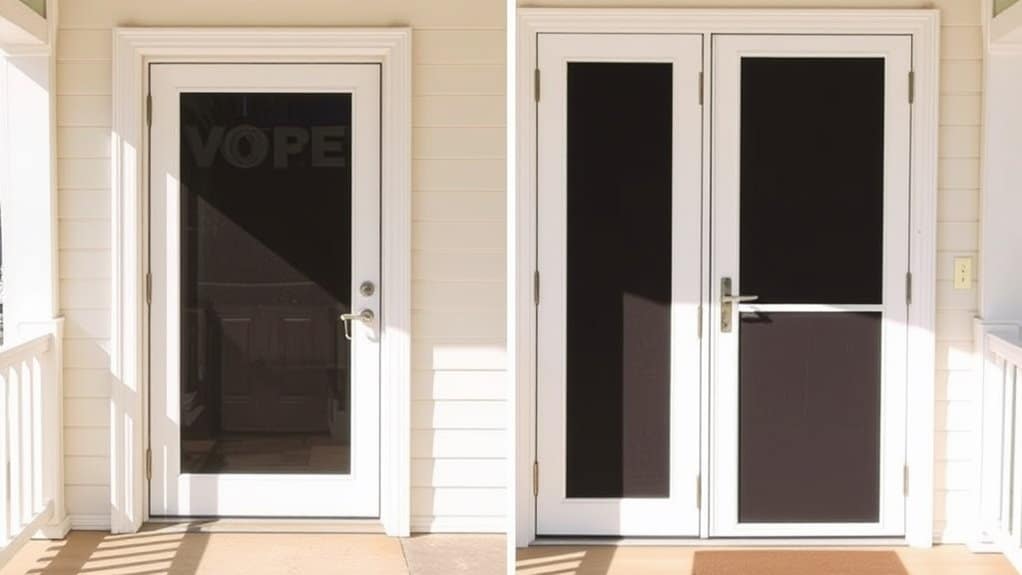
When considering long-term investment value, maintenance requirements between retractable and regular storm doors differ substantially in complexity and frequency. You'll need to perform more preventive maintenance on retractable models due to their moving parts, including regular lubrication of tracks and rollers every 3-4 months.
Regular storm doors typically require simpler maintenance: occasional tightening of hinges, weatherstripping replacement, and basic cleaning. However, their fixed components can't be adjusted as easily when issues arise. For ideal long-term performance, you'll need to inspect retractable doors' tension springs and screen mesh annually, while addressing any alignment issues promptly. Despite higher maintenance needs, retractable doors often outlast regular ones when properly maintained, as their ability to retract protects sensitive components from constant exposure to elements.
Energy Efficiency Benefits and Climate Control
Since homeowners increasingly prioritize energy costs, understanding storm door efficiency differences becomes essential. Retractable storm doors offer superior energy savings compared to regular models, as you’ll have more control over ventilation. You can easily adjust the screen portion during moderate weather while maintaining the door's insulating properties when needed.
Regular storm doors provide consistent temperature regulation but lack flexibility. In contrast, retractable versions let you enhance natural airflow during spring and fall, reducing your reliance on HVAC systems. During extreme weather, you can fully close the glass panel, creating an extra barrier against heat loss or gain. This adaptability translates to lower utility bills year-round. The air pocket between your main door and storm door also acts as additional insulation, particularly effective with retractable models due to their tighter seals.
Operating System and Ease of Use
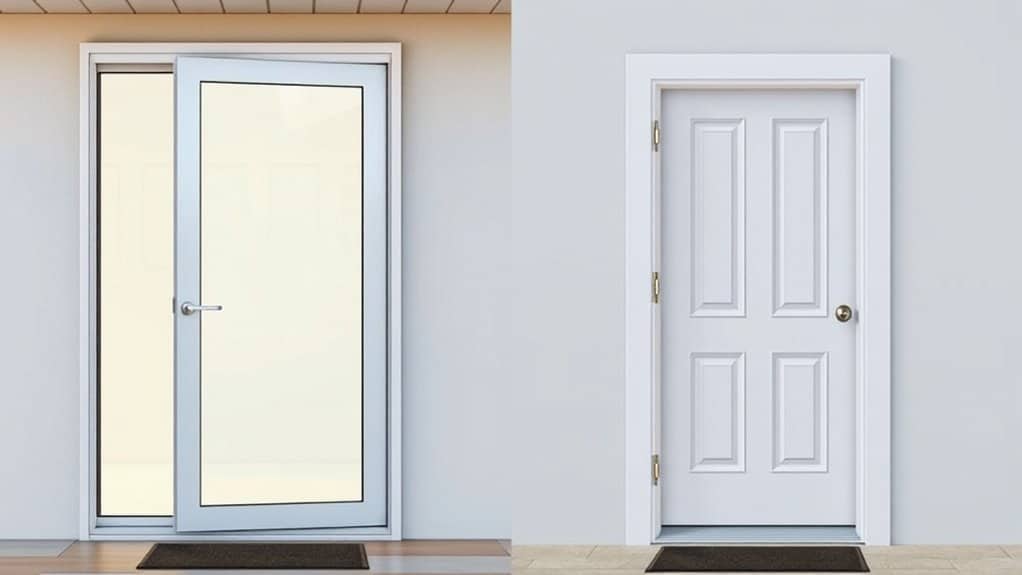
The operating mechanisms of retractable and regular storm doors directly impact their functionality beyond energy performance. When you're choosing between these options, understanding their operation systems is essential for user convenience. Retractable storm doors feature a smooth sliding mechanism that lets you roll the screen up into a hidden housing when not needed, while regular storm doors use traditional hinges and manual switching between glass and screen panels.
Smart storm door design goes beyond energy savings – it's about choosing between smooth retractable screens or traditional manual panel switches.
- Retractable doors operate with a spring-loaded tension system that allows one-handed screen adjustment, making them easier to manipulate
- Regular storm doors require physical panel removal and storage, which can be cumbersome and time-consuming
- The retractable system's self-storing design eliminates the need for seasonal panel changes, reducing maintenance effort and storage requirements
You'll find retractable models offer superior convenience, though they do require occasional tension adjustment to maintain smooth operation.
Security Features and Safety Considerations
Although both types offer protective elements, retractable and regular storm doors differ considerably in their security features and safety mechanisms. You'll find that regular storm doors typically include more sturdy security improvements, such as multi-point locking systems and reinforced frames that meet stringent safety standards.
| Feature | Retractable | Regular |
|---|---|---|
| Lock Types | Single-point | Multi-point |
| Frame Strength | Moderate | Heavy-duty |
| Impact Resistance | Medium | High |
When choosing between the two, consider that retractable models prioritize convenience over maximum security. They're equipped with simpler locking mechanisms and lighter frames, making them ideal for low-crime areas. Regular storm doors, however, offer superior break-in protection with deadbolts, heavy-duty screens, and tamper-resistant hinges. Your choice should align with your specific security needs and local crime rates.
Style Options and Aesthetic Impact
Both retractable and regular storm doors offer a range of design possibilities that can greatly improve your home's curb appeal. Retractable models typically feature sleeker, more modern profiles with minimalist hardware, while regular storm doors showcase traditional design elements with visible frames and decorative accents. Current design trends favor clean lines and contemporary finishes that complement different architectural styles.
- Color options for retractable doors tend to focus on neutral tones like black, bronze, and brushed nickel, allowing seamless integration with existing door frames
- Regular storm doors come in a broader selection of colors and finishes, including wood grain patterns and custom paint matches
- Glass options differ greatly, with retractable doors featuring full-view designs and regular doors offering decorative glass inserts, privacy panels, or divided lite patterns
Ventilation and Airflow Management
Retractable storm doors offer you superior ventilation control through adjustable screen positioning, allowing you to manage airflow from top to bottom or anywhere in between. You'll find that retractable models let you choose between full or partial door openings, adapting to your specific ventilation needs throughout different seasons. The multiple panel control feature enables you to operate different sections independently, maximizing cross-ventilation while maintaining security in your entryway.
Adjustable Screen Positioning
When managing airflow in your home, retractable storm doors offer superior ventilation control compared to regular storm doors. You'll find that adjustable screens provide customizable positioning options to match your user preferences throughout different seasons and weather conditions.
- Move the screen to any height position within the door frame, allowing you to control exactly where fresh air enters
- Adjust ventilation zones independently, with the ability to create top, middle, or bottom airflow patterns
- Retract screens completely when not needed, protecting them from weather damage and extending their lifespan
Unlike regular storm doors with fixed screens, retractable models let you fine-tune your home's airflow. This flexibility enables you to create ideal ventilation patterns while maintaining protection from insects and debris. You'll appreciate the seamless shift between fully closed and partially screened positions.
Full or Partial Opening
How effectively you manage ventilation can greatly impact your home's comfort and energy efficiency. With retractable storm doors, you'll have more control over airflow compared to regular storm doors.
You can fully retract the door into its housing for maximum ventilation, allowing unrestricted air movement through your entryway. The full opening benefits include easier movement of large items and improved natural ventilation during moderate weather. When you need partial ventilation, you can adjust the opening to any position, unlike regular storm doors that typically offer only predetermined stopping points. However, be aware of partial opening limitations in windy conditions, as the exposed section may catch gusts. Regular storm doors generally provide only two ventilation options: fully open or closed, with some models featuring a small window panel that opens independently.
Multiple Panel Control
Multiple panel configurations in retractable storm doors provide superior ventilation control compared to traditional single-panel designs. You'll find improved user control options that let you manage airflow precisely throughout different sections of the door. The multiple panel functionality enables you to adjust ventilation based on weather conditions and personal comfort preferences.
- Upper panels can be operated independently to release warm air while keeping lower sections closed for security
- Middle sections offer targeted cross-ventilation when you need specific airflow patterns
- Bottom panels can be adjusted separately to control drafts and maintain desired temperature levels
With retractable storm doors, you're not limited to the all-or-nothing approach of regular storm doors. You can fine-tune each panel's position to create the ideal balance of fresh air, temperature control, and home security.
Material Choices and Construction Quality
The materials and construction quality of storm doors play a pivotal role in their durability and performance. You'll find that retractable storm doors typically feature aluminum or vinyl frames with high-grade weather stripping and reinforced corners for improved material durability. Their construction techniques often include specialized roller systems and precision-engineered tracks that guarantee smooth operation of the retractable screen or glass panels.
Regular storm doors, while also available in aluminum and vinyl, generally employ simpler construction methods with fixed panels and basic weatherization features. You'll notice that their frames might be thicker but less sophisticated in design. When comparing both types, retractable models usually incorporate more complex components like tension springs and balanced weight distribution systems, which can affect long-term reliability if not properly manufactured with quality materials.
Frequently Asked Questions
Can Retractable Storm Doors Be Installed on Homes With Pets?
You can safely install retractable storm doors in homes with pets, but you'll need to assess specific features for pet safety and door accessibility. Choose models with pet-resistant screens made from durable materials that won't tear easily. Install the door at a height that prevents your pet from pushing against the retractable mechanism. Some models even come with built-in pet doors or panels for convenient access while maintaining the door's functionality.
Are Retractable Storm Doors Available for Double-Door or French Door Entrances?
Yes, you'll find retractable storm doors specifically designed for double door and French door configurations. Manufacturers offer specialized double door designs that can span wider openings up to 96 inches. These systems typically feature a center post that can be removed when both doors are open. For French door options, you can choose between single-screen units that cover the entire opening or dual retractable screens that operate independently for each door panel.
What Warranty Coverage Typically Comes With Retractable Storm Doors?
You'll typically find warranty duration ranging from 5-10 years on retractable storm doors, with premium models offering lifetime limited warranties. Coverage specifics usually include manufacturer defects, mechanical components like the retraction system, and hardware. You'll want to check if your warranty covers screen material, as it's often limited to 1-3 years. Labor costs for repairs aren't typically included, and you'll need to register your product promptly.
Can You Add a Mail Slot to a Retractable Storm Door?
You'll find that adding a mail slot to a retractable storm door isn't recommended due to several installation considerations. The rolling screen mechanism and retractable components can interfere with mail slot placement and compromise the door's functionality. If you need mail delivery options, consider installing a separate mailbox or using a wall-mounted mail slot adjacent to your entry. This approach maintains your retractable door's integrity and guarantees proper operation.
How Do Retractable Storm Doors Perform in Areas With High Humidity?
In high humidity areas, you'll need to pay extra attention to your retractable storm door's humidity resistance and maintenance. While these doors are typically designed to withstand moisture, you should regularly check the tracking system for signs of corrosion or sticking. It's recommended that you lubricate the tracks monthly and wipe down the screen material to prevent mold growth. If you notice any resistance during operation, clean and dry the tracks immediately.