

You’ll want to select window types matching your climate and ventilation goals. Casement windows offer maximum airflow through full outward swing, while awning windows seal tighter against weather. Position larger windows on windward sides within 45° of prevailing winds for ideal cross-ventilation. Combine operable designs with Low-E glazing and security features like multi-point locks and impact-resistant glazing. Maintain a 20% window-to-wall ratio for balanced indoor air quality. Understanding room-specific placement strategies and material selections will further enhance your home’s performance.
Understanding Window Design Types for Optimal Ventilation
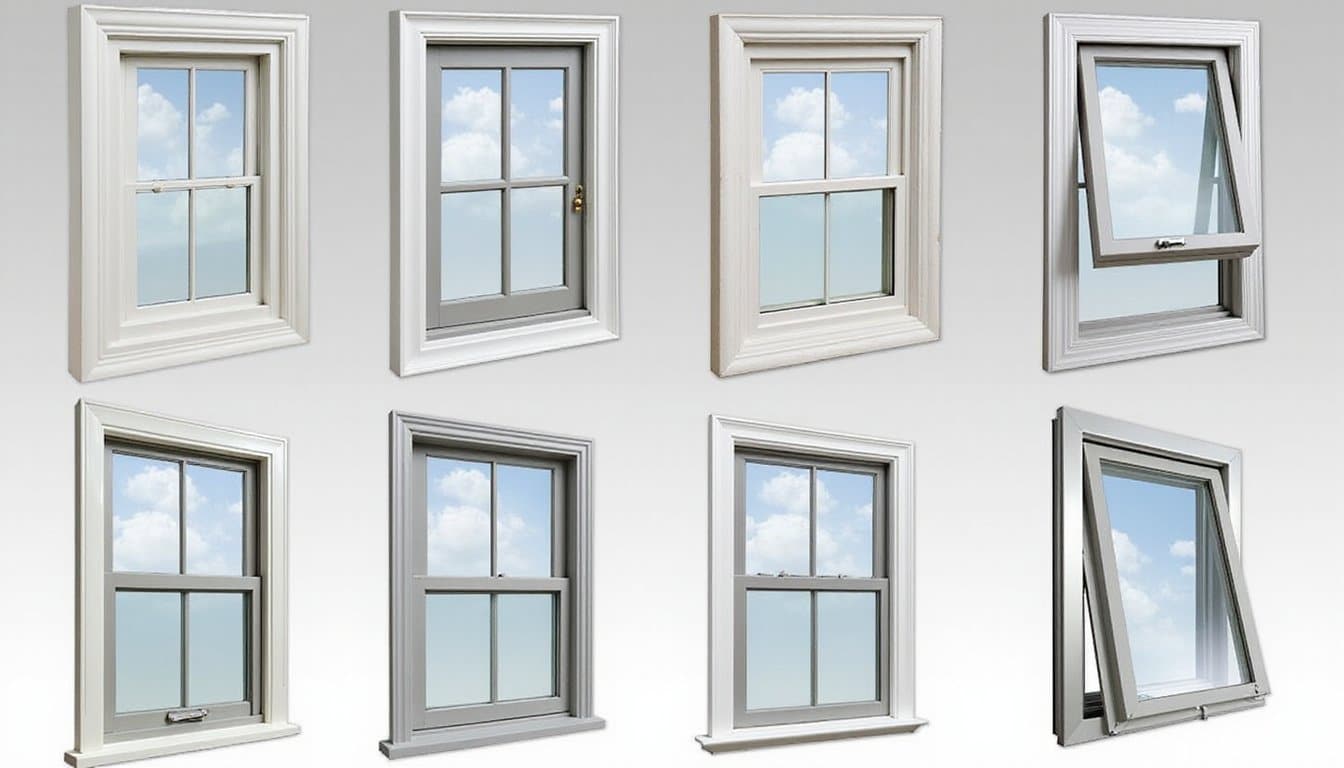
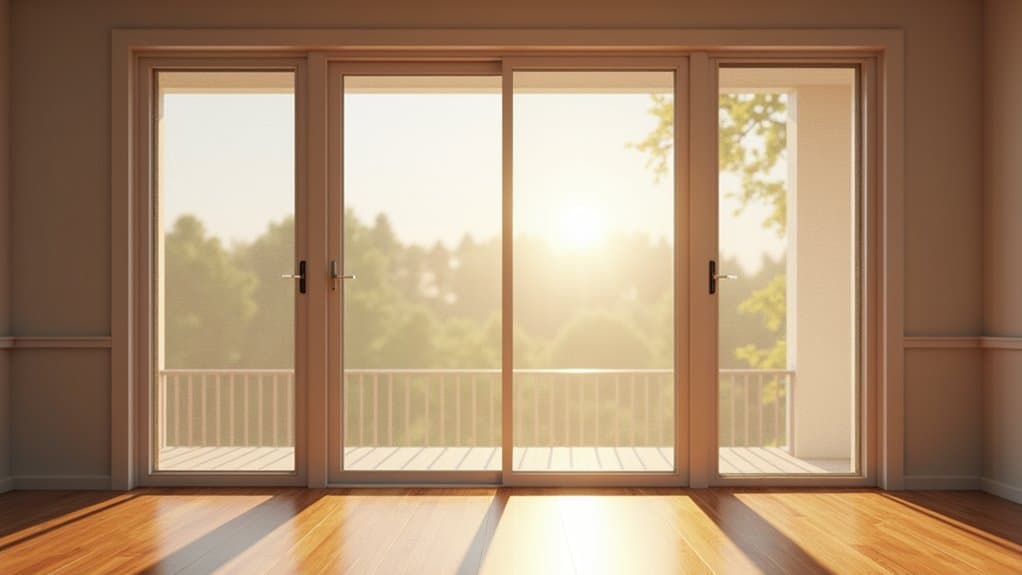
Because window design directly impacts airflow efficiency and energy performance, selecting the right style requires understanding how different operating mechanisms affect ventilation capacity. You’ll find that window opening angles markedly influence natural ventilation patterns throughout your space. Casement windows provide maximum airflow through full outward swing, while double-hung windows enable customizable ventilation via independent sash control. Awning and hopper windows seal tighter against weather while maintaining steady fresh air intake. Sliding windows offer space-efficient operation with 50% opening capacity, ideal for constrained areas. Bay and bow windows create multi-directional airflow from multiple angles simultaneously. Each design presents distinct advantages: casement and awning styles excel in kitchens and bathrooms, double-hung suits traditional architecture, sliding windows work in hallways, and bay windows augment living spaces. Bow windows with their three or more curved windows provide enhanced views while maximizing natural light and ventilation throughout your home. Clerestory windows positioned high on walls maximize natural light and ventilation when paired with lower windows to create cross airflow channels. For areas requiring additional airflow support, reversible window fans provide an affordable supplementary option during periods of still weather. Your choice should align with your specific ventilation needs and spatial constraints.
Strategic Window Placement and Sizing for Cross-Ventilation
Three critical factors, wind direction, room geometry, and opening dimensions, determine whether your windows’ll effectively deliver cross-ventilation throughout your space. Position inlet openings within ±45° of prevailing wind directions and align larger windows on windward sides while placing smaller outlets on leeward sides to create necessary pressure differentials.
Your room depth shouldn’t exceed five times the ceiling height for single-sided ventilation or ten meters for dual-window applications. Maintain minimum ceiling heights of 2.7 meters to maximize natural airflow patterns. Temperature differences between interior and exterior spaces further enhance the strength of airflow created by your window configuration. Casement and awning window styles can be angled to catch prevailing breezes more effectively than fixed alternatives. Window positioning at approximately 2 metres above floor level ensures optimal intake and exhaust heights for effective circulation.
For window wall integration strategies, allocate at least 10% of floor area to total window openings. Maintain ideal inlet outlet ratios by sizing outlet openings equal to or larger than inlet dimensions. Position windows on opposite walls with clear pathways between them, ensuring steady cross-flow circulation without obstructions.
Balancing Security Features With Ventilation Needs
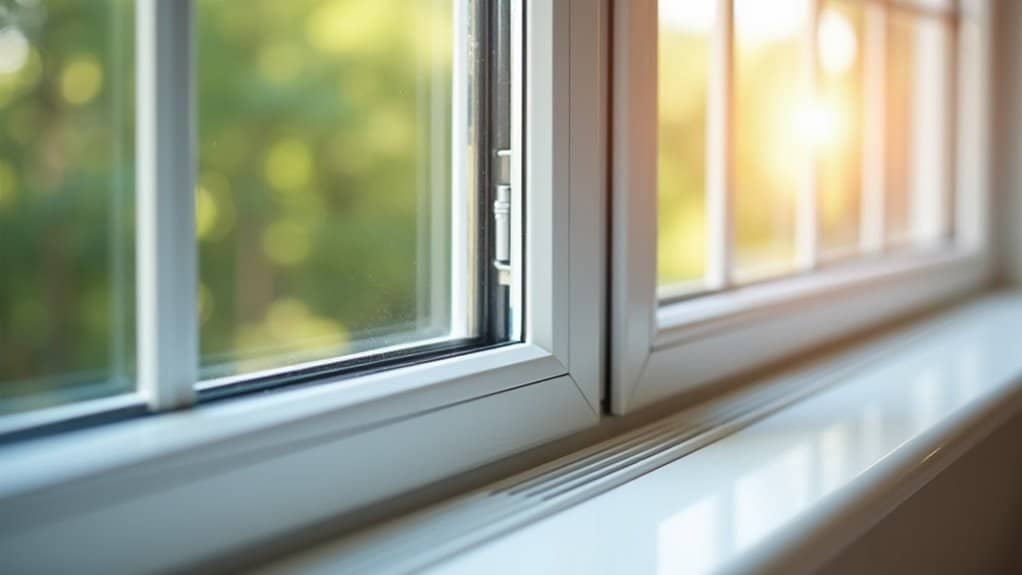
Once you’ve optimized your window placement and sizing for peak airflow, you’ll need to safeguard those openings without sacrificing ventilation performance. Multi-point locking mechanisms combined with adjustable ventilation restrictors let you control opening size precisely, maximizing fresh air intake while limiting unauthorized entry vectors. Integrate security sensors into your window hardware to monitor breach attempts in real-time, triggering immediate alerts if tampering occurs.
Select impact-resistant glazing paired with reinforced frames to withstand forced entry during periods of operation. High-tensile mesh security screens maintain unrestricted airflow while blocking intrusion and pests simultaneously. Customizable ventilation controls, including key-operated latches and compression seals, enable you to balance occupancy needs with security requirements. Casement and double-hung window styles can be selected based on your ventilation requirements to further enhance airflow capacity. Strategic window placement on opposite sides creates cross-flow ventilation that naturally circulates fresh air throughout your home while your security measures remain effective. This layered approach guarantees steadfast protection without compromising your ventilation strategy’s effectiveness.
Energy Efficiency and Airflow: Finding the Right Balance
How do you achieve superior thermal performance without sacrificing the fresh air intake your indoor environment demands? You’ll find that modern window systems balance these competing priorities through integrated design and intelligent controls.
Your window insulation tradeoffs become manageable when you select Low-E glazing paired with operable vents. Occupant behavior impacts energy consumption greatly, automated systems optimize operation based on CO₂ and humidity levels rather than relying on manual adjustments. Proper humidity control prevents mold growth while maintaining energy efficiency. Research demonstrates that student performance declines significantly when CO₂ levels and temperatures exceed comfort thresholds, underscoring the importance of effective ventilation strategies in occupied spaces.
Low-E glazing with operable vents makes window insulation tradeoffs manageable through automated systems optimizing based on CO₂ and humidity levels.
Consider these strategies:
- Deploy triple-glazed windows with trickle vents for passive airflow without heat loss
- Install night-purge systems to ventilate during cooler hours, reducing HVAC demands
- Use intelligent sensors regulating window operation based on indoor air quality metrics
- Combine casement or awning designs with strategic placement for cross-ventilation effectiveness
Retrofitting yields ~10% energy savings, while full replacement with top-rated systems provides greater gains. Coordinate mechanical and natural ventilation to achieve ideal energy performance and indoor air quality simultaneously. Research indicates that F7 filters in balanced ventilation systems can significantly reduce particulate matter concentrations, making them essential for homes located near busy roads or in areas with poor outdoor air quality.
Room-Specific Window Solutions for Different Spaces
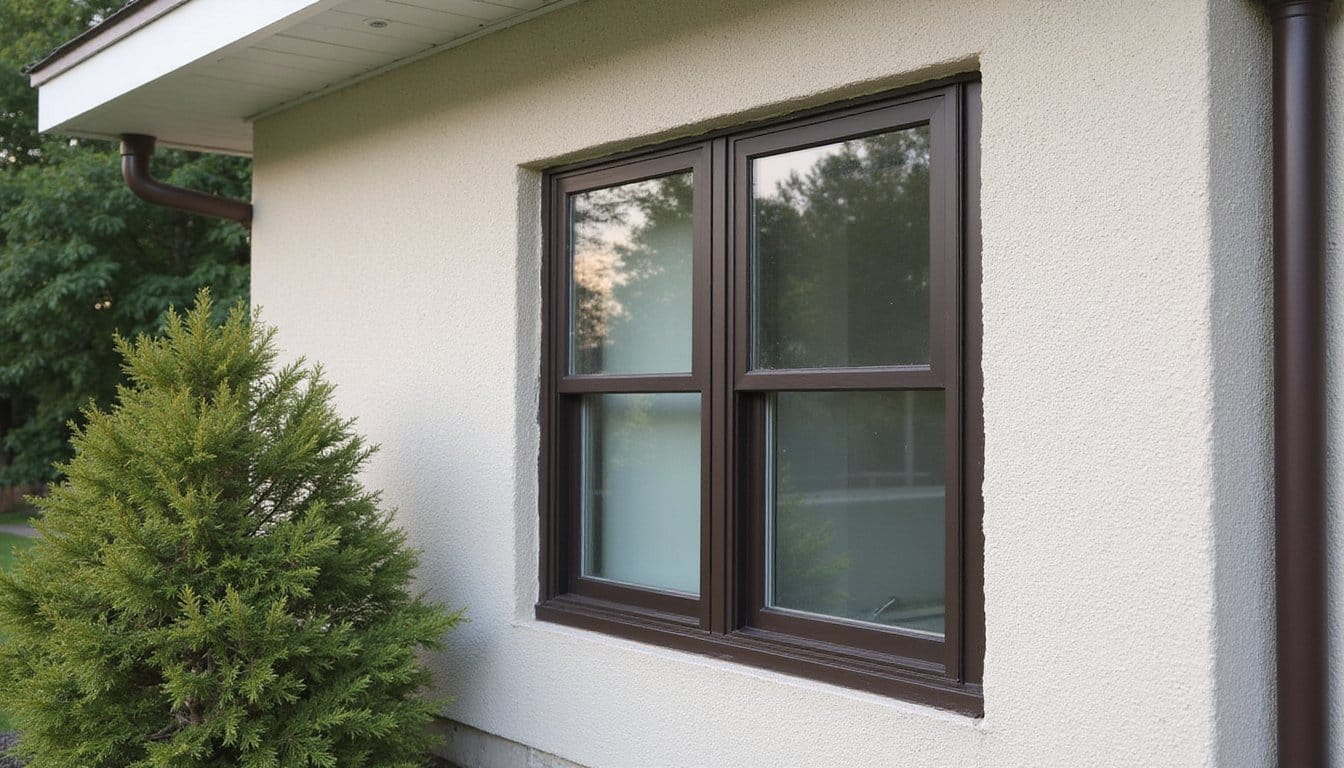
While energy efficiency and airflow balance represent universal design principles, the specific window configuration your space demands depends entirely on its function, occupancy patterns, and environmental demands. Living rooms require operable windows on opposite walls with a minimum 10% window-to-floor ratio. Bedrooms benefit from top-hinged systems with micro-ventilation near ceilings, demanding only 5, 7% coverage. Kitchens need 5% minimum area with extractor fan integration to manage heat and moisture. Bathrooms require 3, 5% with high-placed transoms for upward airflow. Offices demand 10, 15% ratios across multiple walls for optimal occupant comfort. Research demonstrates that opening windows for at least 60 minutes in summer can reduce indoor temperatures by 1-2°C while significantly improving air quality. Window vents with self-regulating non-return valves prevent cold drafts while maintaining consistent fresh air supply year-round. Incorporating window sensor integration with portable ventilation options guarantees adaptable airflow management. Ventilation windows with thermostatically controlled valves automatically adjust airflow based on temperature changes throughout the seasons. Each space’s distinct requirements necessitate personalized solutions maximizing both air quality and energy performance.
Humidity Control and Indoor Air Quality Management
Beyond optimizing window placement and airflow patterns for your space, you’ll need to manage the moisture content that directly impacts both occupant health and building durability.
Maintaining relative humidity below 60% during occupancy prevents mold proliferation and dust mite colonization. Your window-to-wall ratio of 20% considerably boosts indoor air quality while regulating moisture exchange. Building materials with high moisture buffering capacity, such as natural fibers, moderate humidity fluctuations, reducing strain on mechanical systems.
Maintaining humidity below 60% prevents mold and dust mites while a 20% window-to-wall ratio enhances indoor air quality and moisture regulation.
Key humidity management strategies:
- Install operable windows with tight closure mechanisms for controlled cross-ventilation
- Select materials with vapor retarders to prevent moisture intrusion into wall cavities
- Commission HVAC systems to guarantee balanced airflow rates
- Monitor RH levels below 75% to prevent microbial growth on soiled materials
Balanced ventilation design integrates these elements, protecting occupant respiratory health while preserving structural integrity.
Maintenance Requirements Across Window Styles
You’ll find that effective window maintenance hinges on three critical areas: keeping tracks clean and operational, inspecting hinges for binding or noise, and maintaining weatherstripping integrity to prevent air leakage. Each window style, from casement to sliding to mechanical fan-integrated systems, demands specific attention to these components based on its unique mechanical design and exposure patterns. Neglecting any of these elements directly compromises both your window’s ventilation performance and energy efficiency.
Cleaning and Track Care
Regular track maintenance directly determines whether your windows’ll operate smoothly and last for decades. You’ll prevent operational failure by addressing debris accumulation prevention through consistent vacuuming and gentle scrubbing with mild soap solutions.
Your maintenance strategy should include:
- Vacuuming tracks with brush attachments every 2-3 months to remove loose dirt and dust
- Applying mild dish soap solutions with soft brushes to dissolve stubborn residue in crevices
- Drying completely with microfiber cloths to prevent moisture damage and mold growth
- Implementing strategic lubrication frequency using silicone-based products on all track surfaces
You’ll optimize performance by distributing lubricant evenly, then cycling windows back and forth to penetrate moving parts. Remove excess lubricant promptly. Window designs featuring full-opening casements and minimal muntins considerably reduce trapped dirt, streamlining your maintenance efforts and extending component lifespan substantially.
Hinge Inspection and Operation
Three critical factors, inspection frequency, lubrication protocols, and wear detection, directly determine whether your window hinges’ll maintain smooth operation and prevent air and water infiltration. You’ll conduct annual inspections, increasing to every 3, 6 months in high-use or harsh environments. During checks, examine all pivot points for rust, deformation, and excessive wear; tighten screws to guarantee sash stability. Apply silicone-based lubricant or white lithium grease annually, operating windows multiple times to ascertain full distribution. The impact of wear escalates when you neglect these intervals. Watch for squeaking, grinding, or difficulty in movement, early failure indicators. Hinge durability depends on prompt rust removal and replacement of corroded hardware matching original specifications. Misalignment presents as uneven opening or drag against the frame, requiring immediate adjustment to preserve ventilation efficiency and occupant safety.
Seal Maintenance and Weatherproofing
Because window seals and weatherstripping directly control air leakage and water infiltration, they demand systematic inspection and maintenance to preserve thermal performance and occupant comfort. You’ll benefit from conducting seal inspection frequency on an annual or biannual basis to identify deterioration early. Different window styles require customized maintenance protocols:
- Casement and awning windows use compression seals requiring precise adjustments to maintain airtight performance
- Sliding and double-hung windows employ brush or bulb weatherstripping that degrades rapidly, necessitating frequent checks
- Wooden frames demand more frequent inspection due to expansion and contraction cycles
- Aluminum and vinyl frames require less frequent but consistent weatherstripping replacement
You should clean seals regularly with mild soap and water while avoiding harsh chemicals. Weatherstripping replacement prevents energy loss and water infiltration, particularly after seasonal changes or storm events. Professional installation ensures ideal adhesion and longevity.
Weather Resistance and Year-Round Performance
While ventilation improves indoor air quality, you’ll need sturdy weatherproofing to maintain that benefit across changing seasons and extreme conditions. Casement windows excel here, wind pressure actually tightens the sash against the frame, dramatically reducing air leaks. Awning windows offer superior rain shielding capabilities, allowing ventilation during light rain since their outward-tilting panels deflect water away. Double-glazed units with low U-factors and SHGCs provide essential thermal insulation properties while supporting controlled airflow. You should verify performance using EN 12207 or BS 6375 standards, which test air permeability, watertightness, and wind resistance. Aluminum framing resists corrosion in harsh climates. Strategic placement, high on walls or with architectural canopies, maximizes year-round ventilation while protecting against weather infiltration.
Selecting Materials and Durability for Long-Term Value
Your window frame material fundamentally determines its lifespan, maintenance demands, and thermal performance, factors that directly impact your long-term investment value.
Fiberglass delivers superior durability, exceeding multiple decades with minimal maintenance, making it cost-effective despite higher upfront expenses. Vinyl offers moderate longevity but may become brittle in extreme climates. Wood requires frequent sealing and painting, increasing lifetime costs substantially. Composite frames combine fiberglass’s durability with wood aesthetics, reducing maintenance frequency.
Fiberglass frames deliver superior durability and minimal maintenance, making them cost-effective despite higher upfront investment compared to vinyl or wood alternatives.
Consider these durability factors when evaluating material cost considerations:
- Fiberglass: 30+ year lifespan, minimal upkeep
- Composite: High performance, reduced maintenance burden
- Vinyl: Climate-dependent performance, moderate longevity
- Wood: Shortest lifespan, highest maintenance expenses
Review warranty and guarantees carefully; fiberglass typically includes extensive coverage reflecting manufacturer confidence. Calculate total ownership costs, not just initial investment, to determine genuine long-term value across your window system’s operational lifetime.
Frequently Asked Questions
How Much Does Window Ventilation Design Installation Typically Cost Across Different Styles?
You’ll find window ventilation installation costs vary greatly by style. Basic ventilation grilles run €30, €125 per unit, while standard operable windows range $200, $1,200 each depending on type. Your average installation costs depend on material selection; vinyl frames cost $450, $850, wood frames $800, $1,500, and premium fiberglass $900, $1,400. For larger projects, you’re looking at $6,685, $33,425 for whole-house replacements. Typical material expenses escalate with complexity and custom designs like bay windows ($1,550, $4,050).
Can Existing Fixed Windows Be Retrofitted With Operable Ventilation Features?
Yes, you can retrofit fixed windows with operable ventilation features. You’ll find several cost-effective options: trickle vents, insert vent windows, and operable panel attachments offer quick solutions without extensive modification. However, structural compatibility assessment is essential, your frame’s strength and glazing type determine feasibility. For ideal performance, you might consider custom window replacements, though professional evaluation guarantees you’re selecting the most suitable retrofit method for your specific window configuration and building requirements.
What Building Codes and Regulations Govern Residential Window Ventilation Requirements?
You’ll find that residential ventilation codes require openable windows totaling at least 4-5% of your room’s floor area. Ventilation design regulations mandate that 45% of this window area must be operable for natural airflow. New York State specifically requires openings facing streets, yards, or courts. You can alternatively meet codes through mechanical ventilation systems providing 0.35 air changes hourly or 15 cfm per occupant, ensuring your home’s indoor air quality and safety compliance.
How Do Climate Zones Affect the Ideal Window Ventilation Design Choice?
You’ll optimize your window ventilation design by analyzing your climate zone’s seasonal temperature variations and indoor humidity levels. Hot climates demand low Solar Heat Gain Coefficient windows with external shading, while cold regions require high R-value insulation. Tropical zones necessitate operable windows exceeding 10% window-to-wall ratio for dehumidification. Mixed climates benefit from balanced double-pane configurations supporting cross-ventilation. Each zone’s specific thermal and moisture conditions directly determine your ventilation strategy’s effectiveness and energy performance.
Which Window Styles Work Best With Smart Home Automation Systems?
You’ll find that roller shades, cellular shades, and venetian blinds deliver superior smart home integration capabilities. These styles offer straightforward motorization compatible with Alexa, Google Home, and Apple HomeKit via dedicated hubs. For ideal automated control settings, choose top-down/bottom-up shades enabling selective light management. Venetian and vertical blinds provide precise tilting control through automation commands. You’re investing in systems supporting multi-platform compatibility, remote access, and energy-efficient scheduling, minimizing lock-in risk while maximizing functionality.