



You’ll harness buoyancy-driven ventilation by installing symmetric inlet and outlet strips that create continuous air exchange without electrical input. Warm indoor air naturally rises and escapes through upper vents while cooler outdoor air enters below, establishing pressure gradients driven by thermal and wind forces. You can adjust closing proportions, 50% achieves ideal flow while 90% restricts it fourfold, giving you precise control. This passive system dilutes VOCs, CO2, and airborne contaminants, measurably improving indoor air quality. The mechanisms behind this efficiency reveal surprising benefits beyond basic circulation.
The Science Behind Continuous Air Exchange

When warm indoor air rises and escapes through upper ventilation strips while cooler outdoor air enters below, you’re witnessing buoyancy-driven ventilation, a thermodynamic process that doesn’t require temperature differentials to sustain airflow. You utilize pressure gradients, both wind-driven and thermal forces, to maintain continuous air exchange. Symmetric placement of inlet and outlet strips optimizes your flow rate, potentially doubling performance compared to suboptimal configurations. Adjusting closing proportions strategically improves efficiency; at 50% closure, you achieve high flow, while restricting to 90% closed yields fourfold peak flow variations. This passive system operates without mechanical intervention, delivering stable indoor temperatures and consistent ventilation patterns. The geometry and size of openings directly determine exchange efficiency, enabling you to refine airflow for modern airtight buildings while maintaining background ventilation. Since building codes now require some form of mechanical ventilation in modern construction, understanding how passive systems like window strips complement these requirements is increasingly important. Window trickle vents also prevent condensation and mold by removing excess moisture and maintaining balanced indoor humidity levels. Understanding flow physics and simple models is essential for optimizing ventilation performance in residential and commercial spaces.
Eliminating Indoor Air Pollutants and Odors
You’ll find that ventilation strips initiate continuous pollutant removal by drawing fresh outdoor air across indoor contaminants, systematically diluting harmful substances like VOCs, carbon dioxide, and airborne chemicals. This passive air exchange mechanism also combats odor accumulation and staleness by exhausting stagnant air rather than recirculating it, preventing the buildup of compounds from cooking, smoking, and other indoor activities. Window filters use fine mesh or electrostatic materials to trap dust, pollen, and allergens before they circulate through your living spaces. Climate Seal’s custom-sized inserts create an airtight seal that acts as a physical barrier against airborne irritants entering your home. Proper installation on clean, dry surfaces ensures the weatherstripping maintains its effectiveness and seals well when windows are closed while still allowing free opening and closing. The result is measurably improved indoor air quality without requiring electrical input or complex mechanical systems.
Continuous Pollutant Removal Process
How do window ventilation strips actively combat indoor air quality degradation? You’ll find they establish continuous contaminant infiltration prevention through multi-stage filtration mechanisms. As you open your windows, these strips trap particulates, dust, pollen, PM2.5, while activated carbon layers adsorb gaseous pollutants like VOCs and formaldehyde. This whole house air filtration approach works systematically: fine mesh blocks larger particles; electrostatic technology captures finer contaminants; ongoing air exchange dilutes remaining pollutants.
You’re fundamentally lowering time-weighted exposure to CO₂ and ozone through strategic ventilation. Mathematical models demonstrate that filtered window strips decrease indoor pollutant loads considerably compared to unfiltered alternatives. These filters are replaceable for long-term use, allowing you to maintain peak performance throughout seasons. Regular maintenance sustains efficiency, preventing airflow obstruction. By controlling pollutant entry points, you’re reducing respiratory health risks while maintaining comfortable indoor conditions without relying solely on mechanical systems. Proper duct cleaning and HVAC system maintenance ensure that your ventilation components function at peak performance. Unlike traditional ventilation installations that require permanent structural modifications, programmable air purifier models can be utilized by renters to automate ventilation based on outdoor air quality conditions.
Odor and Staleness Control
Window ventilation strips actively eliminate indoor odors and stale air through continuous pollutant displacement and removal mechanisms. You benefit from systematic odor tracking mechanisms that expel volatile organic compounds, cooking odors, and pet-related smells by introducing fresh outside air. This process dilutes airborne particulates and prevents accumulation of formaldehyde, ammonia, and sulfur compounds. Trickle vents can be opened and closed as needed, allowing you to control the amount of ventilation based on your home’s specific air quality needs. Installing trickle vents or window vents ensures continuous fresh air circulation even when windows remain closed, maintaining optimal indoor air quality throughout the day. However, the effectiveness of window ventilation depends on the outdoor air quality and may require supplementary air cleaning strategies for comprehensive pollutant removal.
Your freshness perception factors improve greatly as stagnant, recycled air gets displaced. Consistent humidity regulation prevents moisture-driven microbial growth, further reducing biologically derived odors. You’re actively maintaining a more inviting indoor environment through systematic pollutant removal.
| Odor Source | Ventilation Impact | Freshness Perception |
|---|---|---|
| Cooking/Pet Odors | Rapid expulsion via continuous airflow | Immediate improvement |
| Mold/Mildew | Humidity reduction inhibits growth | Long-term staleness prevention |
| Chemical Off-gassing | Dilution of furniture/paint VOCs | Heightened indoor palatability |
Preventing Condensation and Mold Growth
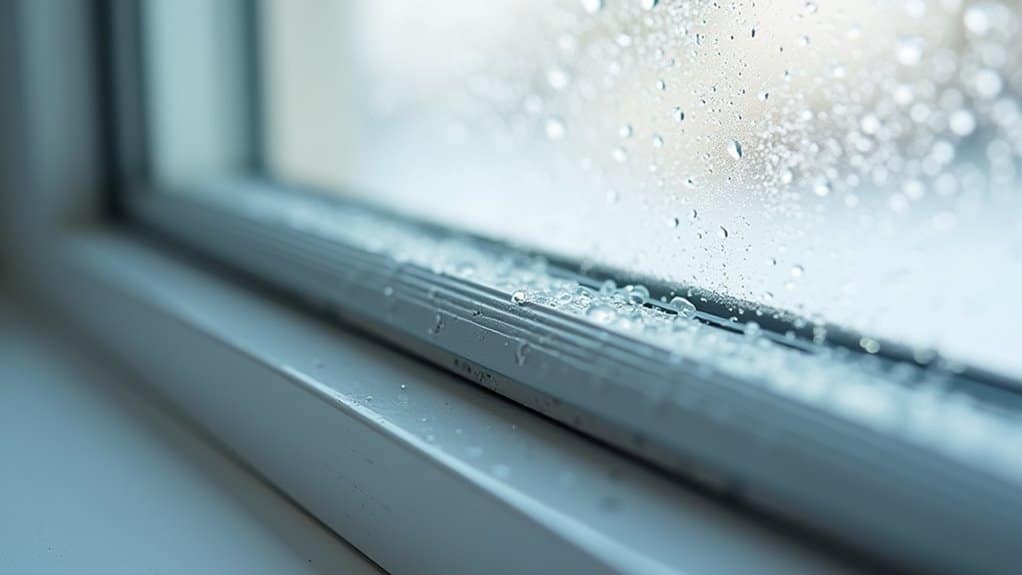
Because condensation and mold thrive in persistent moisture environments, ventilation strips address the root cause by establishing consistent airflow that equalizes temperature differentials across glass surfaces. You’ll curtail moisture buildup by removing moisture-laden air before water droplets form on cold panes. Continuous airflow dries window surfaces and sills, denying mold the damp substrate it requires to colonize. Closed-cell foam materials resist water absorption, maintaining barrier integrity against persistent condensation. Research demonstrates visible reductions in mold patches near windows after ventilation strips are implemented as part of integrated moisture control strategies. When warm indoor air contacts the cold glass surface of inadequately ventilated windows, the resulting temperature and humidity differential creates ideal condensation conditions. The perimeter ventilation system creates an intentional airflow path that prevents moisture accumulation throughout your home’s interior. StormStop Window Condensation Strips provide 25 feet of stripping per roll, allowing you to protect multiple windows throughout your home with a single affordable purchase. By preventing moisture pooling, you’re also prolonging window integrity, protecting wood frames from rot, paint from peeling, and walls from decay damage that demands costly repairs.
Maintaining Energy Efficiency While Ventilating
Three critical factors define successful ventilation implementation: controlling airflow rates, minimizing thermal losses, and preserving building envelope integrity. You can adjust air exchange rates to match your local climate, enabling efficient operation across seasons. Window ventilation strips let you maintain balanced heating and cooling demands by supplying fresh air without excessive heat escape during winter or unwanted cooling loss in summer.
These strips facilitate regulating indoor humidity while sustaining your building’s thermal envelope. By sealing gaps around windows with ventilation strips, you’ll reduce energy bills by up to 30%, real-world data shows 20, 25% seasonal savings in heating or cooling expenses. Proper installation safeguards window insulation ratings and guarantees energy code compliance, supporting whole-house efficiency upgrades without compromising performance.
Enhancing Security Without Compromising Safety

You can maintain continuous protection while away by utilizing window ventilation strips that limit opening width to predetermined thresholds, preventing unauthorized access even during extended absences. Your privacy remains intact during ventilation since these strips allow controlled airflow without exposing interior spaces to external visibility or intrusion vectors. This dual functionality, security and ventilation eliminates the false choice between leaving windows sealed and vulnerable to condensation or opening them fully and compromising perimeter integrity.
Continuous Protection While Away
While you’re away from home, maintaining both security and ventilation doesn’t require compromise; it demands strategic layering of mechanical, structural, and smart technologies that work in concert. Window restrictors and trickle vents enable continuous air exchange even when fully locked, deterring intruders through limited aperture design. Security window screens resist cutting while preserving airflow, meeting fire safety codes without sacrificing egress. Reinforced glass and frames increase break-in resistance alongside insulation benefits. Smart sensors monitor window status in real-time, alerting you to forced entry attempts while automated actuators close windows during adverse conditions. This integrated approach delivers genuine peace of mind, your home breathes safely while remaining protected, requiring no manual intervention during your absence.
Privacy Maintained During Ventilation
How do you maintain privacy while your home breathes? Window ventilation strips paired with privacy films create an effective solution. You’ll apply frosted or reflective coatings that obscure interior views while permitting airflow, outsiders see only reflections, not your living space.
Physical barrier integration enhances this protection. Security screens attached to ventilation strips allow air passage while blocking forced entry attempts. Window restrictors limit opening width, preventing unauthorized access without compromising circulation.
Simultaneously, you retain unobstructed exterior visibility from inside. Adjustable blinds and smart glass technology let you toggle between transparent and opaque modes, granting you full control over sightlines and ventilation.
This systematic approach balances competing demands: fresh air intake, visual privacy, and security hardening, all without sacrificing comfort or safety during occupied periods.
Reducing Airborne Particles and Allergens
Because indoor air quality directly affects respiratory health and comfort, window ventilation strips offer a systematic approach to minimizing both airborne particles and allergens. You’ll reduce aerosol particle concentration by up to 50% within two hours through continuous air exchange, effectively improving respiratory health. Passive window strips decrease dust, pollen, and pet dander accumulation while mitigating health risks associated with mold spores and dust mites. By maintaining humidity levels around 35-40%, you’ll create an inhospitable environment for allergen proliferation. Air quality monitors consistently demonstrate lower particle readings in spaces with bolstered ventilation. This systematic reduction in airborne contaminants directly supports ASHRAE 62.2 compliance standards and prevents sick building syndrome, ensuring healthier indoor environments for occupants.
Adjustable Vents for Customized Airflow Control
Once you’ve established baseline indoor air quality through passive ventilation, adjustable vent mechanisms enable you to fine-tune airflow for your specific environment. Variable speed controls let you modulate airflow rates precisely, while sliding and rotatable rails accommodate both vertical and horizontal window configurations. Directional airflow adjustment prevents uncomfortable drafts by redirecting air away from occupants and sensitive zones, reducing health risks like muscle cramps.
Automatic shutters minimize energy loss by opening and closing based on demand, while trickle vents maintain low-level background circulation at 3,000, 8,000 mm² per vent. Thermal comfort regulation becomes achievable as you adapt settings seasonally, cooling in summer, warming in winter. This customization reduces energy consumption by eliminating excessive ventilation, delivering only what your space requires.
Installation Options and Regulatory Compliance
Proper installation of window ventilation strips requires three critical elements: careful surface preparation, appropriate material selection, and strict adherence to building codes. You’ll clean all frames thoroughly, removing debris and old adhesive to guarantee optimal strip adhesion. Surface preparation considerations directly impact long-term performance and seal integrity.
You’ll choose between adhesive versus mechanical fixings based on strip type. Foam and V-channel strips typically use adhesive backing, while spring-metal strips demand mechanical securing with brads or screws for durability. Installation sequence matters: start with sides, then top, ultimately bottom, maximizing overlapping seals.
You must verify compliance with local building codes specifying minimum air changes per hour (ACH) and follow manufacturer guidelines precisely. Post-installation inspection confirms seal continuity. Regulatory adherence prevents warranty voidification and ensures your system meets code-mandated performance levels.
Frequently Asked Questions
How Often Should Window Ventilation Strips Be Cleaned or Maintained?
You should conduct routine inspection of your window ventilation strips every two months to guarantee ideal performance. For proper maintenance, you’ll need to clean them at least twice yearly in rural areas, but up to six times annually in urban, industrial, or coastal environments. You’ll want to check for visible fouling, mold, or airflow obstruction immediately. Furthermore, you should lubricate hinged components annually with dry lubricant and arrange professional technical inspections every four years for domestic systems.
Can Trickle Vents Be Installed on Existing Windows, or Only New Ones?
You can absolutely install trickle vents on your existing windows through retrofitting. Whether you’ve got uPVC, timber, or aluminium frames, you’re able to add these vents to casement, sash, and double-glazed units. The process involves cutting precise openings in your retrofitted window frames and securing the vent components. For custom window installations or older designs, professional installation’s recommended to guarantee proper sealing and functionality without compromising structural integrity.
What Is the Typical Cost of Installing Window Ventilation Strips?
You’ll typically invest $116 to $302 per window for professional installation of ventilation strips in 2025. Material costs run $8.41, $13.22, while labor ranges equivalently. Your total increases with site conditions, contractor markup (13, 22%), and regional variations; metro areas cost 10, 30% more than rural locations. Though upfront expenses seem substantial, you’ll realize seasonal energy savings through improved air circulation and reduced heating/cooling demands, making this investment economically sensible long-term.
Do Window Ventilation Strips Work Effectively in Noisy Urban Environments?
You’ll find that window ventilation strips offer limited noise reduction benefits in urban settings, typically providing minimal attenuation of low-frequency traffic and construction noise. However, they excel at delivering air quality improvements by enabling continuous fresh air exchange while windows remain closed for security. You’ll achieve ideal results by combining strips with secondary soundproofing measures like acoustic glazing or specialized inserts, balancing ventilation demands against noise control priorities.
How Long Does It Take to Install Trickle Vents on Windows?
You’ll complete standard DIY trickle vent installation in under one hour, though window replacement difficulty greatly affects your timeline. Simple frames require minimal work, while older or intricate windows necessitate extended installation periods. Professional installers typically finish quicker. Your window installation time encompasses measuring, marking, drilling, securing components, and cleanup. Factor in extra hours for multiple windows or challenging placements that complicate accessibility and alignment procedures.