
To protect doors during construction, you’ll want to start before work begins by cleaning surfaces and documenting existing damage. Remove doors entirely when possible to eliminate scratch and dent risks. Shield remaining doors from paint overspray using masking tape, paper, and ventilated spray booths. Protect frames and jambs with temporary covers and edge guards. Finally, reinforce edges, corners, and thresholds with bumper bars and weatherproof seals. Each method offers even more protective detail worth exploring.
Start Door Protection Before Construction Begins
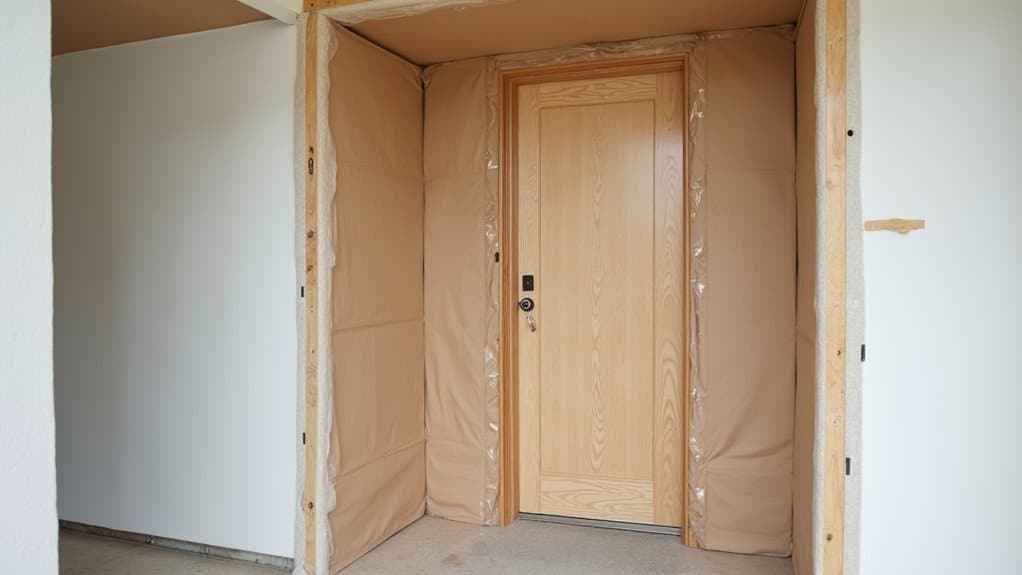
Before construction begins, wash your doors with water and gentle soap to remove dust and debris, ensuring protection materials adhere properly. Avoid harsh cleaners, as abrasive solutions strip paint and corrode metal frames, compromising surface integrity before work even starts.
Once cleaned, monitor existing damage around locks, hinges, and frames. Document any pre-existing decay, cracks, or structural weaknesses so you can distinguish construction-related damage from prior deterioration. This step protects you from liability disputes and guides your protection strategy.
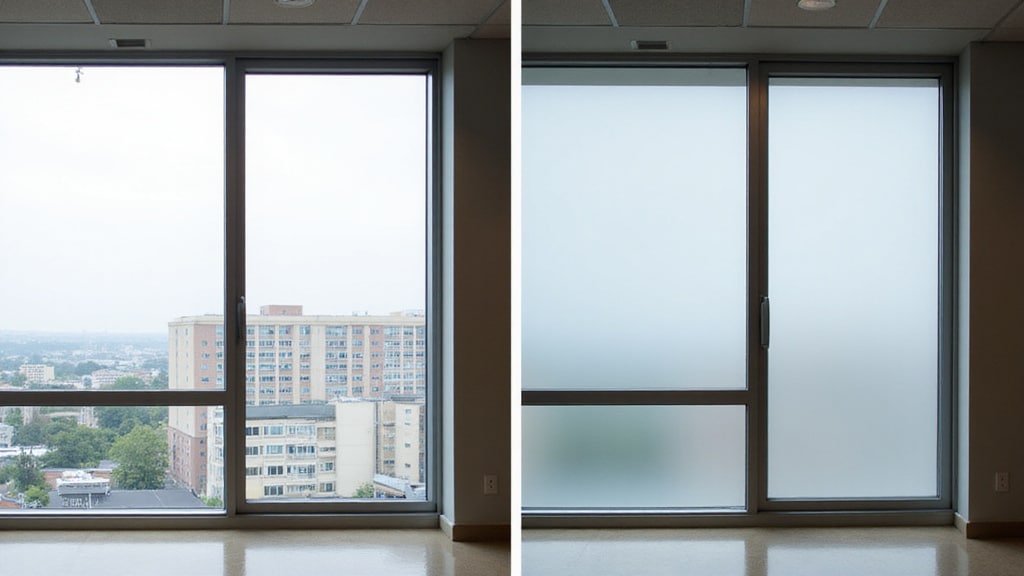
Immediately cover glass panes with self-adhering window film to shield against overspray and scratches. Apply cellophane wrap to all glass and door surfaces at project start. Early application prevents accidental damage during material staging and initial construction activity. Consider removing the door from its hinges entirely, as this protects it from construction hazards such as dents and scratches caused by heavy materials and ongoing activity.
Remove Doors to Prevent Scratches and Dents During Construction
Removing doors entirely from their frames is often the most effective way to prevent scratches, dents, and structural damage during heavy construction activity. Before removal, inspect each door for existing dents, scratches, or loose hardware to avoid worsening pre-existing damage. Apply force to the bottom hinge using a pry tool, pulling screws from the door side to free wood doors from metal frames cleanly. You’ll also want to minimize vibration risks, as structural shifts during demolition can loosen overhead elements, creating fall hazards through unguarded openings. Evaluate fire hazards carefully, since removed doors slow convection currents, limiting damage extension during breach scenarios. After removal, salvage hardware for reuse and cover all openings with load-rated, clearly marked covers to maintain site safety compliance. Regular site inspections by competent persons help identify new or previously undetected hazards that may emerge around unguarded door openings during active construction.
Shield Doors From Paint Overspray During Construction
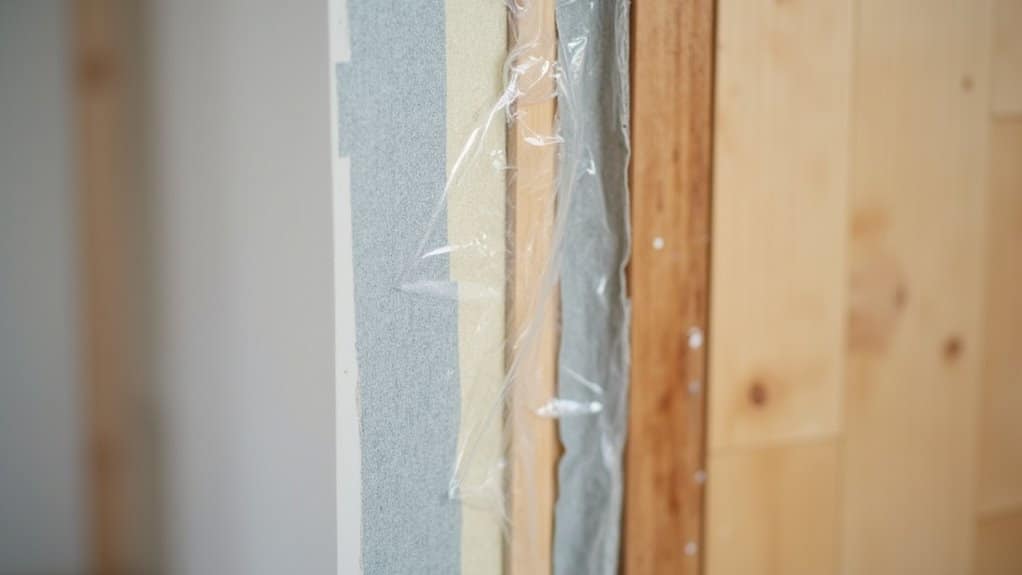
Paint overspray during construction can infiltrate gaps, settle on door faces, and permanently bond to hardware if you don’t take precautions early. Use spray booth ventilation with sufficient exhaust airflow to pull overspray particles away before they drift onto surfaces. Avoid static building floors by placing drop cloths beneath doors to catch fallout. Apply professional masking tape along beveled support edges and use 9-inch masking paper to shield adjacent vents and benches. Deploy 72-inch masking film over nearby glass. Adjust your spray gun to lower air pressure, reduce atomizing air, and select proper tip sizes to minimize overspray spread. Spray at a downward angle on edges, keep your gun perpendicular, and use cardboard shields around door footings for targeted overspray control. When working indoors, turn off fans and keep windows closed, as air drafts can significantly contribute to overspray settling on unintended surfaces.
Protect Door Frames and Jambs From Getting Dinged
Door frames and jambs take a beating during construction from ladders, tools, and bulky materials constantly passing through, so you’ll need to deploy the right protective systems before work begins. Use temporary jamb covers like Ram Jamb, which slides directly over trim without cutting or taping, delivering instant coverage against dents and scuffs. For heavier impact zones, high-density foam versions provide thicker reinforcement across the entire door casing. Secure door guards using L-shaped edge protectors with pre-applied adhesive or U-shaped variants fastened with screws for a firmer hold. C-shaped protectors work specifically on glass panels and handrails. Each option extends your door’s lifespan by blocking damage from passing equipment, ensuring frames stay structurally sound and visually intact throughout every construction phase.
Cover Door Edges, Corners, and Thresholds From Construction Damage
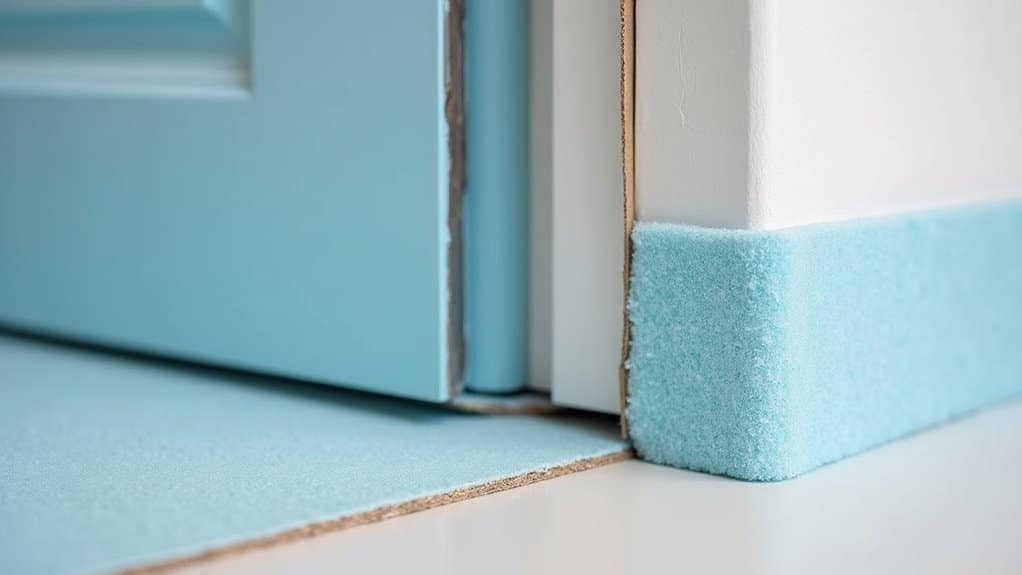
While door frames and jambs demand attention, edges, corners, and thresholds face equally punishing conditions throughout construction. Deploy targeted protection using these solutions: Implementing effective door lock protection strategies can significantly enhance security. Consider utilizing high-grade materials that resist tampering and provide durability.
- Reusable edge protectors, L-shaped versions with pre-applied adhesive install instantly on timber core doors, while U-shaped screw-on or cement-on options secure fragile edges against dents and abrasions in tight spaces.
- Impact absorbing corner guards, High-density compressed card material absorbs repeated strikes, preventing gouges, nicks, and scratches on frequently moved doors without generating costly repairs.
- Threshold protection, Bumper bars absorb bottom-edge shocks, weatherproof seals defend outdoor thresholds, and stainless steel or rigid vinyl reinforcements stop splintering under heavy traffic.
You’ll reduce structural damage, extend door lifespan, and cut repair costs by installing these systems before construction activity begins.
Frequently Asked Questions
How Long Does Door Protection Typically Need to Stay in Place?
You’ll need door protection in place from the start of construction until after your final walkthrough. For long term installation, products like Armour Pro-Tack Felt last up to 90 days, covering high-risk phases like framing and rough-in. For temporary installation, keep protection active until overspray, dust, and heavy equipment traffic completely subside. Removing it prematurely exposes your doors to costly damage, so don’t rush the process.
Are Door Protection Products Safe for Use Around Children and Pets?
Yes, door protection products are safe for use around children and pets. You’ll find that most products use child friendly materials that won’t expose your household to harmful chemicals or sharp edges. They’re engineered with pet safety in mind, featuring durable fiberglass mesh and see-through designs that maintain visibility without creating entanglement hazards. These products simultaneously address both child and pet safety requirements, making them a reliable solution for multi-occupant households during construction.
Can Door Protection Methods Be Used in Extreme Weather Conditions Outdoors?
Yes, you can use door protection methods in extreme weather conditions outdoors. Impact-resistant fiberglass and steel doors withstand extreme winds while reinforced strike plates and heavy-duty hinges maintain structural integrity. Overhangs and storm doors help handle heavy precipitation by blocking direct rain and snow contact. You’ll also want to apply weatherstripping, high-grade sealants, and flashing tapes to prevent moisture infiltration, ensuring your door remains fully protected against harsh outdoor conditions.
What Is the Average Cost of Professional Door Protection During Construction?
When budgeting for professional door protection during construction, you’ll encounter typical cost factors ranging from $22 per door for basic protective covers like DoorWrap to $200-$1,000 for all-inclusive hardware protection. Labor runs $30-$90 hourly, adding extensively to your total. Product resilience considerations directly influence pricing, higher-grade materials command premium costs but deliver superior scratch and impact resistance. You’re typically looking at $200-$825 per door for complete professional protection installation.
How Do You Dispose of or Recycle Used Door Protection Materials Properly?
When disposing of used door protection materials, you’ll want to leverage their recycled content advantage. Paper-based protectors are fully recyclable without separation, take them to recycling centers acceptance facilities that handle paperboard. For proper disposal techniques, confirm the recycler’s compliance, licensing, and third-party certification. If recycling isn’t available, use landfills with dedicated construction demolition waste areas. You can also reduce waste by reusing protectors, since reusability drops waste to 25% or less.