
To protect your exterior door from rain and harsh weather, you’ll need to inspect it for drafts, moisture stains, and warped panels. Choose weatherstripping that matches your door type, whether silicone bulb gaskets or V-strip seals. Install a door sweep to close bottom gaps, then caulk the frame with a weatherproof sealant. In coastal or high-wind climates, upgrade to magnetic or vinyl weatherstripping. Keep exploring to master every detail of each step.
Inspect Your Exterior Door for Weather Damage
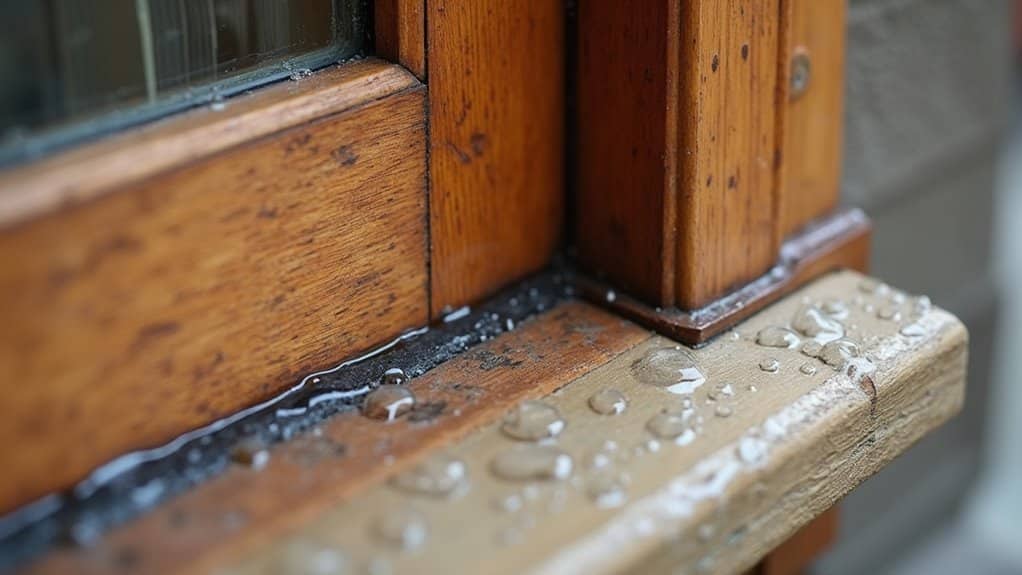
Before replacing weatherstripping or applying new sealants, you’ll need to thoroughly inspect your exterior door for signs of weather damage. Start with air leakage detection by closing the door and checking for visible light around the edges and frame. On windy days, run your hand along the door’s perimeter to feel drafts. Next, examine the weatherstripping for brittleness, fraying, flattening, or loss of resilience when pressed.
For insulation performance evaluation, check moisture indicators like water stains, mold, mildew, or bubbling paint near the jamb and threshold. Probe suspicious wood with a screwdriver to confirm rot. Inspect the door panel and frame for warping, cracks, or splitting. Finally, check insulating glass panes for fogging, which signals seal failure. Gaps caused by damaged weatherstripping allow conditioned air to escape, leading to increased energy bills.
Pick the Right Weatherstripping for Your Door Type
With so many weatherstripping options available, choosing the right one depends on your door type, gap size, and exposure conditions. For modern doors with small, even gaps, silicone fin seals like Pemko S44 provide smooth closure with minimal drag. Irregular frames benefit from silicone bulb gaskets, which compress and recover repeatedly. If you’re dealing with extreme temperature fluctuations, reinforced silicone weatherstripping resists cracking and delivers a longer service life.
For heavy-traffic doors with large bottom gaps, install an aluminum door shoe with vinyl inserts. Use brush sweeps on uneven floors or high-threshold entries. V-strip tension seals work best on door sides with even frames. Match your selection to your specific conditions, mismatched weatherstripping reduces effectiveness and increases replacement frequency. For homes in rainy or coastal climates, drip-edge shoes are the best option to deflect water away from the door threshold.
Fit a Door Sweep to Complete Your Weatherstripping System
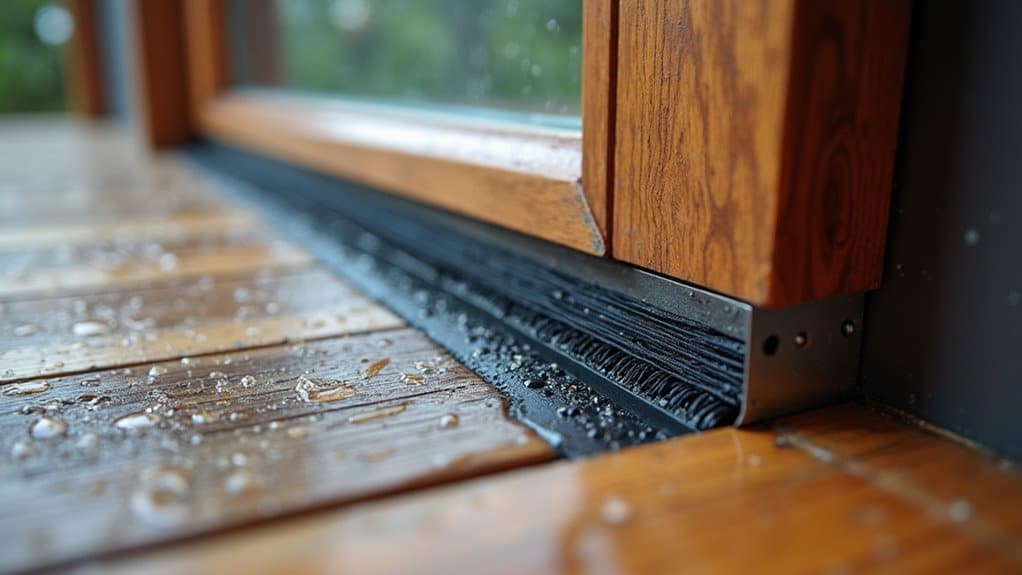
Door sweeps come in several configurations, aluminum or stainless steel frames fitted with plastic, vinyl, sponge, or felt bristles; vinyl sweeps with metal or plastic carriers; drive-on sweeps with barbs that insert into underside slots; wrap-around sweeps that adjust against the sill; and staple-on sweeps secured with silicone and staples.
Proper installation techniques begin with measuring door width accurately, then cutting aluminum models with a hacksaw. Close the door, position the sweep so the vinyl seal lightly touches the threshold, overlapping the sill by 1/8 inch. Drill 1/8-inch pilot holes from center outward, then secure with 1/2-inch flat-head screws. Sweep height adjustment is critical, test the door several times, raising or lowering the sweep until it seals completely without restricting movement. Expect roughly five years of reliable performance. Before beginning installation, clean off any old adhesive and remove existing fasteners from the door bottom using a sponge and rags along with an ammonia or adhesive remover to ensure a secure, lasting bond.
Caulk the Frame to Seal Every Remaining Gap
Once your door sweep is secured and sealing the bottom gap, turn your attention to the frame itself, gaps between the frame and exterior wall are just as vulnerable to drafts, moisture, and pests. Verify proper surface preparation first: remove all old caulk, wipe surfaces with a damp rag, and confirm dryness before applying anything. Evaluate caulk quality carefully, choose a siliconized latex or 100% weatherproof sealant rated for exterior doors that remains flexible through temperature changes. Cut your caulk tip at a 45-degree angle, creating roughly a 3/16-inch opening, then pull the gun steadily toward yourself to lay a continuous, smooth bead. Tool it immediately with a finger or popsicle stick, wipe excess with a damp cloth, and allow full overnight cure before rain exposure.
Add Extra Weatherstripping Protection in High-Wind or Coastal Climates
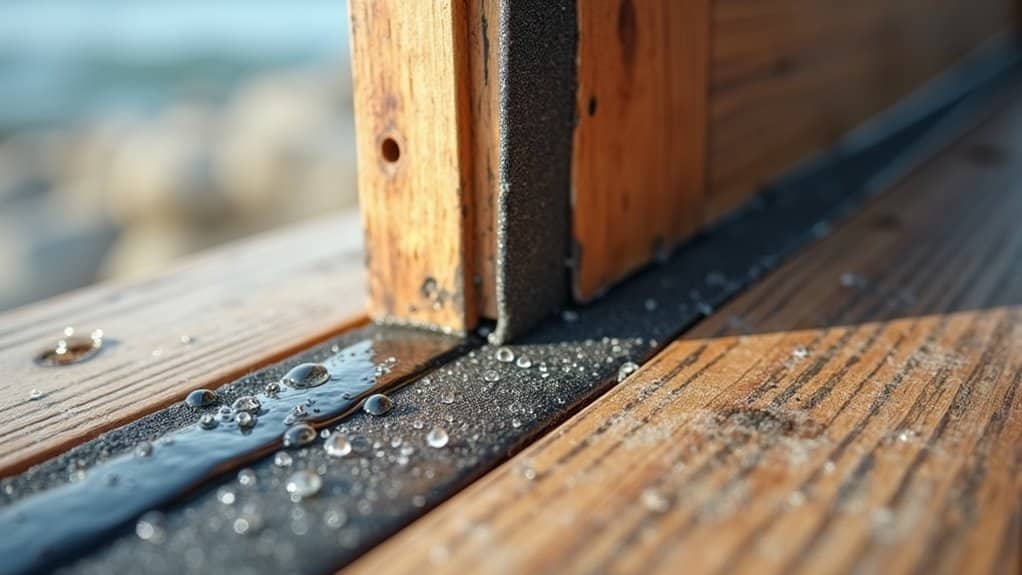
Coastal and high-wind environments demand weatherstripping upgrades that standard interior installations simply can’t match. Install vinyl weatherstripping on exterior doors to resist salt air and moisture absorption while maintaining flexibility in mild coastal climates. Add drip-edge shoes to deflect wind-driven rain before it seeps under your threshold, using elongated mounting slots for even compression. Apply rubber or vinyl bulb seals along the door frame to compress firmly against misaligned frames and prevent rattling during strong gusts. For steel doors, magnetic weatherstripping delivers consistent airtight pressure without compression fatigue. Pair these components with brush door sweeps to block debris and allow ventilation across uneven thresholds. Routinely monitor weatherstripping integrity after severe storms, and replace weatherstripping as needed to maintain a reliable barrier against harsh coastal conditions.
Frequently Asked Questions
How Often Should I Replace My Entire Exterior Door?
You should replace your exterior door every 20-40 years, depending on material and climate. Follow a regular maintenance schedule to maximize lifespan, wood needs recoating every 6-12 months, while fiberglass requires minimal care. Schedule a professional inspection frequency of every few years to catch seal failures, drafts, or structural damage early. If your door’s over 15-20 years old and showing energy loss, it’s time to replace it.
Can Weather Damage to Doors Affect My Home Insurance Premiums?
Yes, weather damage to your doors can affect your premiums. Insurers assess door maintenance requirements when evaluating your home’s vulnerability to wind, hail, and storm risks. Neglected or deteriorating doors signal higher risk, triggering potential insurance rate impacts through stricter underwriting or elevated premiums. You’ll reduce these risks by maintaining weatherstripping, reinforcing frames, and promptly repairing damage. Demonstrating proactive upkeep helps you avoid coverage limitations and keeps your rates more manageable.
What Interior Signs Indicate My Exterior Door Is Failing?
You’ll notice several interior signs that your exterior door is failing. Watch for drafts near the floor, visible light under a closed door, and sticking hinges that indicate frame shifts or hardware deterioration. Irregular gaps around the door reveal weatherstripping failure and structural changes from moisture exposure. Check for soft, spongy spots in wooden frames, mold growth, and doors requiring excessive force to close, all signaling serious deterioration that demands immediate professional evaluation.
Does Door Color or Finish Affect Its Resistance to Weather?
Yes, your door’s color and finish directly impact its weather resistance. Lighter shades reflect heat, reducing thermal stress on your door material composition, while dark tones accelerate finish degradation by absorbing more heat. You’ll also want to prioritize paint or stain quality, factory-applied coatings with UV inhibitors prevent chalking, fading, and protective layer breakdown. High-quality finishes backed by manufacturer warranties considerably extend your door’s longevity against relentless UV radiation and harsh weather exposure.
How Do Extreme Temperature Changes Cause Door Warping Over Time?
Extreme temperature changes warp your door by forcing its door material composition to expand and contract repeatedly. Heat’s temperature impact on door structure varies by material, wood absorbs moisture unevenly, metal expands thermally against frames, and vinyl loses structural integrity under heat buildup. Each expansion-contraction cycle builds internal tension, twisting your door permanently over time. South-facing doors face maximum stress, while insulated cores distribute heat unevenly, accelerating bowing beyond what surface treatments can counteract.