

You can protect your doors from dog scratching by installing physical barriers like aluminum scratch plates or plastic door shields, which take the brunt of your dog’s claws. Pair these with positive reinforcement training and scent-based deterrents to address the behavior at its source. Consistent daily routines also reduce boredom-driven scratching. From choosing the most durable materials to repairing existing damage, there’s a lot more you can do to keep your doors looking their best.
Why Dogs Scratch Doors and What It’s Telling You
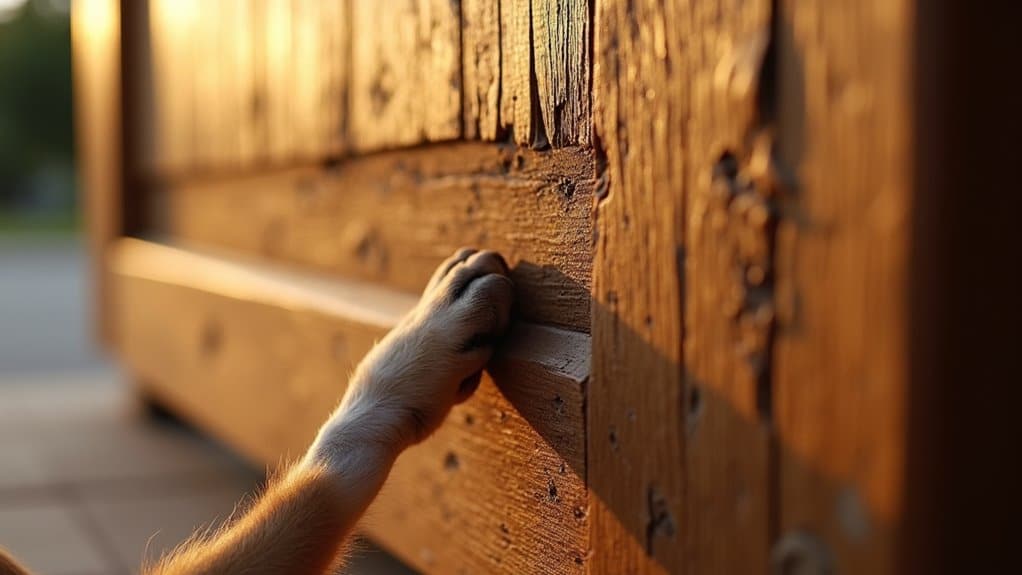
Before you can stop your dog from scratching doors, you need to understand why they’re doing it. This behavior stems from several underlying emotional needs and natural instincts worth analyzing carefully.
Your dog might be seeking attention, knowing that any response, even scolding, reinforces the behavior. They could be bored, releasing excess energy through scratching when they’re under-stimulated. Separation anxiety drives some dogs to scratch frantically near exits when you’re away, while territorial instincts push others to mark boundaries using scent glands in their paws.
Sometimes it’s simply habit, your dog learned that scratching gets results, so they keep doing it. Identifying your dog’s specific trigger is the critical first step toward implementing solutions that actually work. In some cases, what appears to be a habit can evolve into a compulsive behavior that requires more structured intervention to break effectively.
Door Scratch Shields and Physical Barriers That Actually Work
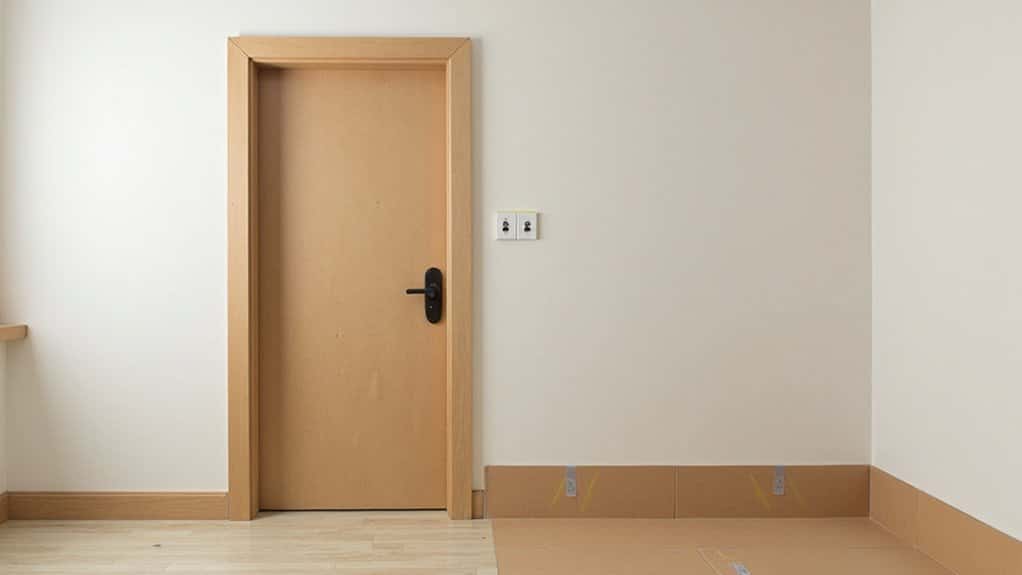
When your dog won’t stop scratching, the right physical barrier turns that destructive habit into a non-issue. You’ve got three solid options to evaluate: polycarbonate shields, aluminum scratch plates, and Clawguard protectors, each designed for different needs and door types. Choosing the best fit comes down to your door’s material, your dog’s size and scratch intensity, and how permanently you want the solution installed. Options like the Protecto Dog Door Scratch Protector install easily with hook and loop fasteners, requiring no glue or mess while still delivering durable, lasting protection.
Types of Door Shields
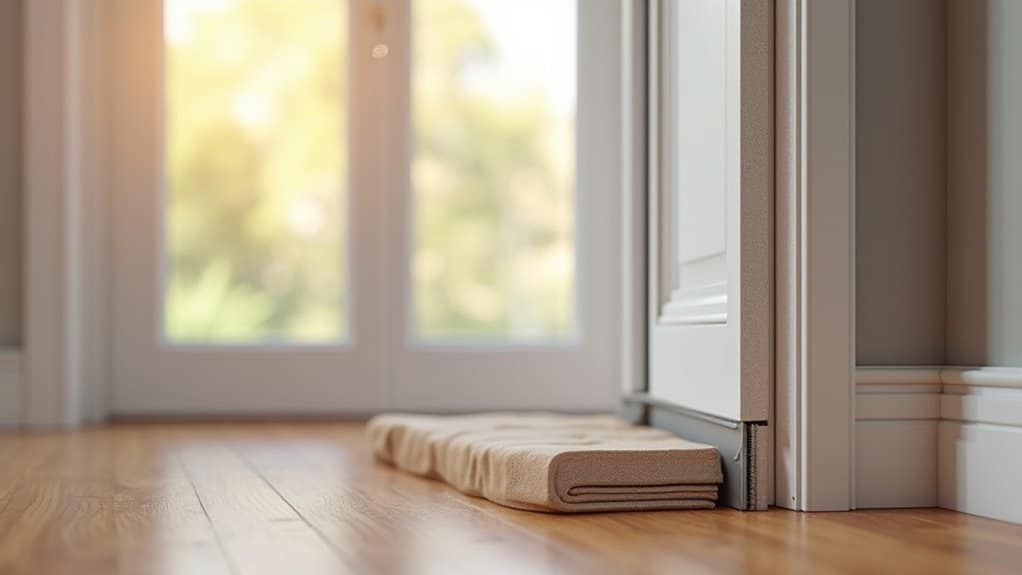
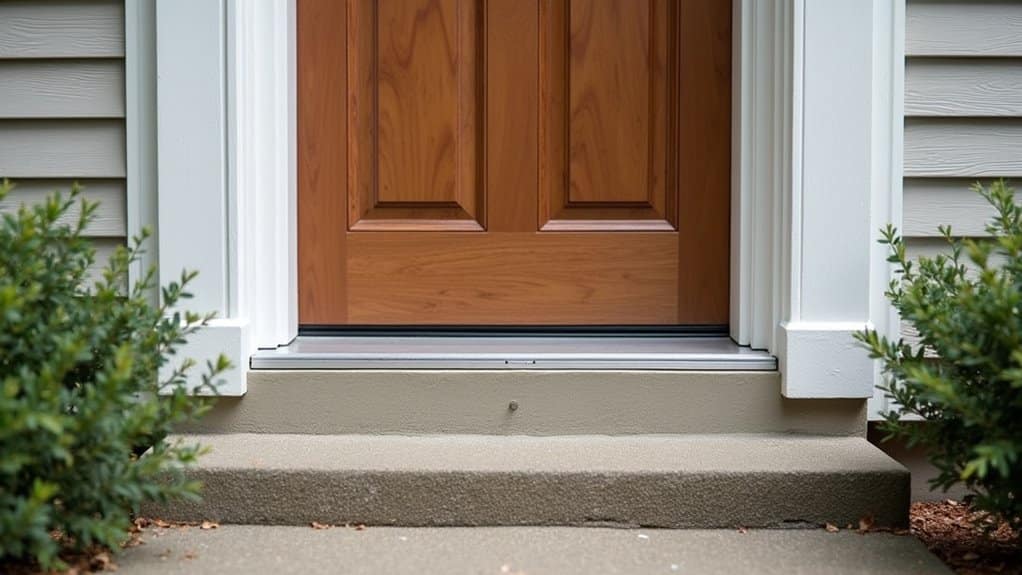
There are five main types of door shields worth knowing about, and each one takes a different approach to keeping your doors scratch-free. Aluminum plates use long lasting adhesives and install in under 60 seconds, offering stylish door designs in four finishes. Plastic scratch guards are cheaper but crack, warp, and peel over time, making them unreliable. Clawguard door shields hang directly from your door knob, letting you trim them for a custom fit. Protective coatings and films apply directly to existing surfaces, creating scratch-resistant layers that work on glass, metal, and painted doors. High-quality polyurethane or acrylic finishes provide a tough, scratch-resistant layer that shields your existing door surface from ongoing pet wear. Finally, textured and specialty surfaces like fiberglass or metal kick plates physically mask or absorb damage. Each option targets pet scratches differently, so your choice depends on your door type and budget.
Installing Physical Barriers
Knowing which door shield fits your situation is only half the battle, installing it correctly is what actually keeps your doors protected. Surface prep is non-negotiable for maintaining adhesive integrity. Clean and dry the door completely before applying any tape-based or vinyl guard, since dirt destroys adhesion fast.
For vinyl shields, wet the surface with a soap-water mix, apply from bottom to top, then flatten outward from center to push out air and water. For clip-and-strap barriers, insert clips evenly across the top frame slots, then tension the elastic straps underneath the door panel. Mitigating installation mistakes means positioning adhesive guards precisely before pressing, they set quickly and don’t forgive errors. Follow each method’s sequence carefully, and your protection will hold.
Best Scratch-Resistant Materials
Once you’ve got your barriers installed, the material they’re made from determines how long they’ll actually last. Not all scratch-resistant materials perform equally, so choosing correctly saves you money and frustration.
Here’s what actually holds up:
- Aluminum scratch plates, Anodized aluminum resists scratches, rust, and staining without warping or fading, outperforming plastic in every durability category.
- Fiberglass doors, Naturally scratch-resistant surfaces handle daily pet activity better than wood, especially models with additional protective coatings.
- Steel door durability, Steel delivers maximum mechanical protection when paired with a proper scratch-resistant coating, preventing surface damage even under aggressive pet behavior.
Aluminum remains the top choice overall since it’s recyclable, artisan-crafted, and built to withstand years of daily punishment without losing its finish.
Train Your Dog to Stop Scratching Doors
Training your dog to stop scratching doors requires a consistent, multi-pronged approach that combines positive reinforcement, firm corrections, and environmental adjustments. Start with positive reinforcement schedules, reward calm sitting before you open the door and ignore scratching completely until the behavior pauses. Require a “sit” before every door opening, closing it immediately if your dog disobeys.
For polite deterrence methods, firmly say “NO” when you catch scratching in the act, then follow with a command and reward. Apply pet-safe scent deterrents near the door base and hang a dog bell as a scratching alternative. Practice “wait” and “stay” daily for 10 minutes. Over two weeks, gradually reduce treat frequency as behavior improves, and schedule periodic refreshers to prevent habit resurgence.
Daily Habits That Stop Dogs From Scratching Out of Boredom
Building a structured daily routine is your most powerful tool against boredom-driven scratching, so commit to consistent walks, play sessions, and outings at the same times each day. You’ll burn off excess energy through vigorous exercise while keeping your dog mentally engaged with puzzle feeders, interactive toys, and training activities. Stick to a predictable schedule, and you’ll eliminate the restless energy that drives your dog to scratch doors in the first place.
Structured Daily Exercise Routines
Consistency is the foundation of any effective exercise routine that keeps your dog calm and away from your doors. Structured exercise routines eliminate the pent-up energy that drives destructive scratching. Daily activity schedules should include:
- Morning walks with occasional tennis ball throwing to trigger short sprints and maximize energy burn
- 10-minute training sessions practiced daily for two weeks to reinforce behavioral routines
- Weekly longer walks alongside regular ones to fully tire your dog out
Frequent, predictable exercise lowers anxiety and reduces scratching urges considerably. When your dog knows activity is coming, restlessness decreases. Combine these walks with consistent feeding and potty times to create a complete daily structure that removes every reason your dog has to scratch your doors.
Mental Stimulation Through Play
When your dog scratches doors out of boredom, mental stimulation is often the missing piece. Cognitive enrichment activities redirect that restless energy into productive mental work. Introduce puzzle feeders that require your dog to manipulate components before accessing food, this alone can reduce problem behaviors by 75% in high-energy breeds.
Rotate scent games throughout the week by hiding treats around your home, engaging your dog’s natural hunting instincts. Short daily training sessions of 15, 30 minutes build problem-solving skills while strengthening your bond. Even touchscreen cognitive tasks show remarkable results in maintaining engagement and motivation.
Mental exercises tire dogs more effectively than physical activity alone, eliminating the destructive hyperactivity that leads to door scratching. Consistent daily implementation keeps your dog mentally satisfied and your doors scratch-free.
Consistent Schedules Reduce Boredom
Daily structure is one of the most powerful tools you have for stopping door-scratching before it starts. Dogs left alone over four hours daily show increased boredom and anxiety, which often leads straight to your doors. Consistent habits create predictability, and predictability produces reduced anxiety.
Build your dog’s day around three non-negotiables:
- Fixed mealtimes, scheduled feeding eliminates food anxiety and regulates energy levels throughout the day.
- Structured walks, morning walks set a calm tone; evening activity burns restless energy before bed.
- Routine engagement, scheduled play and training sessions prevent the inactivity that drives destructive behavior.
Use apps or digital calendars to lock in recurring alarms. Consistency across your household eliminates confusion and keeps scratching impulses in check.
Sprays, Nail Caps, and Coatings That Discourage Scratching
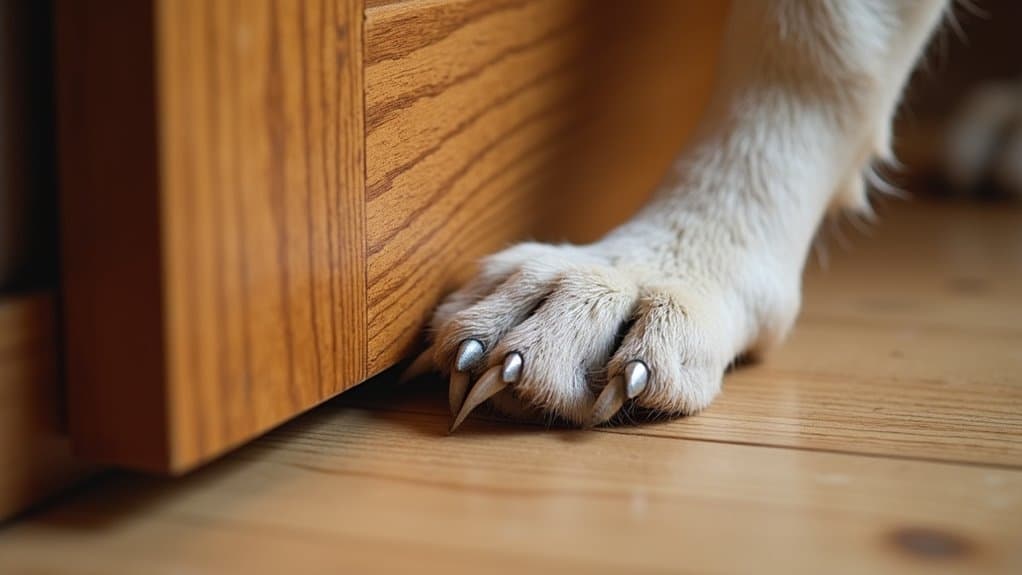
Scent-based deterrent sprays work by exploiting your dog’s keen sense of smell, creating a negative association with treated areas like doors. Apply them around perimeters and high-risk spots, combining them with positive reinforcement for long-term behavior correction.
For deterrent alternatives, taste-based sprays use bitter ingredients like denatonium benzoate to discourage chewing and scratching. Spray 6-12 inches away, cover the entire door surface, and reapply after cleaning or weather exposure.
Noise-activated devices release a spray and loud sound when triggered, startling stubborn pets into avoiding treated areas entirely.
Nail caps glued over trimmed nails prevent surface damage and last 4-6 weeks. Pair them with protective coatings or velcro strips on door edges for extensive, lasting scratch prevention.
How to Fix Door Scratches Your Dog Has Already Made
Even the most diligent prevention efforts can’t always stop a determined dog, so knowing how to repair existing scratch damage is just as important as preventing new damage. Follow these steps to restore your door effectively:
- Sand the damaged area using 150-grit sandpaper with proper door sanding techniques, always working along the wood grain for a smooth surface.
- Apply wood filler in thin layers, smoothing each coat with a putty knife and allowing complete drying between applications.
- Prime and paint after final sanding, using a tack cloth to remove dust before finishing.
These repairs work best on wood doors. Fiberglass or steel doors with severe scratching may require full slab replacement instead.
Frequently Asked Questions
Can Door Scratching Behavior Be Linked to Specific Dog Breeds?
Yes, door scratching behavior can absolutely be linked to specific breeds. Labrador Retrievers top the list at 17.5% for excitable behaviors, while Pit Bulls and German Shepherds follow closely. You’ll notice that high-energy and anxiety-prone breeds display stronger behavioral triggers like scratching near exits. Understanding the underlying causes, whether separation anxiety, territorial instincts, or excess energy, helps you identify your dog’s breed-specific tendencies and implement targeted solutions to protect your doors effectively.
Are There Dog Door Installation Options That Eliminate Scratching Altogether?
Yes, dog door installation can virtually eliminate scratching altogether. When you install a pet door, you’re giving your dog a dedicated access point, so they won’t need to claw at your doors anymore. Choose alternative door designs with magnetic self-closing flaps to prevent gap-related scratching attempts. You’ll also want to apply scratch resistant coatings around the frame perimeter for added protection. Proper positioning and locking safeguard panels reinforce behavioral boundaries, making scratching obsolete.
How Do I Protect Rental Property Doors Without Permanent Modifications?
You can protect your rental doors using non-permanent door guards and door frame protectors that require zero drilling or screws. Install temporary pet doors like Safeguard or DoorAjar, which attach securely to existing frames without causing damage. Sliding glass door inserts fit directly into tracks without tools. When moving out, you’ll remove everything cleanly, keeping your deposit intact. Always pair these solutions with a pet resume to reassure your landlord.
Does Pet Insurance Cover Door Damage Caused by Dogs?
Pet insurance doesn’t cover door damage caused by your dog. It focuses solely on your pet’s veterinary expenses, not property repairs. Your home insurance coverage also typically excludes this damage, classifying it as preventable wear and tear. However, pet liability policies can cover damage your dog causes to *someone else’s* property. To protect yourself financially, consider setting aside a dedicated repair fund specifically for pet-related damage in your rental.
At What Age Should Puppies Begin Learning Not to Scratch Doors?
You should start early socialization training the moment your puppy begins scratching doors, there’s no specific age threshold, but earlier is always better. Puppies learn fastest because they haven’t developed ingrained habits yet. Combine proper crate training with brief, 10-minute daily sessions teaching calm sitting before door access. High-energy breeds especially benefit from immediate intervention. You’ll see quicker compliance by leveraging your puppy’s natural impressionability before scratching becomes a deeply reinforced behavior.