
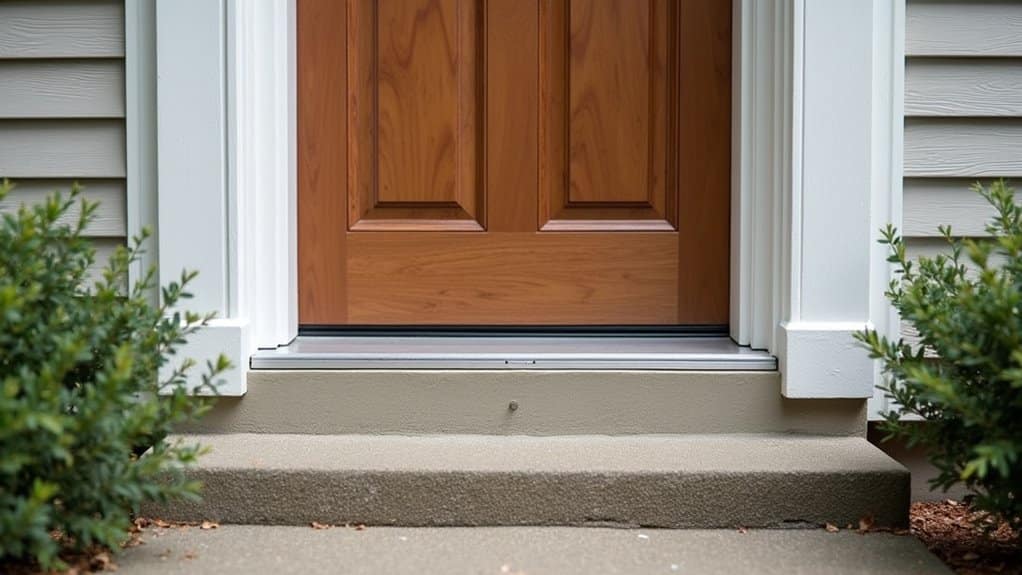
When choosing door and window screens, you’ve got three solid options: fiberglass, polyester, and metal mesh. Fiberglass resists UV damage and corrosion while blocking mosquitoes and flies with its 1×1 mm honeycomb structure. Polyester handles heavy use and harsh weather, withstanding power washing without brittleness. Metal mesh, particularly stainless steel, delivers superior durability in high-traffic areas. Each option maintains strong airflow and visibility while keeping pests out, and there’s more to ponder before making your final choice.
Fiberglass Insect Screen Mesh: The Right Choice for Most Windows
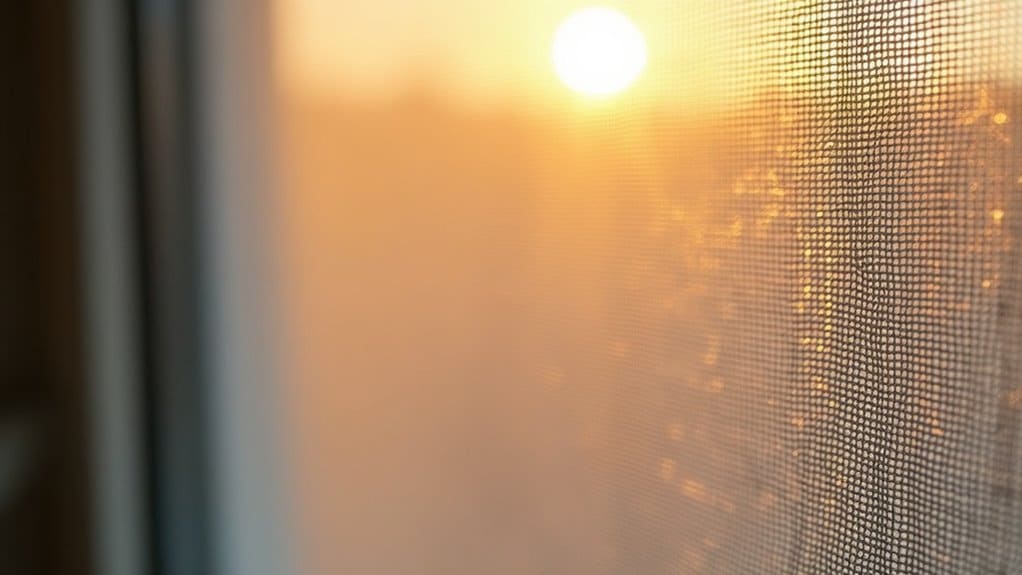
When choosing a screen mesh for most windows, fiberglass is the practical default. Its woven polymer fibers with PVC coating resist corrosion, UV damage, mildew, and extreme temperatures without fading or deforming over time. You get decades of reliable performance with zero painting or sealing required.
The standard 1×1 mm honeycomb structure blocks mosquitoes, flies, and debris while maintaining strong airflow. Thinner fiberglass threads outperform aluminum at equivalent mesh densities, so you’re not sacrificing ventilation for insect protection.
Ease of installation is straightforward since the lightweight, flexible mesh fits universally across window and door frame types. You can also cut it to custom dimensions, giving you decorative customization options that match specific sizing needs. Clean it with soap and water, and it’s ready for continued use. The aluminum profile can be stained in any color according to the RAL catalog for further personalization.
Polyester Insect Screen Mesh for High-Traffic and Weather-Exposed Areas
High-traffic doors and weather-exposed windows demand a screen that fiberglass simply can’t match in raw durability, and polyester mesh delivers exactly that. It’s PVC-coated for UV and weather resistance, withstands pets and children, and offers ease of cleaning through power washing without brittleness.
| Feature | Specification |
|---|---|
| Warp Tensile Strength | 112 lbf |
| Ball Burst Strength | 190 lbs |
| Service Life | Up to 7, 10 years |
| Mesh Options | 16×15 or 18×18 |
| Available Widths | 0.8, 1.8 m |
Versatile installation options accommodate invisible mosquito screens, patio enclosures, and outdoor tents. Biocide treatment repels insects while blocking mold growth. You get reliable airflow, strong visibility, and a screen built to handle extreme conditions without frequent replacement. When burned, polyester screen mesh produces little smoke and minimal plastic odor, making it a safer material choice for family environments.
Metal and High-Performance Insect Screen Mesh for Maximum Durability
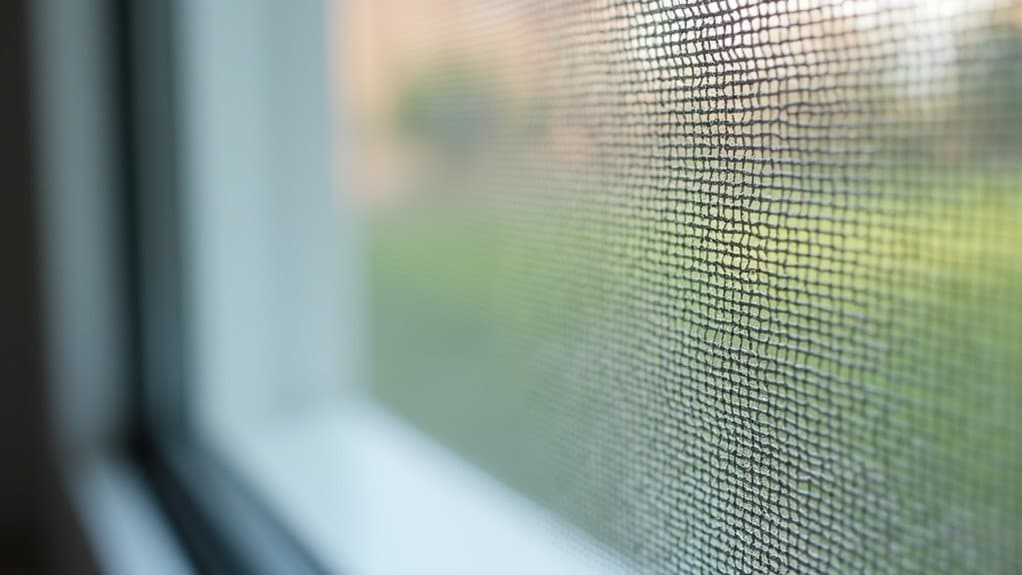
Polyester and fiberglass handle most residential applications well, but if you’re dealing with coastal salt air, aggressive weather, or environments where screens take a serious beating, metal mesh is the next level up. Stainless steel AISI 304 or SS316 alloys deliver corrosion resistant materials that won’t rust, sag, or degrade even in saltwater-exposed climates. You’ll also get superior abrasion resistance, making stainless steel the right call for high-traffic doors and windows that contact hard surfaces repeatedly. An 18×14 mesh configuration provides 68% open area, keeping airflow strong while blocking flies, wasps, and mosquitoes. Step up to 20×20 mesh and you’ll stop no-see-ums and sand flies too. Stainless steel costs more than aluminum, but it outlasts every alternative in demanding conditions. These rolls are priced by the meter and cut from a standard 1.22-meter-wide roll, making it straightforward to order exactly the amount your project requires without waste.
Frequently Asked Questions
How Do Retractable Screens Differ From Standard Flat Window Screens?
Retractable screens use a roller tube retraction mechanism that lets you pull them open or closed as needed, while standard flat screens stay permanently fixed in your window frame. You’ll find that retractable screens feature more flexible screen construction materials that smoothly glide along rails, retracting fully into a housing unit when not needed. They cost up to five times more, but they’ll give you unobstructed views and better ventilation control year-round.
Can Window Screens Help Reduce Indoor Allergens Like Pollen and Dust?
Yes, window screens can enormously reduce indoor allergens like pollen and dust through their air filtration capabilities. If you choose pollen-resistant screens with a 30×30 strand weave or higher, you’ll block 80-100% of pollen particles. Solar screens also filter dust and pet dander while maintaining airflow. For decreased allergen exposure, pair these screens with a HEPA purifier, which captures 99.9% of remaining indoor pollen particles.
What Screen Types Work Best for Blocking Tiny Sandflies and Gnats?
For blocking tiny sandflies and gnats, you’ll want screens featuring tight weave mesh designs like No-See-Um or stainless steel options. Fiberglass screen panels with 20×20 mesh or higher effectively stop these minuscule insects while maintaining airflow. You can also consider polyester screens for added UV resistance or magnetic screens for temporary installation. Each option delivers a fine enough barrier to prevent even the smallest flying pests from entering.
Do Solar Screens Provide Both Sun Protection and Effective Pest Control?
Yes, solar screens deliver impressive dual-purpose solar screen performance by blocking up to 90% of heat and filtering UV rays while simultaneously deterring mosquitoes, gnats, and other pests. You’ll also gain daytime privacy and reduced glare. When planning solar screen installation requirements, guarantee you’re selecting tightly woven, darker mesh fabrics rated for your climate. This single solution eliminates your need for separate pest control systems while cutting cooling costs considerably.
How Do Pleated Screens Maintain Ventilation While Staying Nearly Invisible?
Pleated screens maintain ventilation through their pleated screen material design, which uses ultra-thin fiberglass or polyester fibers woven into a fine, open mesh. You’ll benefit from unrestricted airflow since there’s no heavy frame blocking air circulation. The retractable structure folds away neatly when unused, and the pleated screen see-through clarity lets natural light pass freely while keeping pests out, making it nearly invisible while actively improving your indoor air quality.