
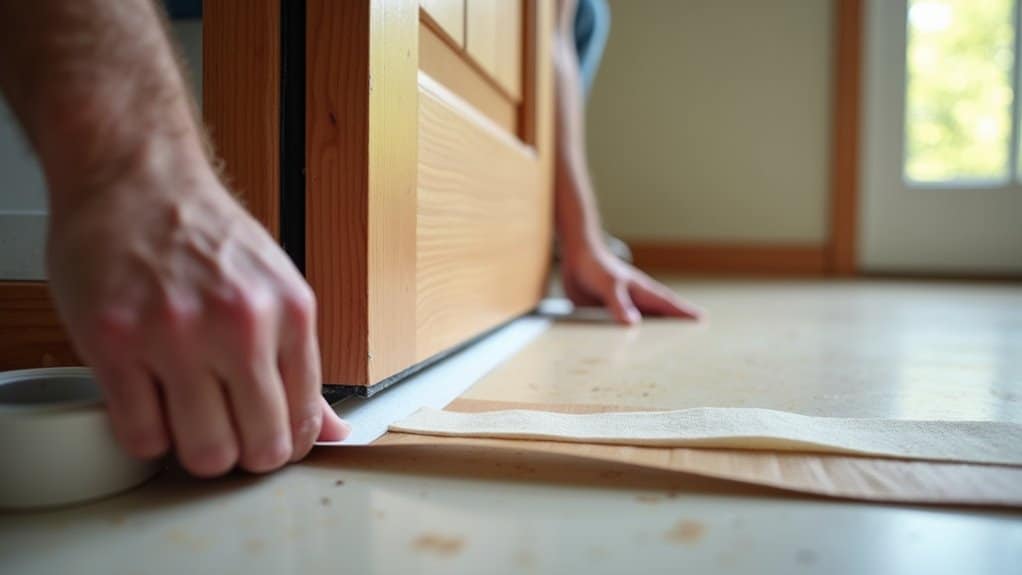
You’ll optimize weather protection and home safety by selecting best door frames designs with high-performance materials, fiberglass, galvanized steel, or composite exteriors, combined with integrated triple-seal systems and pressure-responsive gaskets. Verify multi-point latch mechanisms that distribute stress across reinforced frames, and confirm the design meets ANSI/SDI A250.13 and EN 12210/EN 12211 standards for your geographic location’s wind load requirements. Raised, sloped thresholds with integrated drainage channels prevent water infiltration. Understanding how these components work together reveals the full scope of protection available.
Understanding Door Frame Materials and Their Climate Performance
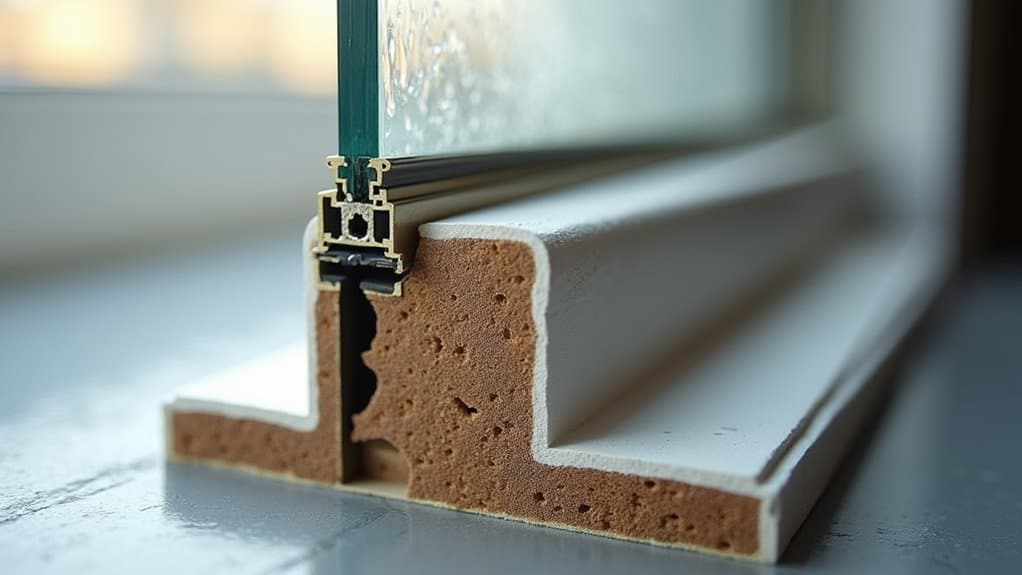
How do you select a door frame that performs reliably across your region’s specific climate demands? You’ll need to evaluate thermal conductivity ratings and moisture absorption profiles for each material option.
Wood frames excel in cold climates with superior R-values but require consistent maintenance to prevent rot and warping in humid environments. Steel insulated frames offer R-5 to R-6 ratings and resist corrosion when galvanized, ideal for temperature extremes and coastal areas. Fiberglass delivers the highest insulation (R-15 to R-20+) with exceptional moisture resistance and minimal maintenance across all climate zones. Vinyl provides moisture protection and low maintenance, though expansion under extreme temperatures may compromise seals. Aluminum requires thermal breaks to prevent heat transfer, suitable only for mild climates. Steel frames undergo treatments like galvanizing or powder coating for enhanced corrosion resistance in challenging weather conditions. Composite door frames blend wood fibers and resin to achieve a wood-like appearance with improved durability and low maintenance for exterior applications across varying climates. Insulated aluminum and steel door frames provide better thermal resistance than wood when properly designed with thermal breaks and weatherstripping.
Your selection depends on balancing thermal performance, durability standards, and maintenance capacity within your specific climate zone.
Essential Design Features for Optimal Weather Resistance
You’ll find that integrated sealing systems, combining continuous weatherstripping, gaskets, and multi-layer barriers, are critical to preventing drafts, moisture infiltration, and air leaks around your door frame perimeter. Your threshold design must incorporate sloped surfaces and engineered drainage to redirect water away from the door base, preventing pooling and seepage that compromise structural integrity. Multi-point latch systems work in conjunction with reinforced frames and heavy-duty hinges to maintain consistent pressure across all sealing surfaces, ensuring your door performs reliably under wind-driven rain and extreme weather conditions. Thick framing provides essential toughness and strength to protect your entry doors against harsh weather while minimizing denting and corrosion. Materials like aluminium frames are particularly effective as they last for extended periods even in harsh coastal environments and extreme weather conditions while remaining easier to maintain than alternatives. Composite door frames with completely composite exteriors resist humidity and moisture to help eliminate the risk of swelling, cracking, mold, and rot while protecting against wood-ingesting insects.
Integrated Sealing Systems Matter
When selecting a door frame, the sealing system’s design fundamentally determines its weather resistance performance and longevity. You’ll find that pressure-responsive systems automatically adapt to environmental changes, maintaining ideal seals regardless of weather fluctuations. Inflatable gasket technologies excel at irregular surface sealing, conforming to door imperfections that compromise standard gaskets.
Advanced triple-seal systems provide layered defense against air and water infiltration, achieving airtightness ratings comparable to fixed windows. You benefit from sensor-based monitoring integration, which delivers real-time seal effectiveness data, enhancing both security and reliability. The continuous center gasket design remains in flexible contact under all weather conditions, protecting hardware from corrosive exterior elements. These systems typically require maintenance intervals of 6 to 18 months to ensure sustained performance and barrier integrity.
Frame construction matters just as much. You should prioritize designs featuring fusion-welded joints and integrated seal channels that prevent displacement. Steel door frames filled with foam insulation provide superior thermal performance and structural integrity. Hybrid frames combining galvanized steel with composite materials reinforce structural durability while supporting seamless sealing system integration, ultimately reducing maintenance costs and extending component lifespan.
Threshold Design Prevents Water
While advanced sealing systems protect the door frame itself, the threshold, the horizontal component at the base of the doorway, serves as your initial line of defense against water infiltration. You’ll find that proper threshold design addresses critical moisture management considerations and thermal expansion characteristics.
Your threshold strategy should include:
- Raised or sloped profiles that actively redirect water away from the doorway, preventing pooling during heavy rainfall and reducing water ingress risk.
- Integrated drainage channels and damp proof membranes positioned beneath or flush with the threshold, extending at least 150 mm above ground to block surface water entry.
- Marine-grade materials like stainless steel or corrosion-resistant composites that withstand substrate movement, thermal expansion, and chemical exposure without premature failure.
These elements combine to create thorough weather resistance. For homes in areas with severe weather conditions, raised thresholds provide superior protection against wind and dirt infiltration. Quality weather stripping quality around the threshold perimeter enhances the seal and prevents moisture from bypassing the threshold entirely. A breach of the sub-sill can lead to water penetration causing structural damage and compromising the long-term integrity of your home’s foundation and surrounding walls.
Multi-Point Latch Performance
Precision in locking mechanisms directly determines how effectively your door resists both weather infiltration and forced entry. You’ll benefit from multi-point latches that engage three contact points, top, center, and bottom, distributing stress across your frame and eliminating vulnerable single-point weaknesses. The central handle actuates vertical rods that simultaneously engage all locking points, creating a unified seal. You should prioritize tamper resistance features like hardened, anti-saw deadbolts and anti-jemmy components that prevent prying attacks. Adjustable strike plates allow you to fine-tune alignment across varying door thicknesses and site conditions, ensuring consistent engagement. Quality systems incorporate heavy-gauge steel or brass components engineered to withstand frequent cycling and extreme weather exposure. Multi-point locking systems provide enhanced security by locking at multiple points along the frame, making them significantly more resistant to forced entry attempts than single-point alternatives. ANSI-certified locks provide verification of quality standards and durability for your door frame system. Multi-point latches comply with NEMA standards and are commonly integrated into electronic enclosures and semi-trailer doors for their proven strength. This integrated approach delivers superior wind-load protection while maintaining structural integrity against physical attack.
Meeting Industry Standards and Safety Certifications
You must verify that your door frame design meets specific wind load testing standards and design pressure ratings classifications to guarantee structural compliance with building codes like the IBC. When you select a frame, you’ll need to confirm it’s been tested according to ASTM standards for positive and negative pressure differentials, which directly impact performance in high-wind regions. Your frame’s pressure rating classification, typically expressed in pounds per square foot (psf), must align with your building’s geographic location and exposure category to certify both safety and regulatory approval.
Wind Load Testing Standards
Several internationally recognized standards govern how door frames must perform under severe wind conditions, guaranteeing they’re tested consistently and certified for safety.
When you’re evaluating door frames, you’ll encounter three primary standards:
- ANSI/SDI A250.13 establishes design load ratings and impact testing procedures for exterior swinging doors, testing frames at their most vulnerable specifications to ascertain real-world applicability.
- EN 12210/EN 12211 classifies European windows and doors into five performance classes based on wind pressure resistance, requiring repeated load cycles and safety testing at 1.5 times design pressure.
- ISO 6612:2023 provides globally comparable testing methods for assembled door sets, emphasizing both serviceability deflection limits and safety margins.
Independent third-party laboratories certify these tests, providing detailed performance documentation that validates your frame’s structural integrity and weather-resistance capabilities.
Design Pressure Ratings Classification
While wind load testing standards establish how door frames must perform under severe conditions, Design Pressure (DP) ratings provide the specific numerical classifications that quantify this performance capability. You’ll encounter DP ratings like DP30, DP47, and DP50, each representing distinct pressure thresholds measured in pounds per square foot (psf).
| DP Classification | Pressure Rating (psf) | Typical Applications |
|---|---|---|
| DP30 | ±30 | Standard residential areas |
| DP47 | ±47 | Moderate wind zones |
| DP50+ | ±50 or higher | Hurricane/severe weather regions |
Your selected door frame must sustain 1.5x its rated DP without permanent damage. Product labeling requirements mandate clear identification of DP performance specifications, including your door’s configuration-specific rating. Regional codes, particularly Florida Building Code, establish minimum DP thresholds you’ll need to verify. Certification documentation confirms compliance with ASTM E330/E330M standards, ensuring your installation meets local regulatory demands and insurance requirements.
Proper Installation Techniques for Long-Lasting Protection
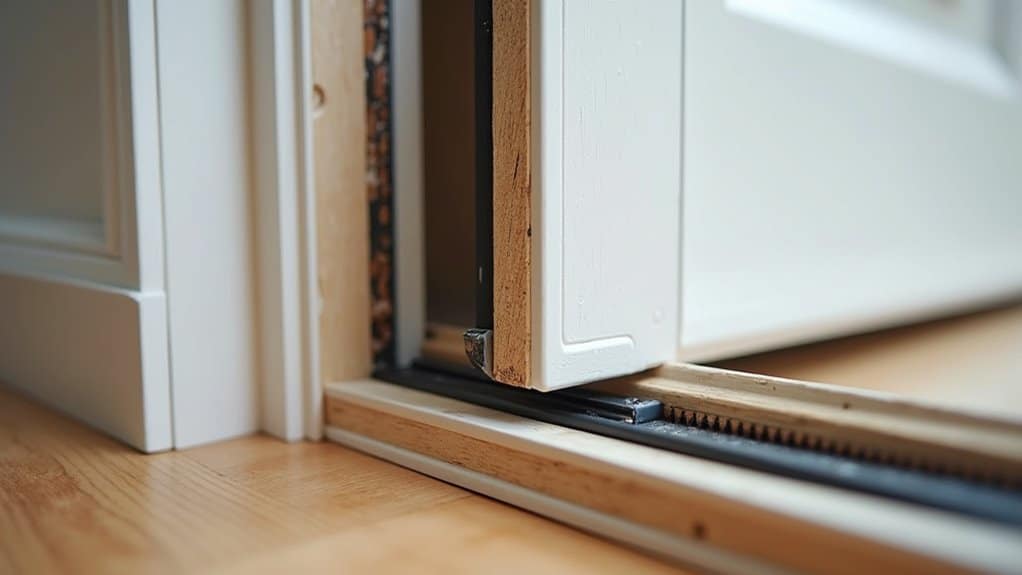
Because improper installation undermines even the highest-quality door frames, mastering fundamental techniques is essential for ensuring long-lasting performance and weatherproofing integrity.
Improper installation undermines quality door frames, master fundamental techniques to ensure lasting performance and weatherproofing integrity.
You’ll achieve accurate installation alignment and proper frame to opening integration through precise measurement and preparation. Your door frame must sit level and square within the opening to prevent binding, drafts, and moisture infiltration.
- Shimming and Securing: Position non-compressible shims between frame and opening, checking level repeatedly. Secure with exterior-grade screws spaced every 30 centimeters for consistent support without settling or warping.
- Weatherproofing Sealing: Apply silicone caulk around the entire outer perimeter and seal where the sill meets the jamb. Use flashing tape at frame edges to prevent water damage.
- Final Testing: Open and close the door multiple times, verifying proper latch alignment and confirming no binding or excessive gaps exist at the frame perimeter.
Evaluating Weatherstripping and Sealing Systems
Once you’ve installed your door frame with precision, you’ll need to select and evaluate weatherstripping and sealing systems that match your specific climate, door usage patterns, and performance requirements. Silicone bulb and triple-fin gaskets reduce air leakage by up to 60%, ideal for extreme temperatures. Aluminum shoes with vinyl inserts excel in coastal regions, blocking rainwater intrusion effectively. V-strips cut draft levels by 50% when properly installed. Compare comparative costs against longevity: silicone lasts 10+ years, while foam degrades within 1, 3 years. Consider environmental impact, rubber and vinyl systems withstand heavy use without frequent replacement, reducing waste. For high-traffic entries, rubber’s sustained compression and durability outweigh initial expense. Assess gap size, door material, and climate exposure to optimize both performance and value.
Routine Maintenance Strategies to Preserve Frame Integrity
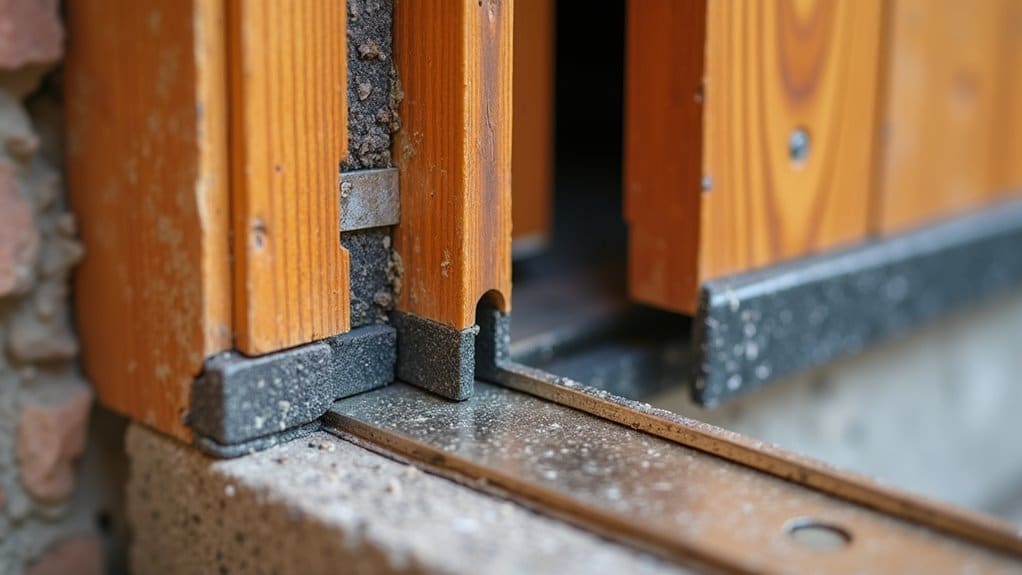
Just as weatherstripping systems degrade without proper care, your door frame’s structural integrity and operational performance depend on consistent, proactive maintenance protocols.
Establish a structured cleaning schedule every three to six months using mild soap and water, followed by complete drying to prevent rust and corrosion. Conduct seasonal inspections to identify cracks, warping, misalignment, or hardware deterioration before issues escalate.
- Apply silicone-based lubricant to hinges, locks, and closers while tightening loose screws on strike plates and hinges to reinforce stability.
- Maintain protective coatings through prompt touch-ups on scratched areas and periodic application of wax or oil-based products for wood frames.
- Adapt maintenance routines to your local climate, adjusting lubrication frequency and weather protection measures seasonally to optimize frame longevity.
Frequently Asked Questions
How Often Should Door Frame Hardware Be Replaced or Serviced for Optimal Performance?
You should conduct periodic maintenance checks every 6-12 months on your door frame hardware to guarantee excellent performance. For security components, inspect twice yearly and lubricate hinges and locking mechanisms during each visit. You’ll need to replace handles and locks in high-traffic areas every 5-7 years, while hinges typically last 10-15 years. Your weatherstripping requires replacement every 2-5 years depending on wear. You must assess hardware immediately if you notice decreased functionality or security compromises.
What Are the Cost Differences Between Various Door Frame Materials Over a 20-Year Lifespan?
You’ll find significant material maintenance costs differences across frame types over twenty years. Wood frames demand routine sealing ($200, $500), risking premature replacement in humid climates. Steel requires professional repainting every 5, 7 years ($300, $600 cycles). Conversely, fiberglass and aluminum/PVC frames offer superior frame durability comparisons with minimal upkeep. While fiberglass carries higher initial investment ($250, $500), you’ll recoup costs through negligible maintenance. Aluminum/PVC provides the lowest total expenditure, delivering ideal long-term value and durability performance across your lifespan investment.
Can Existing Door Frames Be Retrofitted With Modern Weatherstripping Without Full Replacement?
Yes, you can retrofit existing frames with modern weatherstripping without full replacement. You’ll find tubular rubber and adhesive foam options work well for updating weatherstripping materials on older frames. Kerf-in types require groove cutting but offer superior durability. Proper surface preparation and accurate gap measurement guarantee ideal performance. Most retrofitting existing frames demands basic tools and patience rather than specialized skills, delivering results comparable to new systems when correctly installed.
How Does Door Frame Orientation or Placement Affect Overall Home Weather Protection Effectiveness?
Your door frame orientation impact directly determines weather protection effectiveness. You’ll optimize defense against wind-driven rain by positioning doors on less-exposed wall orientations away from prevailing winds. You should employ proper door frame installation angles, ensuring plumb and square alignment, to eliminate gaps that compromise seals. You’re strengthening performance by locating entries beneath overhangs or recessed alcoves. You’ll improve long-term durability by aligning openings with terrain drainage high points, preventing moisture pooling at thresholds and maintaining structural integrity.
What Signs Indicate a Door Frame Has Sustained Damage Requiring Professional Repair or Replacement?
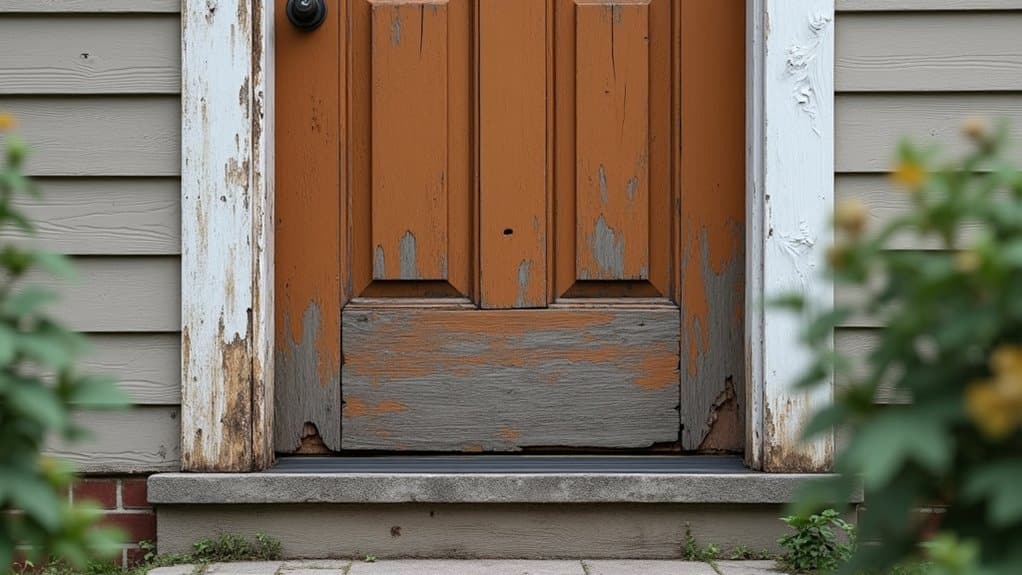
You’ll recognize critical damage when you observe moisture damage indicators like soft wood, discoloration, or peeling paint near the frame base. Structural integrity concerns manifest as difficulty opening doors, visible gaps, or sagging jambs. You should also inspect for rot, mold growth, pest infestation signs, or significant cracks. These conditions require professional evaluation and intervention to prevent further deterioration and guarantee compliance with building codes.