
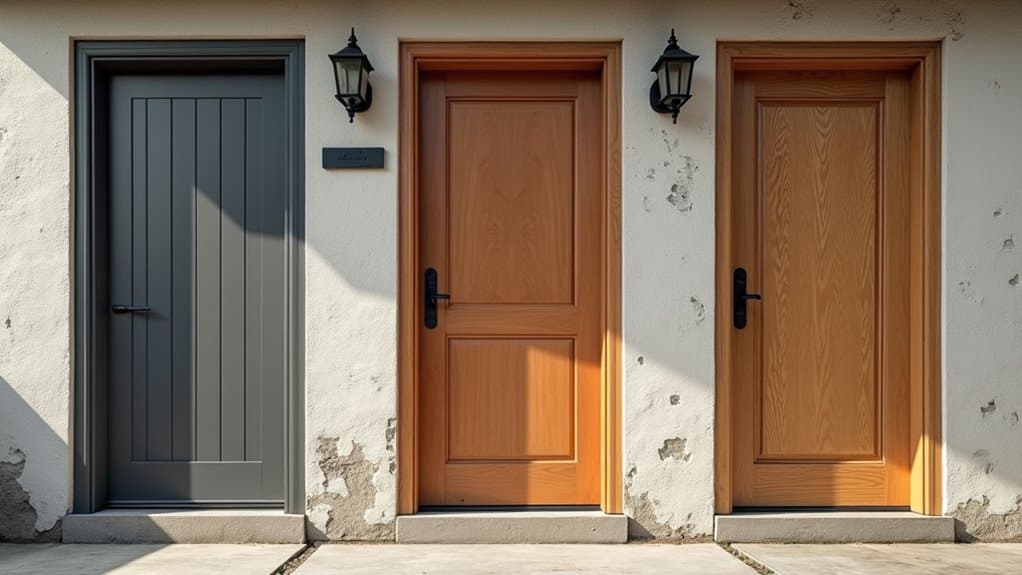
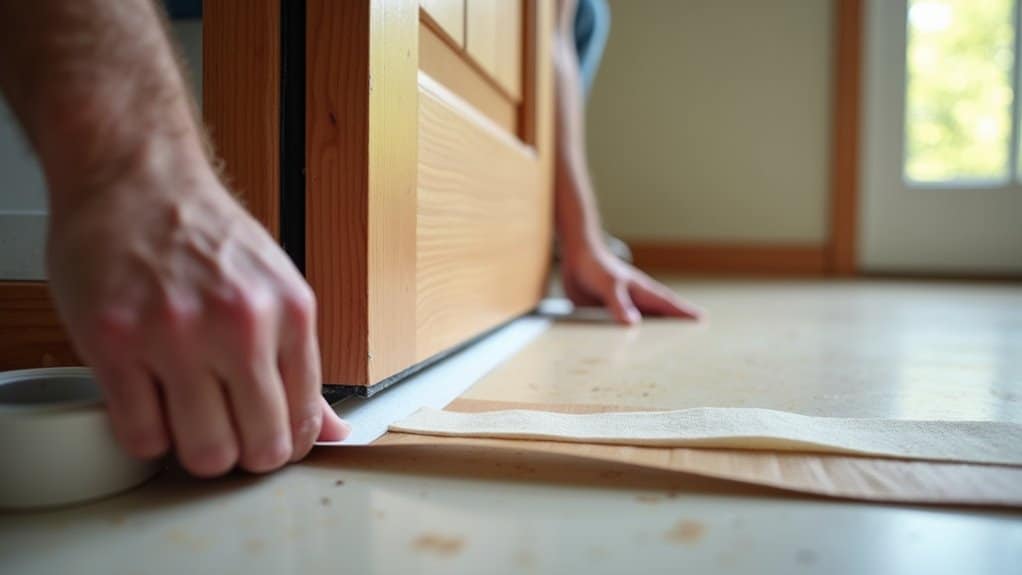
Steel, fiberglass, and wood are the three most common exterior door materials, but they’re not equal in safeguard, durability, or weather resistance. Steel doors withstand up to 1,600 lbs of impact force and offer strong ROI, while fiberglass resists corrosion, warping, and moisture for 50+ years with minimal upkeep. Wood looks premium but demands the most maintenance and performs poorly in harsh climates. Keep going to discover which material best fits your home’s specific needs.
Steel vs. Fiberglass: Which Exterior Door Material Is Right for You?
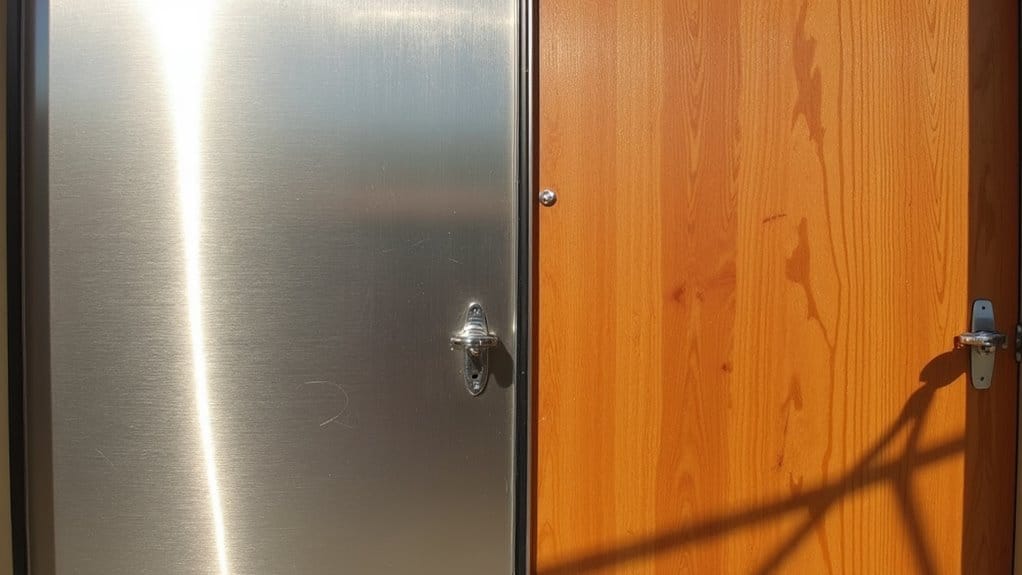
When choosing an exterior door, two materials dominate the market: steel and fiberglass. Each offers distinct advantages depending on your priorities.
Steel delivers superior forced-entry resistance, withstanding up to 1,600 lbs of impact force, making it ideal for high-security applications. It’s also more affordable upfront, providing strong ROI for budget-conscious homeowners. However, its maintenance requirements are demanding, damaged paint exposes steel to rust, requiring regular touch-ups and recoating.
Fiberglass excels in long-term durability, resisting corrosion, warping, and rot without protective coatings. Its aesthetic appeal surpasses steel, offering realistic wood-grain textures and versatile finishes that hold up over time. Though costlier initially, fiberglass minimizes ongoing upkeep, making it the smarter investment for low-maintenance performance. For added peace of mind, pairing either door material with a security service protection layer helps safeguard your home against unauthorized access attempts.
How Steel and Fiberglass Exterior Doors Handle Weather and Moisture
Beyond material strength and cost, how a door handles weather and moisture determines its real-world durability. Fiberglass lifespan extends considerably because it resists warping, cracking, and moisture absorption without requiring special maintenance. Steel aesthetic appeal diminishes quickly when protective coatings scratch, exposing the core to rust and corrosion.
Fiberglass resists warping and moisture without special maintenance, while steel corrodes once its protective coating scratches.
Consider these critical performance differences:
- Fiberglass excels in direct rain, coastal humidity, and freeze-thaw cycles without swelling or corroding.
- Steel performs best under covered entries where moisture exposure stays minimal and coatings remain intact.
- Fiberglass provides superior thermal sealing at 0.75″ thickness, maintaining indoor temperatures across extreme climate swings.
You’ll protect your investment longer by matching your door material to your specific climate conditions. For dealers weighing options across different projects, fiberglass also stands out as the stronger choice for long-term performance compared to steel.
Which Exterior Door Material Lasts Longer and Costs Less Over Time?
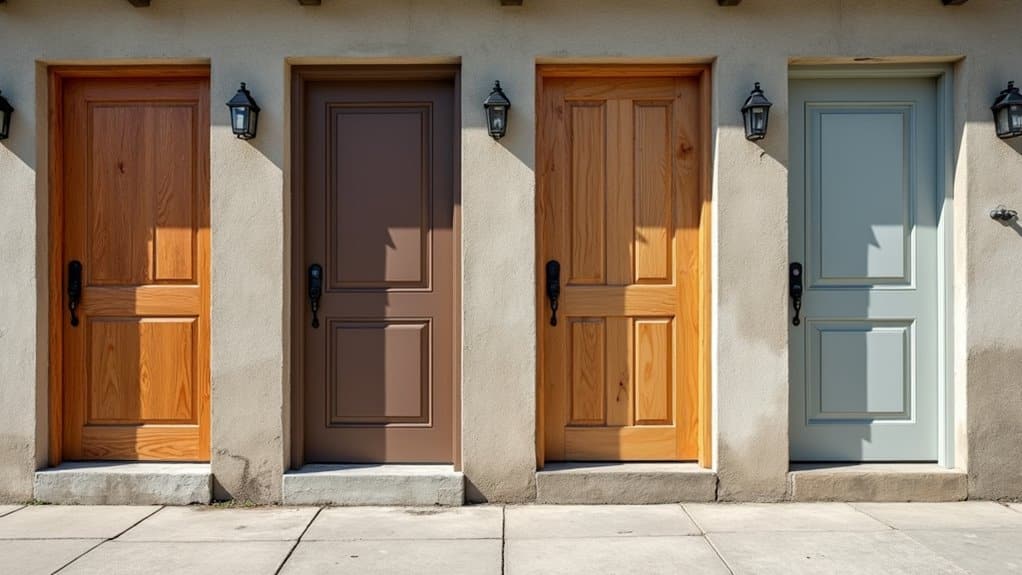
Choosing the right exterior door material means weighing upfront cost against long-term replacement and maintenance expenses. Fiberglass doors run $500, $3,000 and last 50+ years with minimal upkeep, making them the strongest durability-to-value option. Steel doors cost less upfront at $200, $1,500 but average only 10 years in high-moisture environments, driving replacement costs higher over time. Wood doors carry the steepest price range at $500, $5,000+, and maintenance requirements for wood are demanding, refinishing every 2, 5 years is necessary just to reach a 20, 30 year lifespan. Most wood door material warranties cover only one year, signaling a shorter expected service life. If you’re prioritizing long-term savings, fiberglass delivers the lowest total cost of ownership across humid and variable climates. A steel door replacement ranks as the number two highest-ROI home improvement project in the country, with an average return of over 216%.
Frequently Asked Questions
Can Fiberglass Exterior Doors Be Painted or Stained Any Color?
Yes, you can achieve custom color finishes on fiberglass exterior doors using either paint or stain. For painting, you’ll want to apply high-quality oil-based or 100% acrylic latex paint with a bonding primer. For staining, use opaque, heavily pigmented oil-based or gel stains. Always finish with weather resistant coatings like UV-stabilized exterior polyurethane to protect your door’s appearance and guarantee long-term durability against the elements.
Are Steel Doors Safe During Lightning Strikes or Electrical Storms?
Yes, steel doors are safe during lightning strikes. Steel’s lightning conduction safety properties allow it to direct electrical current harmlessly into the ground when your structure’s properly bonded and grounded. The Faraday cage effect protects your interior from charge distribution. For enhanced electrical surge protection, you’ll want a professional Lightning Protection System installed. Avoid touching metal surfaces during storms, and guarantee all steel components, frames, doors, roofing, are properly bonded.
How Do Exterior Door Materials Affect Home Resale Value?
Steel doors deliver the strongest resale returns, offering you over 100% ROI through elevated curb appeal and fortified security features that buyers actively prioritize. Fiberglass doors recover roughly 80% of costs while providing energy efficiency and low maintenance. You’ll maximize value by selecting doors with quality hardware, which averages 95% ROI independently. Regional markets influence returns substantially, with some areas exceeding 166% ROI, so you should research your local market before deciding.
Which Exterior Door Materials Qualify for Energy Efficiency Tax Credits?
The material itself doesn’t determine tax credit eligibility requirements, ENERGY STAR certification does. You’ll qualify for the 30% credit if your door meets energy efficiency ratings for your specific climate zone, verified through the NFRC Certified Product Directory. Fiberglass, steel, and wood doors can all qualify if they carry valid NFRC certification. Use the CPD number on your door’s label to confirm eligibility before filing IRS Form 5695.
Can Exterior Doors Be Recycled or Sustainably Disposed of After Replacement?
Yes, you can recycle or sustainably dispose of exterior doors through several methods. For proper material recycling, take metal, fiberglass, or glass doors to local recycling centers, following disassembly guidelines by removing hardware first. You can also explore sustainable disposal methods like donating functional doors to Habitat for Humanity ReStores or repurposing them into furniture. If recycling isn’t available, use landfills’ construction and demolition waste areas as a last resort.