

To stop air leaks and moisture damage, you’ll need a sealant matched to your substrate, movement demands, and exposure conditions. Silicone handles UV and extreme temperatures, acrylic bonds to porous surfaces and accepts paint, and polyurethane delivers superior tear resistance. Top performers include OSI Quad Max, GE Advanced Silicone 2, and DAP Dynaflex 230, each built for specific retrofit and weatherproofing challenges. Understanding the best sealants for doors and windows and finding the right fit for your exact situation is covered below.
Why Windows and Doors Leak Air and Moisture
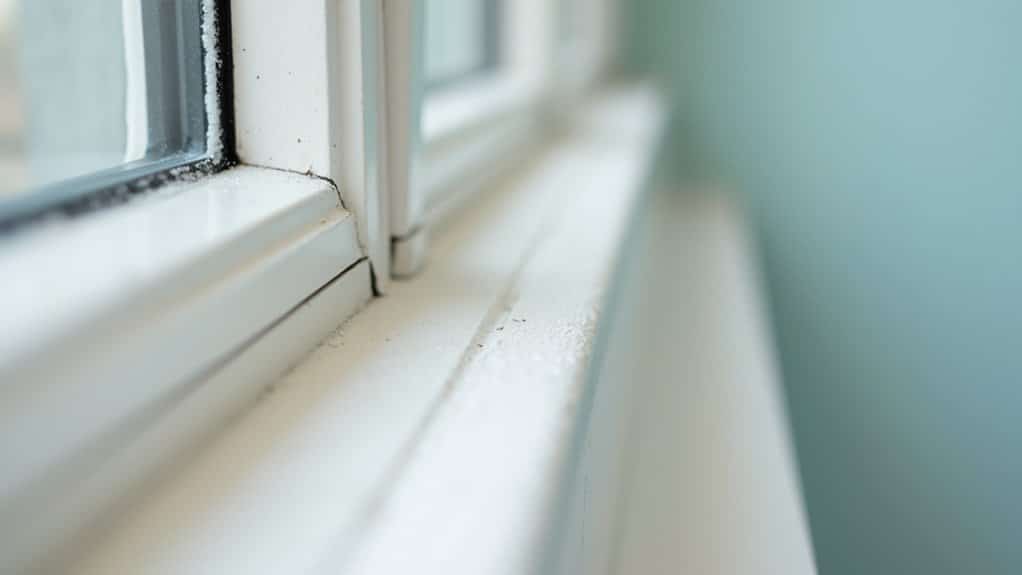
Air leaks and moisture infiltration around windows and doors stem from a handful of predictable failure points, and understanding them helps you target repairs effectively. Worn or cracked weatherstripping breaks the airtight seal, while failed caulking opens pathways for both air and water. Improper installation and frame issues compound the problem, gaps behind trim, loose frames, and poor flashing let moisture penetrate walls and compromise structural integrity. Warped doors and structural problems add another layer, as warped panels, misaligned hinges, and clogged sliding tracks prevent full closure, leaving drafts unchecked. Settling structures shift frames over time, widening existing gaps. High indoor humidity accelerates deterioration by swelling wood, corroding metal, and promoting mold growth on sills and frames, turning minor seal failures into costly structural damage. In climates like South Florida’s, these vulnerabilities are especially critical, as the region’s heat and humidity make moisture damage risks significantly more severe and harder to reverse.
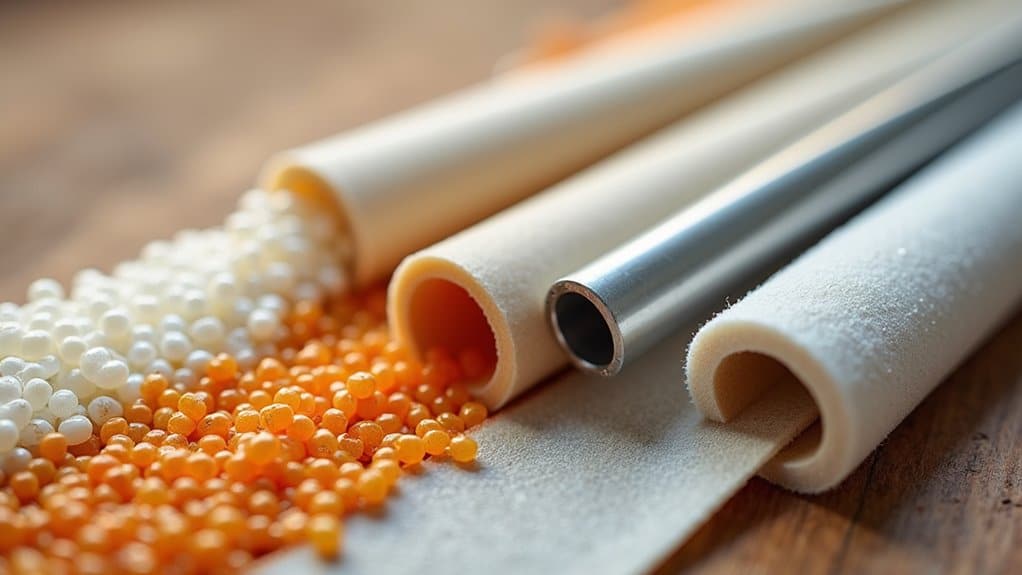
Silicone vs. Acrylic vs. Polyurethane: Which Type Fits Your Project?
Once you’ve identified where your windows and doors are losing air and moisture, your next decision is which sealant chemistry will actually hold up in that specific location. Each type delivers distinct sealant adhesion properties that determine long-term performance.
- Silicone achieves ±50% movement rating with superior UV resistance, making it ideal for exterior glazing and high-humidity zones.
- Acrylic bonds mechanically to porous substrates and accepts paint, suiting interior trim and decorative sealant application techniques.
- Polyurethane delivers Shore A hardness of 25, 50 with exceptional tear and abrasion resistance, optimizing structural joints and expansion gaps.
Match your sealant to the substrate, exposure conditions, and movement demands. Choosing incorrectly compromises adhesion, accelerates degradation, and defeats the purpose of sealing entirely. Polyurethane sealant requires thorough priming for best results, especially when applied to porous surfaces like untreated wood or concrete around door and window frames.
Drying Time, Flexibility, and VOC: What Sealant Specs Actually Matter
Three specs determine whether a sealant performs or fails in real-world conditions: drying time, flexibility, and VOC emissions. Standard silicones skin in 10, 30 minutes but require 24, 48 hours for full cure, depending on curing conditions like temperature, humidity, and application thickness. Fast-cure formulas compress that window to 12, 24 hours. For flexibility, neutral-cure silicones handle structural movement without cracking, while polyurethane needs 48+ hours before it flexes properly. Always verify product compatibility before selecting a sealant, acetoxy-cure silicones emit higher VOCs, restricting use in occupied spaces. Neutral-cure and acrylic options stay low-VOC, meeting indoor air quality standards. Match your sealant’s specs to the environment it’ll face, and you’ll avoid premature failure, off-gassing issues, and costly reapplication. Thicker sealant applications follow a general rule of 2, 3 mm of curing per 24 hours, meaning deep gaps or heavy beads demand significantly more time before the silicone develops its full strength and flexibility.
OSI Quad Max: Best Window and Door Sealant for Retrofits
When you’re retrofitting windows and doors, OSI Quad Max’s silane-modified polymer formula delivers Class 50 joint movement capability and a service range of -14°F to 158°F, giving you a bond that handles thermal cycling without failure. You can apply it directly to damp or cold surfaces down to 0°F, which means weather delays won’t stall your project the way they would with conventional sealants. Its 180° peel adhesion exceeds 47 lb./in on PVC trim, fiber cement, and painted aluminum, so you’re working with a high-strength bond across the surface materials most common in retrofit installations.
Retrofit Performance Benefits
Retrofitting windows and doors introduces unique challenges that standard sealants simply can’t handle, uneven substrates, fluctuating temperatures, and tight project timelines demand a product engineered for real-world conditions. OSI Quad Max delivers measurable performance advantages specifically suited for retrofit applications.
Key retrofit performance benefits include:
- Wet surface adhesion, applies directly to damp substrates, eliminating prep downtime
- All-season application, performs reliably from 0°F to 140°F without consistency loss
- Class 50 joint movement, handles high movement retrofit areas while maintaining long term retrofit durability
You get 24-hour full cure, paintability within one hour, and zero shrinkage during curing. Its 5x stretch capability guarantees joints stay sealed in demanding conditions, making it the technically superior choice for retrofit professionals.
Weather-Resistant Bond Strength
Exterior seals fail when UV degradation, thermal cycling, and moisture infiltration combine to attack the bond, OSI Quad Max’s weather-resistant formulation is engineered to defeat all three simultaneously. Its non-cloudy, UV-resistant chemistry prevents yellowing and cracking, maintaining transparency and structural integrity under prolonged sun exposure. You get peel adhesion exceeding 47 lb/in across PVC trim, fiber cement, and coated aluminum, without primer. The sealant’s Class 50 rating handles ±50% joint movement, accommodating thermal expansion without bond failure. Immediately water-resistant after application, it delivers excellent dirt resistance that prevents surface contamination from compromising adhesion over time. With no shrinkage or bubbling and a service range of -14°F to 158°F, you’re investing in long term performance that withstands the full spectrum of exterior weathering demands.
Compatible Surface Materials
One of the biggest challenges in retrofit work is substrate variability, OSI Quad Max eliminates that obstacle by bonding without primer to over 20 surface types. Proper caulk application becomes considerably more efficient when you’re not prepping every surface differently. That efficiency directly impacts energy efficiency by reducing gaps in the sealing process.
You’ll find it adheres reliably to:
- Structural materials, fiber cement, cedar, brick, stone, concrete, and masonry
- Engineered surfaces, coated aluminum, vinyl, fiberglass, PVC, and EIFS
- Specialty substrates, XPS and EPS foam, stucco, glass, and architectural coatings, including Kynar
Whether you’re sealing crown molding, precast concrete, or soffit assemblies, Quad Max delivers consistent adhesion across interior and exterior applications without additional prep steps.
GE Advanced Silicone 2: Best for Flexibility and UV Resistance
When flexibility and UV resistance are your top priorities for sealing doors and windows, the GE Advanced Silicone 2 delivers with ASTM C-920 Class 35 certification and ±35% movement capability, 40% more flexibility than standard Class 25 sealants. Its 100% silicone formula resists UV degradation and remains weatherproof and waterproof, making it a reliable long-term solution for exterior applications. You can apply it in temperatures as low as -31°F and expect rain-ready performance in just 30 minutes, with adhesion strength five times greater than standard Silicone 1 sealants.
Superior Flexibility Benefits
Among silicone sealants designed for doors and windows, GE Advanced Silicone 2 sets the benchmark for flexibility, meeting ASTM C-920 Class 35 specifications with a movement capability of ±35% per ASTM C719, 40% more flexibility than Class 25 sealants. Its 347% elongation at break and Shore A Hardness of 15 reinforce its moisture barrier capabilities against dynamic building movement.
- Class 35 compliance allows spanning gaps up to 5/8″ x 5/8″ without failure
- Rubber-like recovery prevents shrinking and cracking through repeated joint cycling
- Freeze/thaw stability maintains performance from -60°F to 400°F, countering UV degradation resistance challenges in extreme climates
You get a permanently flexible, shrink-proof seal that accommodates structural shifts while blocking air infiltration and moisture intrusion year-round.
UV Resistance Capabilities
That flexibility advantage carries real weight only if the sealant holds up under sustained UV exposure, and GE Advanced Silicone 2 delivers on both fronts. Its 100% silicone formulation resists UV degradation, preventing the hardening and cracking that compromise joint movement over time. Verified through a 30-year weathering study, it maintains thermal performance across -60°F to 400°F.
| UV Performance Factor | Specification |
|---|---|
| Weathering Study Duration | 30 years |
| Service Temperature Range | -60°F to 400°F |
| ASTM Classification | C-920 Class 35 |
| Elongation at Break | 347% |
You’re getting a sealant that won’t blemish metal finishes, resists sun-induced breakdown on exterior windows, doors, siding, and trim, and backs UV protection with a lifetime guarantee.
Application and Performance
Putting GE Advanced Silicone 2 to work is straightforward: apply it with a caulking gun or squeeze tube across temperatures ranging from 32°F to 120°F, and it’ll cover 13 linear feet per tube. Its neutral curing formula minimizes odor while delivering reliable performance across demanding conditions.
Key performance metrics you should know:
- Movement capability reaches ±35% per ASTM C719, handling joint expansion and contraction without failure
- Cure progression advances at 2, 3 mm per 24 hours, achieving water-readiness in 30 minutes and full cure within 24 hours
- Service range spans -60°F to 400°F, maintaining Shore A hardness of 15 and shrink-proof integrity throughout
Note that the cured sealant isn’t paintable, and you should avoid applying it to galvanized surfaces or structural repairs.
DAP Dynaflex 230: Easiest Sealant for DIY Application
When you need a sealant that balances professional-grade performance with straightforward DIY application, the DAP Dynaflex 230 delivers. Its non-sag, gunnable paste consistency makes easy-to-use application achievable for any skill level. You’ll appreciate the 10-minute tooling window, 30-minute tack-free cure, and 2-hour paintability, all supporting efficient project completion.
The durable adhesion and silicone-like flexibility handle joint movement up to 50% without cracking, performing reliably from -30°F to 180°F. One 10.1 oz cartridge covers 55 linear feet at a 3/16-inch bead, maximizing value across window, door, and trim sealing projects.
Water cleanup before skinning, low odor, and a 40°F, 100°F application range add practical convenience. Backed by a lifetime warranty and ASTM C920 Class 25 certification, it’s a technically sound choice for permanent air and moisture sealing.
Gorilla 100% Silicone Sealant for Extreme Weather Exposure
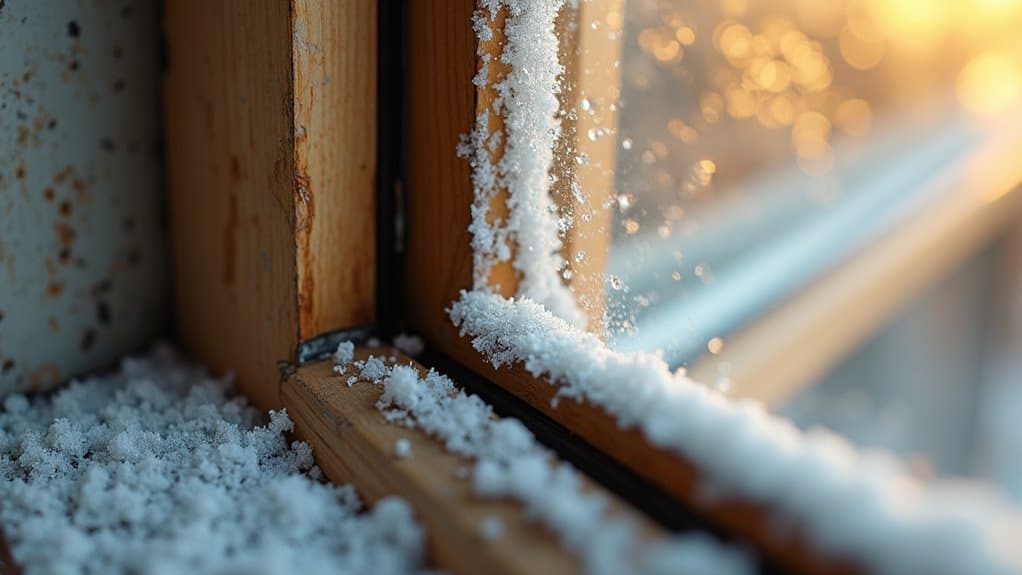
When you’re dealing with extreme weather exposure around doors and windows, Gorilla 100% Silicone Sealant delivers reliable performance across a service temperature range of -40°F to 350°F, making it a strong candidate for harsh climates. You’ll benefit from its 30-minute water readiness for a 3/16-inch bead at 70°F and 50% humidity, letting you move through your project efficiently without extended downtime. Built-in mold and mildew resistance further strengthens its suitability for high-moisture zones like window frames and door thresholds, where biological growth can compromise a seal’s long-term integrity.
Extreme Weather Performance
Extreme weather demands a sealant that won’t crack, shrink, or lose flexibility under punishing conditions, and the Gorilla 100% Silicone Sealant is engineered to guarantee that challenge. Its sealant temperature durability spans -40°F to 300°F, handling freeze-thaw cycling without compromising adhesion. Its sealant ultraviolet durability affirms minimal elasticity loss after prolonged sun exposure, making it reliable in high-UV climates.
Key performance highlights include:
- UV resistance: Maintains structural integrity under continuous sunlight exposure with little change in elasticity
- Temperature extremes: Performs reliably across a -40°F to 300°F operational range without sagging or cracking
- Moisture defense: Resists rain, snow, and humidity while sustaining tensile strength after high-humidity aging conditions
You’re getting a technically sound, weather-hardened sealant built for long-term outdoor performance.
Quick Drying Benefits
Speed matters when you’re sealing doors and windows against extreme weather, and the Gorilla 100% Silicone Sealant’s curing profile is engineered to keep your project moving. Skin formation occurs within minutes to hours, letting you handle surfaces sooner without compromising superior weather sealing. The accelerated curing benefits become most pronounced when you apply thin, layered coats and maintain elevated humidity levels, both of which drive faster vulcanization without introducing internal stress. You’ll reach full adhesion and structural integrity within 72 hours, ensuring a watertight, air-resistant seal that resists debonding under pressure. Avoid forced drying methods that trap stress and cause cracking. Instead, control your environment, raise the temperature, manage the humidity, and you’ll complete door and window sealing efficiently in a single, uninterrupted session.
Mold And Mildew Resistance
Fast curing gets your seal in place, but what protects it, and your home, over the long haul is the sealant’s built-in resistance to mold and mildew. Gorilla 100% Silicone Sealant’s anti-fungal features actively block mold and mildew formation on the cured surface, making it a reliable choice for moisture damage prevention in kitchens, bathrooms, and high-humidity zones.
Key mold and mildew resistance advantages include:
- Sustained protection against mold growth without yellowing or degradation over time
- Moisture-sealing formulation that maintains a clean, hygienic seal in persistently damp conditions
- Withstands prolonged moisture exposure on windows and doors, even in extreme weather environments
You’re getting a sealant that doesn’t just cure fast, it stays clean and structurally sound for the long term.
EnergySaver EcoSeal: Best Low-VOC Sealant for Energy Savings
Five environmental certifications back the EnergySaver EcoSeal‘s claim as a top low-VOC sealant, starting with its sub-0.3 g/L VOC content that meets or exceeds all state and federal architectural sealant requirements. GREENGUARD Indoor Air Quality and Children & Schools certifications confirm its formaldehyde-free composition, while LEED compliance qualifies it for Low-Emitting Materials credits. NAHB Model GREEN Home Building guidelines compliance further solidifies its sustainability credentials.
You’ll achieve moisture control and energy cost savings through its water-based elastomeric formulation, which eliminates hazardous jobsite chemical mixing and reduces off-gassing. The formula penetrates gaps as small as ⅛ inch, creating continuous thermal and air barriers across the building envelope. Its application temperature range of 20°F to 115°F extends your installation season considerably.
SealMax SoundGuard: A Reliable Seal That Also Cuts Urban Noise
While the EnergySaver EcoSeal excels at air sealing and energy efficiency, urban dwellers often face an equally pressing challenge: external noise infiltration. Ranking fifth among top sealants, SealMax SoundGuard addresses both concerns simultaneously, delivering product durability through its siliconized structure that handles up to 15% movement.
SealMax SoundGuard tackles noise infiltration and energy efficiency simultaneously, backed by durable siliconized construction built for lasting performance.
Key performance highlights include:
- Multi-barrier protection against air, water, dust, noise, mold, and insects
- Frame compatibility with aluminum, wood, vinyl, and fiberglass materials
- User convenience through Zipperpile insertion designs, 75% faster than traditional pile
Its water-based, low-VOC formulation guarantees safe indoor application. Whether you’re managing residential retrofits or commercial properties, SoundGuard’s proven laboratory and independent test results make it a technically sound investment for noise-affected environments.
How to Apply Window and Door Sealant the Right Way
Applying window and door sealant correctly starts long before you pick up a caulking gun. Inspect frames for gaps, clean surfaces with a damp cloth and mild detergent, and confirm substrates are dry. Apply only above 20°F (-7°C), ideally between 40°F and 140°F.
Proper sealant selection matters equally. Choose low-expansion foam specifically designed for windows and doors to prevent frame warping. For joints deeper than ¼ inch, install backer rod to eliminate three-point adhesion and support ±25% movement capacity.
During the sealant application process, cut the tube tip at 45 degrees, hold the gun at 45 degrees, and apply a continuous bead from bottom to top. Tool the bead within 5, 15 minutes, then allow 24, 48 hours before any moisture exposure.
Frequently Asked Questions
Can Sealants Be Applied Over Existing Old Caulk Without Removal?
You can apply new sealant over existing caulk, but it’s rarely recommended. When applying new sealant over existing caulk, the old layer must show zero cracks, peeling, mold, or damage. Evaluating the compatibility of old and new sealants is critical, silicone surfaces actively reject new layers due to surface oils. You’ll achieve better adhesion by extending your new bead beyond the old caulk’s edges, but professionals strongly advise complete removal for lasting, watertight results.
Which Sealants Work Best for Sealing Gaps Around Basement Windows?
For sealing gaps around basement windows, you’ll want to ponder the efficacy of silicone-based sealants for weatherproofing exterior frames and masonry joints, as they deliver flexible, durable waterproof protection. For larger, irregular gaps, leverage the benefits of polyurethane window sealants, they expand to fill voids while considerably enhancing insulation. Use butyl rubber when bonding dissimilar materials, and reserve acrylic latex strictly for narrow interior gaps where paintability matters most.
How Long Does a Properly Applied Window Sealant Typically Last?
When considering the typical lifespan of properly applied window sealants, your choice of material matters considerably. Acrylic latex lasts 5-10 years, polyurethane delivers 7-10 years, and silicone exceeds 10-20 years. Factors affecting sealant longevity include UV exposure, freeze-thaw cycles, humidity, and surface preparation quality. You’ll extend performance by applying sealant to clean, dry surfaces and inspecting it every 2-3 years for early deterioration signs.
Are There Sealants Safe for Use Around Fish Tanks or Aquariums?
Yes, you can use aquarium-safe silicone sealants specifically formulated as 100% RTV silicone, which are non-toxic, acid-free, and chemically inert once fully cured. You’ll also find fish-friendly polyurethane sealants suitable for aquatic environments. Avoid standard bathroom silicones containing fungicides, as they’re toxic to aquatic life. Always allow a minimum 24-48 hour cure time before introducing water, and 3-4 days for thicker applications.
Can Window Sealants Help Reduce Condensation Buildup on Glass Panes?
Yes, window sealants can substantially reduce condensation buildup on glass panes. When you apply airtight sealants around frames, you block cold air infiltration that drops interior glass temperatures below the dew point. This improves interior climate control by stabilizing surface temperatures and mitigating moisture buildup caused by warm indoor air meeting cold surfaces. Pairing sealants with Low-E coatings and inert gas-filled double-pane glazing maximizes your condensation resistance across all climate conditions.