
The five best woods for door jambs are oak, teak, mahogany, maple, walnut, and Accoya. Oak delivers a Janka hardness exceeding 1,200 lbf with exceptional impact resistance. Teak and mahogany handle moisture-heavy and coastal environments through natural oils and rot resistance. Maple and walnut excel in interior applications, offering stability and minimal warping. Accoya provides a 25-year guarantee with 75% less dimensional movement. Each wood has specific strengths worth understanding before you commit.
What Makes a Good Door Jamb Wood?
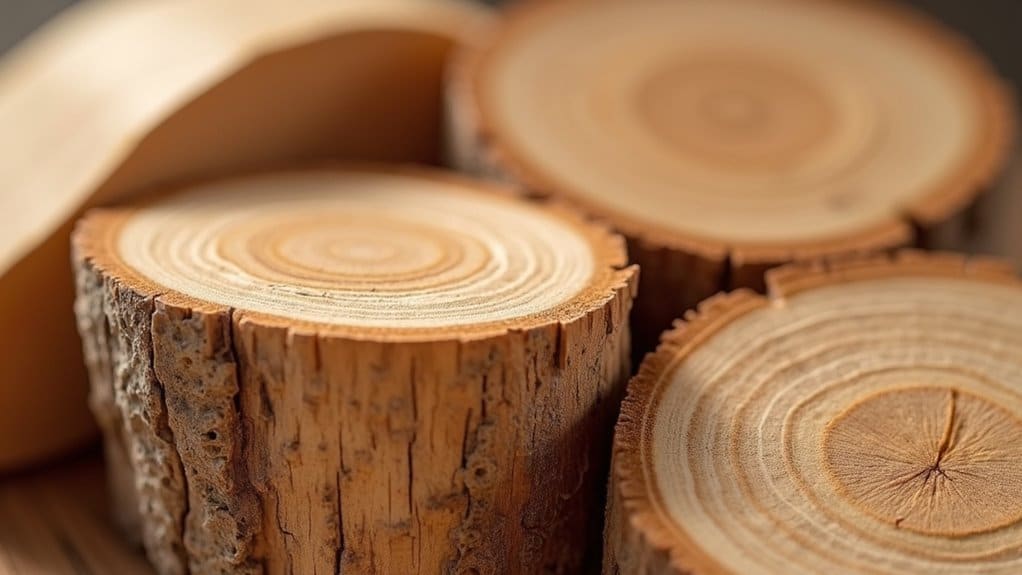
When selecting wood for door jambs, you’ll want to evaluate five key properties: strength, stability, moisture resistance, durability, and workability. Each property directly impacts long-term performance.
Strength determines dent resistance under high-traffic conditions, ideally requiring a Janka hardness rating exceeding 1,000. Stability prevents warping and shrinking, particularly in humid environments. Douglas fir door jambs deliver reliable stability and moderate pricing, making them a practical structural choice. Moisture resistance safeguards against decay, especially in exterior applications. Cedar door jambs excel here, as their natural oils actively repel moisture and insects while resisting rot. Durability ensures the wood maintains its appearance across decades with proper maintenance. Workability affects how well the wood accepts stain, paint, and finishing treatments, directly influencing your final aesthetic results. Selecting the right wood species is the first step in ensuring your door jamb complements both the door’s overall design and the surrounding interior elements. Choosing traditional wood for your door jamb not only enhances the visual appeal but also contributes to the overall durability of your entryway. It is essential to consider the interplay between traditional wood and modern design elements, ensuring a harmonious blend.
Oak Door Jambs: The Case for Raw Strength
Oak stands apart from most door jamb materials because its Janka hardness rating exceeds 1,200 lbf, placing it well above the 1,000 lbf threshold that separates practical hardwoods from softer, more vulnerable alternatives. Raw oak composition delivers tight grain patterns that resist impacts, denting, and surface abrasions while natural oils maintain smooth finishes without requiring heavy chemical treatments.
You’ll also benefit from oak’s flexible structural integrity, since its modulus of elasticity allows slight flexion under stress without triggering permanent deformation, cracks, or splits. That same density supports compressive loads effectively, keeping door frames aligned and stable across repeated daily use. High-density cellular structure further reduces vibrations, reinforcing frame stability over extended service periods. These combined mechanical properties make oak a technically superior choice for door jamb applications demanding long-term performance. Oak’s natural resistance to wear and tear further extends its functional lifespan, reducing the need for costly replacements over time. Enhance curb appeal by choosing door frames that complement the exterior design of your home. Upgrading to high-quality oak doors is an ideal way to achieve both durability and style.
Teak and Mahogany Door Jambs for Wet and Coastal Climates
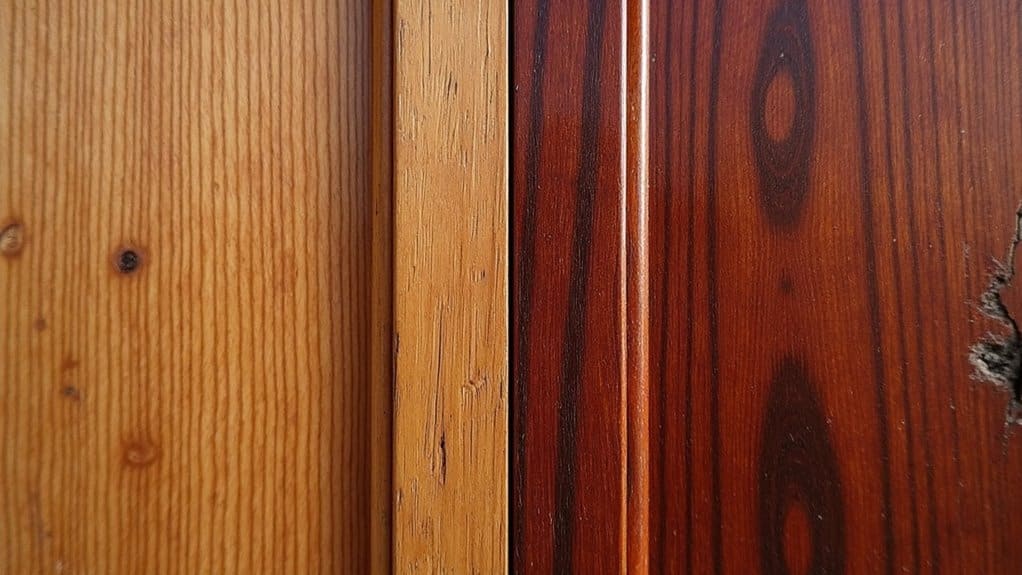
Coastal and high-humidity environments introduce moisture loads, salt air corrosion, and biological threats that eliminate most conventional wood species from serious consideration for exterior door jambs. Teak’s self-sealing natural oils directly counter salt air corrosion while delivering Janka hardness exceeding 1000, termite resistance, and mold suppression in tropical conditions. Its humidity resistance profiles sustain 40, 60+ years outdoors with minimal treatment. You’ll find teak’s elevated coastal performance unmatched when jambs face constant wet exposure. Mahogany offers a practical alternative for protected coastal exteriors, with Janka hardness between 800, 900, dimensional stability against expansion and contraction, and rot resistance exceeding 30 years under maintained conditions. Both species prevent moisture absorption that causes swelling and structural failure, making either a defensible premium selection for demanding jamb applications.
Maple and Walnut for Interior Door Jambs
Interior environments demand a different performance profile than coastal or high-humidity exteriors, shifting the focus from rot resistance and oil content to hardness, dimensional stability, and aesthetic versatility. Performance comparisons between maple and walnut reveal distinct trade-offs you’ll weigh based on application and budget.
| Feature | Maple | Walnut |
|---|---|---|
| Color | Light, pale tone | Rich, dark brown |
| Hardness | Very high | High |
| Stability | Even grain, minimal warp | Smooth grain, consistent |
| Best Use | Bedroom, bathroom jambs | Statement interior jambs |
| Finish | Clear or painted | Stained or natural |
Maintenance and refinishing considerations for maple and walnut door jambs differ slightly. Maple supports resanding effectively, while walnut deepens beautifully with age, requiring minimal intervention for sustained quality.
Why Accoya Outlasts Other Woods on Exterior Jambs
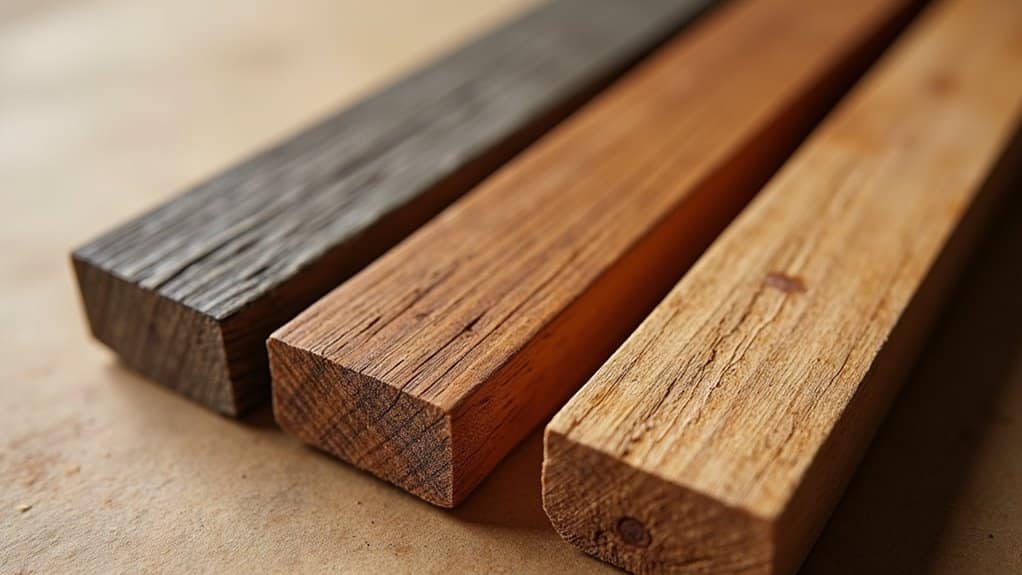
Accoya stands out as the top-performing wood for exterior door jambs, backed by a Class 1 durability rating and a 25-year guarantee even in ground or freshwater contact. Its acetylation process delivers exceptional moisture resistance benefits by reducing swelling and shrinkage by at least 75%, keeping jambs dimensionally stable through repeated weathering and sun exposure durability cycles. You get tighter seals, smoother operation, and surfaces that hold coatings up to twice as long as untreated wood. Accoya resists rot, decay, termites, and wood-destroying fungi without toxic chemicals. It surpasses teak and other tropical hardwoods in longevity while offering a lower environmental footprint. For exterior applications demanding long-term performance, Accoya eliminates the premature failures that compromise lesser wood species.
Frequently Asked Questions
How Do I Properly Install a Wooden Door Jamb Myself?
To install a wooden door jamb, you’ll route mortises on the door first, then mark hinge positions on the jamb with a 1/8-inch gap. After assembling the frame, align it square in the rough opening. When securing the jamb to the wall, use #8 screws 2-1/4 inches long with wedges 2 inches from each end. For reinforcing the jamb structure, predrill pilot holes at 3/32 inch and install five shims per side.
What Is the Average Cost of Wood Door Jambs?
You’ll typically spend $289 to $445 per jamb for a complete wooden door jamb installation. Average material costs run $130 to $200, representing 30-45% of your total expense. Typical installation labor costs fall between $100 to $250, comprising 25-35% of your project budget. Don’t forget to factor in $35 to $53 for supplies and equipment. If you’re pursuing complex installations requiring structural modifications, expect labor expenses reaching $250 to $500.
Can Wooden Door Jambs Be Painted Instead of Stained?
Yes, you can paint your wooden door jambs instead of staining them. First, clean with a degreaser, apply liquid deglosser, then sand lightly with 180-grit. Use a bonding primer like Zinsser BIN to block tannin bleed. For paint application techniques, you’ll want an angled sash brush for edges and a microfiber roller for flat surfaces. Your paint color options include semi-gloss latex, which resists yellowing and withstands regular cleaning.
How Often Should Wooden Door Jambs Be Inspected for Damage?
You should conduct periodic inspections of your wooden door jambs every three to six months under standard conditions. In humid climates, increase that frequency to every two to three months. Perform visual wear assessments on edges, corners, weatherstripping, and areas where the finish has worn. Check for cracks, warping, mold, and alignment issues. Doors exposed to direct sunlight daily require quarterly reviews to monitor fading and structural deterioration effectively.
Are Wooden Door Jambs Suitable for Fire-Rated Door Assemblies?
Yes, you can use wooden door jambs in fire-rated door assemblies when they meet fire resistance requirements. They’re classified by Underwriters Laboratories under file R21551, achieving 20 to 45-minute ratings. For building code compliance, you’ll need to install them in walls with equal or greater fire ratings, use steel-bearing hinges, apply intumescent tape at 45-minute ratings, and guarantee self-closing, positive-latching mechanisms per NFPA 80 standards.