
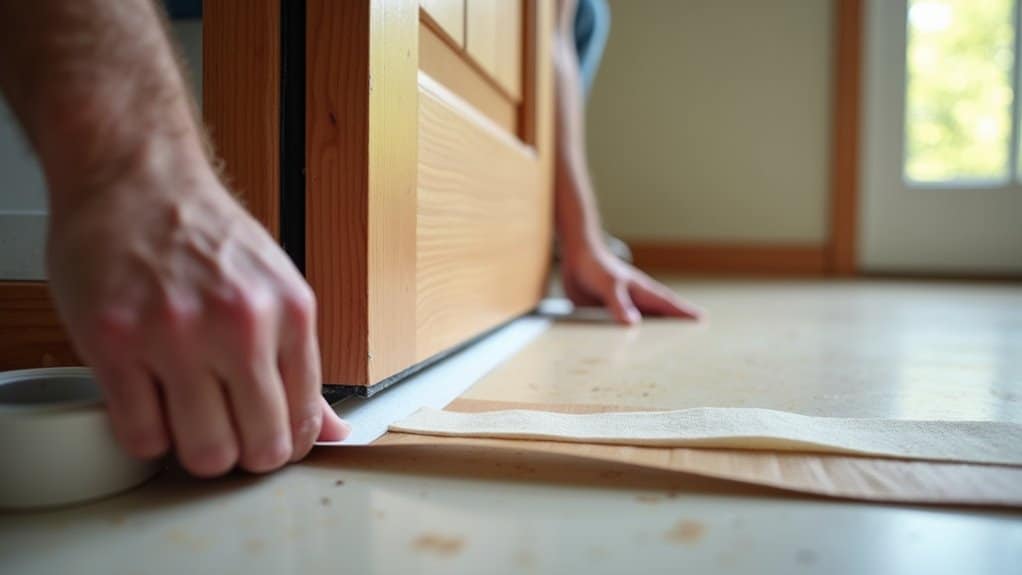
You can paint your storm door by following essential preparation and application steps. Start by removing hardware and cleaning the surface thoroughly with detergent. Sand lightly with fine-grit sandpaper, then apply a metal-specific primer. Use oil-based or high-quality latex paint designed for exterior metal surfaces, applying multiple thin coats with a foam roller or angled brush. Proper technique and material choices will determine your project's long-term success.
Tools and Materials Needed
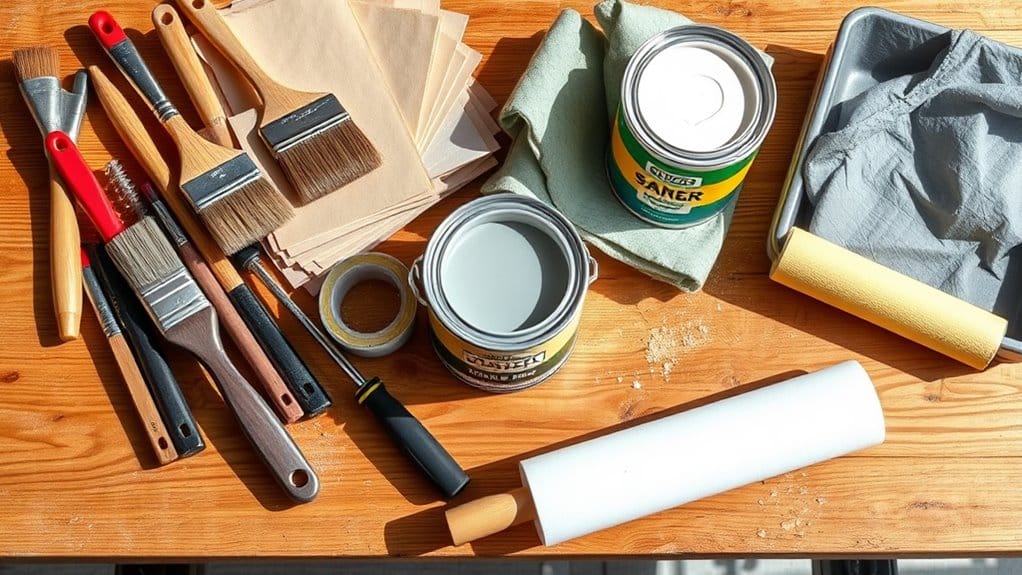
Several essential tools and materials are required before you begin painting your storm door. You'll need fine-grit sandpaper, tack cloths, and a degreasing cleaner for surface preparation. Choose between oil-based or latex paint types specifically formulated for metal surfaces, along with a compatible primer.
For application, gather a small foam roller, 2-inch angled paintbrush, painter's tape, and drop cloths. Don't forget safety equipment including protective gloves, a dust mask, and safety glasses. You'll also need a screwdriver to remove hardware and a putty knife to scrape away any loose paint or rust. Keep mineral spirits or appropriate paint thinner on hand for cleanup, along with clean rags and a paint tray for your working surface.
Preparing Your Storm Door for Paint
Before you apply any paint, proper preparation of your storm door's surface will determine the quality and longevity of the finish. Start by removing all hardware, including handles, locks, and weatherstripping. You'll want to protect any glass panels with painter's tape and newspaper.
Next, focus on cleaning techniques that'll remove all dirt, grime, and oxidation. Use a mixture of warm water and mild detergent to scrub the entire surface. For stubborn areas, try mineral spirits or a dedicated metal cleaner. Once clean, rinse thoroughly and let dry completely.
Surface preparation continues with light sanding using fine-grit sandpaper to create a slightly rough texture that helps paint adhere better. Wipe away all dust with a tack cloth, then apply a coat of metal primer designed for exterior use.
Choosing the Right Paint and Primer
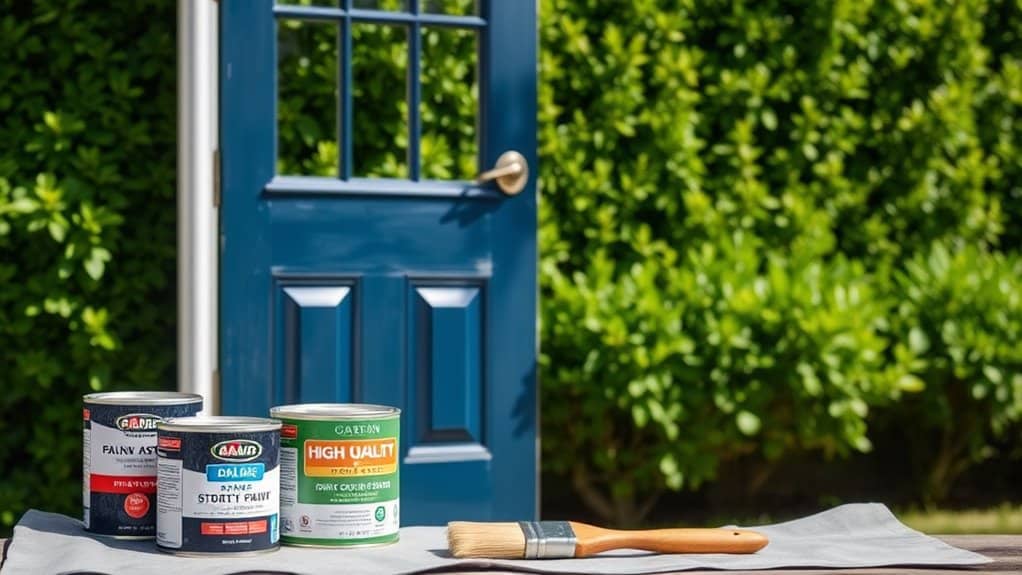
When selecting paint for your storm door, the right combination of primer and paint will make the difference between a finish that lasts for years and one that peels within months.
For storm doors, you'll need an oil-based or epoxy-based primer specifically designed for metal surfaces. After the primer, choose either oil-based or high-quality latex paint that's rated for exterior use. While your color selection options are unlimited, darker colors tend to show scratches more easily than lighter shades.
For aluminum storm doors, look for paints labeled specifically for metal surfaces. These specialized coatings contain additives that help them adhere better and resist weathering. Don't use regular interior paint types, as they won't stand up to outdoor conditions and will quickly deteriorate, leading to peeling and fading.
Step-by-Step Painting Process
The key steps to painting your storm door begin with thorough preparation of the surface. After cleaning and sanding, apply your primer in thin, even strokes. Let it dry completely according to the manufacturer's instructions.
When you're ready to apply paint, use proper painting techniques: work from top to bottom in smooth, overlapping strokes. Don't overload your brush or roller. Your color selection will look best when applied in multiple thin coats rather than one thick layer. Allow each coat to dry thoroughly before adding the next.
For professional-looking results, remove any painter's tape while the final coat is still slightly wet. This prevents paint from peeling when you pull off the tape. Let the door dry completely for 24-48 hours before closing it.
After-Care and Maintenance Tips
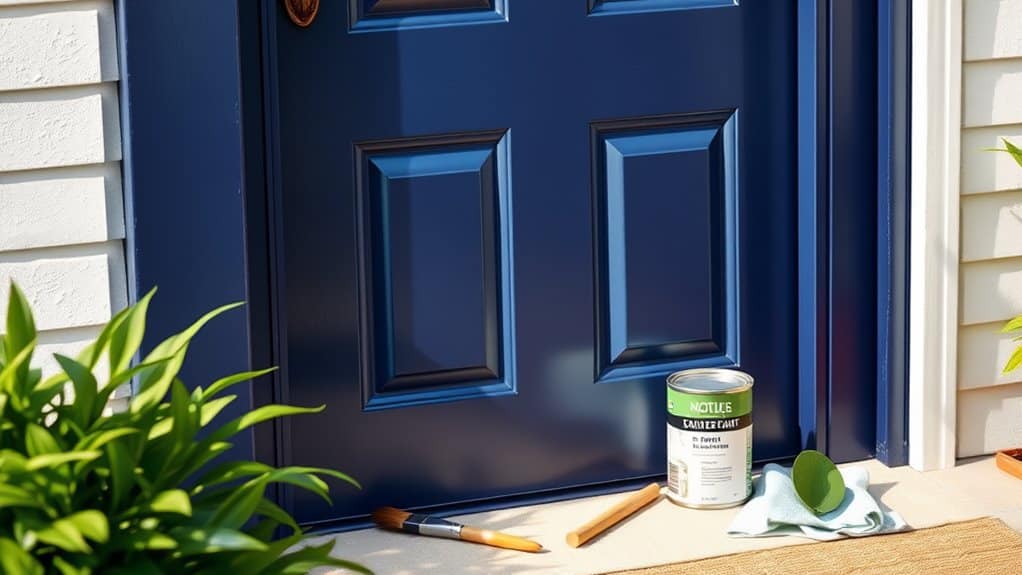
Once your storm door's paint has fully cured, you'll need to maintain its appearance through proper care and cleaning. Use gentle cleaning techniques, like wiping the door with a soft, damp cloth and mild soap solution every few months. Don't use abrasive cleaners or scrub brushes that could damage the paint finish.
Keep touch up tips in mind for maintaining your door's appearance. Store leftover paint in an airtight container for future touch-ups on any scratches or chips. When you notice wear, clean the affected area thoroughly, lightly sand it, and apply paint with a small brush. If you live in a harsh climate, inspect your door's paint job twice yearly, paying special attention to areas around handles and edges where wear occurs most frequently.
Frequently Asked Questions
Can I Paint My Storm Door a Different Color Than My Main Door?
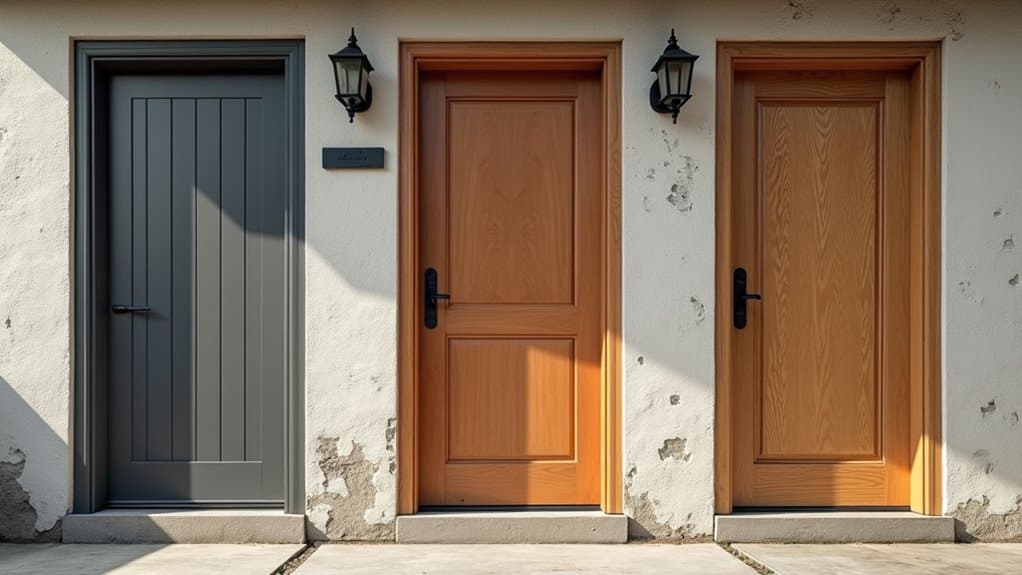
Yes, you can paint your storm door a different color than your main door, but it's crucial to think about color coordination for ideal door aesthetics. While matching colors create a unified look, contrasting colors can add visual interest if done thoughtfully. You'll want to choose complementary shades that work with your home's exterior palette. Contemplate using darker or lighter variations of your main door's color for a harmonious appearance.
How Long Will the Painted Finish Typically Last on a Storm Door?
A properly painted storm door's finish can typically last 3-5 years, but paint durability depends on several factors including weather exposure, paint quality, and preparation methods. You'll get the best longevity by using high-quality exterior paint and proper maintenance tips: clean the door regularly, touch up chips promptly, and apply a clear protective coating. In harsh climates or direct sunlight, you might need to repaint every 2-3 years.
Should I Remove the Storm Door Completely Before Painting It?
You don't need to completely remove your storm door for painting, but you should remove the hardware and weatherstripping. Your storm door preparation should include uninstalling handles, locks, and closers, then marking their locations for easy reinstallation. It's best to leave the door hinged, as it provides a stable surface for painting. Just be sure to protect surrounding areas with drop cloths and painter's tape before using your painting tools.
What's the Best Weather Condition for Painting a Storm Door?
You'll want to paint your storm door in ideal temperatures between 50-85°F (10-29°C) and when humidity levels are between 40-70%. Choose a clear, calm day with no rain in the forecast for at least 24 hours. Early morning or late afternoon works best to avoid direct sunlight, which can cause the paint to dry too quickly and create bubbles. Don't paint on windy days, as debris can stick to wet paint.
Can I Paint Over Rust Spots on My Storm Door?
Yes, you can paint over rust spots, but proper surface preparation is essential for lasting results. Initially, remove loose rust with a wire brush or sandpaper. Then, apply a specialized rust treatment product to convert remaining rust and prevent future corrosion. Once the treatment dries completely, sand the area smooth and wipe it clean. You'll need to prime the treated spots with a rust-inhibiting primer before applying your final paint coat.