
Composite Door Frame Insulation
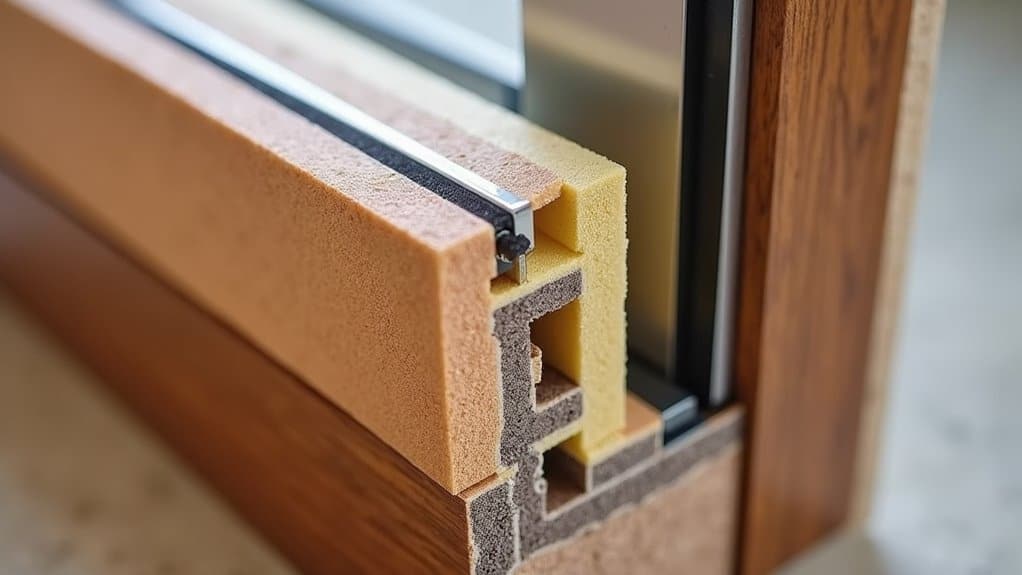
Composite door frames deliver superior thermal performance through multi-layered construction with insulated cores that consistently achieve U-values below 1.8 W/m²K, exceeding regulatory requirements. Fiberglass composites provide inherent thermal insulation without extra thermal breaks, minimizing heat transfer and preventing cold spots around entry points.
You’ll experience significant energy efficiency gains as reduced heat loss lowers household energy bills. The long-term cost savings prove substantial, particularly in extreme climates where heating and cooling demands peak. Property value increases when buyers recognize reduced utility expenses and year-round comfort. Weather stripping along composite frame edges creates an additional barrier that seals areas where cold air can enter, further reducing heating and cooling costs. Composite doors typically come with a 10-year guarantee, ensuring your investment in thermal performance is protected.
Unlike traditional wood frames, composite construction resists warping, swelling, and rot from moisture fluctuations. Factory-fitted frames integrate insulation benefits while requiring minimal maintenance. The multi-point locking systems enhance security while maintaining the thermal integrity of the frame seal. You maintain tight, insulated seals for decades with little re-treatment or repair, ensuring consistent structural integrity and insulation reliability across seasons. The cost of door frames can vary significantly based on materials and styles. Investing in quality can lead to long-term savings through reduced maintenance and enhanced durability.
Fiberglass Door Frame Insulation
When you’re evaluating door frame insulation options, fiberglass emerges as a high-performance alternative that consistently outperforms traditional wood frames. You’ll gain thermal performance advantages through polyurethane foam cores achieving R-5 to R-6 coefficients, with best R-values exceeding R-15+ for premium designs. U-Factor ratings as low as 0.09 minimize heat transfer effectively. Poor installation practices can reduce energy performance by 20-40%, so ensure proper frame cavity filling without gaps to maintain these benefits.
Your resistance to moisture absorption distinguishes fiberglass from wood, it won’t warp, rot, or support mold growth in humid climates. You maintain structural integrity for years with minimal maintenance or repainting. Installation requires filling entire frame cavities without gaps, paired with weather stripping and door sweeps for ideal performance. Unlike wood or steel doors, fiberglass requires no storm door protection to maximize its weather resistance capabilities. Fiberglass doors are Energy Star-certified, ensuring they meet rigorous energy efficiency standards for modern homes. While initial costs exceed wood frames, you’ll recover expenses through reduced heating and cooling bills over time.
Steel Door Frame Insulation
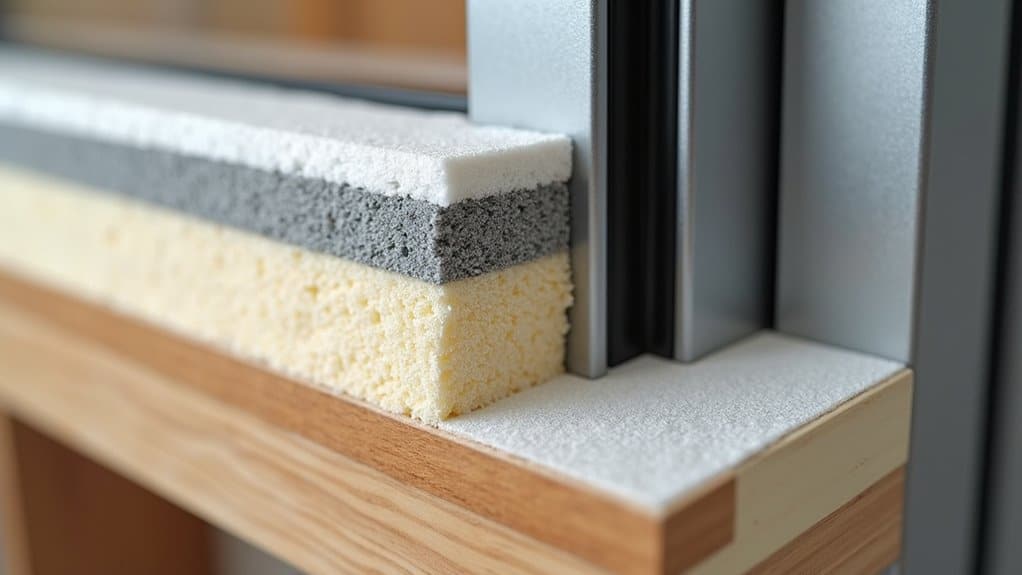
Steel door frames deliver exceptional thermal performance through strategic insulation core selection and structural design improvements. You’ll find polyurethane foam cores achieve R-values up to 12, dramatically outperforming polystyrene alternatives. Thermal breaks within the frame structure disrupt heat conduction, enabling thermal bridging minimization while multi-layer sandwich construction boosts durability. Steel doors also provide superior security and forced-entry resistance that protects your home beyond thermal performance.
You can further optimize performance through continuous frame sealing via magnetic or compression weatherstripping systems that eliminate gaps at frame-door interfaces. Door shoes with vinyl inserts target threshold areas, preventing drafts and water intrusion. Quality insulated steel frames attain R-values between 5 and 12, potentially reducing heating and cooling costs by 15% when professionally sealed. Proper installation ensures the effective thermal barrier performance that maximizes your home’s energy efficiency.
You’ll also appreciate that steel-insulated systems cost 30% less than fiberglass alternatives while delivering comparable energy savings, making them economically practical for extensive home protection.
Vinyl (uPVC) Door Frame Insulation
Because you’re seeking a balance between thermal performance and affordability, uPVC door frames offer a compelling alternative to steel and fiberglass systems. Multi-chambered profiles trap air, reducing heat transfer and lowering utility costs over time. You’ll benefit from superior acoustic insulation through fusion-welded joints and airtight seals that minimize external noise infiltration.
The material’s non-porous composition resists moisture, UV degradation, and temperature fluctuations, ensuring long term durability across diverse climates. You won’t experience rotting, rusting, or warping, performance typically exceeds 30 years with minimal maintenance. Unlike timber frames, uPVC requires only regular cleaning without painting or sealing. With life expectancy of around 35 years, your investment in uPVC frames provides reliable protection well into the future. The insulated aluminum and steel frames within uPVC door systems provide superior thermal resistance compared to traditional materials. Multi-point locking systems integrated into uPVC frames deliver enhanced security protection for comprehensive home safety.
You’ll achieve substantial energy savings that offset initial investment costs while maintaining consistent indoor temperatures. This combination of thermal efficiency, acoustic performance, and weather resistance makes uPVC frames a systematic solution for 2025 home protection standards.
Aluminum Door Frame (Thermally Broken) Insulation
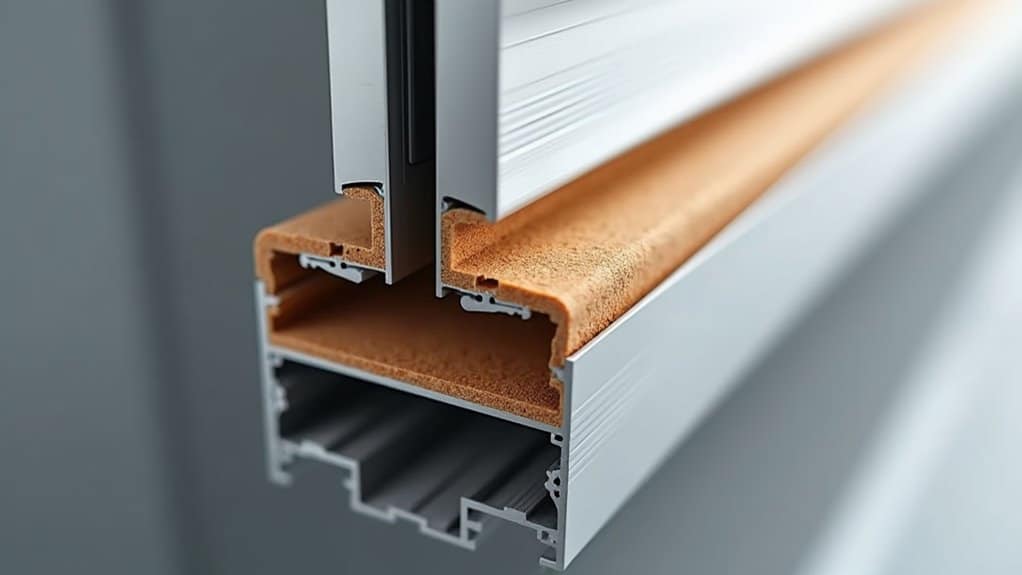
Modern thermally broken aluminum frames represent a significant advancement in door system design, combining the structural strength and aesthetic appeal of aluminum with engineered thermal resistance. You’ll find polyamide barriers interrupting heat transfer between interior and exterior elements, substantially lowering U-factor ratings and reducing heating/cooling costs. The built-in insulation of these frames makes them particularly ideal for coastal homes where durability against salt air corrosion is essential. These thermal breaks also help minimize noise transmission, creating a quieter indoor environment while maintaining energy efficiency. The naturally resistant to rust and corrosion properties of aluminum ensure these frames maintain their performance and appearance for decades with minimal deterioration.
When paired with low emissivity glazing or insulated core panels, these systems achieve thermal performance comparable to wood frames while maintaining slim, contemporary profiles. You benefit from minimized condensation risk, reduced drafts, and improved sound insulation.
| Feature | Benefit | Performance |
|---|---|---|
| Thermal breaks | Heat transfer reduction | Comparable to wood frames |
| Minimal maintenance | Long-term durability | Rust/corrosion resistant |
| Design flexibility | Modern aesthetics | Supports large glass panes |
Proper installation with attention to air sealing guarantees you maximize insulation benefits. Reference NFRC labels to compare U-factor and SHGC values across products.
Frequently Asked Questions
What Is the Average Cost Difference Between Door Frame Insulation Types?
You’ll find significant cost disparities among door frame insulation options. Spray foam insulation ranges from $3.00, $7.00+ per square foot installed, while rigid foam insulation costs $1.50, $4.00 per square foot for materials alone. The average cost difference between rigid foam insulation versus spray foam insulation reaches approximately 2, 3× higher for spray applications. Budget-conscious homeowners typically choose weatherstripping at $5, $30 per door, up to 30× cheaper than premium foam solutions, though with reduced thermal performance metrics.
How Often Should Door Frame Insulation Be Maintained or Replaced?
You should establish regular inspection schedules annually, or monthly in harsh coastal environments. You’ll want to replace your weatherstripping and foam seals every 3, 5 years, depending on exposure and maintenance. You must inspect immediately after severe weather or if you notice drafts and temperature fluctuations. You’ll achieve ideal performance by cleaning monthly, lubricating hardware annually, and addressing gaps promptly with caulk to prevent air leakage and system degradation.
Which Frame Type Works Best for Extreme Climate Conditions?
Composite and thermally-broken steel frames work best for your extreme climate conditions. You'll achieve superior performance by combining these materials with rigid foam insulation options that reduce heat transfer effectively. Implement air sealing techniques for door frames, including silicone weatherstripping and foam strips, to optimize energy efficiency. You're looking at R-values exceeding 10 with proper installation. This systematic approach minimizes warping, rust, and air infiltration while maintaining structural integrity across severe temperature fluctuations.
Can Existing Door Frames Be Retrofitted With Better Insulation?
Yes, you can retrofit your existing door frames with energy efficient retrofits using weatherstripping, foam insulation, and door sweeps, all DIY-friendly options completed in under an hour. These solutions reduce heating/cooling costs by up to 15% while preserving frame integrity. For larger gaps, expanding spray foam offers superior R-values, though professional installation considerations become relevant here due to application complexity. Proper measurement and full perimeter sealing guarantee ideal performance and long-term effectiveness without costly frame replacement.
What Installation Timeline Is Typical for Different Door Frame Materials?
You’ll find installation timelines vary by material. The installation timeline for wood frames typically spans 2, 4 hours for standard pre-hung units, extending to 6 hours if you’re addressing rot or custom trim. The installation timeline for metal frames, including steel and aluminum, generally completes in 2, 3 hours, though insulated variants add roughly one hour. Fiberglass frames mirror wood timelines at 2, 4 hours. You should factor in supplementary 30, 60 minutes post-installation for weatherproofing and quality checks across all materials.