
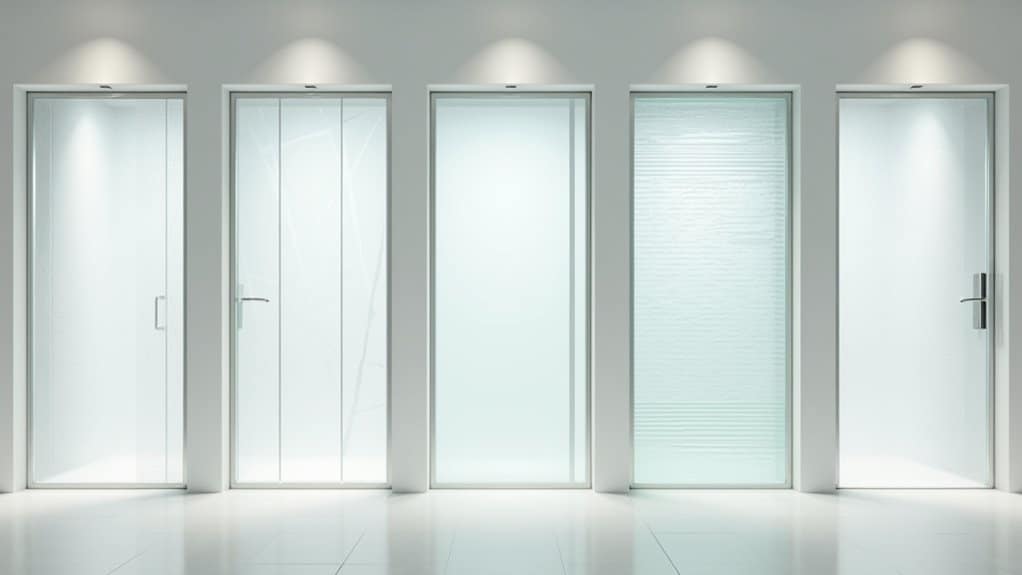
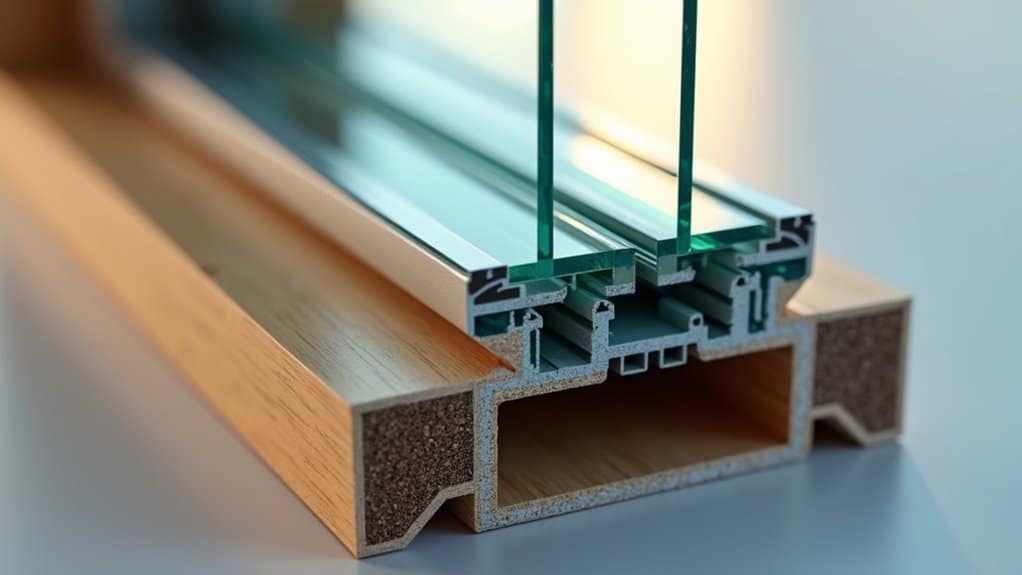
You can improve your door’s security without compromising style. Laminated glass holds fragments in place during impact, while tempered glass is four times stronger than standard varieties. Frosted and opaque options provide privacy through light scattering. Tinted glass offers modern security aesthetics. Patterned designs balance visibility with protection. You’ll find that combining these glass types creates maximum defense customized to your specific needs.
Laminated Security Glass for Proven Durability

When you’re evaluating door glass options, laminated security glass stands out as a high-performance solution that combines multiple protective benefits in a single panel. You’ll appreciate how the interlayer holds fragments in place during impact, preventing injury and maintaining structural integrity even after repeated blows.
You gain superior durability that reduces replacement frequency and long-term maintenance costs. The glass resists breakage from storms, earthquakes, and everyday accidents while sustaining its aesthetic appeal over decades. This extra protective layer also provides enhanced fire resistance, preventing flames and smoke from entering your interior during emergencies. Laminated glass can be strengthened with materials like polyvinyl butyral or SGP for even greater performance. Unlike tempered glass, which shatters into small cubes, laminated glass maintains its spider web crack pattern to preserve the barrier even when damaged.
You’ll also benefit from acoustic insulation that reduces noise by up to 50%, creating quieter interiors. The interlayer blocks 99% of UV rays, protecting furnishings from fading while amplifying energy efficiency. This environmental sustainability aspect means you’re lowering your property’s carbon footprint through reduced replacements and improved thermal performance.
Tempered Glass: Strength Through Advanced Processing
Because standard glass fractures into dangerous shards, tempered glass offers a fundamentally safer alternative through advanced heat-processing technology. You’ll benefit from glass that’s approximately four times stronger than annealed varieties, with superior resistance to impact and thermal shock. During manufacturing, raw materials undergo heating to 600, 700°C, followed by rapid air cooling that creates compressive surface stress and internal tensile stress. This process generates exceptional durability for your door applications.
Thermal tempering remains the industry standard due to its cost-effectiveness and scalability, though chemical tempering provides an alternative option. The molten glass is carefully shaped into sheets through float glass manufacturing to ensure consistent thickness and quality before the tempering stage. When breakage occurs, you’ll experience small, blunt fragments rather than sharp shards, significantly minimizing injury risk. Building codes frequently mandate tempered glass for doors, reflecting its proven safety performance. Common applications include shower doors, storefronts, and smartphone screens, demonstrating the versatility across industries. You can customize your door with clear, tinted, or decorative finishes without compromising strength, making tempered glass an ideal choice for high-traffic residential and commercial installations. The greater resistance to thermal stress ensures your door glass maintains integrity even in environments with significant temperature fluctuations.
Frosted and Opaque Glass for Privacy Protection
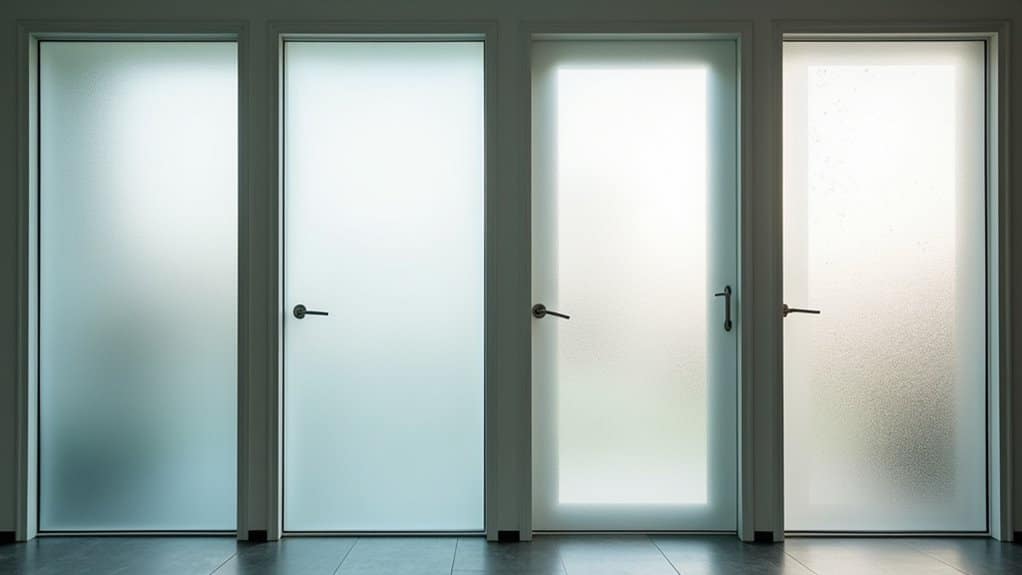
You’ll find that frosted and opaque glass gives you privacy through light diffusion, allowing natural daylight to enter while obscuring interior views with shadows and vague shapes. These finishes, whether acid-etched, sandblasted, or film-applied, maintain consistent privacy regardless of time of day or lighting conditions, and they’re available in varying opacities to match your specific design needs. When you select frosted or opaque glass for your doors, you’re combining functional privacy protection with aesthetic flexibility that works across traditional, modern, and commercial architectural styles without sacrificing brightness or visual comfort. Custom design options allow you to incorporate logos and patterns into the frosted glass for a personalized brand presence. The resilient material resists tears and abrasions that could compromise the privacy barrier over time. Frosted glass achieves its distinctive translucent appearance through the scattering of light across the treated surface.
Privacy Through Light Diffusion
While traditional privacy solutions like blinds and curtains block light entirely, frosted and opaque glass offers a smarter alternative: they scatter incoming light to prevent clear visibility while still allowing daylight through. You’ll find that patterned and textured finishes provide directional light control, effectively obscuring direct lines of sight while diffusing glare simultaneously. These surfaces distort shapes and colors, limiting external visibility to vague silhouettes, ideal for entry doors, bathrooms, and office partitions where you need privacy without sacrificing natural illumination. Frosted glass diffuses light, creating a soft, subtle illumination that enhances privacy while maintaining an elegant appearance.
The aesthetic customization options are extensive, with decorative patterns, gradients, and tints available to match your architectural style. You can retrofit existing doors using films or sprays, avoiding costly replacements. Unlike blinds or curtains, frosted glass maintains consistent privacy regardless of indoor or outdoor lighting conditions, delivering both security and welcoming ambiance.
Durability Meets Aesthetic Design
Frosted and opaque glass delivers enduring privacy protection without compromising on visual appeal, a balance that’s achieved through material composition and manufacturing precision. You’ll find that tempered and laminated options provide exceptional temperature resistant performance, making them ideal for challenging environments like saunas where rapid thermal fluctuations occur. The 8mm-thick tempered frosted glass used in quality sauna doors ensures optimal durability while maintaining the soft light diffusion necessary for a comfortable sauna experience. Textured privacy glass options from quality manufacturers offer varying opacity levels to meet different privacy needs while still allowing natural light to pass through.
| Feature | Benefit |
|---|---|
| Acid etching or sandblasting | Creates varied decorative aesthetic finishes |
| Color-tinted glass | Maintains privacy while adding visual interest |
| Laminated construction | Enhances shatter resistance and longevity |
| Protective coatings | Reduces wear on etched surfaces |
| Sturdy framing systems | Supports extended product life |
You can customize opacity levels, patterns, and sizes to match your architectural requirements. Regular gentle maintenance with soft materials preserves the frosted finish, while stain and mold resistance make these solutions particularly effective in moisture-prone areas. Decorative film offers a flexible and cost-effective alternative to permanent etching techniques, allowing for easy removal or replacement if your design preferences change. This approach combines durability with personalized design elements seamlessly.
Rain and Patterned Glass for Balanced Visibility
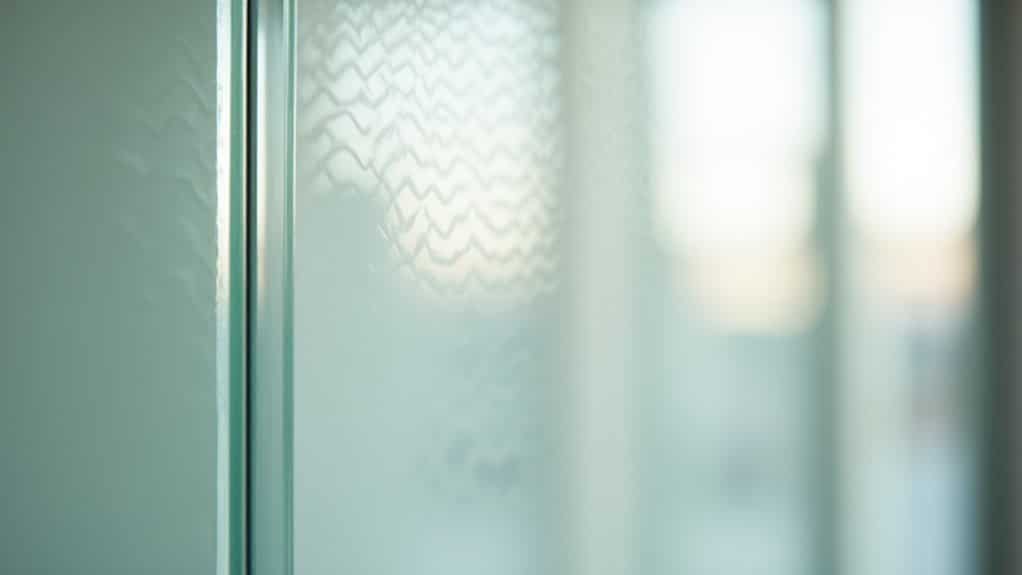
When you’re selecting door glass that maintains privacy without compromising natural light, rain and patterned glass options deliver a practical solution. Both styles distort visibility while preserving light transmission efficiency, creating an inviting atmosphere without darkening your interior spaces.
You’ll appreciate how the textured or patterned surfaces obscure direct lines of sight to your home’s interior while allowing abundant daylight to penetrate. These designs eliminate harsh shadows and distribute illumination evenly across entryways. Installing glass doors with these treatments can transform entryways into multipurpose transitional spaces that function as both privacy barriers and design focal points.
The decorative effects strengthen your home’s curb appeal while serving functional purposes. Rain glass diffuses sunlight to reduce glare, whereas patterned variants offer geometric, floral, or ribbed options matching your home’s aesthetic. These glass options also enhance acoustic insulation, creating a quieter home environment by reducing disruption from external noise sources.
Both options come in impact-resistant variants, tempered or laminated, providing sturdy security alongside visual privacy. You can further strengthen protection by pairing them with reinforced frames and upgraded locks.
Mirrored and Tinted Glass for Modern Security
Beyond the aesthetic and privacy benefits of patterned glass, modern security demands more sophisticated solutions that actively deter criminal activity. You’ll find mirrored and tinted glass options deliver measurable protection advantages.
One-way visibility with mirror films lets you see outside while concealing your interior from potential intruders. Tinted glass reduces direct sightlines while maintaining natural light infiltration. Both options integrate with tempered or laminated security glass for bolstered impact resistance.
Consider these key benefits:
- Easy retrofit installation using professional-grade films without replacing entire panels
- UV filtration protecting furnishings and reducing glare
- Security films that prolong forced entry time, granting response opportunities
- Compliance with rigorous safety testing standards
- Cost-effective alternatives to full glass replacement
You’ll achieve robust protection by combining these glass treatments with reinforced frames and upgraded locking mechanisms for your entryways.
Impact-Resistant Glass for Extreme Protection
While mirrored and tinted films bolster security through concealment and deterrence, impact-resistant glass delivers active protection by physically withstanding forced entry attempts and severe weather events. You’ll find laminated assemblies featuring polyvinyl butyral interlayers that retain glass fragments upon impact, preventing dangerous shards from scattering. These units meet ASTM E1996-17 and ASTM E1886-19 standards, with thicknesses ranging from 1/4 inch to 1-1/2 inches for residential applications. You can integrate fire rated glass configurations and blast resistant glass solutions for specialized threat environments. Professional installation remains critical, pairing impact-resistant panes with reinforced frames, upgraded locks, and secure doorjambs optimizes protection. Regular inspection of seals and hardware guarantees longevity, while adherence to local building codes assures ongoing compliance and effectiveness.
Combining Glass Types for Maximum Defense
Impact-resistant glass alone provides substantial protection, but you’ll achieve superior security by strategically layering different glass technologies.
Combining laminated and tempered glass creates dual-layer defense where laminated resists intrusion while tempered fragments into blunt pieces. Energy efficient insulated glass adds strength through dual panes separated by air or gas, multiplying break-force requirements by 2, 4x.
Consider these layering strategies:
- Stack laminated glass with tempered panes for maximum impact absorption
- Apply security film over multi-layer glass composition for fragment containment
- Integrate energy efficient insulated glass with reinforced frames for system-wide strength
- Pair polycarbonate layers with laminated glass for ballistic resistance
- Combine frosted or privacy glass with security layers without compromising protection
This multi-layer glass composition approach delays intrusion considerably while maintaining visibility and aesthetic appeal, optimizing both security and functionality.
Frequently Asked Questions
How Much Does Upgrading to Security Glass Typically Cost Compared to Standard Door Glass?
When you’re upgrading to security glass, you’ll typically spend 20, 600% more than standard door glass, depending on the type you choose. Tempered glass supplements 20, 50% to your costs, while laminated security glass runs 20, 100% higher. Impact-resistant options cost up to six times more. Your installation considerations shouldn’t be overlooked, you’ll likely spend an additional 15, 30% on professional installation due to specialized mounting techniques and hardware requirements.
Which Glass Type Offers the Best Balance Between Privacy and Natural Light Transmission?
You’ll find textured glass delivers the ideal balance between privacy and natural light transmission. Its patterned surface scatters light effectively while maintaining 75% daylight entry, obscuring visibility without dimming your interior. When you consider translucent glass options, textured varieties outperform frosted alternatives by offering decorative visual interest alongside functional privacy. You can further amplify performance through glass tint considerations, adding laminated or tinted films preserves light transmission while heightening security and UV protection simultaneously.
Can Security Glass Be Installed in Existing Doors, or Does It Require Replacement?
You can absolutely install security glass in your existing doors without replacing them entirely. Retrofit methods let you upgrade protection while keeping your current frames intact. You’ll want to evaluate glass thickness considerations to guarantee your frame supports the added weight. Security film installation offers a cost-effective alternative if you’re concerned about structural compatibility. Professional assessment helps determine whether overglazing, backglazing, or full glass replacement works best for your specific door setup.
What Maintenance or Cleaning Methods Are Recommended for Different Security Glass Types?
You’ll maintain your security glass by establishing a regular cleaning schedule using only pH-neutral, non-abrasive cleaners and microfiber cloths, never ammonia or harsh solvents. You should apply solutions to cloths, not directly onto glass, then dry immediately to prevent streaking. You’ll protect laminated and polycarbonate types with extra care, avoiding metal tools entirely. You’ll schedule professional inspections to detect delamination, haze, or coating damage early, ensuring your installation’s long-term integrity and performance.
How Do I Know Which Glass Option Meets Local Building Codes for My Area?
You’ll consult your local building department initially, they’ll confirm which safety glazing standards apply to your region. Request specific code requirements for door glass in your zone, then verify that any glass you’re considering displays ANSI Z97.1 or CPSC 16 CFR 1201 certification labels. You should also check your homeowner’s insurance policy, as it may impose additional requirements. Ultimately, work with certified installers who’ll confirm compliance before installation.