
You shouldn’t delay fixing door frame damage, it cascades into serious problems. Warping weakens load distribution and triggers foundation shifts. Misalignment prevents proper lock engagement, creating security gaps that 74% of burglars exploit. Moisture damage rots wooden frames and corrodes metal ones. Trip hazards and entrapment risks endanger occupants. Material fatigue accelerates joint failure, requiring expensive hardware replacement. Early intervention prevents structural compromise, protects your family, and secures your home before complications multiply.
The Structural Consequences of Neglected Door Frame Damage
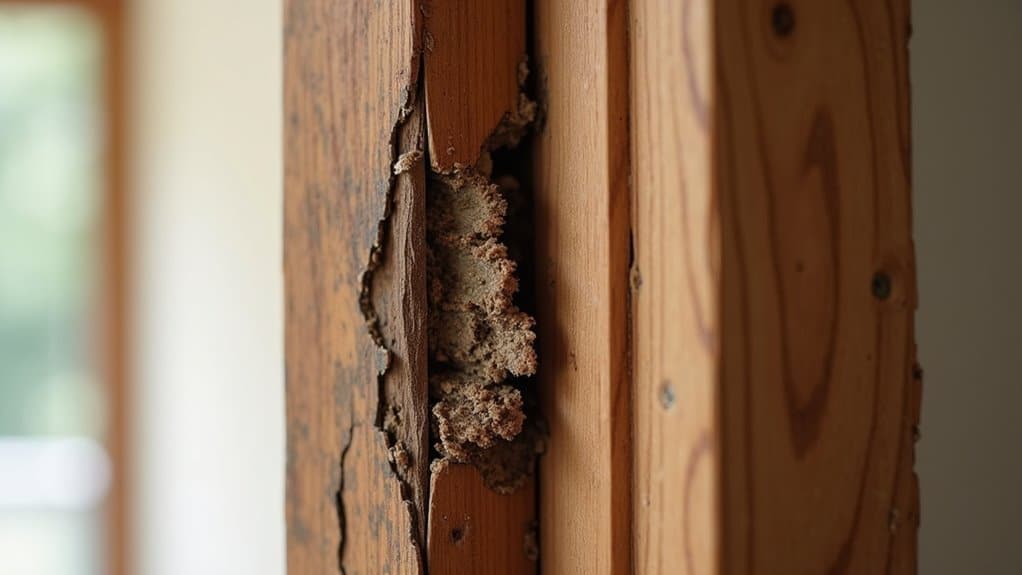
When you ignore door frame damage, you’re allowing a cascade of structural failures that’ll compromise far more than the door itself. Frame warping impairs your building’s comprehensive support system, while cracks reduce load distribution and weaken connected structures. Misalignment can trigger foundation shifts, accelerating settlement issues throughout your home.
Repetitive mechanical stress from daily use accelerates material fatigue and joint looseness. Prolonged neglect often demands full structural replacements beyond the frame, affecting adjacent wall components. A damaged door frame also creates security vulnerabilities that compromise home protection. These failures create energy efficiency degradation as gaps increase air leakage and thermal bridging reduces HVAC performance. Your envelope integrity compromise allows moisture penetration, triggering rot in wooden substructures and corrosion in metal frames. Regular inspections at least once yearly can help catch problems early before moisture damage spreads through the frame system. Termite damage can hollow out the wood, creating additional structural compromise that accelerates deterioration. Weakened fasteners cascade into structural attachment failures, potentially spreading damage to floor and wall framing systemwide.
How Damaged Frames Increase Accident and Injury Risk
Beyond the structural deterioration that weakened door frames cause, they’re a direct source of preventable injuries that affect thousands annually. Damaged frames escalate accident risks through multiple mechanisms:
- Pinch and crush injuries, Misaligned frames trap fingers and hands; England reports 40,000 annual finger injuries with over 5% requiring amputation or reconstructive surgery.
- Trip and fall hazards, Warped thresholds create uneven surfaces, particularly endangering elderly adults who account for 488,600 emergency department injuries over five years.
- Entrapment and egress obstruction, Bent frames jam during emergencies, blocking swift exit and delaying rescue operations. In the US alone, an estimated 356,960 hospital emergency cases related to door sills or frames occurred in 2003, underscoring the widespread nature of these preventable incidents.
You’ll face significant medico-legal consequences when preventable injuries occur on your property. Physical impairment effects from door-related trauma, including mobility loss and nerve damage, generate substantial liability claims and medical costs that proactive maintenance prevents.
Security Vulnerabilities Created by Compromised Door Frames
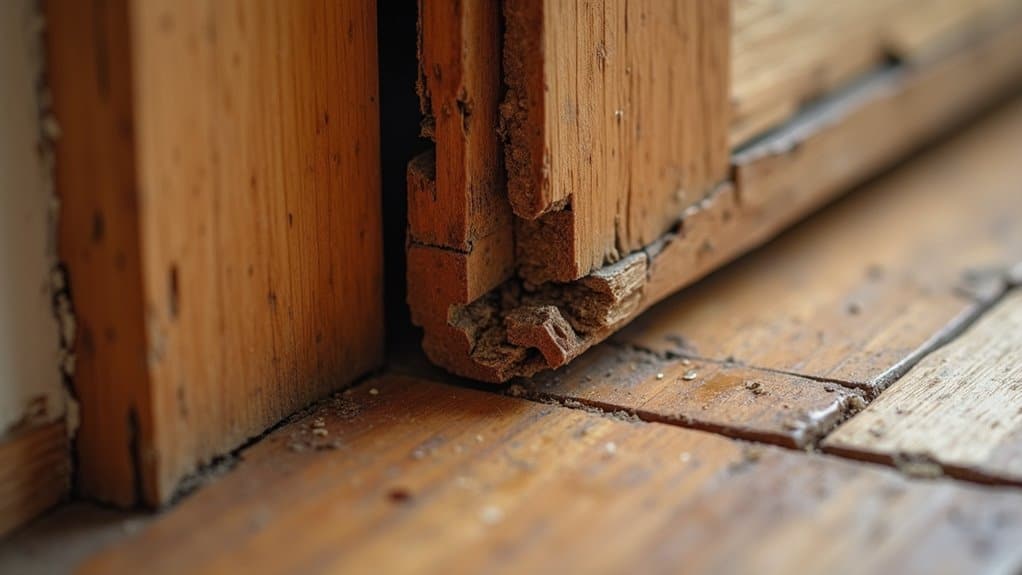
Your damaged door frame dramatically escalates forced entry risk because intruders exploit frame compromise rather than attacking locks directly, approximately 74% of break-ins target frame weaknesses instead of lock mechanisms. When you don’t address misalignment or structural deterioration, your lock mechanism becomes ineffective regardless of its quality, since a compromised frame allows the door to flex or separate under pressure without the bolt ever needing to be defeated. This combination of frame vulnerability and lock misalignment creates a critical security gap that you must remediate to restore your entry point’s protective function. Misaligned doors can also cause wear and tear on hardware components, resulting in costly repairs and system downtime that compounds your security vulnerabilities. Strong, well-installed deadbolts paired with frame reinforcement provide robust defense against brute force attacks. Professional installation of reinforced door frames ensures proper anchoring to surrounding structure and appropriate fastener selection based on your wall construction type, which determines whether your security investment actually prevents forced entry attempts.
Forced Entry Risk Escalation
Roughly 74% of successful forced entries in business environments exploit damaged door frames rather than targeting lock mechanisms directly. Your frame’s structural integrity determines whether your security investment pays off or fails catastrophically.
Frame deterioration indicators, cracks, gaps, warping, and loose hinges, create vulnerabilities that experienced intruders systematically exploit. Consider these material strength considerations:
- Hollow or builder-grade frames collapse under kicking attacks, while reinforced steel frames withstand sustained force
- Rust and corrosion compromise metal frames’ resistance to prying tools and cutting techniques
- Inadequate anchoring allows frames to pull away from wall structures during breaches
Even high-security locks become ineffective when installed in compromised frames. Your door’s strength becomes irrelevant if the frame buckles. Weather exposure and age accelerate frame deterioration through moisture damage and warping, making seasonal inspections critical to catching vulnerabilities early. Regular inspections identify deterioration before criminals target your entry points, making frame maintenance essential to your security strategy. One-way deadbolt mechanisms cannot provide adequate protection without a structurally sound frame to receive the bolt’s full throw length. Installing deadbolts and reinforcing door frames with high security door frames can significantly increase protection against forced entry attempts.
Lock Mechanism Misalignment Issues
When door frames shift even slightly out of alignment, they create gaps that’ll compromise your entire locking system’s effectiveness. Misalignment prevents your lock mechanism from fully engaging with the strike plate, leaving your door vulnerable to manipulation even when secured.
You’ll notice doors becoming difficult to lock or disengage, especially as frame damage worsens. Latch misalignment causes excessive friction and accelerated wear on hinges and locksets. Over time, this repetitive stress can cause complete mechanical failure, requiring expensive hardware replacement. Settling of the house can shift the door frame, further exacerbating alignment issues. To prevent security failures, ensure gearboxes maintain a misalignment of no more than 0.1 mm and verify alignment using a dial indicator or micrometer.
Implementing periodic maintenance protocols prevents these cascading problems. Regular inspections identify gaps before they compromise security. Lock timing adjustments during seasonal shifts keep mechanisms functioning properly. Addressing minor frame issues immediately, tightening hardware, applying wood putty, stops minor misalignment from escalating into serious security and operational failures.
Financial Impact of Delaying Door Frame Repairs
You’ll save up to 30% on repair costs by addressing door frame damage promptly, whereas ignoring minor issues can double or triple expenses as deterioration accelerates. Emergency repairs routinely exceed $1,200, and deferred maintenance averages over $5,600, far surpassing the cost of preventive fixes. Compounding deterioration spreads structural damage beyond the frame itself, eventually forcing costly full replacements that compromise adjacent walls, hardware, and your building envelope’s integrity. Small cracks in door frames can widen over time, progressively affecting the structural integrity of your entire entry point system. Minor issues can quickly lead to major mechanical failures if ignored, multiplying the financial burden over time and requiring emergency service surcharges.
Early Repair Cost Savings
Three distinct financial stages define the economics of door frame repair: the minimal expense of early intervention, the mounting costs of delayed action, and the considerable expense of full replacement.
You’ll find that preventive maintenance benefits greatly reduce long-term expenses. Early repairs typically cost $50, $220, while neglected damage escalates to $300, $850. Consider these cost-saving strategies:
- Address minor issues immediately to prevent structural deterioration and secondary water damage expenses
- Implement budget-friendly DIY solutions using basic materials like filler and sandpaint for small cracks
- Schedule grouped repairs rather than reactive call-outs, eliminating repeated labor premiums
Industry research shows you can reduce long-term repair costs by up to 30% through timely intervention. Delaying repairs compounds expenses across multiple areas, frames, adjacent walls, energy efficiency, and hardware damage. Proactive repairs contain damage to the smallest, most cost-effective area possible, deferring expensive replacements.
Emergency Replacement Expenses
Delaying door frame repairs doesn’t just extend the timeline, it fundamentally transforms minor fixes into costly replacencies that drain your budget far more severely. What starts as a $75, $200 repair escalates to $500+ emergency replacements when structural compromise occurs. You’ll face premium labor rates exceeding standard pricing, especially in urban areas where skilled labor availability commands $40, $60 hourly during expedited service calls.
Entry door replacements demand $500, $1,500 investments due to security requirements and mandatory professional installation. Secondary damage compounds expenses dramatically, water infiltration, termite infestation, and rot necessitate structural assessments beyond frame restoration. Warranty coverage often excludes emergency scenarios resulting from neglect, leaving you responsible for full out-of-pocket costs.
Your delay strategy backfires financially. Addressing frame damage proactively costs 3, 10 times less than emergency interventions.
Compounding Deterioration Expenses
Every month you postpone door frame repairs, costs multiply exponentially rather than remain static. Neglected damage spreads into surrounding walls, escalating repair complexity and expenses substantially.
You’ll face compounding deterioration through multiple pathways:
- Structural expansion: Rot or warping extends beyond the frame into adjacent structures, requiring reframing at $7, $16 per square foot rather than basic repairs costing $50, $200.
- Interior water damage risks: Moisture ingress compromises drywall, flooring, and insulation, necessitating specialized treatments and reconstruction across multiple areas.
- Gradual aesthetic decline: Secondary damage accumulates, forcing you to hire multiple contractors and increasing project overhead costs.
Additionally, annual material inflation drives prices higher. You’ll eventually spend $200, $700 for frame replacement instead of addressing early-stage cracks inexpensively. Delaying repairs guarantees escalating financial consequences far exceeding initial intervention costs.
Maintaining Long-Term Performance Through Proactive Maintenance
How do you transform door frame maintenance from a costly burden into a predictable, manageable expense? You’ll establish systematic inspection schedules that catch minor issues, cracks, misalignment, moisture damage, before they escalate into structural failures. Regular maintenance extends your door frames’ functional lifespan substantially, reducing replacement frequency and associated costs.
This proactive approach delivers measurable benefits: companies typically save 12, 18% on total maintenance costs compared to reactive strategies. You’ll gain improved curb appeal through consistent upkeep, directly supporting long-term tenant retention and property marketability. Preventive care also maintains thermal integrity, blocking drafts and moisture infiltration that compromise energy efficiency.
Building Code Compliance and Legal Obligations
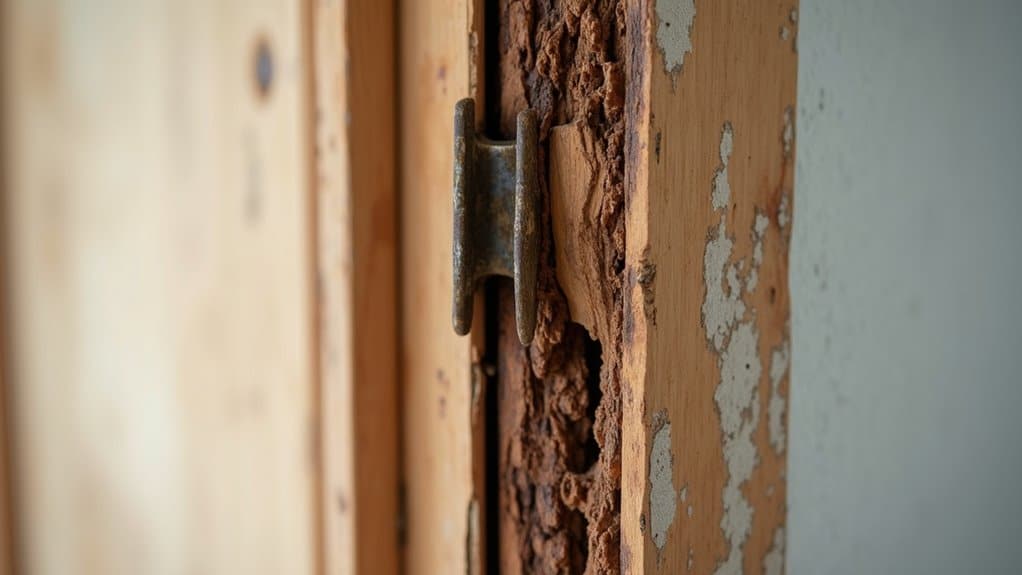
While proactive maintenance protects your investment and operational costs, it’s just as crucial to recognize that door frame repairs aren’t merely a best practice, they’re a legal mandate governed by building codes that carry significant consequences for non-compliance.
Door frame repairs aren’t optional, they’re legally mandated by building codes with serious compliance consequences.
You’re obligated to meet industry standards compliance through NFPA 80, IBC, and local authority requirements. Failure exposes you to:
- Code violations, fines, and potential operational shutdowns from regulatory bodies
- Insurance policy implications, including claim denials if frame damage contributes to loss
- Civil liability in fire or injury incidents where unaddressed frame damage is cited
Property owners and managers must maintain documentation of inspections and repairs. Your local AHJ enforces these standards and approves modifications to rated assemblies. Non-compliance directly affects your legal standing and coverage eligibility.
Early Detection and Prevention Strategies
The foundation of effective door frame management rests on identifying deterioration before structural failure occurs. You’ll benefit from establishing seasonal inspection schedules that catch damage early, particularly after extreme weather events. During inspections, use a flashlight to examine hidden cracks, gaps, and water damage at the frame’s base. Press gently on the frame to detect soft spots indicating rot.
Your early intervention methods should include cleaning debris around frames, reapplying sealant, and tightening hardware regularly. You’ll prevent moisture accumulation by ensuring proper drainage and installing weatherstripping. Monitor for warning signs: visible fungal growth, warping, splintering edges, and doors that swing independently. Addressing these indicators promptly prevents costly structural compromise and maintains safety, enormously extending your door frame’s lifespan. Door frames for severe weather are essential in areas prone to harsh conditions. Investing in high-quality materials designed to withstand extreme temperatures and heavy winds can significantly enhance your home’s resilience.
When Professional Repair or Replacement Is Necessary
Despite your best preventive efforts, some door frame damage progresses beyond what basic maintenance or DIY repairs can safely address. You’ll need professional assessment when: Repair techniques for frames can vary significantly depending on the extent of the damage. It is essential to choose methods that ensure structural integrity while also enhancing the appearance of the door frame.
- Structural compromise, Large cracks, rot affecting load-bearing sections, or frame separation from walls signal core integrity loss requiring expert diagnosis and reconstruction.
- Recurring functional failures, Persistent misalignment, hardware that won’t hold, or chronic drafts after repeated repairs indicate underlying settling or warping demanding specialized intervention.
- Fire-safety violations, Damaged fire-rated frames with excessive clearance or missing components require certified installer correction to maintain code compliance and insurance coverage.
Professional replacement prevents homeowner liability from injuries, forced entry, or catastrophic failure. You’ll also restore manufacturer certifications and security ratings that DIY patches can’t recover.
Frequently Asked Questions
What Are the Most Common Causes of Door Frame Damage in Residential and Commercial Buildings?
You’ll encounter several primary damage sources in residential and commercial settings. Impact damage from carts, equipment, and forced entries compromises your structural integrity issues rapidly. Weather-related damage stems from moisture exposure, causing wood rot and warping. Foundation settlement creates misalignment and cracking. Poor installation practices leave frames vulnerable to premature failure. Humidity fluctuations trigger material expansion and contraction. You should address these issues promptly to prevent escalating deterioration and safety hazards.
How Can I Temporarily Stabilize a Damaged Door Frame Until Professional Repairs Are Available?
You’ll stabilize your damaged frame by installing temporary framing support using wood braces and long screws anchored into wall studs. Reinforce loose sections with metal plates at hinges and latches. For severe cases, you can employ door wedging techniques, fitting a cut-to-fit board between the frame and floor to prevent movement. Apply high-impact tape for edge protection, limit door usage, and monitor these measures until professional repairs arrive.
Does Homeowners Insurance Typically Cover Door Frame Damage, and What Documentation Is Needed?
Your homeowners insurance typically covers sudden, accidental door frame damage under dwelling protection, provided your home insurance policy limits include structural components. You’ll need photographic evidence, contractor estimates, and incident reports for vandalism or break-ins. Professional assessment requirements are essential; most insurers mandate licensed contractor evaluations before approving claims. You must document the damage’s cause as accidental, not neglect-related, and submit original policy documents to substantiate coverage eligibility.
What Is the Average Timeline for Professional Door Frame Repair Versus Complete Replacement?
You’ll typically complete minor door frame repairs within 2-4 hours, while standard repairs take 4-6 hours. For your average repair timeline, expect a single workday finish. When you’re considering a complete replacement timeline, you’re looking at 4-6 hours for standard residential doors. However, complex installations extend to 1-2 days. You’ll account for preparation, measurement, cutting, installation, and finishing work. Factors like material type, custom sizing, and weather conditions drastically impact your actual timeline.
Are There DIY Inspection Methods Homeowners Can Use to Identify Early Signs of Frame Deterioration?
Yes, you can perform effective DIY inspections using straightforward techniques. Start with visual inspections, examining all frame surfaces for cracks, chips, and gaps. For moisture detection, you’ll probe suspect areas with a screwdriver, checking for softness indicating rot. You should also check weather-stripping integrity and look for discoloration or peeling paint. Test door operation for sticking or dragging. These hands-on methods help you catch deterioration early, preventing costly repairs.