
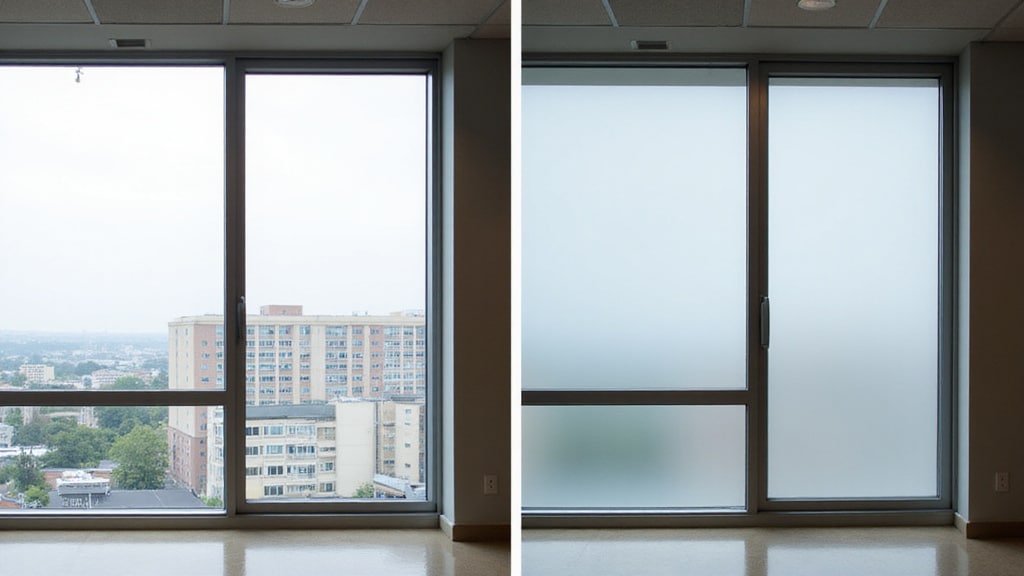
You’ve got four hurricane shutter types to compare. Storm panels are cheapest at $9, $20 per square foot, bolting into C-tracks for category 5 protection. Accordion shutters run $15, $25, deploying in under 30 seconds without storage. Bahama shutters cost $20, $50, adding louvered shade and curb appeal. Roll-downs top the range at $25, $60 (electric up to $175), offering motorized convenience. Each trades cost against ease, and the right pick depends on your specific needs.
How These 4 Hurricane Shutters Actually Work
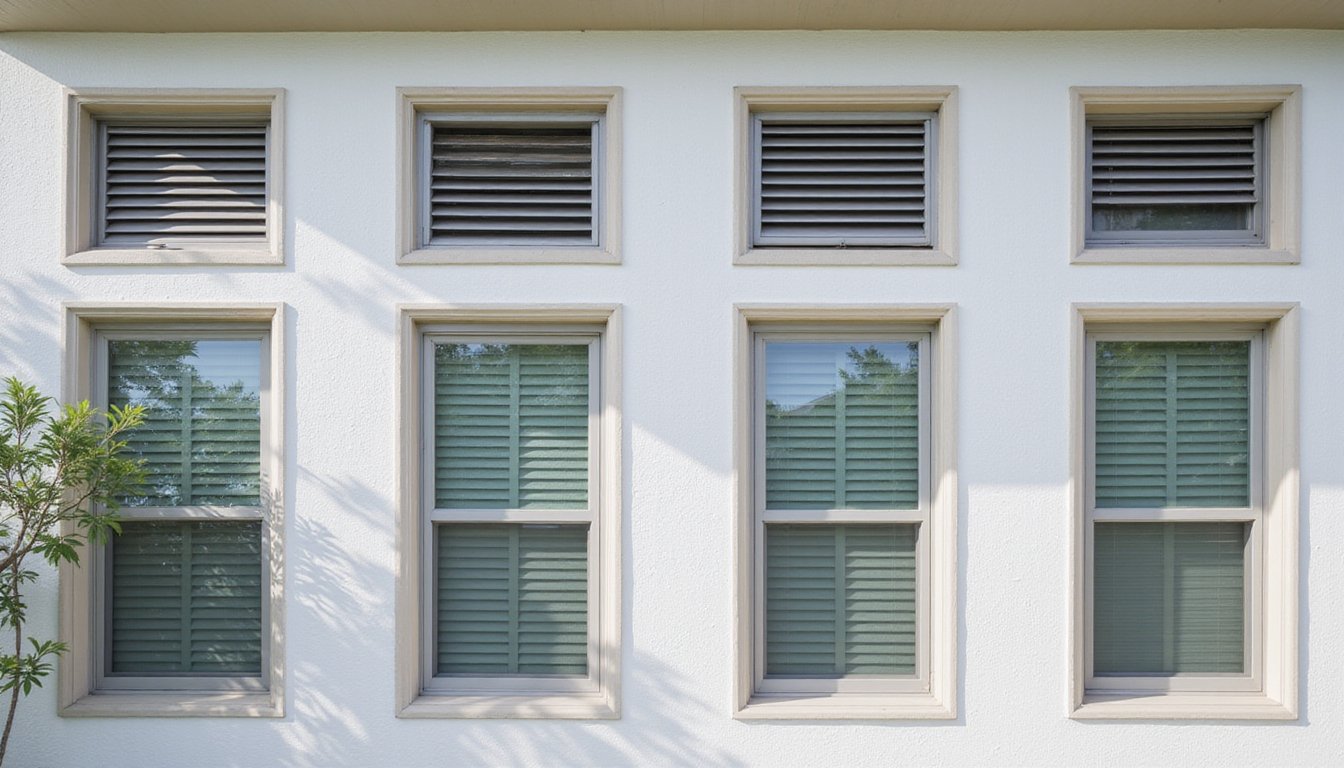
Each of these four shutter types closes off an opening differently, and knowing how they actually work helps you match the right system to your home. In this hurricane shutter comparison, start with accordion shutters: you pull the interlocking vertical blades from both ends toward the center and lock them into a continuous barrier. Roll-down shutters descend from a housing box above the opening, deploying by crank or motor, then lock in place. Bahama shutters hinge at the top and swing down from their angled, awning-like position over the window. Storm panels bolt or slide into C-tracks around the opening, overlapping grooved aluminum or polycarbonate sections. Each method covers the opening to block wind-borne debris, rain, and pressure changes, but deployment effort varies considerably. Quality systems must comply with the Miami Dade Building Code, Florida Building Code, and Texas Department of Insurance standards to ensure maximum protection.
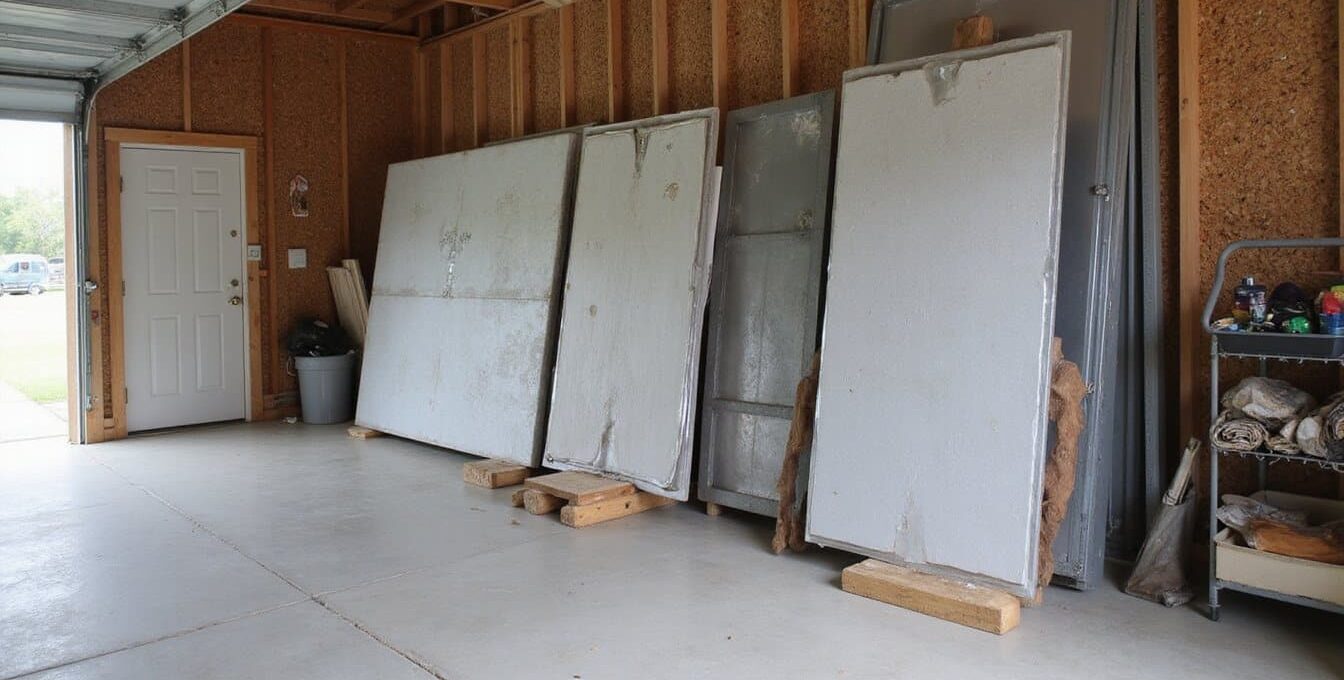
Storm Panels: The Cheapest Hurricane Protection
Now that you know how each system deploys, let’s talk cost, because storm panels win that category outright. Storm panel shutters run roughly $9 to $20 per square foot installed, undercutting roll-downs ($25 to $60) and Bahama shutters ($20 to $50). A standard 24″ x 42″ window costs about $70 to $240 depending on materials and installer. You’ll choose between corrugated aluminum, steel, or clear polycarbonate, with panels sized to extend 6 to 8 inches beyond the opening height. That reinforced construction resists strong winds, heavy rain, and flying debris, creating a physical barrier against broken windows and water infiltration. Despite being budget-friendly, storm panels can withstand category 5 hurricanes, making them a serious permanent protection option. The tradeoff is labor and convenience: installers charge $45 to $100 per hour, and you’ll handle storage and deployment yourself each time a storm threatens.
Accordion Shutters: The Value Pick for Fast Deployment
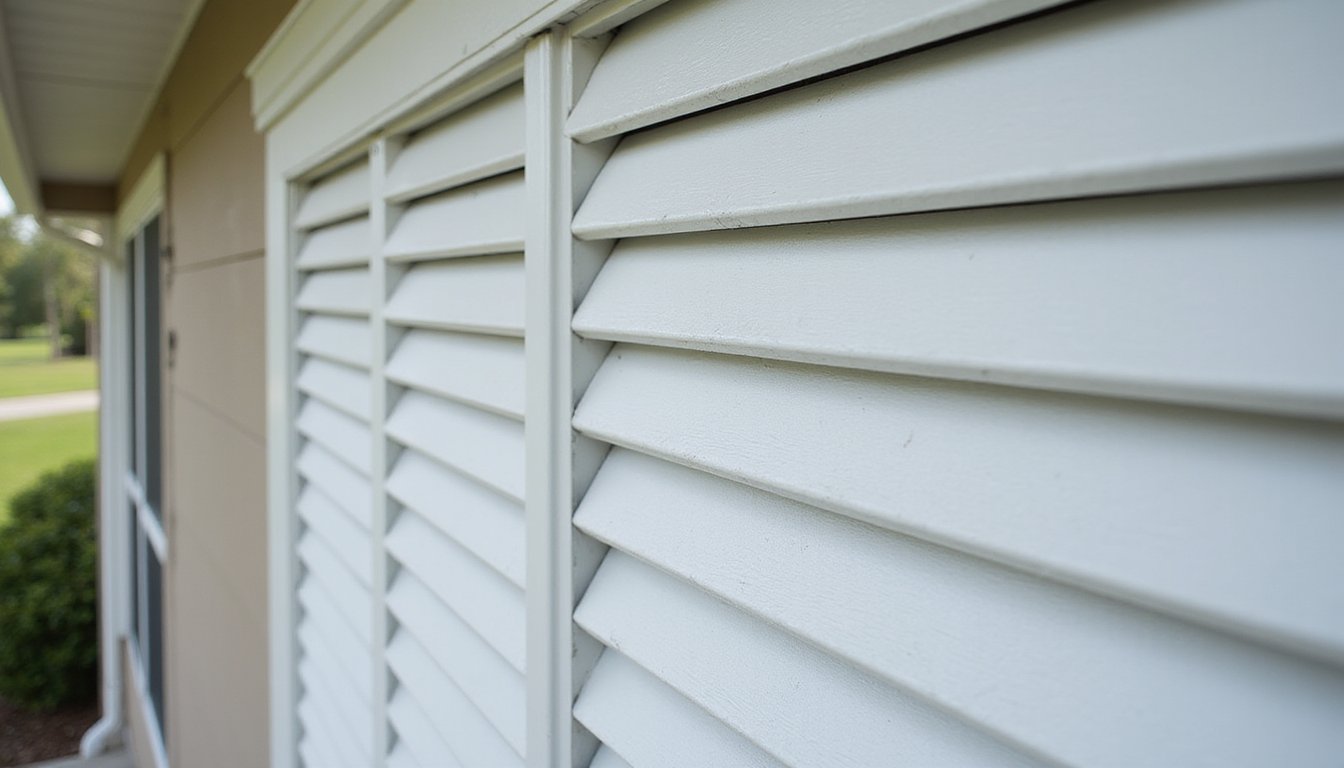
While storm panels win on price, accordion shutters win on convenience, and that’s why they’re the value pick for most homeowners. Accordion shutters mount permanently on tracks beside each opening, so you skip seasonal installation and panel storage entirely. When a warning hits, you pull the folded aluminum panels across the opening and latch them, tool-free, often in under 30 seconds. That speed matters when storms leave little prep time. Beyond convenience, accordion shutters deliver excellent value and long-term durability, making them a smart investment that pays off season after season.
At roughly $15, $25 per square foot installed, you’ll spend about $6,000, $10,000 covering a typical 400-square-foot home. That’s less than motorized roll-downs while delivering equivalent protection when both carry Florida Product Approval. The interlocking panels block wind, rain, and debris, add year-round safety, and span moderate-to-large windows, doors, and sliders without sacrificing usability between storms.
Bahama Shutters: Storm Protection With Curb Appeal
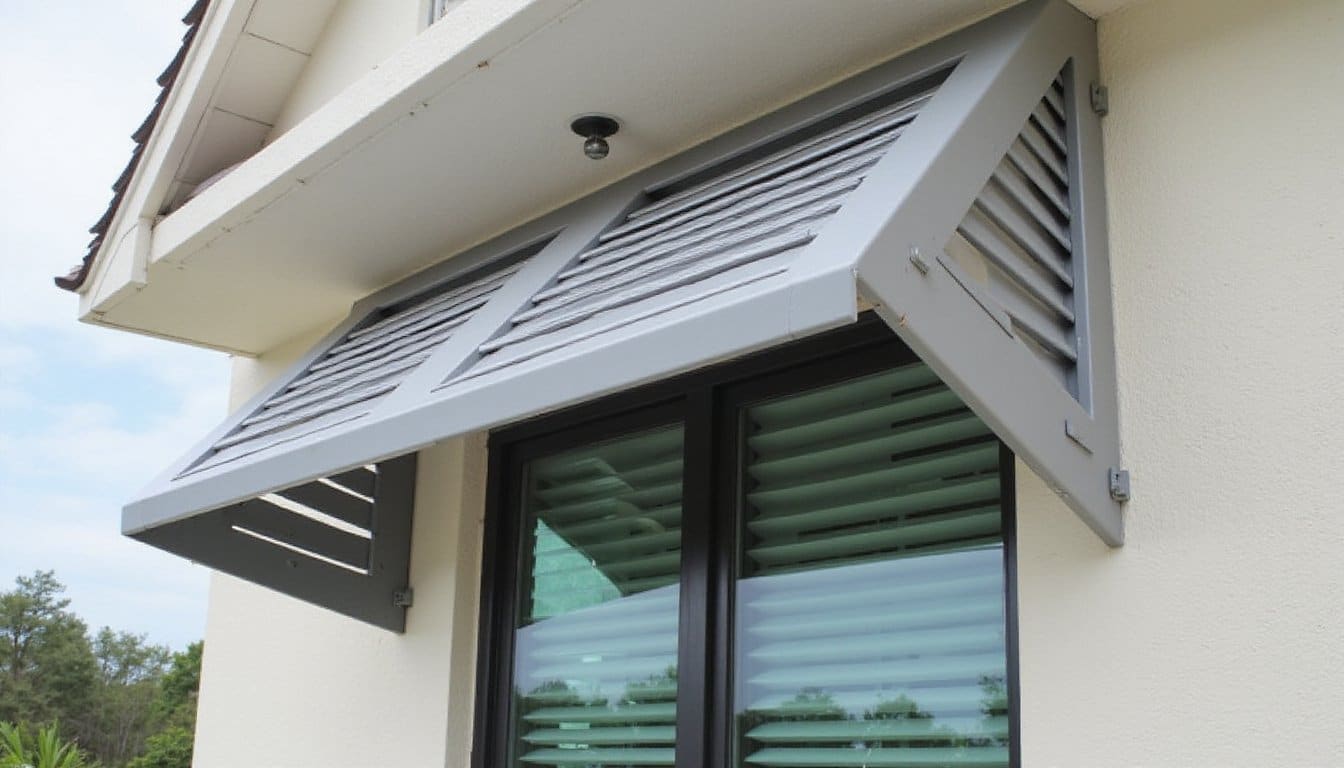
You’ll appreciate Bahama shutters‘ top-hinged louvered design, which props open like an awning to redirect sunlight, control daylight, and cut solar heat gain while still allowing airflow. That same angled position gives you shade and rain protection over the opening without sacrificing ventilation on fair-weather days. And because they mount permanently across the façade, they deliver a distinctive tropical look that boosts curb appeal year-round, something stowed-away shutters can’t match.
Louvered Design Benefits
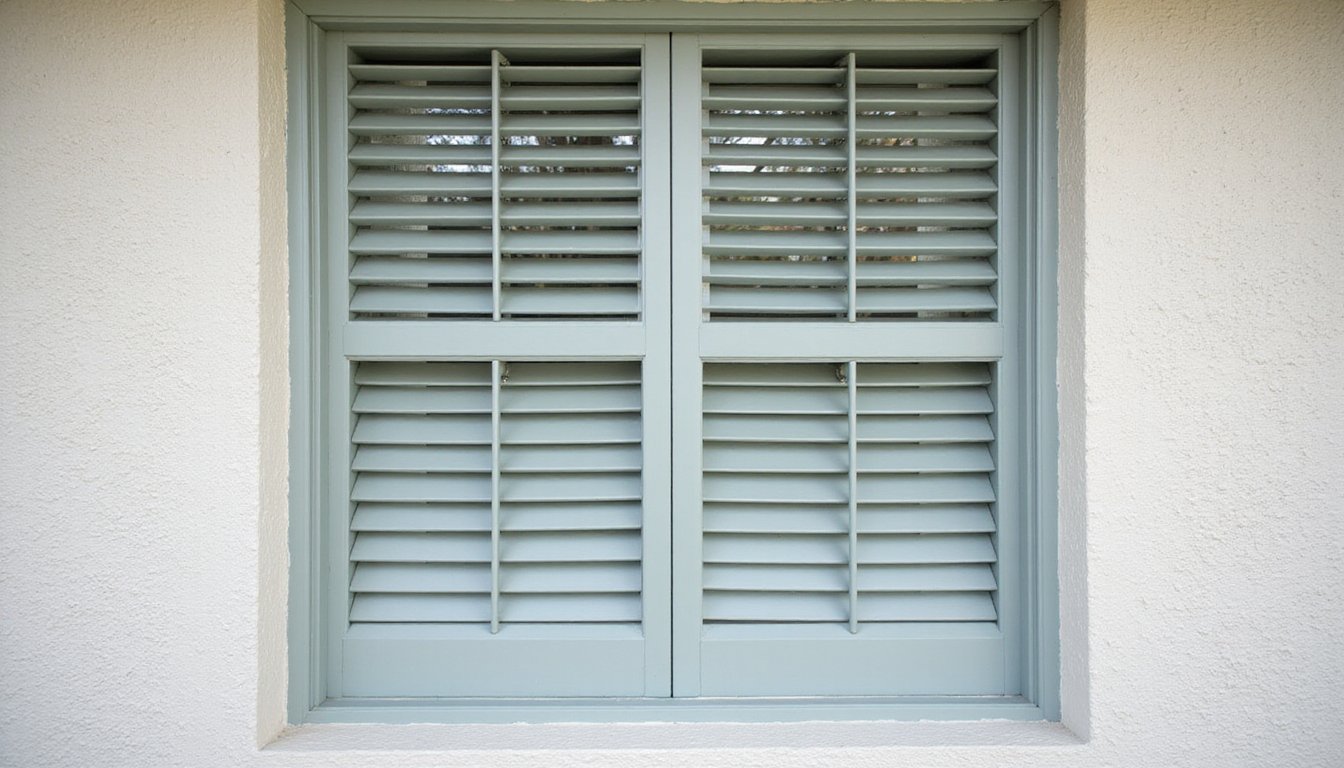
The defining feature of Bahama shutters is the top-hinged panel filled with angled louvers, and that single design choice drives most of their everyday value. You set the panels at roughly a 45-degree angle to control breeze and sun without fully closing the opening. The articulating blades, available in 2-inch or 4-inch sizes, let you balance natural ventilation against intense sunlight.
| Adjustment | What You Control | Result |
|---|---|---|
| 45° open | Breeze and sun | Daytime airflow |
| Partial tilt | Light angle | Solar heat gain |
| Blade size | 2″ or 4″ louvers | Airflow precision |
| Closed/locked | Coverage | Storm and intrusion barrier |
This louvered layout reduces solar heat gain, lowers cooling demand, and keeps ventilation moving, useful comfort benefits that work well beyond storm season.
Shade And Rain
Two everyday jobs define Bahama shutters once storm season passes: blocking sun and shedding rain. The top-hinged design props open like an awning, casting shade over the window while staying storm-ready. You can set them full open, halfway, or fully closed, controlling glare and heat gain without sacrificing outdoor visibility. That awning angle also diverts precipitation away from the opening, so you get sun and rain protection in one fixture, ideal for humid, tropical climates. Among hurricane shutters Florida homeowners choose, this dual function makes Bahama units genuinely year-round. Energy efficiency improves as you keep interiors cooler in summer and warmer in winter, and you preserve privacy while admitting light and ventilation. Routine cleaning and periodic hardware checks keep that performance intact through severe weather.
Curb Appeal Factor
Beyond their shade-and-rain performance, Bahama shutters earn their place by reshaping how a home reads from the street. Their top-hinged design stays visually prominent even when closed, creating an awning-like profile that differentiates your façade from flat shutter styles. Black finishes deliver a sleek, modern look; wood, fiberglass, aluminum, faux wood, and MDF options let you match traditional coastal or contemporary exteriors. That flexibility makes hurricane shutter selection a design decision, not just a safety one. Because these shutters stay mounted year-round, storm protection and curb appeal coexist without trade-offs. Materials that resist rot, rust, and peeling preserve appearance after repeated weather exposure. The result: improved perceived value, stronger buyer appeal, and a coastal-classic aesthetic that protects both your windows and your investment.
Roll-Down Shutters: Premium Convenience and Security
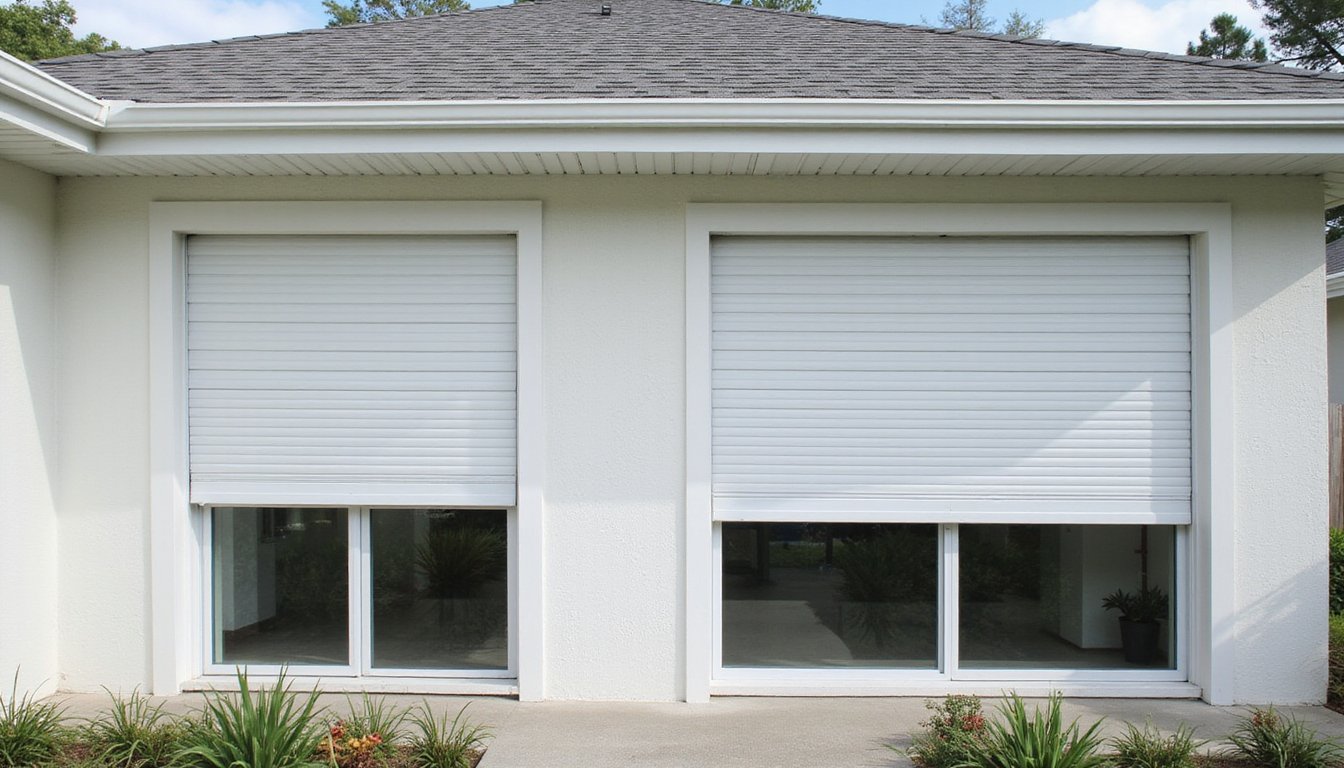
When you choose roll-down shutters, you get a system that stores in a concealed housing box mounted above each opening, keeping the slats out of sight until you need them. You can operate them by motor for one-touch deployment or specify a manual spring-tension crank as a lower-cost or backup option. Just plan for the premium price, motorized roll-downs run twenty-five to fifty dollars per square foot, the top end of any shutter type covered here.
Concealed Housing Design
Roll-down shutters offer one design feature the other three types can’t match: a concealed housing that hides the roller box inside the wall or façade, leaving only the curtain and side guides visible when you deploy it. Builders plaster over the box so it disappears, harmonizing roll-down hurricane shutters with your exterior rather than bolting on visible hardware. You get sleek lines, multiple finishes to match the façade, and premium curb appeal alongside storm protection. The tradeoff is installation complexity. The box has to sit level, the track legs plumb, and the assembly integrated into the building envelope, which is why you’ll often see concealed housings specified during new construction or major renovations, where the structure can accommodate the box from the start.
Flexible Operation Options
Concealed housing handles the look; operation handles how you actually live with the system day to day. Roll-down shutters give you more control options than other hurricane shutter types. You can order manual, electric, or gear-operated deployment. Motorized operation uses a switch, remote, or smart control, closing fast for daily protection against theft and vandalism. Manual versions use a hand crank, pull-strap, wand, or crank box, a simpler mechanical system without electronics.
Motorized systems depend on electricity, but you can add backup power for outages. Without backup, shutters stay closed and keep protecting until power returns. Manual operation skips the power dependence entirely during storm prep.
Match your control type to convenience, accessibility, and how often you’ll deploy, budget and daily use both factor in.
Premium Cost Considerations
Because they pack the most mechanism into each opening, roll-down shutters land at the top of the hurricane shutter price range. You’ll pay roughly $20 to $50 per square foot for manual systems, while electric versions climb to $50 to $175 per square foot. Installed, that translates to about $175 to $840 per window, though larger roller units can run $600 to $1,408 each. Motorization, insulation, and smart controls add $200 to $6,000 per shutter, so a 3 ft × 5 ft window jumps from about $1,163 manual to $1,294 motorized. The hurricane shutter cost reflects greater installation complexity too, plan on $10 to $20 per square foot in labor. You’re paying for stronger steel and aluminum, better protection, and push-button convenience that simpler systems can’t match.
Which Hurricane Shutter Fits Your Budget and Home?
How much you’ll spend on hurricane shutters comes down to four variables: budget, deployment frequency, aesthetics, and whether your home sits occupied year-round or stays seasonal. Match the system to your priorities:
- Aluminum storm panels ($5, $30/sq ft): lowest hardware cost, but you’ll bolt them on manually before every storm, ideal for seasonal homes and less visible openings.
- Accordion shutters ($15, $25/sq ft): permanently mounted, fold away fast, best value when you want quick setup without motorized expense.
- Roll-down shutters ($20, $175/sq ft): motorized deployment with minimal handling, worth it for multi-window living areas in occupied homes.
- Bahama shutters ($20, $50/sq ft): curb appeal plus protection, choose these when architectural style matters.
Coastal Palm Beach County homes often combine roll-downs and panels strategically.
Conclusion: Comparing Hurricane Shutter Types
Hurricane shutters come in several styles, each with its own balance of cost, convenience, and looks. Storm panels are the most affordable but need setup and storage, accordion and roll-down shutters offer permanently mounted, easy-to-deploy protection, and Bahama shutters add shade and curb appeal. Matching the type to your budget, how quickly you need to deploy, and your home’s style points to the right choice. Whatever the style, code-rated shutters properly installed are a reliable way to protect a Florida home.
Find the Right Storm Protection for Your Home
Choosing the right hurricane shutters means balancing cost, looks, and storm performance, and the right team makes the choice easier. At Innovative Storm Defense serving Jupiter, FL, our experienced team provides trusted Storm Window & Shutter Solutions with expert installation and premium materials. Call (561) 517-9399 today and book your free consultation.
Frequently Asked Questions
How Long Do Hurricane Shutters Typically Last Before Needing Replacement?
Quality aluminum hurricane shutters can last well over a decade, often much longer, since aluminum resists corrosion and weather. Motors, tracks, and hardware on powered units may need service sooner. Rinsing off salt in coastal areas and keeping moving parts maintained helps all shutter types reach their full lifespan.
Do Hurricane Shutters Require Permits for Installation in Florida?
Usually, yes. Permanently mounted shutters and panel mounting hardware must meet wind-load and code requirements, so most Florida jurisdictions require a permit. Requirements vary by location. Checking with your building department, or using a licensed installer who handles permits, ensures the shutters are properly rated, anchored, and approved as storm protection.
Can I Install Hurricane Shutters Myself or Need a Professional?
Because proper anchoring is critical to withstand hurricane winds, professional installation is strongly recommended for permanently mounted shutters. Once panel hardware is installed, homeowners can usually put up and take down removable panels themselves. For the mounting itself, a professional ensures the anchors and tracks meet code and will hold in a storm.
How Do I Maintain and Clean My Hurricane Shutters?
Rinse shutters and tracks periodically to remove dirt and salt, clean with mild soap and a soft brush, and lubricate hinges, tracks, and moving parts so they operate smoothly. Test them before hurricane season, and service motors on powered units as needed. This routine care keeps them ready to deploy quickly.
Are Hurricane Shutters Covered Under Home Warranties or HOA Restrictions?
It varies. Some manufacturer warranties cover the shutters and components, while home warranties may or may not include them, so check the terms. Many HOAs also have rules on shutter type, color, and when they can be deployed. It is worth reviewing both your warranty and any HOA guidelines before choosing and installing shutters.