
Both accordion and roll-down shutters meet Florida Building Code for Category 5 protection, so you’re covered either way when they’re properly installed and certified. You’ll pay less for accordions ($15, $35 per square foot) than roll-downs ($20, $50), but roll-downs offer cleaner looks and easier motorized operation. Both earn the same wind mitigation insurance discount. Your choice comes down to budget, aesthetics, and convenience. Keep going to find which fits your home best.
Accordion vs Roll-Down Shutters: Quick Verdict
If you want the short answer before diving into the details, here it is: accordion and roll-down shutters protect your home about equally well, so the choice comes down to budget, looks, and convenience.
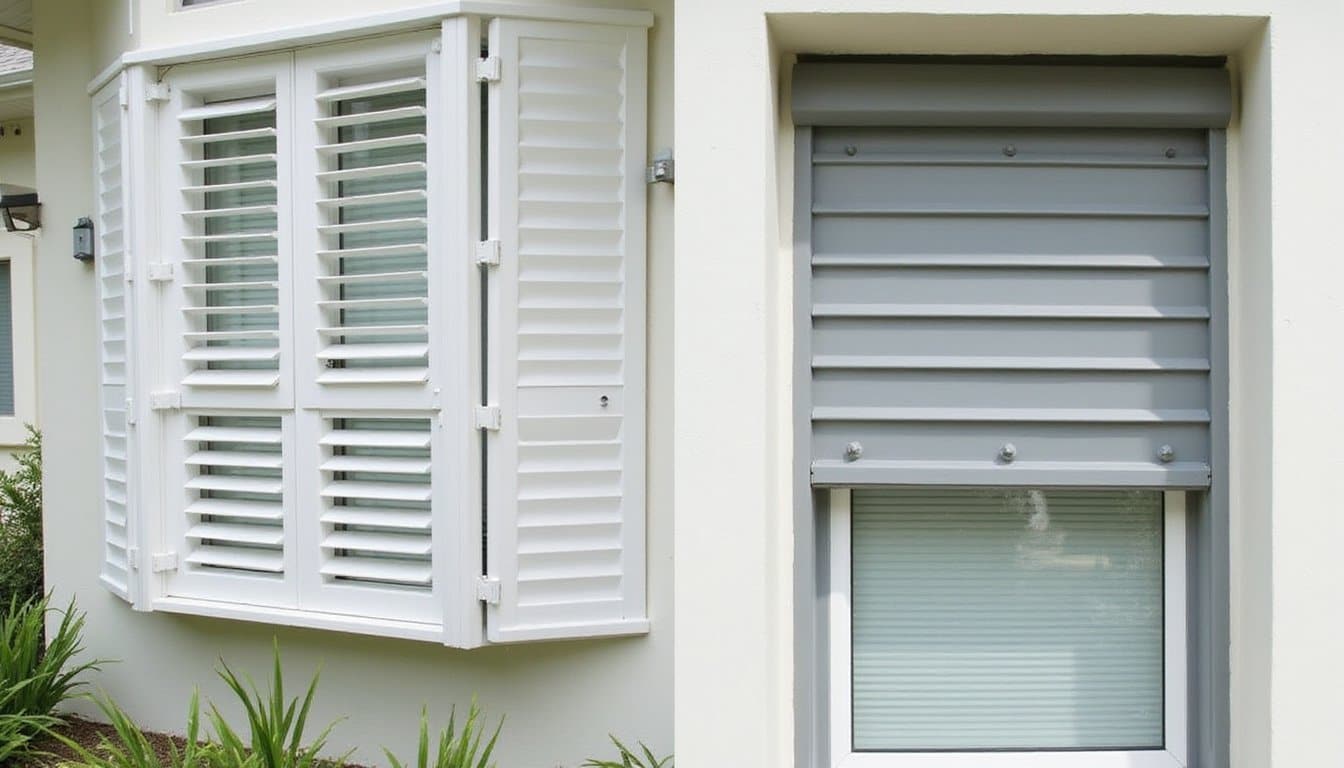
When you compare accordion vs roll-down shutters, both meet the same Florida Building Code impact and wind pressure requirements. Properly installed and Florida Product Approved, either system can withstand Category 5 conditions, so neither is materially stronger.
Pick accordion shutters for lower-cost, simpler, manual protection that still safeguards openings effectively. Pick roll-down shutters for a cleaner exterior, faster deployment, and premium features like motorization and added safety. Accordion shutters typically run $6,000 to $10,000 installed for 400 square feet, making them the more budget-friendly choice.
In short, accordion equals value, while roll-down equals premium convenience and aesthetics. Your deciding factors are appearance and ease of use, not hurricane resistance.
What You’ll Pay for Each Shutter Type
Two numbers drive this decision: accordion shutters run about $15, $35 per square foot installed, while roll-downs land at $20, $50. Your accordion shutter cost typically lands lower, making it the budget-friendly entry point for permanent protection. Your roll-down shutter cost climbs higher, especially with motorization, housing, and added features driving the premium. While the price gap is real, both types provide strong storm protection, so you’re not sacrificing safety by choosing the more affordable option.
- Accordion shutters: roughly $3,000, $4,000 for a typical home, reaching $8,000, $10,000 on larger or complex builds.
- A 400-sq-ft Sarasota home: $6,000, $10,000 installed for accordion coverage.
- Manual roll-downs on that same home: $8,000, $14,000 installed.
- Motorized roll-downs: $14,000, $20,000+, since motors and electrical work add cost.
- Accordion labor: $40, $100 per hour, averaging $70, $75 per window at about one hour each.
Opening size, shape, and installation complexity shift these figures.
Which Shutter Looks Better on Your Home?
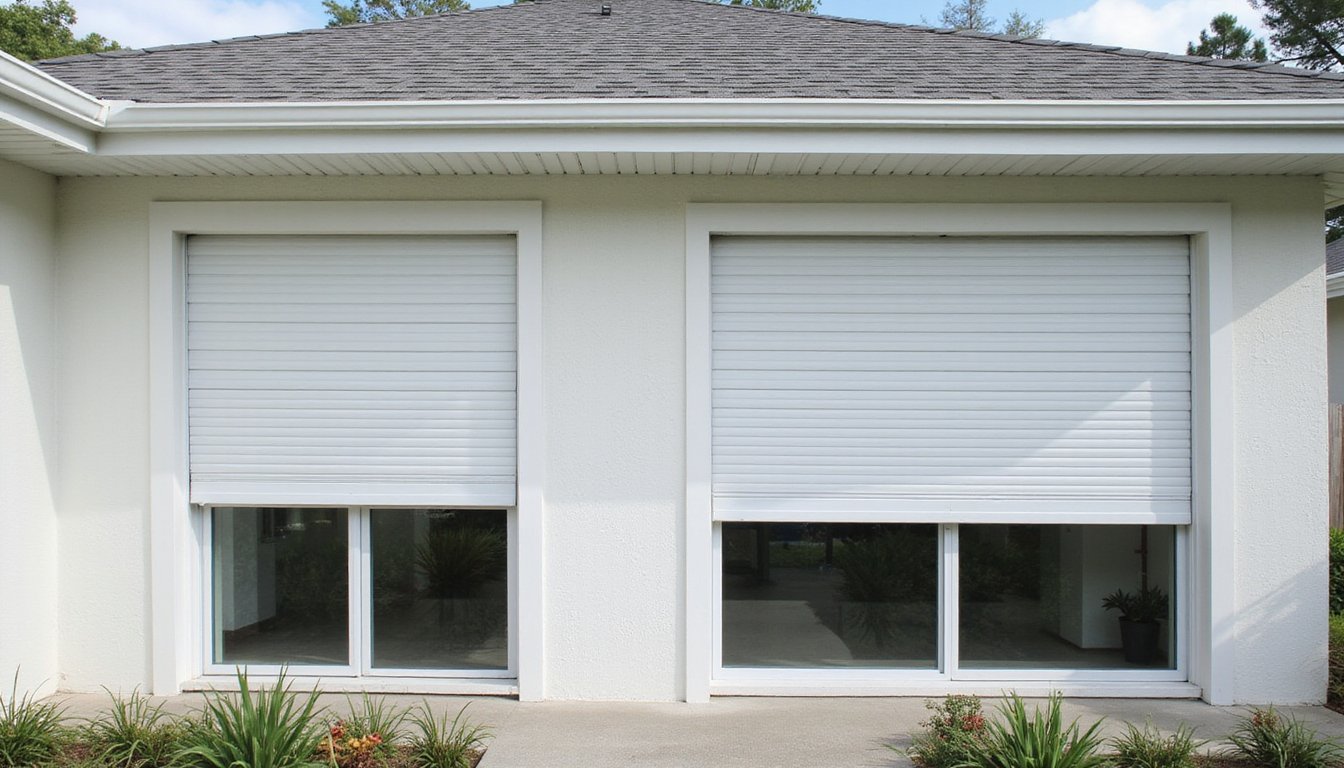
Once you’ve sorted out the cost difference, appearance is usually the next deciding factor. Roll-down shutters hide inside a compact overhead housing with only slim guide rails showing, while accordion shutters stay visibly stacked at the sides of each opening. That contrast shapes everything from luxury curb appeal to whether you want a polished, concealed look or a more practical, always-visible storm system. Roll-down shutters feature a sleek, European design, tucking away cleanly above windows and doors when open.
Visible Tracks vs. Concealed Housing
When you compare these two systems side by side, the biggest visual difference comes down to where the hardware lives. With accordion shutters vs roll-down shutters, the contrast is hardware visibility, not storm performance. Accordion shutters use permanent side tracks beside each opening, and the folded panels stay in view year-round. Roll-down shutters store in a housing box above the opening, with low-profile tracks that nearly disappear when raised.
- Accordion tracks stay mounted on one or both sides of every window
- Folded panels remain visible, creating a noticeable exterior profile
- Roll-down housing tucks above the opening, mostly out of sight
- Concealed side rails read as low-profile and minimal
- Larger openings make accordion stacks especially obvious from the street
Best Look for Luxury
Hardware visibility doesn’t just affect how your home looks today, it shapes how upscale the façade reads year-round, and that’s where these two systems part ways. If you’re prioritizing appearance, roll-down hurricane shutters typically win. They store in a housing box above each opening, so the curtain disappears until you deploy it, leaving clean wall and window lines that complement contemporary, coastal, and custom luxury homes. Accordion shutters stay mounted at the sides of your windows and doors, keeping a permanent presence that reads more utilitarian than architectural. On symmetrical or luxury-traditional elevations, that visible side-stack competes with your trim and window proportions. For a polished, premium façade, and HOA-friendly discretion, concealed storage and minimal day-to-day hardware give roll-downs the clear aesthetic edge over accordions.
Practical vs. Polished Appearance
Because the two systems handle their hardware so differently, they leave very different impressions on your façade. Accordion hurricane shutters keep their folded slats and side-mounted tracks visible at the edges of every opening, signaling a practical, function-first installation. Roll-down shutters hide their operational parts in a housing box above the opening, so when retracted they read as cleaner and more integrated. The distinction comes down to practical versus polished.
- Accordion slats stay bundled at the sides, creating a more noticeable, utilitarian profile.
- Side tracks read as visible hardware rather than finished trim.
- Roll-down guide rails sit slimmer and less obtrusive.
- Concealed housing keeps the exterior neater when open.
- Motorized roll-downs add a modern, refined look on street-facing elevations.
Do They Protect Equally in a Hurricane?
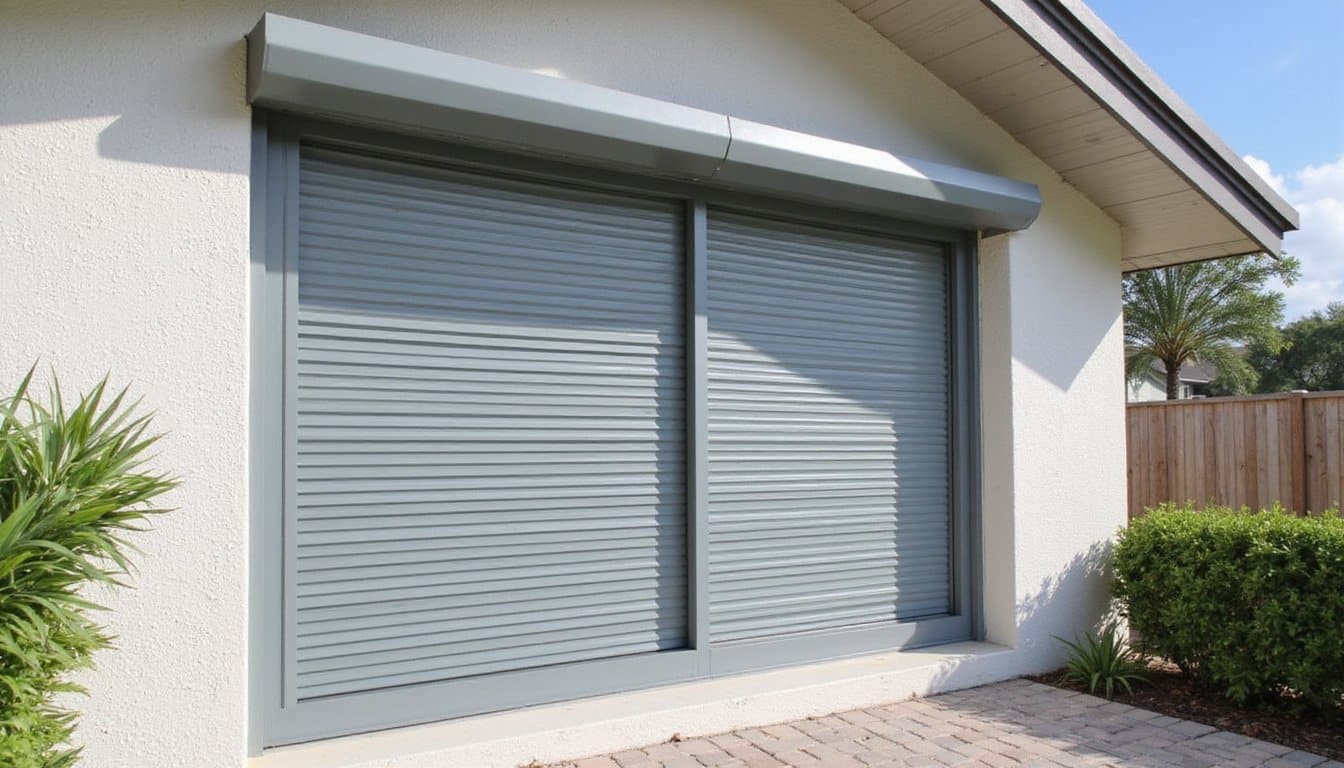
When both systems are code-approved and installed correctly, you get equivalent hurricane protection against wind pressure and flying debris. The difference isn’t the base storm rating, it’s that roll-down shutters typically offer superior structural strength and better intrusion resistance. Accordion shutters still deliver exceptional safety and strong defense against high winds, so your home stays protected either way. Aluminum storm panels are another effective option for homeowners looking to enhance their property’s defenses against severe weather.
Equal Code Protection
Although accordion and roll-down shutters look and operate differently, they protect your home equally when both meet the same Florida Building Code requirements. The deciding factor isn’t style, it’s certification. When both systems are tested, approved, and installed correctly, they meet identical impact and wind-pressure standards.
- Accordion shutters are widely used in high-wind zones and Miami-Dade County, meeting that area’s strict impact and wind-pressure standards.
- Both systems qualify as code-compliant protection methods when Florida Product Approved.
- The same impact-resistance and wind-pressure standards apply to each shutter type.
- Neither type outperforms the other in code-based hurricane resistance.
- Without proper installation or certification, neither delivers its rated protection.
Strength and Intrusion Differences
Code compliance tells you both systems clear the same bar, but it doesn’t tell the whole story about how each one behaves under load and against forced entry. Roll-down shutters often earn the edge on structural strength, thanks to their rigid overhead housing and a vertically guided curtain that closes into one solid barrier. That same continuous curtain gives them better intrusion resistance, with fewer accessible gaps and stronger daily protection for homes left vacant or occupied at night. Accordion shutters still create a sturdy, locked barrier across the opening, but their interlocking slats and side tracks introduce more joints and leverage points. If you want unvented slats for added water-intrusion resistance, roll-downs deliver it. Both, properly installed, protect against wind, debris, and water.
Manual or Motorized: Daily Operation Compared
Once you’ve chosen a roll-down shutter, your next decision is how you’ll operate it: by hand or by motor. Manual systems use a hand crank, strap, or spring-assisted mechanism, requiring direct physical effort at each opening. Motorized hurricane shutters use an electric or solar motor controlled by a wall switch, remote, or smartphone app, letting you secure openings from inside without handling exterior hardware in bad weather.
- Manual shutters suit smaller or secondary openings used infrequently.
- Motorized systems close large openings quickly for last-minute storm prep.
- Manual designs have fewer electrical parts, simplifying upkeep and troubleshooting.
- Motorized units need regular cleaning and occasional lubrication.
- Backup power or manual override keeps motorized shutters working during outages.
Both deliver identical certified protection when properly installed.
Do Both Shutters Earn the Same Insurance Discount?
Both accordion and roll-down shutters typically earn the same wind mitigation insurance discount when they’re properly installed and certified to Florida Building Code or a similar approved standard. In this hurricane shutter comparison, the discount depends on certification, installation quality, and proof of compliance, not on whether the shutter folds horizontally or rolls down from an overhead housing.
Florida insurers grant wind mitigation credits based on protective performance, so choosing roll-downs won’t automatically get you a larger discount than accordions. Reported credits range from roughly 10% to 45% off your wind premium, varying by location and insurer.
To maximize your savings, verify your insurer’s wind mitigation form requirements before purchase and installation, then keep the certification paperwork that documents your shutters meet approved hurricane protection standards.
Conclusion: Accordion vs Roll-Down Shutters: Which to Choose
Accordion and roll-down shutters both offer convenient, always-ready storm protection, but they differ in cost, looks, and operation. Accordion shutters are more affordable and fold from the sides, while roll-down shutters offer the easiest operation, especially when motorized, and a cleaner look. Weighing budget, convenience, and appearance points to the right fit. Either option provides strong, permanently mounted protection that is far quicker to deploy than removable panels.
Find the Right Storm Protection for Your Home
Choosing the right hurricane shutters means balancing cost, looks, and storm performance, and the right team makes the choice easier. At Innovative Storm Defense serving Jupiter, FL, our experienced team provides trusted Storm Window & Shutter Solutions with expert installation and premium materials. Call (561) 517-9399 today and book your free consultation.
Frequently Asked Questions
How Long Do Accordion and Roll-Down Shutters Typically Last?
Both types are durable and can last many years, often well over a decade, when made from quality aluminum and properly maintained. Tracks, wheels, and motors on roll-down units benefit from occasional service. Rinsing off salt in coastal areas and keeping the moving parts clean and lubricated helps them last and operate smoothly.
Can These Shutters Be Installed on Doors and Sliders?
Yes. Both accordion and roll-down shutters are commonly installed over windows, entry doors, and sliding glass doors, which are especially vulnerable in a storm. They are a popular way to protect large openings like sliders. An installer can size and configure them to fit and operate correctly on each opening.
What Maintenance Do Accordion and Roll-Down Shutters Require?
Keep the tracks clean and clear of debris, rinse off salt and dirt periodically, and lubricate moving parts so they slide or roll smoothly. Test them before hurricane season, and have motors on roll-down units serviced as needed. This routine care keeps them ready to deploy quickly when a storm approaches.
Are Permits Required to Install Hurricane Shutters in Florida?
Usually, yes. Permanently mounted hurricane shutters must meet wind-load and code requirements, so most Florida jurisdictions require a permit. Requirements vary by location. Checking with your building department, or using a licensed installer who handles permitting, ensures the shutters are properly rated, anchored, and approved as storm protection.
Can Motorized Roll-Down Shutters Operate During a Power Outage?
Yes, with a backup. Motorized roll-down shutters typically include a manual override, such as a hand crank, so you can operate them if the power fails, and some offer battery backups. Because outages are common during storms, it is important to know your manual override, so it is worth having the installer demonstrate it.