

Office window tint gives you privacy by altering light transmission, obscuring outside views while keeping daylight flowing in. You can choose frosted films for high-traffic areas or one-way mirrored tints for daylight-facing offices, letting you see out while blocking inbound peering. Just remember, mirrored tints depend on a daylight differential, so they won’t protect you after dark. You’ll also gain glare reduction, heat control, and UV blocking. Here’s how to pick the right one.
Key Takeaways
- Window tint obscures outside views while allowing natural daylight to filter into office workspaces.
- One-way mirrored tints enable outward viewing while blocking inbound peering, ideal for daylight-facing offices.
- Frosted films suit high-traffic areas, while customizable opacity films adjust privacy levels by workspace.
- Mirrored tint privacy fails at night when interior brightness exceeds exterior, reversing visibility control.
- Additional benefits include glare reduction, heat control, UV blocking, and enhanced safety for physical assets.
Office Privacy Through Tinted Windows
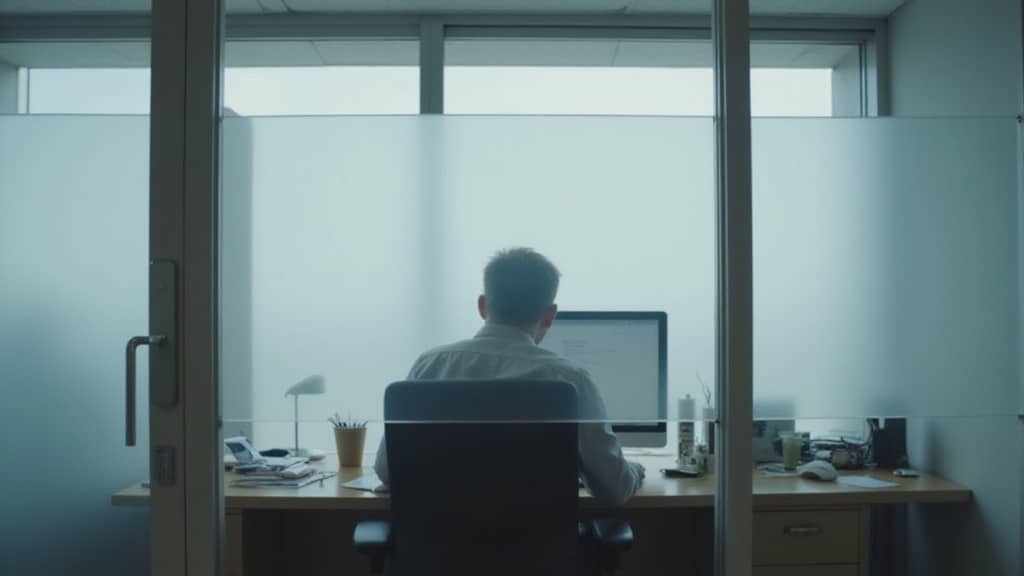
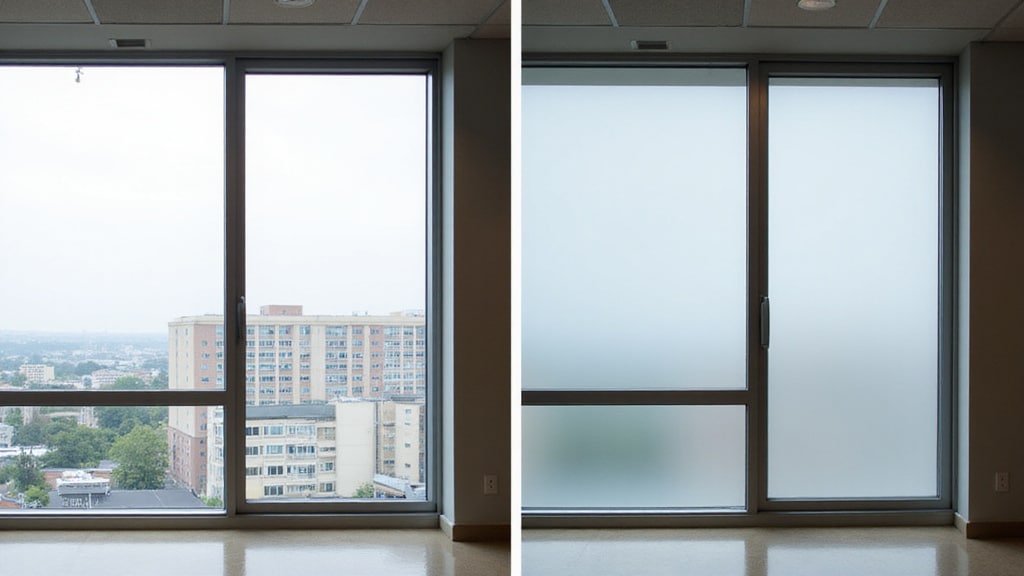
Office window tinting creates privacy by applying modern films that obscure outside views while letting ample natural light filter through. You’ll create a secluded environment where your team works without exposure or distraction. One-way mirrored office privacy windows let your employees see out while preventing outsiders from peering in during daylight hours. Because tinted windows privacy is customizable, you can adjust the film’s opacity to match each workspace’s specific requirements, heavier tint for conference rooms, lighter coverage for open areas. This targeted approach addresses your building’s most exposed surfaces, giving you precise control over visibility without sacrificing the daylight benefits your workspace depends on. Reducing noise pollution is another benefit of office window tinting. By minimizing sound transmission from the outside, your team’s focus and productivity can significantly improve.
How does window tint provide privacy
Window tint provides privacy by altering how light passes through your glass, obscuring outside views while still letting natural light filter into your workspace. Installing commercial window tint addresses the most visible weakness in modern offices: clear glass that lacks any visual barrier. The result is a secluded environment where you can work without exposure in high-traffic areas.
Window tinting delivers privacy through several distinct mechanisms:
- One-way mirrored tints let you see out while preventing outsiders from peering in during daylight hours.
- Privacy films obscure interior views without sacrificing daylight benefits.
- Customizable tint options let you adjust privacy levels to match specific workspace requirements.
You get targeted control over exactly who sees what.
What types of privacy tint are available for offices
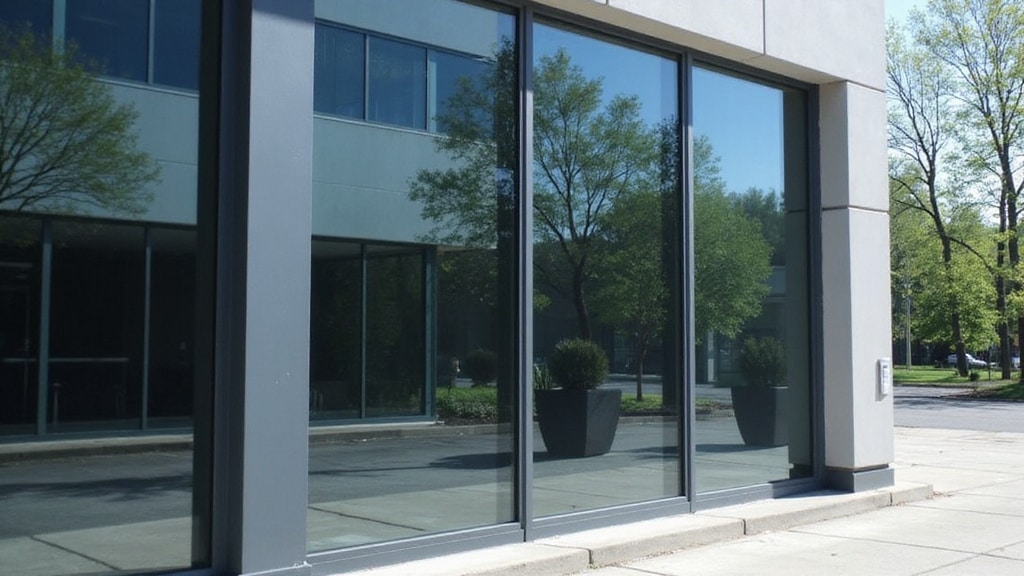
Office privacy tints fall into three main categories, each solving a different visibility problem. Frosted films obscure outside views while allowing ample natural light into your workspace. One-way mirrored tints let you see out but prevent outsiders from peering in during daylight hours. Customizable opacity films let you adjust privacy levels to suit specific workspace requirements. Window orientation effects can significantly influence the effectiveness of these privacy solutions. For instance, the amount of sunlight entering an office can alter the performance of window films throughout different times of the day.
| Tint Type | Visibility Control | Best Application |
|---|---|---|
| Frosted Film | Obscures views, keeps light | High-traffic areas |
| One-Way Mirrored | See out, blocks inward view | Daylight-facing offices |
| Customizable Opacity | Adjustable privacy levels | Multi-use workspaces |
You’ll match each film to your specific privacy weakness, clear glass that lacks visual barriers. Select the category addressing your exposure risk, then customize the opacity to secure seclusion without sacrificing daylight.
Does tinted glass keep privacy at night
Tinted glass does not automatically keep privacy at night. One-way mirrored tints rely on a light differential to function. They let you see out and block outside views only during daylight hours. Once interior lights exceed exterior brightness, that differential reverses, and outsiders can see in while you lose visibility outward.
Mirrored tints flip after dark, the same light differential that hides you by day exposes you by night.
To maintain nighttime privacy, you’ll need to layer solutions that don’t depend on ambient light conditions:
- Frosted or opaque privacy films that obscure views regardless of lighting differentials
- Dual-reflective films engineered to reduce reverse visibility after dark
- Supplementary treatments like blinds for spaces requiring absolute nighttime concealment
Assess each workspace’s after-hours usage, then specify films matching those operational requirements to eliminate exposure gaps.
What added benefits do tinted office windows offer

Tinted office windows deliver a stack of measurable benefits that extend well beyond visual concealment. You’ll cut glare on computer screens, reducing eye strain and diffusing harsh sunlight into softer, uniform lighting. Heat control keeps your workspace comfortable and lowers cooling demands, slashing energy bills. UV-blocking films protect your staff’s skin and eyes while shielding furniture and equipment from sun damage over time. High-performance films fortify safety, protecting physical assets and intellectual property, which instills client confidence and builds your reputation as a trustworthy partner. You’ll also enhance your professional image. Tint adds an elegant decorative touch that impresses clients and strengthens your brand. Together, these benefits transform your workspace into a productive, energy-efficient, and safe environment without sacrificing natural light. Cutting costs with window film is not only a smart financial decision but also a sustainable one. This investment leads to a significant reduction in energy consumption, contributing to lower carbon footprints.
How do you choose the right tint for office privacy
Choose the right tint by defining your specific privacy requirements against your workspace layout. Assess your building’s orientation and daylight exposure, since one-way mirrored tints only obscure outside views during daylight hours. Match tint density to each zone: high-traffic areas demand stronger obscuration, while collaborative spaces benefit from lighter films that preserve natural light. Consider customizable options that let you calibrate privacy levels precisely to each room’s function.
Evaluate these technical factors before finalizing your selection:
- Visible light transmission (VLT): Balance privacy with daylight retention to reduce glare without darkening interiors.
- UV rejection rate: Prioritize films blocking harmful rays to protect staff and furnishings.
- Heat rejection performance: Select films optimizing temperature control to cut cooling costs.
Test samples under actual conditions.
Conclusion: Adding Privacy and Comfort With Window Tint
Window tint is a simple, cost-effective way to add privacy to an office while also cutting glare and heat from the sun. The right film keeps interiors more comfortable, protects furnishings from fading, and gives employees a sense of privacy without blocking daylight entirely. Professional installation ensures a clean, lasting result. For many offices, tinting delivers privacy, energy savings, and comfort in one straightforward upgrade.
Upgrade Your Office Windows Today
Better office windows mean better productivity, comfort, and energy savings for every business in Florida. At Innovative Storm Defense serving West Palm Beach, FL, our experienced team provides trusted Office Windows with expert installation and premium materials. Call (561) 517-9399 today and book your free consultation.
Frequently Asked Questions
How Much Does Office Window Tinting Typically Cost?
Cost depends on the film type, the number and size of windows, and the building’s access. Basic films are more affordable, while high-performance or decorative films cost more. Pricing is usually quoted per square foot, so a walkthrough and quote for your specific office gives the clearest figure. Larger jobs often come at a better rate.
How Long Does Professional Window Tint Installation Take?
For a typical office, professional installation often takes a day or less, depending on the number of windows and their accessibility. Larger buildings can take longer. The film also needs time to fully cure after installation, during which it may look slightly hazy. An installer can give a realistic timeline for your space.
Can Window Tint Be Removed or Replaced Later?
Yes. Professional film can be removed and replaced if your needs change or the film ages. Removal is best done carefully to avoid leaving adhesive or damaging the glass, so it is usually worth having a professional handle it. This flexibility makes tint a low-risk way to update office privacy or performance.
Does Window Tinting Damage or Scratch Office Glass?
Quality film applied by a professional does not damage glass and can actually help hold it together if it breaks. Scratches usually come from improper cleaning rather than the film itself. Using gentle, non-abrasive cleaning methods keeps both the film and the glass in good condition for years.
How Do You Clean and Maintain Tinted Office Windows?
Wait until the film has fully cured, then clean with a soft cloth or sponge and a mild, non-abrasive cleaner, avoiding ammonia-based products that can degrade some films. Skip abrasive pads and scrapers. With gentle regular cleaning, professionally installed tint stays clear and effective for many years.