
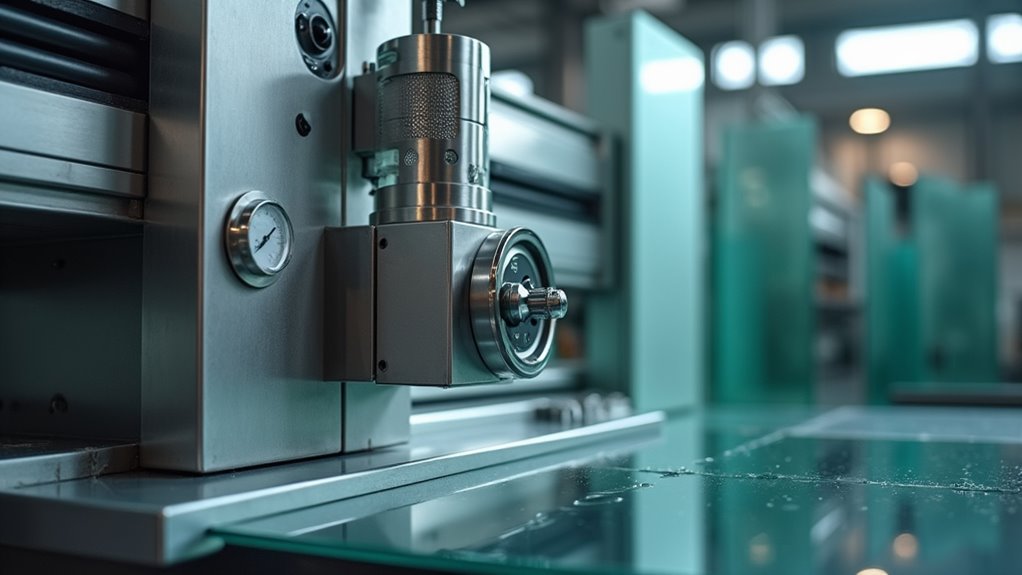


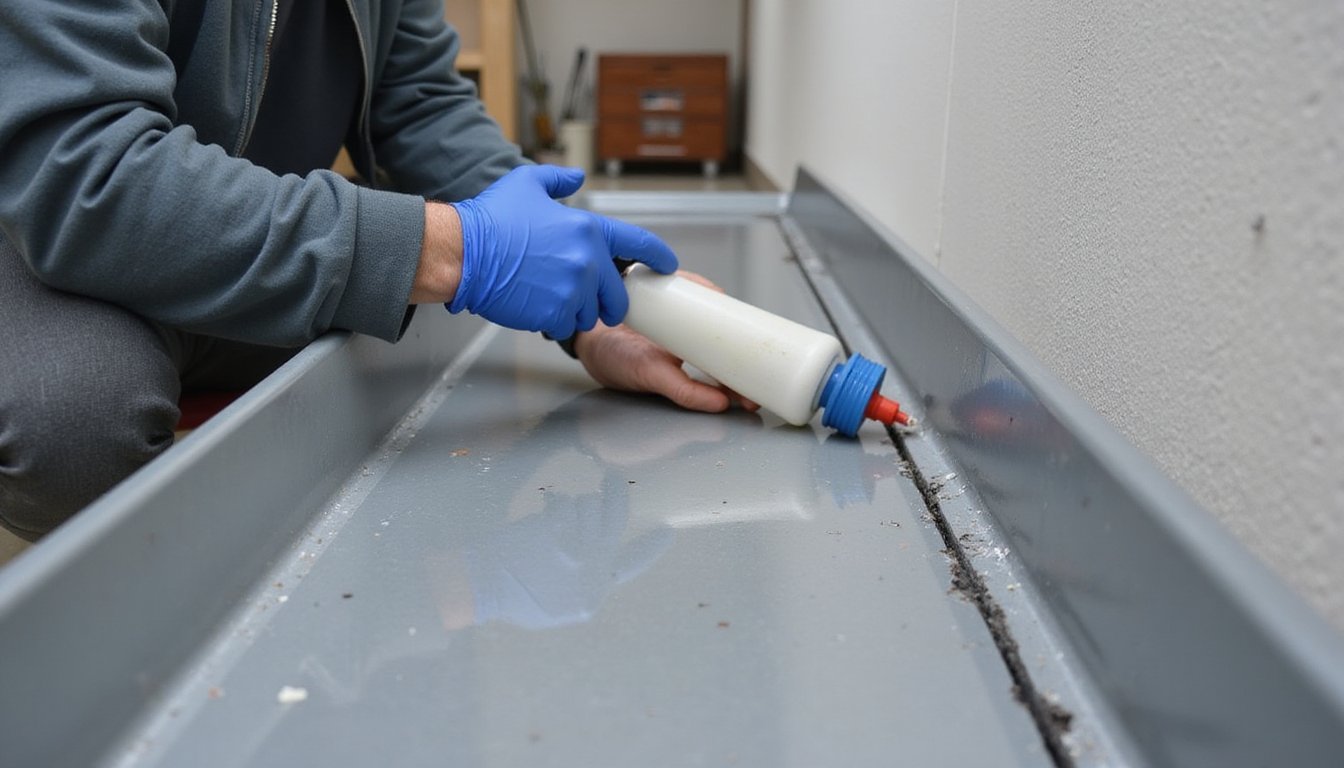

You’ll use a door glass machine to achieve precision cuts, edge finishes, and custom configurations that manual methods can’t match. These systems integrate programmable actuators, laser scanners, and multi-spindle equipment for tight tolerances in routing, drilling, cutting, and edging. AI-driven quality detection identifies defects in real-time while IoT connectivity enables predictive maintenance. The technology reduces labor by 40-60% and maintains consistent output across varied production runs. Understanding how these capabilities translate into specific operational advantages reveals substantial benefits.
Core Technology and Precision Capabilities
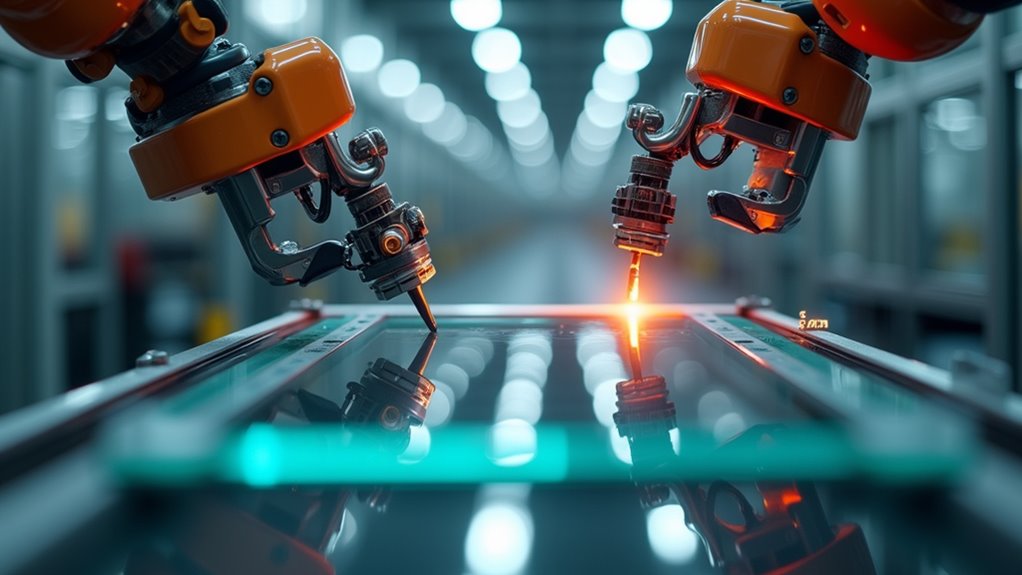
Five core technologies drive precision glass replacement: programmable actuation systems, integrated sensor networks, smart automation platforms, precision machining equipment, and advanced safety mechanisms.
You’ll find that electric actuators with soft-land technology deliver precise positioning accuracy, applying forces as low as 0.1N to prevent cracking. Integrated laser scanners and measurement systems create 3D digital models for real-time inspection, detecting deviations in cut angles and edges. Multi-spindle machines simultaneously route, drill, cut, and edge components while maintaining tight tolerances. Sophisticated process control adapts automatically to different glass types, thicknesses, and curvatures. IoT connectivity and AI-based defect recognition enable predictive maintenance and minimal rejects. Non-contact removal tools safely extract damaged glass without damaging surrounding frames, ensuring consistent, reproducible quality throughout replacement operations. Connected robotic systems with networked software reduce errors and downtime through continuous communication between processing stations. These smart integration capabilities support real-time monitoring technologies that enhance data-driven decision making for production optimization. Data collection systems provide feedback for process optimization to continuously improve manufacturing efficiency and reduce defects.
Versatile Applications Across Industries
Because precision glass replacement technology addresses critical demands across diverse sectors, you’ll uncover its transformative impact spanning everything from towering architectural facades to compact consumer electronics. In architectural applications, you utilize automated cutting systems for curtain walls and custom door panels, achieving seamless design integration with CAD workflows. The automotive sector demands high-strength laminated glass for windows and sunroofs, where you optimize energy efficiency through lightweight solutions. Consumer electronics manufacturers rely on your technology to produce optical-grade panels for smartphones and tablets with flawless surfaces. Industrial markets benefit from specialized glass fabrication for laboratory equipment and protective shields in hazardous environments. Interior design projects employ your capabilities for customized aesthetic solutions in shower enclosures and decorative partitions. Schirmer’s modular processing concepts enable manufacturers to transition between different glass products and specifications with automatic setup for quick product changes. Tempering and heat strengthening machines enhance the durability and safety of glass used across these applications by subjecting materials to intense heat and rapid cooling for increased structural integrity. Each sector demands precision, durability, and rapid turnaround, standards your technology consistently delivers.
Enhancing Operational Efficiency Through Automation
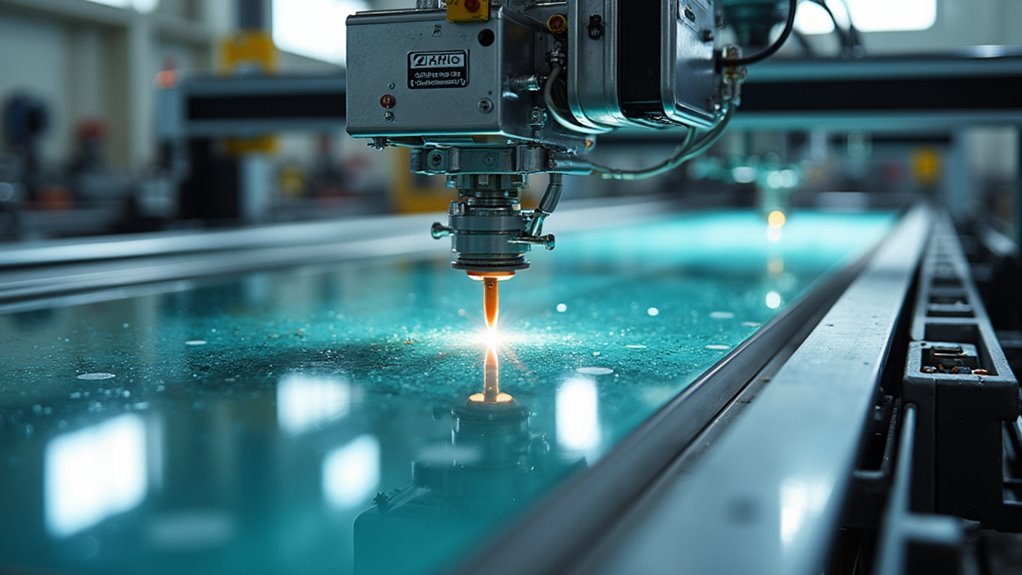
You’ll find that CNC automation directly cuts your labor requirements by 40, 60%, freeing skilled workers to focus on supervisory and value-added tasks rather than manual handling. AI-driven quality detection systems monitor each processing step in real time, catching misalignments and defects instantly to prevent costly rework and material waste. Swift design changeover capabilities let you move between different glass specifications and geometries without lengthy recalibration, maximizing throughput across varied production runs. As smart-building retrofits accelerate across commercial properties, manufacturers increasingly embed IoT connectivity into door automation systems to support the growing demand for integrated access-control and operational monitoring solutions. The commercial segment, which currently holds ~45% market share in 2024, represents a significant opportunity for manufacturers to expand automation solutions across offices, hospitals, and retail stores.
CNC Automation Reduces Labor
Several critical operational advantages emerge when precision glass manufacturers deploy CNC automation to replace manual labor processes. You’ll realize substantial labor cost savings by reducing headcount requirements for repetitive, labor-intensive tasks like loading, unloading, and material transport. These automated systems handle what manual workers previously performed, directly lowering your operational expenses and improving return on investment.
Additionally, you’ll gain staffing flexibility during workforce shortages. Automated systems maintain consistent production levels regardless of labor availability, ensuring your facility operates seamlessly without disruption. CNC machines execute high-speed task execution, minimizing cycle times and downtime. The integration of automatic tool changers and robotic cells further reduces setup interruptions, allowing for quick and seamless transitions between different machining operations. Proper tooling selection ensures these CNC systems achieve the precision and efficiency necessary for high-volume production demands. By transferring physically demanding work to machines, you simultaneously bolster worker safety while optimizing your production throughput and profitability. When implementing these systems, choosing the right partner ensures successful integration and maximizes the benefits of your automation investment.
AI-Driven Quality Detection Systems
Three transformative capabilities distinguish AI-powered quality detection from conventional inspection methods: real-time defect identification, predictive analytics, and autonomous learning. You’ll benefit from machine vision that detects surface defects, scratches, dents, misalignments, with 99% accuracy, reducing error rates by 20-50%. AI systems analyze historical production data to forecast defects and identify root causes, enabling preemptive maintenance. Deep learning algorithms minimize false positives, preventing unnecessary waste while maintaining consistency across batches. You’ll experience amplified workforce productivity as operators shift from repetitive inspection to system oversight and optimization. Cloud-based platforms enable scalable quality control across multiple sites, creating a data driven process optimization framework. These integrated systems generate auditable records for regulatory compliance, ensuring traceability while continuously refining defect recognition autonomously. Algorithmic learning and refinement continuously enhances detection accuracy over time, allowing AI systems to adapt to new defect patterns and manufacturing variations. AI-powered vision systems can learn patterns from image datasets to identify anomalies and deviations not previously encountered, enabling manufacturers to introduce design changes or launch new product lines without overhauling inspection infrastructure. AI systems can gather and process information instantly, analyzing temperature, vibration, sound, and pressure to detect issues before they impact production quality.
Swift Design Changeover Capabilities
While AI-driven quality detection systems guarantee your products meet exacting standards, the speed at which you can reconfigure machinery for new designs directly impacts your competitive advantage. You’ll implement data-driven process optimization through integrated software that consolidates order and inventory data, identifying ideal changeover windows and coordinating swift changes. Your adaptive changeover strategies make use of modular roll forming, automated profile recognition, and electro-mechanical tool repositioning to reduce downtime by 50, 80%. Real-time analytics pinpoint bottlenecks, while ERP integration enables just-in-time reconfiguration. NFC/RFID verification systems confirm correct tooling engagement, eliminating manual setup errors. By leveraging rafting technology to mount roll tooling on permanent stands, you can perform offline changeovers while the machine operates, further accelerating your changeover capabilities. This systematic approach minimizes production interruptions, accelerates lot preparation, and allows your machinery to adapt seamlessly to evolving customer specifications without sacrificing operational consistency or throughput.
Ensuring Safety and Quality Standards

You’ll implement protective systems and interlocks that guard against operator contact with hazardous areas while maintaining compliance with BS EN ISO standards. Your quality assurance protocols must include sample testing, dimensional verification, and documented inspection at each production stage to confirm conformity with specifications. These safeguards work together to eliminate gaps between automated processes and human oversight, reducing both safety risks and defect rates.
Protective Systems and Interlocks
Effective machine guarding doesn’t rely on a single safety mechanism, it’s built on layered protective systems that work in concert to prevent operator injury and equipment damage. You’ll integrate safety interlock switches that monitor door status and block machine activation when access points remain open. These electromagnetic locking mechanisms hold doors secured during equipment operation and release only after hazardous movement ceases. Non-contact interlock models eliminate mechanical wear, reducing false triggers from vibration or misalignment. Your control systems employ OSSD outputs that signal immediate machine stoppage if you access any guarded zone. When you implement wireless connectivity integration with your PLCs and safety relays, you enable real-time monitoring and predictive maintenance protocols, ensuring regulatory compliance while minimizing downtime through proactive event logging.
Quality Assurance Protocols
Your protective systems and interlocks prevent accidents, but they can’t guarantee the quality of the glass itself, that’s where thorough quality assurance protocols take over. You implement exhaustive testing at multiple stages:
- Documentation and Traceability: You maintain detailed logbooks and work orders for every batch, establishing a complete traceability chain of custody from raw material receipt through final handover. Quality documentation procedures create an auditable trail supporting compliance verification.
- Multi-Stage Inspections: You conduct raw material, in-process, and final inspections using automated scanners and manual verification, catching defects before they advance downstream.
- Process Control: You monitor key parameters in real-time, track reject rates, and perform statistical analyses to minimize variability and ensure consistent output.
These protocols safeguard both product integrity and regulatory compliance.
Essential Maintenance and Calibration Practices
How does a precision glass replacement system maintain its accuracy over time? You’ll uphold peak performance through calibration verification, lubrication schedules, and documentation procedures. Regular calibration checks confirm accurate cuts and fits across operational axes, while scheduled lubrication of gearboxes and bearings reduces friction and wear.
| Maintenance Task | Frequency | Purpose |
|---|---|---|
| Calibration verification | Monthly | Guarantee cutting accuracy |
| Lubrication application | Quarterly | Reduce friction, prevent wear |
| Alignment checks | After transport | Correct misalignment issues |
| Documentation review | Bi-annually | Trace quality variations |
| Component inspection | Weekly | Detect corrosion early |
You’ll implement detailed checklists designating task frequency and responsible personnel. Maintain thorough records to adapt schedules based on wear patterns. Immediate corrective measures during maintenance prevent minor faults from escalating into costly repairs, maximizing machine longevity and minimizing unexpected downtime.
Real-World Benefits in Glass Replacement
Precision glass replacement systems built on rigorous maintenance practices translate directly into measurable operational advantages. You’ll experience substantial improvements across three critical dimensions:
- Streamlined installation workflows reduce turnaround times through automated cutting, edging, and inspection processes, enabling same-day service delivery.
- Optimized supply chain logistics minimize material waste and rework costs, directly lowering your operational expenses while maintaining quality standards.
- Enhanced durability outcomes produce glass with superior impact resistance and structural integrity, decreasing post-installation failures and warranty claims.
Your investment in precision machinery delivers consistent micron-level fits that eliminate drafts, improve energy efficiency, and support long-term property value. Automated defect detection catches imperfections before installation, ensuring reliability. These real-world benefits compound over time, reduced maintenance costs, higher client satisfaction, and strengthened market reputation justify your commitment to precision-based operations.
Future Innovations in Glass Processing Technology
As operational demands intensify and market competition sharpens, glass processing technology’s evolution fundamentally reshapes what you can achieve in replacement workflows. You’ll utilize adaptive process monitoring systems that dynamically adjust parameters based on real-time material feedback, ensuring consistent quality across varying batch conditions. Emerging sustainable manufacturing methods reduce waste and energy consumption, lowering your operational footprint while maintaining precision standards. Advanced coatings and composite materials you’ll implement offer improved durability and scratch resistance, extending replacement intervals. Machine learning algorithms continue refining predictive maintenance schedules, minimizing unexpected equipment failures. Integration of non-destructive removal techniques with automation streamlines workflows further. These innovations collectively enable you to deliver faster turnarounds, reduce costs, and meet increasingly stringent quality expectations in precision glass replacement applications.
Frequently Asked Questions
What Types of Glass Materials Can Door Glass Machines Process Effectively?
You can effectively process float glass, tempered glass, laminated glass, and specialty decorative glass with modern door glass machines. You’ll maintain precise glass thickness variations through automated cutting systems and advanced quality control measures. You’re capable of handling multi-layer constructions, textured surfaces, and coated materials without compromising integrity. You’ll achieve tight tolerances essential for safety-critical applications, ensuring your finished products meet rigorous industry standards and code compliance requirements consistently.
How Do Smart Factory Technologies Improve Door Glass Machine Operations?
You’ll achieve increased workflow efficiency through IoT sensors and real-time data analytics that optimize cutting, milling, and corner processing simultaneously. AI-driven predictive maintenance systems you implement detect potential failures before breakdowns occur, considerably reducing maintenance downtime. You’ll utilize machine learning algorithms for rapid customization, enabling smooth shifts between standard and personalized orders. Smart factory platforms you integrate directly connect customer specifications to machine operations, accelerating production cycles while maintaining precision accuracy throughout operations.
What Are the Typical Costs Associated With Door Glass Machine Equipment?
You’ll encounter several cost categories for door glass machines. Equipment purchases range from $500,000 to $750,000, depending on automation features. Installation and facility modifications add substantial expenses. You’re looking at roughly $50,000 annually for operations. Machine maintenance costs typically run throughout equipment life, while machine repair expenses spike unpredictably during breakdowns. However, you’ll offset these through $100,000 in annual labor savings, $50,000 from material waste reduction, and increased production revenue gains.
How Long Does Training Take for Operators to Use These Machines?
You’ll typically complete door glass machine operator training in one to five days for basic proficiency, though exhaustive programs span eight to ten weeks. Your timeline depends on automation complexity and prior experience. You’ll master cutting, grinding, and CNC programming to optimize production workflow efficiency. Manufacturer-led on-site sessions provide hands-on instruction, while apprenticeships require 430+ hours for expert-level machine operator training certification, ensuring you’re fully equipped for operational excellence.
What Environmental Benefits Result From Optimized Glass Usage in Machines?
You’ll realize substantial environmental gains through optimized glass usage in precision machines. You’re reducing waste disposal by minimizing defective components and cutting landfill inputs. You’ll achieve energy efficient manufacturing by decreasing melting demands and lowering carbon emissions across production cycles. You’re enabling higher-quality cullet for closed-loop recycling, which further reduces raw material extraction. You’ll also diminish micro-particle emissions and hazardous runoff, supporting both environmental preservation and circular economy objectives systematically.