

Door protection film shields your doors from scratches, dings, abrasions, and job site grime during manufacturing, transit, and installation. You’ll choose the right film based on surface type, acrylic or polyolefin for glass, rubber-based masking for metal, PPF for painted surfaces, and PE films for plastic. Apply it clean, squeegee out bubbles, and remove it carefully with heat and a plastic blade. Keep exploring to master every step of the process.
What Does Door Protection Film Actually Do?
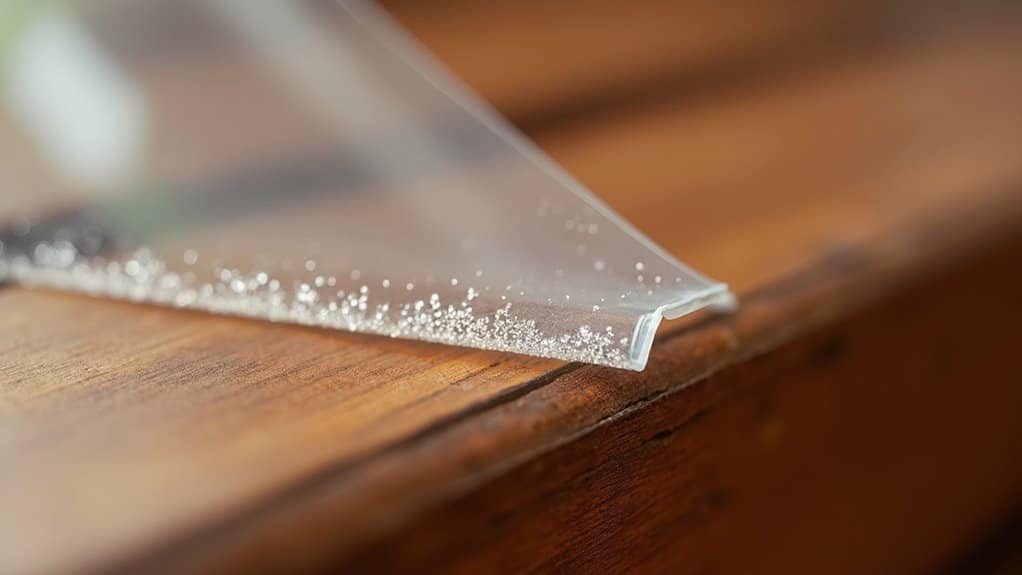
Whether you’re managing a manufacturing line or overseeing a construction site, door protection film serves as a temporary yet highly functional barrier that shields surfaces from scratches, dings, abrasions, dust, fingerprints, and job site grime. Understanding door protection film capabilities helps you deploy it strategically across high-contact areas like door edges, where everyday wear accelerates surface deterioration.
Beyond basic scratch resistance, the film absorbs and dissipates impact energy, reducing the likelihood of breakage during transit and installation. It also holds shards together upon impact, preventing dangerous fragmentation. Door protection film longevity extends up to 360 days with UV protection, ensuring residue-free removal after prolonged use. You’re fundamentally maintaining surface integrity throughout the entire manufacturing, shipping, and installation chain without introducing secondary damage during the protection process itself.
For glass door surfaces specifically, the film is constructed from multiple polyester layers bonded with strong adhesives, giving it the structural reinforcement needed to perform consistently under repeated impact and environmental stress.
Which Door Protection Film Works for Each Surface Type
Matching the right film to your surface type directly determines how well your protection holds up and whether it comes off cleanly when the job’s done. For glass finishes and metal coatings specifically, adhesive chemistry matters as much as film material. Protection films are commonly manufactured from durable plastic materials like LDPE, PVC, PP, and polyolefin, making them lightweight yet robust enough to withstand environmental challenges across surface types.
- Glass doors, Use acrylic adhesive clear films or polyolefin films for smooth, glossy glass finishes with UV protection up to 6 months.
- Metal doors, Apply rubber-based black & white masking film for architectural metals; avoid copper, brass, or copper alloys entirely.
- Painted doors, Select elastomeric polymer PPF for high impact resistance, self-healing properties, and UV resistance.
- Plastic or PVC doors, Use polarised PE self-adhesive films or LDPE films for residue-free removal on smooth plastic surfaces.
How to Apply Door Protection Film Correctly
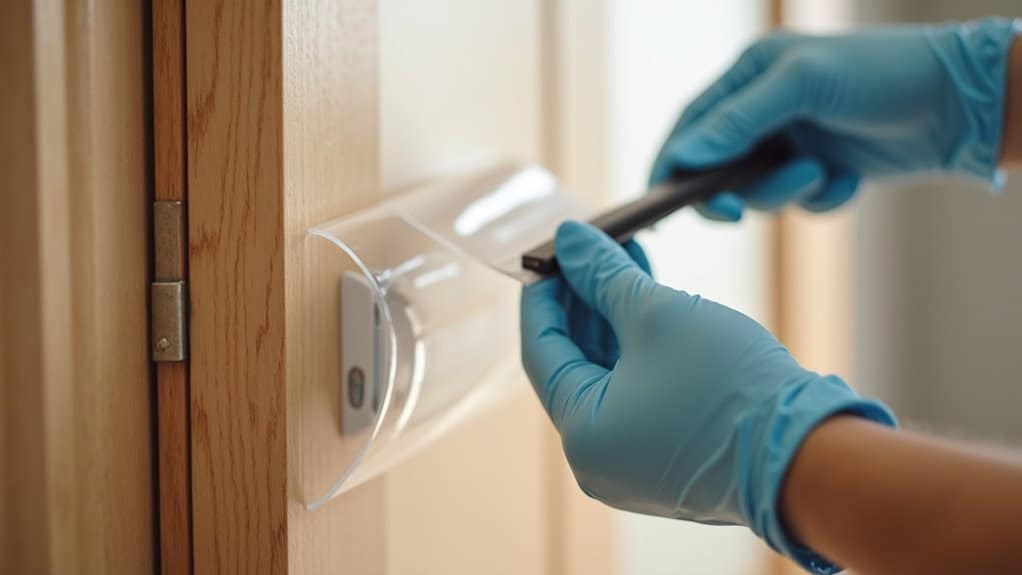
Once you’ve selected the right film for your door’s surface type, correct application technique determines whether that film bonds cleanly, stays put, and releases without residue. Door film application precautions start before you touch the film: clean the door edge with a 75% water, 25% isopropyl alcohol solution, let it dry completely, and keep your hands clean throughout.
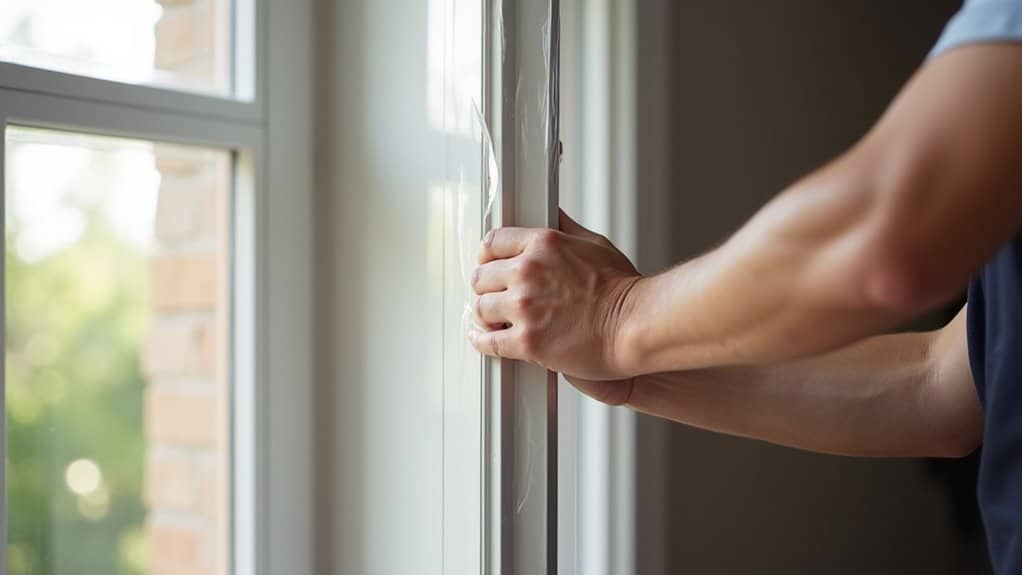
For door film application techniques, peel the liner carefully, press the film starting at the top with half on the door edge and half extending over. Work downward using thumb pressure while gradually removing the liner. Fold the film around the edge, feed it into crevices, then squeegee out air bubbles. Hold edges firmly for several seconds and avoid washing the surface for 24 hours. If the curve of the door is too extreme, cut the film with sharp scissors and begin a new piece below that point.
How Long Should Door Protection Film Stay On?
Door protection film has two distinct timelines depending on its type and purpose. Installation duration directly affects removal success, since adhesive deterioration increases with age and exposure.
Follow these time-based guidelines:
- Andersen windows and patio doors, Remove factory film within six months of manufacture.
- 3M industrial films, Remove at any desired time; no strict deadline applies.
- Interior door glass films, Remove freely; newer formulas don’t impose time constraints.
- Paint protection film on car doors, Remove before cracking, peeling, or yellowing develops.
Cold temperatures harden adhesive, making removal harder. Heat softens aged film, enabling cleaner pulls. You should always remove film promptly to minimize residue and avoid staining surfaces beneath.
How to Remove Door Protection Film Without Leaving a Trace
Knowing when to remove door protection film matters little if you pull it off incorrectly and leave adhesive behind. Start the adhesive removal process by applying medium heat 6, 8 inches from the surface using a heat gun or hairdryer. This softens the bond without damaging paint. Lift a corner with a plastic razor blade, then peel slowly at a 45-degree angle. Never rip quickly, it tears the film and leaves stubborn residue.
Once the film’s off, spray adhesive remover onto a microfiber cloth and rub the surface gently. Follow with isopropyl alcohol for a thorough clean. These surface prep tips guarantee no residue compromises future wax, polish, or film applications. Repeat the cleaning steps if any adhesive traces persist.
Frequently Asked Questions
Can Door Protection Film Be Reused After Removal?
You can’t reuse door protection film after removal. Standard films aren’t designed as reusable door protection film, their adhesive degrades once you peel them off, eliminating tackiness permanently. Manufacturers engineer these products for single-use application only. If you need adhesive-free door film options, consider purpose-built reusable alternatives specifically marketed for multiple applications. Following proper removal guidelines within 30, 90 days guarantees clean separation, but the original film remains unsuitable for reapplication regardless of removal technique.
Does Door Protection Film Work in Extreme Weather Conditions?
Door protection film performs reliably in extreme weather when you select the correct grade. Exterior-grade films withstand heavy rain and resists extreme temperatures through weather-resistant adhesives and UV stabilizers that prevent cracking, peeling, or bubbling. You’ll need professional installation with proper caulking to maintain seal integrity. Inspect the film after severe weather events to identify adhesive failures or compromised edges. Standard interior-grade films won’t deliver equivalent performance under outdoor environmental stress.
Are There Eco-Friendly or Recyclable Door Protection Film Options Available?
Yes, you’ll find several eco-friendly door protection film options available today. Shengming’s PE protective films use renewable raw materials, cutting CO2 emissions by 60% compared to conventional films. You can select bio-based PET films coated with water-based acrylic adhesives, eliminating solvent residue entirely. These sustainable materials remain fully recyclable after use, reducing plastic pollution. While biodegradable options continue emerging, current LDPE and polyolefin-based films already deliver measurable environmental advantages without sacrificing protective performance.
Can Door Protection Film Be Custom Printed With Branding or Logos?
Yes, you can customize door protection film with custom logo design and branding elements. For cardboard options, Door Guard™ lets you print your company information on reinforced B/C-flute material, requiring a minimum of 1,250 units. For vinyl, RM Wraps produces branded protection film using 3M Air Release Vinyl, matching your exact door dimensions. Both options deliver precise, professional graphics with durable, UV-resistant finishes suited for commercial applications.
Does Door Protection Film Affect the Warranty of Door Surfaces?
Door protection film doesn’t inherently void door warranties, but you’ll need to follow proper surface preparation before application. If you use certified installers and approved materials, you protect both the film’s coverage and existing door warranties. However, you should check your door warranties carefully, as improper installation or non-certified removal can create conflicts. Avoid abrasive cleaning methods and unauthorized modifications, which can simultaneously void both your door’s manufacturer warranty and the film’s coverage.