
You must understand that tempered glass‘s superior strength, laminated glass‘s fragment retention, Low-E coatings’ energy efficiency, impact resistance standards like CPSC 16 CFR 1201, fire-rating compliance under ASTM E119, and reinforced hardware specifications directly determine your door system’s durability and safety performance. These seven critical standards, from 4-5x stronger tempered glass to 1,100 lbs pull-out force requirements, protect against structural failure, severe lacerations, and fire spread. Each specification addresses real-world performance demands that affect liability, compliance, and long-term reliability. Understanding their interconnected relationships reveals why thorough specification analysis matters for your facility’s protection.
Tempered and Laminated Glass: The Foundation of Durable Door Systems
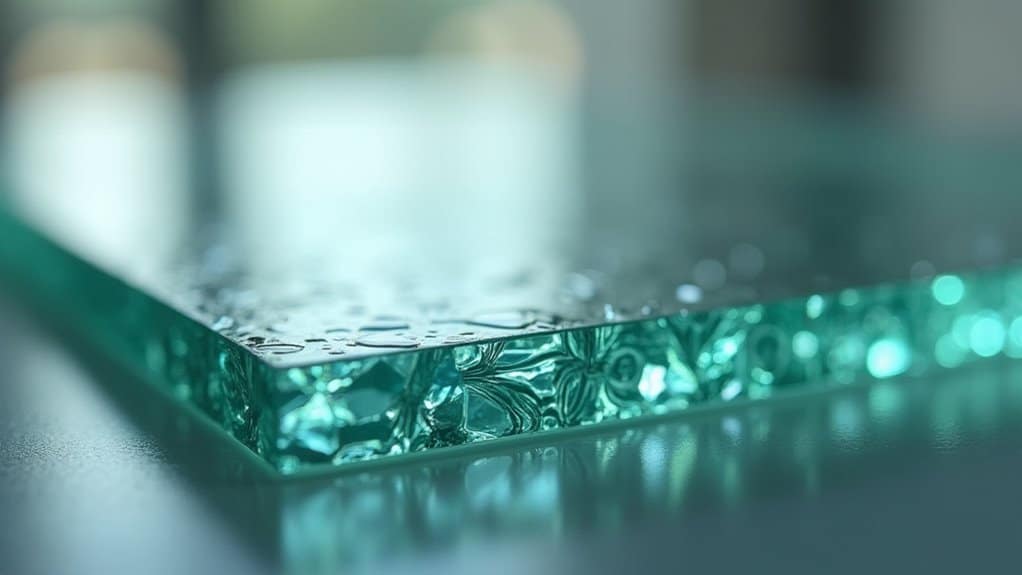
When you’re selecting glass for door frames, you’ll need to understand the critical differences between tempered and laminated glass, the two primary safety glazing options that meet building codes and protect occupants from impact hazards. Tempered glass, four to five times stronger than annealed glass, shatters into small, blunt pieces minimizing injury risk. Laminated glass retains fragments through its PVB interlayer, providing superior security and acoustic performance benefits. Your glass composition options depend on installation location: tempered glass suits high-traffic commercial entries requiring rapid heat cycling resistance, while laminated glass excels in overhead and security-sensitive areas. Both meet ANSI Z97.1 and CPSC 16 CFR 1201 standards. Laminated glass typically offers longer service life in exposed locations due to its multi-layered construction resisting environmental stressors. The plastic interlayer in laminated glass effectively blocks harmful UV rays, protecting interior furnishings and occupants from sun damage. In coastal regions and areas prone to severe weather, impact-resistant glass with thicker plastic inner layers provides enhanced protection against high winds and flying debris. Safety glass selection should prioritize applications like large windows near walkways, glass doors, and overhead glazing where occupant protection from impact hazards is critical.
Energy Efficiency Through Low-E Coatings and Insulated Glass Technology
To optimize the durability benefits you’ve gained from tempered or laminated glass, you’ll want to layer in energy efficiency through insulated glass units (IGUs) and low-emissivity coatings, technologies that work synergistically to dramatically reduce heat transfer and lower operational costs. Low-E coatings reflect infrared radiation while transmitting visible light, cutting energy loss by up to 70%. When combined with IGUs, this pairing achieves 90% heat loss reduction against single-pane uncoated alternatives. Your thermal barrier effectiveness improves through sealed air or inert gas spaces between panes, minimizing conduction and convection. The sealed cavity between panes acts as an insulating barrier that helps maintain consistent indoor temperature while reducing the load on your heating and cooling systems. Soft-coat Low-E coatings offer superior UV protection and overall U-value performance compared to hard-coat alternatives. These coatings are made of metal or metallic oxide materials that optimize their reflective properties. Solar energy performance varies by climate: passive Low-E suits cold regions; solar control Low-E optimizes warm climates. These systems meet NFRC standards, with U-factors typically ranging 0.25, 0.30, ensuring verified performance and potential energy bill reductions of 10, 30% annually.
Impact Safety Standards and Hazardous Location Requirements
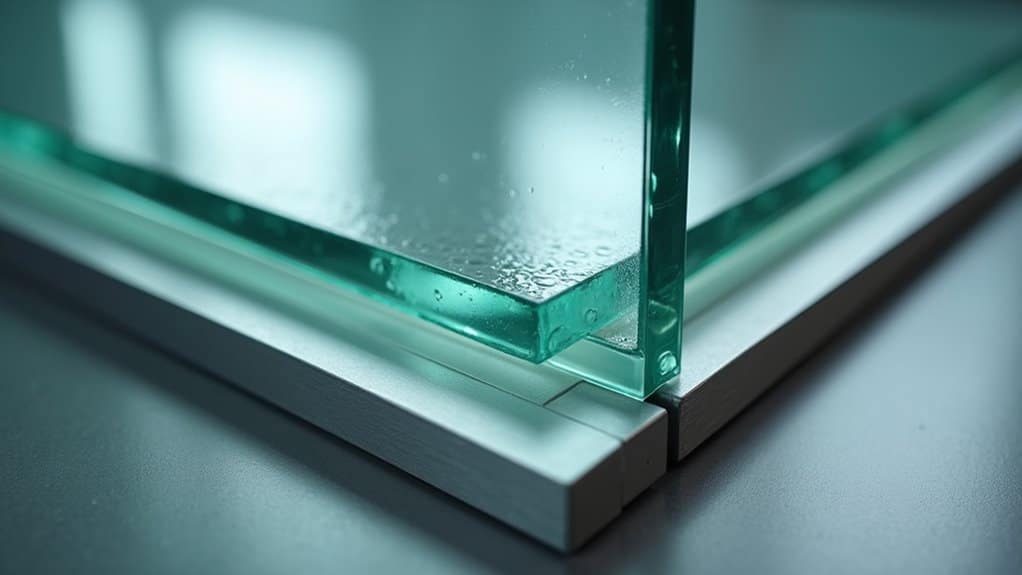
Since you’ve optimized your glass frames doors for durability and energy efficiency, you’ll now need to verify they comply with mandatory impact safety standards that govern high-risk installation locations. The CPSC 16 CFR 1201 establishes two compliance categories: Category I requires 150 ft.-lbs. impact resistance for panels up to 1,296 sq. in., while Category II demands 400 ft.-lbs. for larger panels or high-traffic areas. You must affirm all glazing within 24 inches horizontally of door edges and below 60 inches receives proper glass certifications and permanent labeling. CPSC compliance considerations demand that replacement glazing meet current standards regardless of original installation dates. Tempered and laminated glass types most effectively satisfy these requirements, protecting against severe lacerations and legal liability. Individual panes exceeding 9 square feet require safety glazing installation to prevent serious injuries from impact events. Fire doors with glazing must also meet temperature rise requirements to limit heat transmission and protect building occupants during fire events. Glazing materials must be labeled for use in fire door assemblies and installed in labeled glass kits or per manufacturer’s listings to ensure proper performance during a fire.
Fire Ratings and Compliance With Building Codes
Your glass frames doors must achieve fire ratings that align with the surrounding wall assembly’s protective requirements, a critical consideration that directly impacts life safety and regulatory compliance. You’ll need to guarantee your door assembly maintains at least 75% of the wall’s assigned fire rating rating, whether that’s 20, 45, 60, 90, or 180 minutes. When heightened thermal protection standards apply, you must specify doors with temperature rise requirements meeting 450°F or 650°F thresholds. Your assemblies must comply with NFPA 80, NFPA 101, the IBC, and IFC standards. Fire-resistive glazing tested under ASTM E119 or UL 263 provides reliable temperature rise protection, limiting maximum end temperatures to 450°F above ambient after 30 minutes of exposure, guaranteeing your installations meet all applicable building codes. For fire protective glazing applications, you must recognize that sprinklers do not allow larger sizes of fire protective glazing beyond the standard 100 square inch limitation. Fire-rated glass maintains structural integrity during extreme heat, creating a protective barrier that prevents the unchecked spread of fire and smoke. Doors are tested as complete assemblies, including frame, hardware, glazing, and seals, to ensure that all components work together to deliver predictable fire performance under standard fire exposure conditions.
Reinforced Frames and Hardware for Enhanced Structural Integrity
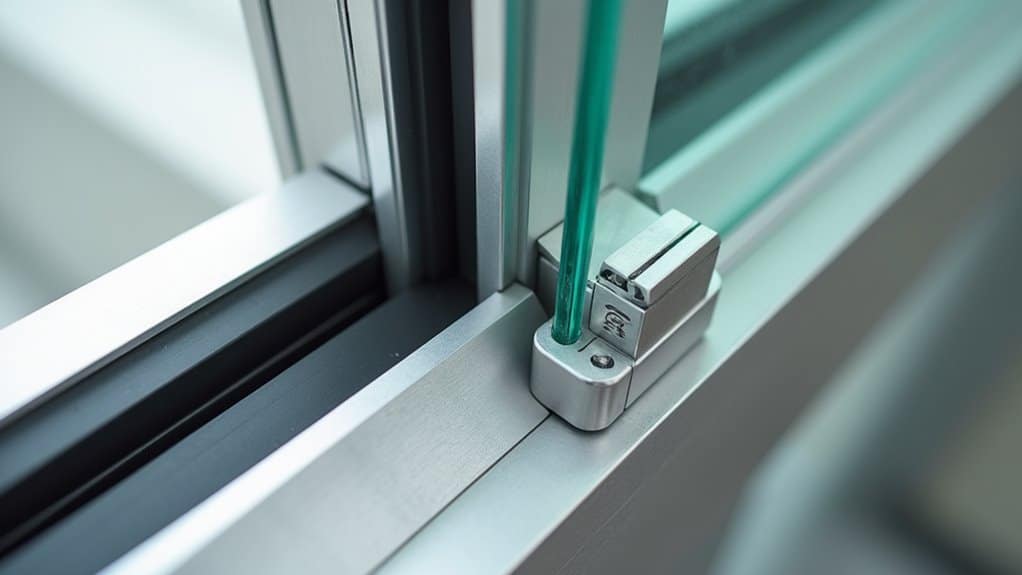
You’ll achieve bolstered durability when you specify metal security framing that incorporates reinforced hardware protection meeting minimum screw holding strengths of 1,000 lbs per fastener. Your hinge assemblies require closer reinforcement, typically 1/4 inch aluminum inserts in the head rail, to prevent structural failure under repeated loading cycles. Chemical weld connections at hardware locations must attain pull-out force strengths of 1,100 lbs per screw to guarantee long-term performance and compliance with structural integrity standards. Proper edge treatment and finishing of frame components further enhances safety by reducing the risk of lacerations and improving overall durability against wear and corrosion.
Metal Security Framing Benefits
When you’re selecting glass frames and doors for high-security or critical applications, reinforced metal framing delivers superior structural integrity that standard frames can’t match. You’ll benefit from corner bracing, internal stiffeners, and welded joints that prevent separation under stress. Steel frames resist warping, cracking, and splitting far better than wood or plastic alternatives.
Modern designs incorporate thermal break technology to minimize heat transfer while maintaining security performance. You’ll also gain from corrosion resistant coatings, powder coating or galvanization, that extend service life in demanding environments. Galvannealed steel construction particularly resists wear, impact, and environmental factors that would compromise lesser materials. Powder coating creates a tough protective layer that won’t chip or peel under normal use, ensuring long-term durability in high-traffic security applications.
You can integrate reinforced frames with impact-resistant glazing and anchor plates for maximum forced-entry protection. Testing standards like UL 972 and ASTM F476 verify your frame’s resistance capabilities, ensuring compliance with security requirements for high-occupancy facilities.
Hardware and Hinge Protection
Because hardware failures account for a significant percentage of forced-entry breaches, reinforcing frames with high-strength hinges and multi-point locking systems is essential to maintaining structural integrity and security performance.
You’ll want stainless steel hinges with corrosion resistant hardware finishes that minimize rust and extend functional lifespan in demanding environments. Guarantee hinges support at least 150% of your glass door’s weight to prevent sagging and misalignment, primary causes of failure.
Implement multi-point locking systems that secure doors at top, middle, and bottom frame locations, dramatically increasing prying resistance. Advanced materials like liquid metal hinge resilience reduce creasing and breakage under stress. Integrate anti-lift devices and reinforced strike plates to create layered security beyond factory standards. Precision installation proves critical, improper placement compromises even premium hardware’s protective capabilities.
Security Vulnerabilities and Solutions for High-Risk Facilities
Most unauthorized intrusions, 51% across campus and high-risk facilities, exploit glass frames and doors as the weakest perimeter security points. You’ll find that standard glass offers minimal resistance to impact, enabling rapid breach attempts. Address these vulnerabilities through proven solutions:
- Window film application increases impact resistance and holds fragments intact when shattered
- Sensor integration with glass break detectors triggers immediate alerts to attempted breaches
- Laminated or tempered glass retrofitting provides superior durability compared to standard glazing
- Reinforced aluminum frames prevent door failure during forced entry attempts
- Polycarbonate layering protects against gunfire and blunt-force attacks per UL 752 standards
You should prioritize vulnerability assessments evaluating glass locations and visibility exposure. Combining security glazing with robust framing creates extensive perimeter protection meeting ASTM impact resistance standards. These integrated measures considerably reduce unauthorized entry risk in high-risk environments.
Regular Inspection, Labeling, and Replacement Protocols
Regular inspection and maintenance protocols are essential to preserving the fire-rating integrity of glass doors and frames, as even minor damage can compromise their life-safety function. You must conduct annual certification inspections per NFPA 80 standards, examining glass panels, hinges, frames, and seals for damage indicators like cracks and warping.
| Inspection Component | Acceptance Criteria | Action Required |
|---|---|---|
| Glass panels (≤6 sq ft) | Max 1 scratch (≤1″) | Replace if non-compliant |
| Frame gaps | NFPA 80 dimensional tolerances | Adjust or reinforce |
| Hardware fasteners | Secure, no corrosion | Tighten or replace |
You’ll replace damaged components immediately with manufacturer-certified materials only. Fire-rated glass requires visible markings and intact gaskets. Functional testing confirms proper closing and latching without manual assistance, validating your facility’s emergency compliance standards.
Frequently Asked Questions
What Happens to Glass Door Safety Standards When Building Codes Are Updated or Changed?
When local building code changes occur, you must guarantee your glass doors comply with updated impact ratings immediately for new installations. You’re not required to retrofit existing compliant doors unless they’re broken or compromised. However, you’ll face liability if replacements don’t meet current CPSC safety glazing standards. You should verify whether your jurisdiction mandates upgrading existing installations, as requirements vary. You’ll need tempered or laminated glass meeting Category I or II impact resistance standards, depending on panel size.
Can Security Films Be Applied to Existing Glass Doors Without Compromising Fire Ratings?
No, you’ll likely void your fire rating. Applying aftermarket security films to existing fire-rated doors compromises certification unless you’ve tested the complete assembly under UL 10C or NFPA 252 standards. Film adhesion won’t prevent glass fracture vulnerability during fire exposure. You’ll need manufacturer-listed solutions with factory-applied films or specified assemblies. Field-installed films aren’t inherently fire-rated, creating code non-compliance and liability risks.
How Do Temperature Fluctuations Affect the Lifespan of Insulated Glass Door Systems?
Temperature swings create thermal expansion stresses that accelerate seal degradation in your insulated glass doors, typically reducing service life from 15, 30 years to 10, 20 years under extreme conditions. You’ll experience condensation buildup prevention challenges as sealants lose elasticity faster. Uneven heating intensifies internal stresses, risking microcracks and fogging. You’ll extend durability by installing shading devices, selecting premium frames accommodating movement, and scheduling regular maintenance inspections per manufacturer standards and industry guidelines.
What Specific Maintenance Tasks Should Facility Managers Prioritize to Extend Door Longevity?
You’ll prioritize regular inspections and preventative maintenance to bolster door longevity. You should conduct monthly glass cleaning with microfiber cloths, lubricate hinges annually with silicone-based products, and clear drainage tracks every 2-3 months. You’ll tighten hardware quarterly, inspect weather stripping seasonally, and schedule professional assessments annually. You’ve got to wipe moisture promptly after rain and apply aluminium polish to prevent corrosion. These systematic tasks substantially extend your door systems’ operational lifespan and performance reliability.
Are There Cost-Effective Alternatives to Replacing Entire Glass Door Assemblies for Safety Upgrades?
You’ll find retrofitting options greatly reduce replacement costs. Security window films, polycarbonate overlays, and DefenseLite shields mount directly onto existing glass without assembly replacement. You can reinforce frames with steel strips, upgrade strike plates, and install multi-point locking mechanisms. These alternative maintenance strategies strengthen security while preserving original installations. You’ll achieve safety standards compliance through targeted upgrades that eliminate labor-intensive removal processes, delivering superior durability at considerably lower expenses than complete door system replacement.