

Door and window seals improve your indoor comfort by blocking the gaps where conditioned air escapes and outdoor air intrudes. They maintain your home’s thermal envelope, reducing the strain on your HVAC system and lowering energy costs. They also filter allergens, dampen external noise, and minimize condensation risks. Understanding how seals, hardware, and maintenance work together will help you get the most out of every component in your home’s building envelope.
How Door and Window Seals Keep Indoor Temperatures Stable
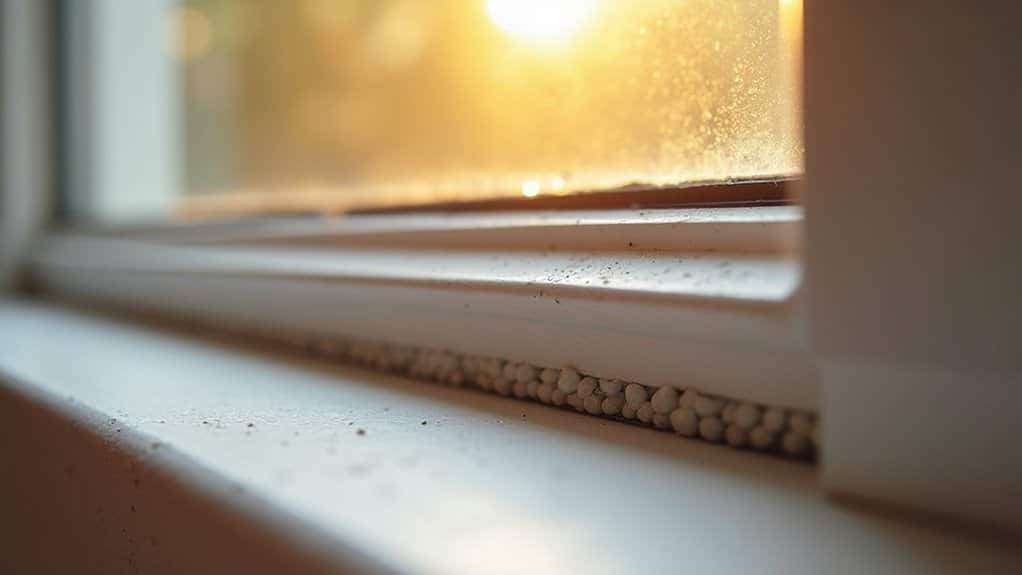
Door and window seals form the first line of defense against air infiltration, blocking the drafts and pressure-driven airflow that destabilize indoor temperatures. By preventing conditioned air from escaping and stopping external air from entering, seals maintain the thermal envelope your HVAC system depends on for consistent climate control.
During summer, they block heat gain. During winter, they limit heat loss. Both functions reduce the thermal fluctuations that force your heating and cooling systems to overcompensate. With less demand placed on your HVAC equipment, you achieve reduced energy consumption and lower utility costs.
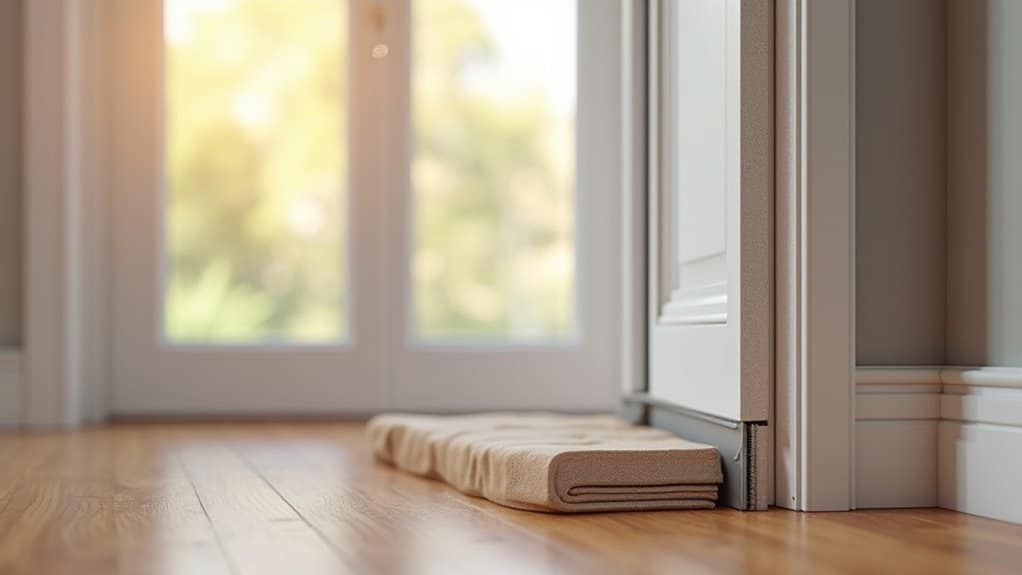
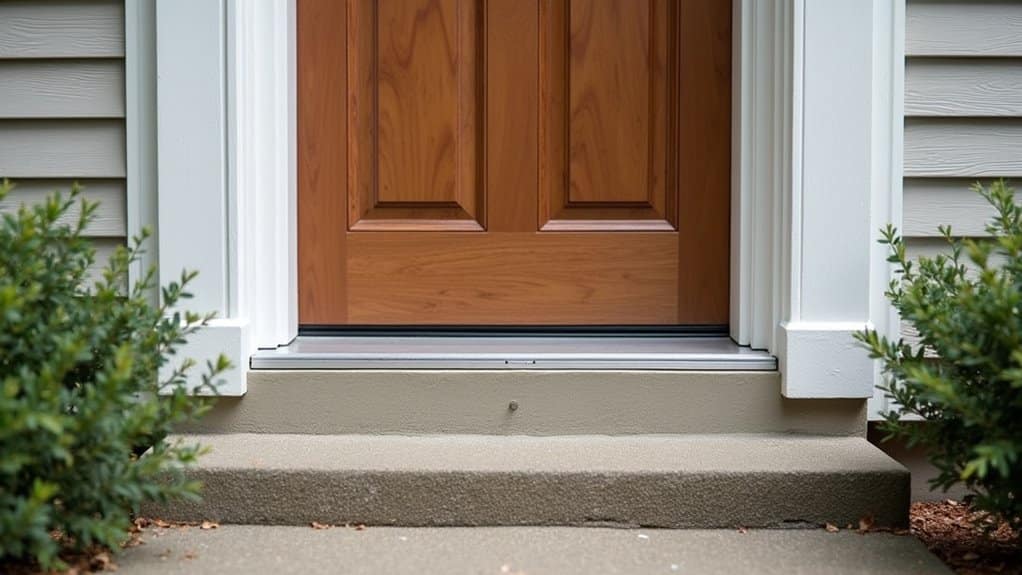
Flexible materials like foam, silicone, and rubber fill perimeter gaps effectively, while proper installation guarantees door-frame alignment. Together, these factors sustain seal performance and keep indoor temperatures stable across varying external weather conditions. Door seals are available in several forms, including adhesive-backed foam strips, silicone rubber seals, and brush seals, each offering different levels of durability and ease of installation.
The Real Cost of Gaps in Doors and Windows
Even small gaps in your doors and windows impose measurable financial and thermal penalties that compound over time. Heat loss through windows accounts for over 25% of residential heating and cooling energy, making evaluating window seals’ impact on utility bills a necessary practice.
Unchecked deterioration produces cascading costs:
- Failed seals permanently reduce insulating capacity, forcing furnaces and boilers to compensate continuously.
- Damaged weatherstripping worsens air leakage during windy conditions, directly spiking heating demand.
- Cracked joints and gaps collectively waste $200, $400 annually in avoidable energy spending.
Monitoring deterioration of weatherstripping lets you catch damage before it escalates. Inspect for flattening, cracks, or missing sections regularly. Poor installation and seal failure negate every energy-saving feature your windows provide, making proactive examination financially essential. Research indicates that occupant window opening behavior can significantly affect seasonal heating demand, with the energy impact being particularly pronounced in apartments and well-insulated houses.
How Door and Window Seals Improve Air Quality and Reduce Noise
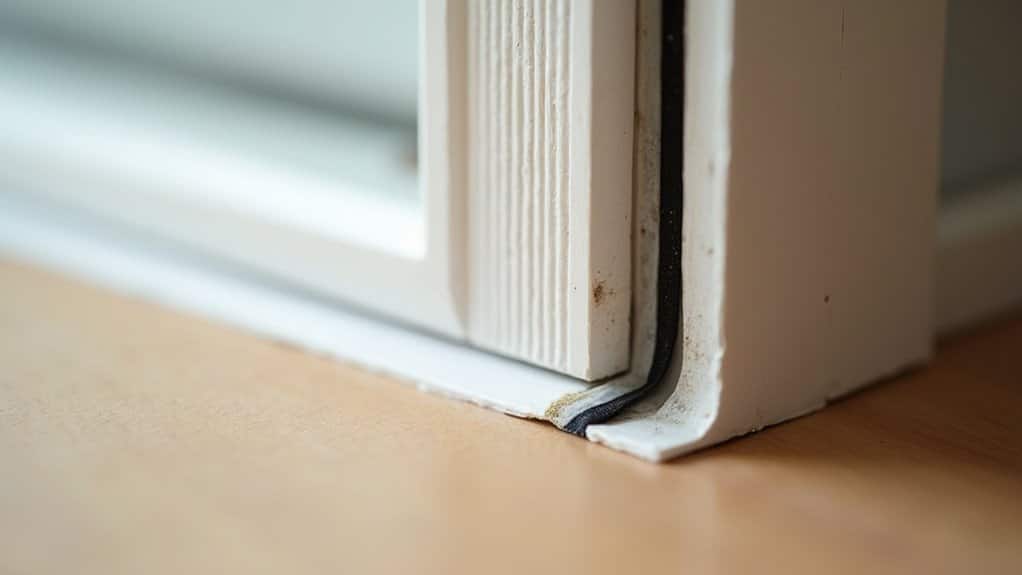
Well-sealed doors and windows do more than stabilize indoor temperatures, they actively filter the air you breathe and reduce intrusive noise. Effective weatherstripping creates an airtight barrier that supports pollen filtration, blocking airborne allergens, dust, and mold spores from penetrating your living space. Proper sealing also contributes to emission reduction by preventing vehicle exhaust and environmental contaminants from infiltrating through gaps and cracks.
Modern double-pane windows with Low-E coatings further minimize condensation, reducing mold risk by controlling interior humidity levels below the critical 60% threshold. Simultaneously, a tighter building envelope dampens external noise transmission, limiting unwanted sound pollution. When integrated with CO2-monitoring door seal systems, you can automate air exchange precisely, maintaining ideal indoor air quality without compromising your home’s thermal or acoustic performance. The Intelligent Door Seal System, developed by the Fraunhofer Institute and Athmer Company, automatically opens and closes the door seal based on CO2 concentration readings to keep levels below the 1000 ppm guideline.
How Hardware Determines How Well Your Seals Actually Perform
Four distinct hardware features determine whether your door and window seals deliver their rated performance, or fail prematurely under real-world conditions. Hardware integration between locking mechanisms and seal geometry directly controls gasket compression dynamics across all contact points.
Four distinct hardware features determine whether your seals perform, or fail prematurely under real-world conditions.
Multipoint locking hardware bolts the sash at the side, top, and bottom simultaneously, achieving uniform gasket compression that prevents air and water infiltration. Fusion-welded corners eliminate gap vulnerabilities by melting seals into continuous joints around each corner.
Testing standards validate this integration rigorously:
- AAMA 920-22 requires 25,000 to 500,000 open/close cycles without seal failure
- Vertical load testing applies up to 2,224 N to confirm hardware structural integrity
- Cycle testing prohibits cracking, separation, or misalignment throughout the entire test duration
Properly sized seals also reduce latch resistance, ensuring hardware engages fully every time.
When Do Door and Window Seals Need Replacing?

Knowing when your door and window seals need replacing prevents minor degradation from becoming costly structural or thermal failure. Monitoring seal effectiveness over time requires identifying common seal failure indicators before damage escalates.
Watch for condensation forming between double-pane glass, foggy or milky hazes, and distorted reflections, these signal insulation gas escape and compromised seals. Physically inspect frames for water stains, peeling paint, visible cracks, or warping. Run your hand along closed windows and doors; drafts or cold spots confirm weatherstripping or gasket failure.
Operationally, stiff windows, difficulty closing doors, and increased outside noise indicate seal deterioration. Rising energy bills reinforce this diagnosis. If foggy glass persists after cleaning or drafts remain after adjustments, schedule a professional inspection and prioritize immediate seal replacement.
Frequently Asked Questions
What Types of Door and Window Seals Are Available on the Market?
You’ll find several weatherstripping materials available, including EPDM rubber seals, compression and bulb seals, V-strips, tension seals, and foam or sponge seals. Each type targets specific gap sizes and applications. You can also apply caulking compounds to seal fixed joints around frames. EPDM handles moisture and ozone effectively, compression seals reduce energy loss, V-strips suit lighter doors, and foam tape addresses smaller gaps quickly and affordably.
Can Door and Window Seals Be Installed as a DIY Project?
Yes, you can install door and window seals yourself using basic DIY installation tips. Start by measuring your frame’s perimeter, adding extra length for corners. Clean the grooves thoroughly before pressing self-adhesive or arrowhead seals firmly into place. Install bubble gaskets in one continuous length, while wedge gaskets require four separate sections. For proper seal maintenance, test compression by closing the door or window and checking for draughts regularly.
Do Door and Window Seals Work Differently in Extreme Climate Conditions?
Yes, door and window seals do perform differently under extreme climate conditions, and you’ll need to account for thermal expansion effects when selecting materials. In severe cold or heat, seals expand and contract alongside your door frames. EPDM rubber and silicone compounds offer superior weathering resistance characteristics, maintaining flexibility from -40°F to 140°F. You’ll also find that multi-point sealing systems compensate for seasonal dimensional changes, ensuring consistent air infiltration prevention year-round.
Are There Eco-Friendly or Sustainable Seal Material Options Available?
Yes, you’ve got several eco-friendly seal material options available. Recycled rubber seals repurpose post-consumer materials, reducing landfill waste while maintaining excellent compression and weather resistance. Plant-based sealant materials, derived from renewable sources like soy or natural latex, offer low VOC emissions and biodegradable properties. You can also consider FSC-certified wood-compatible sealants that complement sustainable window frames. These materials deliver reliable thermal performance without compromising your environmental commitments.
How Do Door and Window Seals Perform in Commercial Versus Residential Buildings?
Door and window seals perform distinctly across both settings, directly affecting your energy efficiency performance and operational cost implications. In residential buildings, you’ll reduce heating and cooling costs by 10-20% using EPDM or foam-based compression seals. Commercially, you’ll require TPV materials meeting fire, smoke, and air-infiltration ratings while withstanding high-traffic demands. You’ll find compression and bulb seals outperform sweep types in minimizing air and light infiltration across both applications.