
You’ll optimize natural light while maintaining storm safety by selecting high-transmittance glass that penetrates up to 15% more visible light than standard alternatives. Tempered or laminated glass provides superior impact resistance and structural integrity during hurricanes. Low-E coatings preserve daylight entry while blocking infrared radiation. Structurally rigid aluminum frames support larger panes without compromising stability. Multi-pane glazing with argon gas fills boosts insulation. Proper installation with multi-point anchors secures wind resistance. Strategic door positioning and slim-profile frames further amplify daylighting gains while maintaining code compliance, each element working synergistically to perfect your design.
Understanding Glass Transmittance and Light Quality
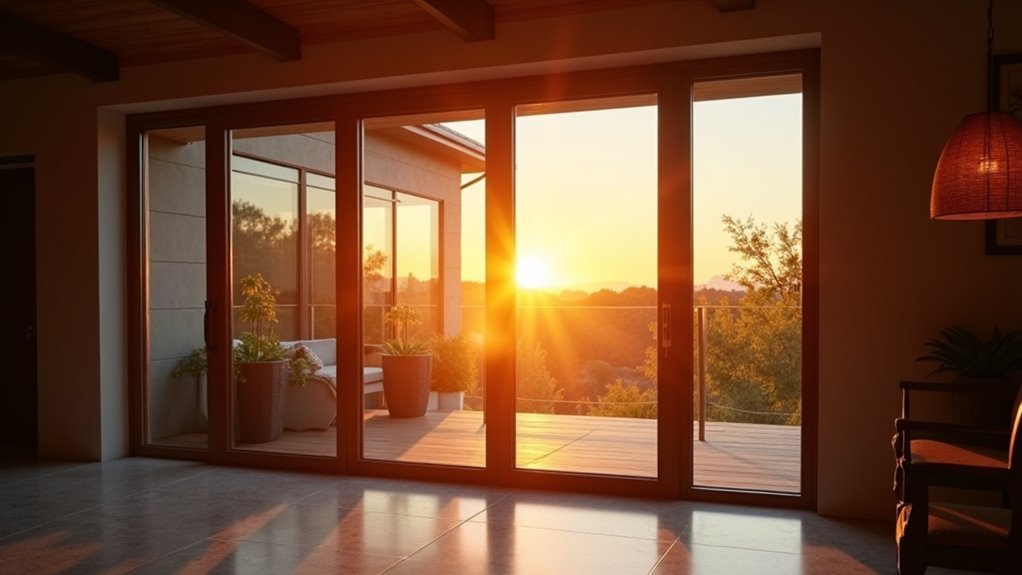
Clarity in architectural glass begins with understanding how light passes through it. You measure transmittance as the percentage of incident light penetrating a material, directly affecting daylight spectrum composition in your spaces. Higher transmittance values indicate superior clarity and boosted light penetration effects throughout your interiors.
You’ll find that visible light transmittance operates within the 380, 750 nm range, critical for daylight quality assessment. When selecting glass panels for doors, you should recognize that high-transmittance options transmit up to 15% more visual light than low-energy alternatives. Furthermore, the 460, 480 nm spectral range stimulates your circadian rhythm regulation. High-transmittance glass exposure can improve mood and alertness while supporting your overall physiological and psychological well-being. Selecting glass door systems with appropriate transmittance ratings ensures energy efficiency while maximizing natural light benefits. Glass panels meeting industry standards for light transmittance requirements ensure optimal performance for both residential and commercial applications.
You achieve accurate transmittance measurements using spectrophotometers or transmittance meters across standard testing ranges of 300, 800 nm. This data-driven approach guarantees you select glass that optimizes both natural illumination and occupant well-being.
Balancing Brightness With Low-E Glass Technology
Achieving ideal daylighting in your glass panel doors doesn’t require sacrificing energy efficiency, Low-E coatings accomplish both simultaneously. These microscopically thin coatings maintain high visible light transmittance while selectively blocking infrared radiation, allowing you to harness natural brightness without excessive heat gain.
Your Low-E glass doors preserve daylight entry through their electromagnetic spectrum selectivity, minimizing glare while maximizing passive solar gain during winter months. The coating’s insulation capabilities reduce radiant heat loss, keeping interiors warm without compromising transparency. Low-e glass works similar to a thermos, reflecting interior temperatures back inside. Laminated glass options can further enhance protection by blocking up to 99% of UV light, reducing damage to interior furnishings and improving occupant comfort. Strategic placement of these doors throughout your home creates a cascading effect that brightens adjacent spaces and elevates your overall living environment.
In warm climates, Low-E glass reflects solar infrared energy, maintaining cooler spaces and reducing cooling demands. This dual functionality, supporting passive solar gain when beneficial and blocking excess heat when needed, ensures your glass panel doors deliver optimal daylighting year-round while meeting stringent energy codes and sustainability standards.
Tempered and Laminated Glass for Storm Protection

When you’re selecting glass panel doors for regions prone to severe weather, you’ll find that tempered and laminated glass offer distinctly different protective mechanisms. Tempered glass provides superior glass impact resistance through its four to five times greater strength than standard annealed glass, shattering into harmless pebble-like pieces upon failure. Laminated glass excels in hurricane conditions, remaining structurally intact despite cracking due to its polyvinyl butyral interlayer adhesion.
| Feature | Tempered Glass | Laminated Glass |
|---|---|---|
| Impact Resistance | High initial strength | Maintains integrity when cracked |
| Hurricane Performance | Moderate | Excellent (200+ mph winds) |
| Glass Acoustic Dampening | Minimal | Exceptional sound blocking |
You’ll also benefit from laminated glass’s glass acoustic dampening properties, which reduce exterior noise while maintaining natural light transmission and UV protection for your interior spaces. Laminated glass is commonly used in automobile windshields, demonstrating its proven durability and safety performance in real-world high-impact applications. The laminated glass’s plastic layer helps block outside noise and filter out up to 99% of harmful UV rays, providing additional environmental comfort. The tight seals around glass panels prevent drafts and water infiltration, further enhancing the storm safety of your door installation.
Multi-Pane Glazing: Strength Meets Energy Efficiency
By incorporating multiple glass panes separated by insulating air or gas layers, you’ll considerably reduce heat transfer through your glass panel doors while simultaneously enhancing structural integrity and acoustic performance. Understanding seasonal energy usage patterns helps you select the optimal glazing composition for your climate. Double-pane configurations achieve U-values of 1 to 2, compared to single-pane windows exceeding 5. Cold climates realize up to 24 percent energy savings, while hot climates achieve 18 percent reductions. Low-E coatings with argon or krypton gas fills further improve insulation, reflecting heat to maintain consistent indoor temperatures year-round. The spacing between panes and gas type guarantee tight seals prevent drafts and water infiltration, protecting frame integrity while maximizing energy efficiency and noise reduction simultaneously. Triple-pane configurations provide another layer of insulation for homeowners in extremely cold or hot climates seeking enhanced thermal performance. Thicker glass in multi-pane doors slows heat transfer more effectively than thinner alternatives, improving overall insulation performance. Multi-pane glass doors provide UV protection that shields your interior furnishings and flooring from harmful ultraviolet radiation damage over time.
Choosing the Right Frame Material for Durability
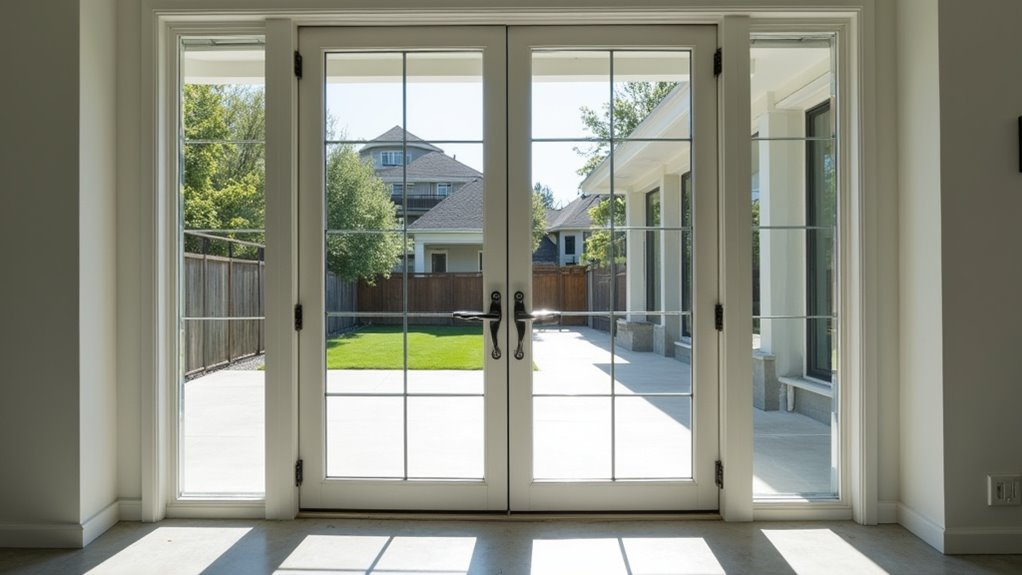
You’ll find that aluminum frames deliver impressive structural strength and corrosion resistance, making them particularly valuable for coastal environments where saltwater exposure accelerates degradation in lesser materials. When comparing UPVC and fiberglass, you’re weighing cost-effectiveness against superior longevity, UPVC typically lasts 20, 30 years with minimal maintenance, while fiberglass extends that lifespan to 30, 50 years with vastly superior thermal performance (up to 700x better insulation than aluminum). Steel framing offers slim profiles that increase daylight penetration while maintaining corrosion-resistant finishes for enhanced durability. For homeowners seeking traditional aesthetics with proven longevity, wood door frames provide authentic appeal alongside excellent noise resistance through their natural density. Consider verifying NFRC certification and Energy Star ratings to ensure transparent documentation of your frame material’s energy efficiency performance. Your choice fundamentally depends on climate conditions, maintenance tolerance, and whether long-term energy savings justify the higher initial investment in fiberglass technology.
Aluminum’s Strength and Corrosion
Why does aluminum dominate glass panel door construction? You’ll find that aluminum’s structural rigidity enables larger glass panels with slimmer frames, a critical advantage for storm safety. The material’s inherent strength withstands high winds and lateral loads without compromising stability.
Aluminum’s corrosion resistance outperforms wood and steel alternatives. You won’t deal with rust or rot; anodized or powder-coated finishes provide electrochemical protection, especially in coastal environments. This surface treatment creates a barrier against salt air and moisture degradation.
You’ll appreciate minimal maintenance requirements compared to other materials. Unlike wood requiring regular staining, aluminum resists warping and termite damage, reducing long-term costs. While dents can occur, they don’t compromise structural integrity like decay does. For storm-prone areas, you’re investing in durability without sacrificing the thermal efficiency that thermal conduction-resistant frames provide.
UPVC vs. Fiberglass Comparison
While aluminum excels in coastal environments and high-wind applications, homeowners and builders often face a more nuanced decision when selecting frame materials for moderate climates: uPVC versus fiberglass. Fiberglass doors deliver superior longevity, lasting 15, 20 years with minimal maintenance and exceptional design flexibility for slim, modern profiles. However, they demand higher upfront investment and may require Low-E coatings to match uPVC’s thermal performance. uPVC offers affordability, multi-chambered insulation, and greater color customization, though it typically underperforms fiberglass in lifespan. Both materials resist corrosion and require only periodic cleaning. uPVC’s recyclability improves its environmental impact profile, while fiberglass excels in fade resistance. Your choice depends on balancing durability priorities, budget constraints, and long-term maintenance expectations.
Installation Best Practices for Maximum Performance
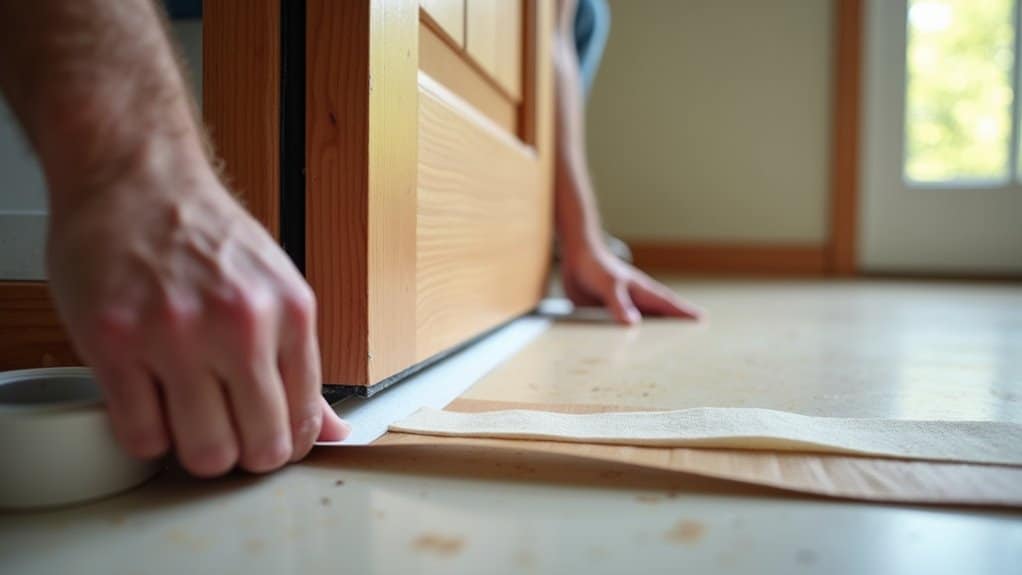
Because glass panel doors demand precision at every stage, proper installation fundamentals directly determine their performance, longevity, and safety. Your pre-installation planning must include accurate measurements of openings, glass dimensions, and hardware clearances while accounting for frame irregularities and wall substrate type. You’ll secure tempered or laminated safety glass using reinforced frames with multiple fasteners and multi-point locking systems per code requirements.
| Installation Phase | Critical Task | Performance Impact |
|---|---|---|
| Preparation | Surface cleaning and debris removal | Ideal adhesion and clarity |
| Glazing | Gasket and sealant application | Airtight, weatherproof fit |
| Fastening | Multi-point anchors and bolts | Wind and impact resistance |
| Adjustment | Hinge and lock alignment | Smooth operation, stress elimination |
| Post-installation inspection | Seal integrity verification | Long-term durability assurance |
Your post-installation inspection verifies seal integrity, weatherstripping continuity, and hardware function before final acceptance.
Maximizing Daylight Design Through Door Sizing
Maximizing daylight through strategic door sizing directly influences both energy efficiency and occupant well-being in interior spaces. You’ll achieve ideal light distribution by selecting full-height, wide glass doors that substantially exceed standard dimensions. Larger glazing areas reduce artificial lighting dependency while minimizing mullion obstruction that compromises light transmission.
Your door positioning strategy should prioritize south-facing orientations for peak solar exposure and east-facing placements for morning illumination. Position doors in connecting areas like hallways and corridors to extend daylight penetration deeper into the building. Grouping doors adjacent to existing windows or skylights amplifies light distribution across multiple rooms.
Slim-profile frame designs further boost effective glass area, ensuring the majority of the door remains transparent rather than structurally obstructive, maximizing your daylighting gains without sacrificing storm safety compliance.
Maintaining Your Glass Doors for Long-Term Safety and Clarity
To preserve the safety and optical performance of your glass doors, you’ll need to implement a thorough maintenance regimen that addresses cleaning, inspection, environmental protection, and hardware care. Conduct regular maintenance checks monthly to identify scratches, chips, cracks, and hardware wear early. Clean both glass surfaces weekly using microfiber cloths and non-abrasive cleaners, preserving optical clarity while preventing dust and fingerprint buildup. Replace weather stripping as needed to maintain storm resistance and energy efficiency. Apply silicone-based lubricant to hinges and locks quarterly, avoiding oil-based products that attract dust. Tighten all visible fasteners quarterly for structural resilience. UV-protective films and laminated glass further bolster safety and durability. Clear drain tracks regularly to prevent water ingress and corrosion during severe weather events.
Frequently Asked Questions
How Often Should I Inspect My Glass Door Seals to Maintain Storm Protection?
You should inspect seals periodically, monthly for high-traffic doors and quarterly for seldom-used entrances. You’ll want to monitor seal degradation closely after severe weather events, as storms cause approximately one-third of failures. You must conduct annual caulking reviews and maintain detailed inspection logs. For ideal storm protection, you shouldn’t rely solely on self-inspections; you’ll benefit from professional assessments once or twice yearly to identify emerging issues before they compromise your door’s weather resistance.
Does Anti-Reflective Coating Affect the Appearance or Color of Glass Panels?
You’ll find that high-quality AR coatings produce minimal optical distortion and preserve your glass panel’s aesthetic appeal. While thin-film layers may occasionally create subtle bluish or purplish tints depending on manufacturing tolerances, professional-grade coatings are engineered for neutral color impact. You’re assured consistent visible spectrum transmission without significant hue distortion, maintaining true color appearance. For architectural applications, you’ll experience bolstered clarity and contrast rather than compromised aesthetics.
What Is the Cost Difference Between Tempered and Laminated Glass for Doors?
You’ll find tempered glass typically costs 20, 30% less than laminated options for doors. Expect to pay $75, $525 per standard door with tempered glass versus $150, $600 with laminated alternatives. While tempered glass offers superior impact resistance comparison through rapid heating-cooling processes, laminated glass‘s interlayer provides boosted forced-entry protection. Your glass panel pricing decision depends on balancing upfront costs against long-term security needs and regional storm exposure requirements.
Can I Upgrade Existing Glass Doors With Low-E Coating for Better Efficiency?
Yes, you can upgrade your existing glass doors with Low-E coatings through professional installation services. These energy efficient upgrades reflect heat indoors during winter while blocking solar gain in summer, reducing energy consumption by up to 30%. You’ll recoup your initial investment within years through lower utility bills. For impact resistant retrofits, professional glaziers can apply protective coatings simultaneously, enhancing both thermal performance and durability while maintaining warranty coverage.
Which Frame Material Requires the Least Maintenance in Coastal Storm-Prone Regions?
You’ll find that vinyl frames require the least maintenance in coastal storm-prone regions. They won’t warp, rot, or swell in humid environments, and their UV-resistant properties prevent fading from intense sunlight. While aluminum frames offer lightweight durability with baked enamel protection, they can eventually corrode under extreme seaside conditions. Vinyl’s superior resistance to salt exposure and moisture makes it your ideal choice for minimal upkeep in challenging coastal climates.