
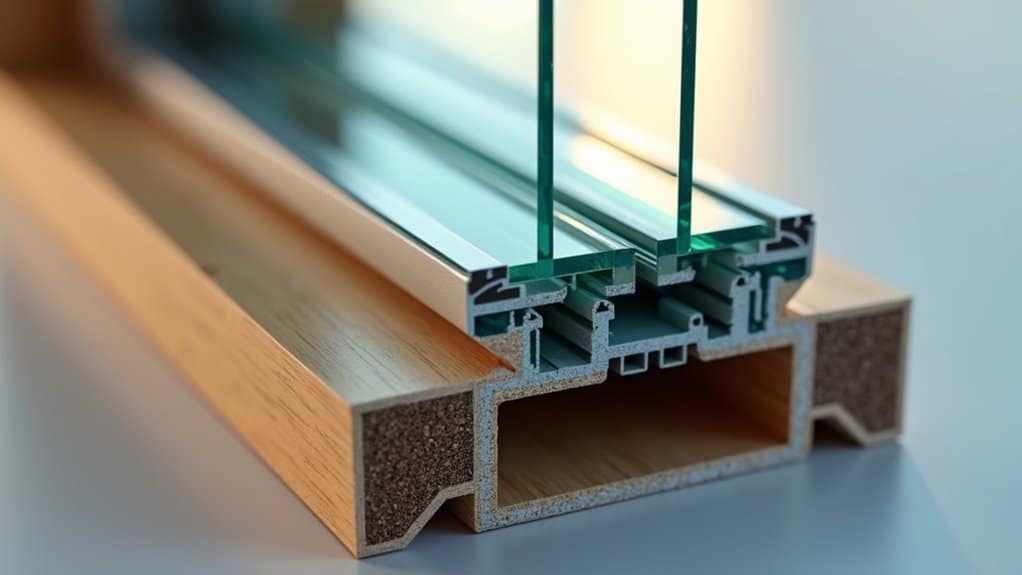
You’ll strengthen your door frame by inspecting for cracks and misalignments, then reinforcing weak points with steel inserts and fusion-welded corners. Upgrade your hardware with commercial-grade strike plates anchored into wall studs using 3-inch screws paired with ANSI Grade 1 deadbolts. Seal gaps with weatherstripping, door sweeps, and expanding foam to block drafts and water. Ultimately, establish monthly maintenance routines and annual inspections to catch corrosion or wear early. Uncover thorough reinforcement techniques that address all vulnerable points.
Inspection and Assessment
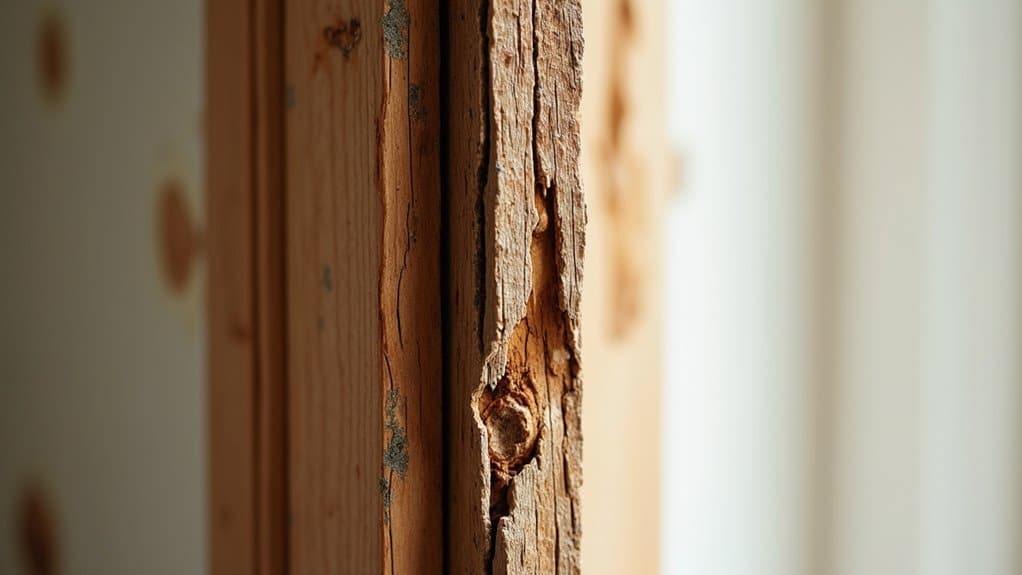
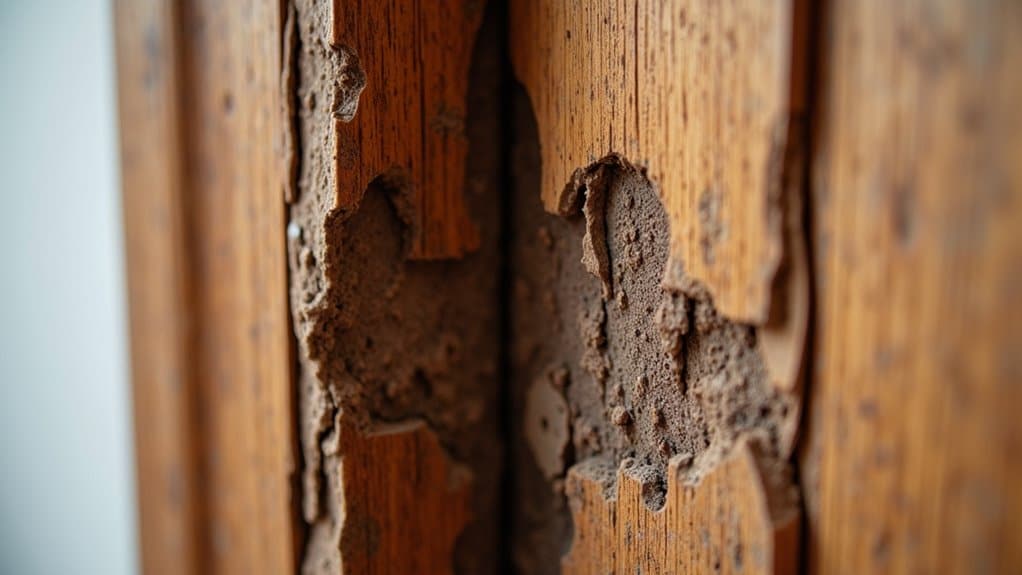
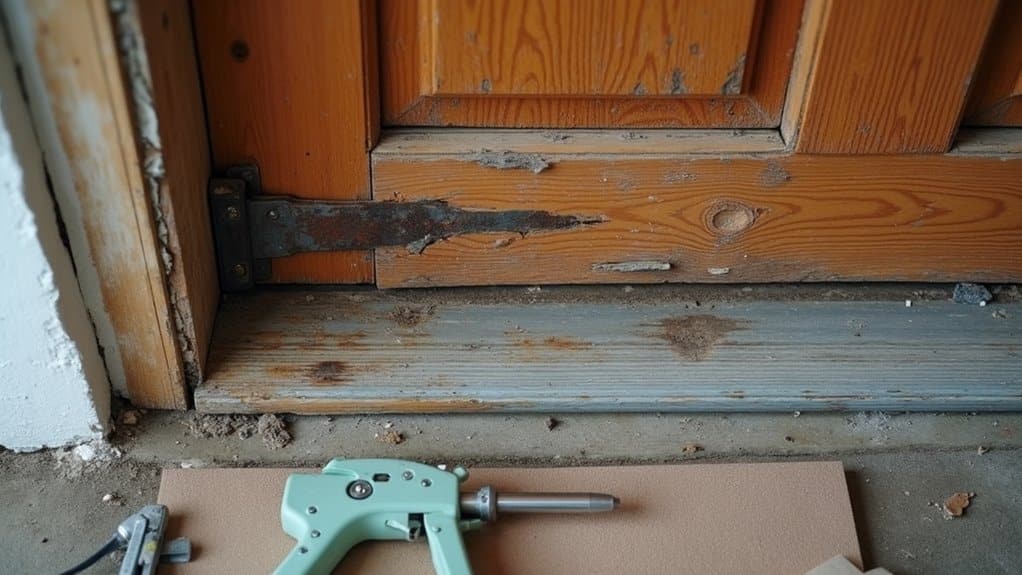
Before you can effectively repair your door frame, you’ll need to conduct a thorough inspection that evaluates its physical condition, hardware functionality, weatherproofing integrity, and code compliance. Start by examining the entry condition for cracks, warping, dents, rust, and visible damage. Assess frame stability by checking for gaps, misalignments, or improper anchoring that compromise security. Inspect hardware, latches, hinges, locks, and bolts, for loose fasteners and proper operation. Evaluate weatherstripping and seals for gaps allowing air or water infiltration. Document findings with photos and detailed notes. Per NFPA 80 standards, annual inspections with written records available for review by your Authority Having Jurisdiction are required to ensure fire door compliance and safety. Look for visible cracks or splits in wooden frames, as these are common signs of structural weakness that compromise both security and weather resistance. Use a spirit level to verify that door frames are properly plumb and level, ensuring optimal alignment and structural integrity. Verify compliance with local building codes and fire-rating requirements. Test door movement for smooth operation without obstructions. This systematic assessment establishes a clear repair roadmap and identifies safety concerns requiring immediate attention.
Structural Reinforcement
Once you’ve identified the specific vulnerabilities in your door frame through inspection, you’ll want to focus on structural reinforcement, the systematic strengthening of your frame’s materials, joints, and fastening systems to resist forced entry, weather damage, and operational stress.
Identify vulnerabilities through inspection, then systematically strengthen your frame’s materials, joints, and fastening systems against forced entry and weather damage.
You’ll strengthen your frame construction through targeted upgrades:
- Steel inserts and reinforcement kits increase impact resistance by distributing load distribution across wider areas
- Fusion-welded corners eliminate weak joints prone to splitting under stress
- 3-inch screws anchored into wall studs replace standard fasteners for superior holding power
- Metal corner brackets and internal steel plates prevent frame separation and cracking
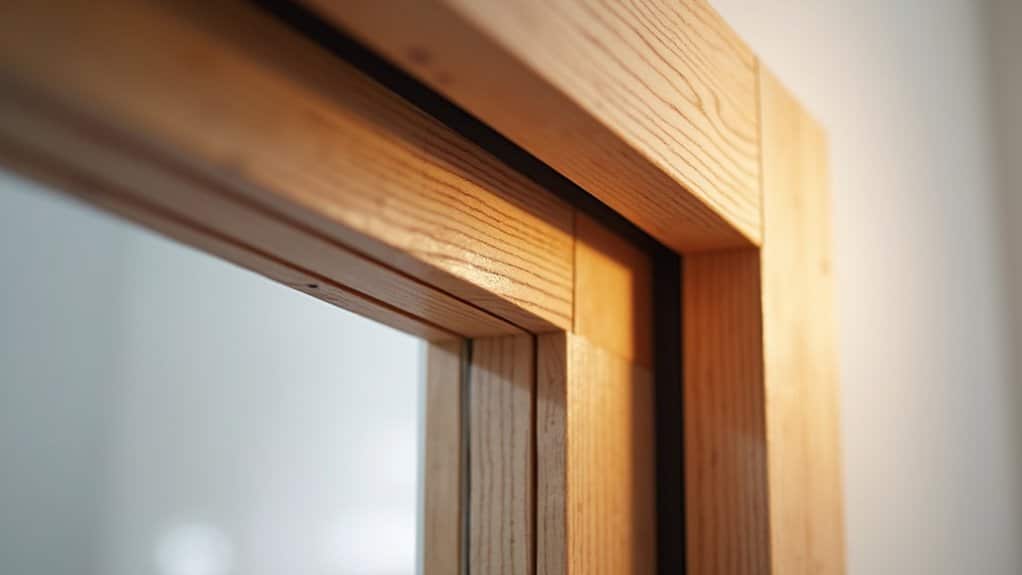
These reinforcement techniques work synergistically to harden vulnerable points, particularly the lock-side jamb and strike plate areas. Standard builder-grade frames fail predictably under direct impact because the soft pine jamb shatters when force concentrates at the lock location. You’ll achieve maximum structural integrity by combining material upgrades with proper anchoring methods. Reinforced hinges prevent sagging and maintain proper door alignment throughout the operational life of your entrance. Installing steel door edge bars in combination with your structural reinforcements provides additional protection against forced entry attempts.
Hardware Upgrades
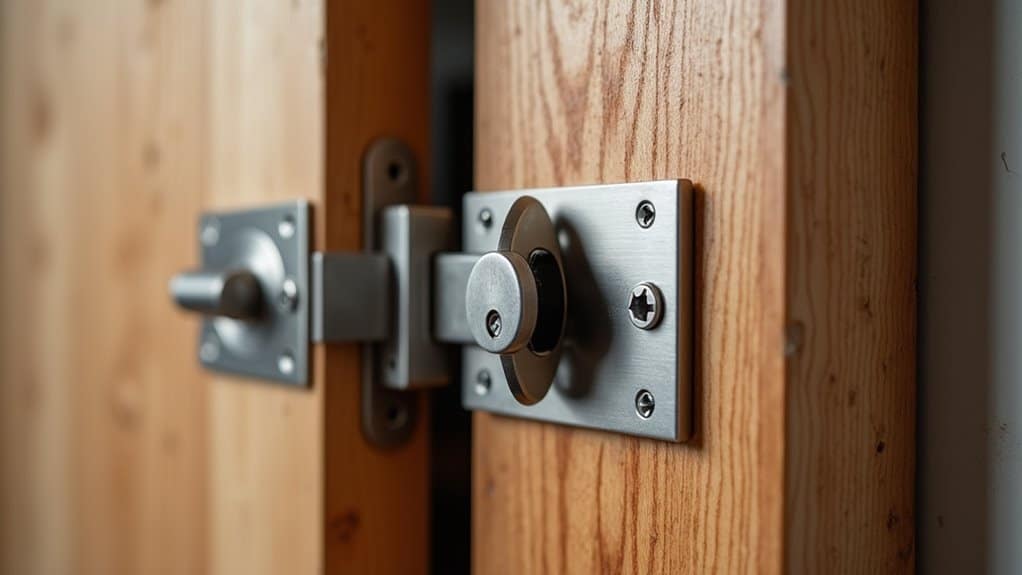
While structural reinforcement fortifies your door frame’s core materials, hardware upgrades systematically improve the mechanical systems that resist forced entry and operational stress. You should prioritize upgraded strike plates rated for commercial use, which distribute force more effectively than standard residential models. Install these with 3, 4 inch hardened steel screws that penetrate wall studs rather than just the frame molding. Reinforced fasteners resist stripping and withstand repeated stress better than conventional half-inch screws. In addition, pair your upgraded strike plates with ANSI Grade 1 deadbolts featuring anti-drill and anti-pick technologies. Smart deadbolts also provide keyless entry while maintaining the same high security standards as traditional mechanical locks. Consider adding door jamb reinforcement kits and hinge shields to eliminate vulnerable points. The ENTRY ARMOR line of security hardware offers stainless steel wrap around door edge guards that provide comprehensive protection against both forced entry attempts and weather damage. Strike plate reinforcement distributes impact forces and creates a unified security barrier that prevents isolated failures. These coordinated upgrades create an inclusive security system where each component supports the others, preventing isolated failures under attack.
Weatherproofing and Sealing
After you’ve reinforced your door frame’s structure and hardware, weatherproofing creates a continuous defensive seal that prevents drafts, moisture infiltration, and energy loss.
Your material selection depends on gap size and durability requirements. Consider these installation methods:
- Self-adhesive weatherstripping for quick application on clean, dry surfaces
- Nail-in or grooved installation for high-traffic entries requiring added strength
- Door sweeps (aluminum or rubber) secured at the bottom to block drafts and water
- Expanding foam for hard-to-reach frame gaps, complemented by exterior caulking
Measure your top, sides, and bottom frame accurately, then cut materials precisely to avoid overlaps. Test the door repeatedly after installation to confirm proper sealing. You can detect air leaks by using a candle to detect air movement around the door frame. Recognizing signs of poor weatherproofing such as drafts, water stains, and increased energy bills allows you to address problems before they worsen. Weather-resistant rubber or vinyl materials excel in climates with temperature fluctuations or heavy rain, ensuring long-term performance and minimal maintenance requirements. Selecting Energy Star certified products guarantees quality seals that reduce strain on your heating and cooling systems while lowering energy bills.
Maintenance and Monitoring
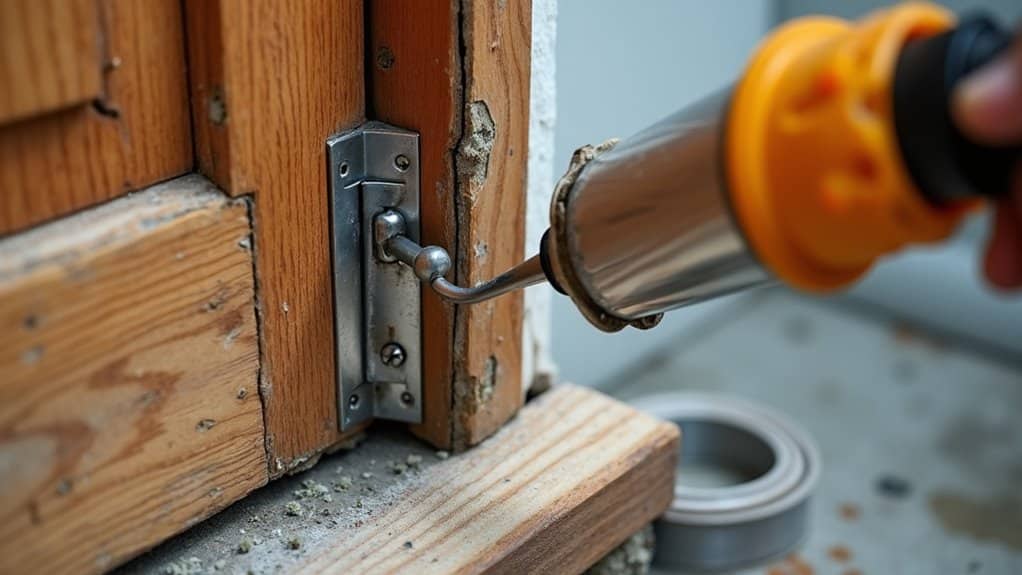
Your door frame’s longevity depends on consistent inspection and upkeep that catch problems before they escalate. You’ll want to establish a regular lubrication regimen for hinges, screws, and bolts, tightening them quarterly prevents operational issues and structural strain.
During monthly cleanings, you should inspect hardware for corrosion or wear, replacing compromised components immediately. Test your door’s smooth operation frequently; sticking or tightness signals alignment problems requiring prompt adjustment. Watch for signs of warping or moisture exposure that can affect how your door closes and opens.
Maintain finish protection through regular paint or stain touch-ups, which repel moisture and slow decay. Keep detailed repair logs to identify recurring issues and monitor frame condition over time. Regular inspections for signs of wear will help you identify damage early before it becomes costly. Using a flashlight to check for hidden issues like rot or deeper cracks will help you catch structural problems early. If you notice damage affecting structural stability, seek professional assessment rather than attempting extensive repairs yourself.
Frequently Asked Questions
How Much Does Professional Door Frame Repair Typically Cost?
You’ll typically spend $75, $220 for professional door frame repairs, with the national average hovering around $125. Your average hourly labor rates for door frame repair range from $30, $150 per hour, depending on your region and contractor expertise. The typical total cost range for professional door frame repair depends on damage severity, simple fixes like sanding cost $75, $90, while structural repairs run $110, $220. Most jobs take 1, 3 hours to complete.
What Tools and Materials Do I Need for DIY Door Frame Fixes?
You’ll need essential hand tools like a hammer, screwdrivers, chisel, and pry bar for removal work. For repairs, gather wood filler, epoxy, replacement wood, and wood glue. You’ll want basic wood sanding tools, ranging from coarse to fine grits, to smooth surfaces. Don’t skip high quality weather sealants and calk for lasting protection. Include a cordless drill, level, measuring tape, primer, paint, safety glasses, and a dust mask for thorough DIY door frame repairs.
Can I Repair a Door Frame Myself, or Should I Hire a Professional?
You can repair minor door frame damage yourself using DIY methods if you’ve got basic handyman skills. However, you’ll want professional expertise for severe structural issues, extensive rot, or complete frame replacement. If you’re unsure about the repair’s complexity or the damage’s severity, hire a contractor. They’ll guarantee proper alignment, weatherproofing, and code compliance while providing warranties, saving you costly mistakes.
How Long Does It Take to Complete Door Frame Security and Weatherproofing Improvements?
You’ll typically complete basic door frame security and weatherproofing improvements in 4, 8 hours for a standard project. Your door frame alignment assessment takes 30 minutes, while the door frame tightening procedure requires 1, 2 hours. Frame preparation and repair consume 2, 3 hours, weatherproofing adds 1, 2 hours, and hardware installation takes another 1, 2 hours. Complex conditions or multiple doors will extend your timeline considerably.
What Warning Signs Indicate My Door Frame Needs Immediate Professional Inspection?
You’ll need immediate professional inspection if you notice a sagging door frame that won’t close properly, deteriorated wood that’s soft or crumbling when pressed, or visible mold and musty odors indicating moisture damage. Furthermore, watch for diagonal cracks above the frame suggesting foundational stress, hollow-sounding sections revealing pest damage, or noticeable separation between frame and wall. These warning signs indicate compromised structural integrity requiring expert assessment before conditions deteriorate drastically.