
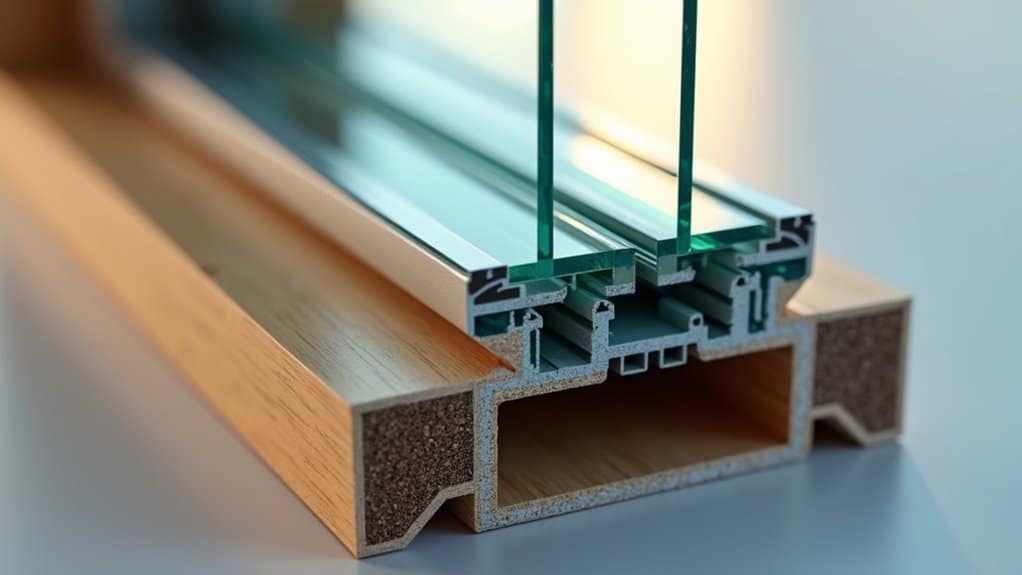
You’ll locate your door frame’s three critical components, head jamb, side jambs, and sill, by examining hinge placement patterns and exterior hardware positioning. Hinges typically sit 5, 7 inches from the top edge and 10, 11 inches from the bottom, marking vertical alignment points. Strike plates and weatherstripping reveal vulnerability zones requiring reinforcement. Understanding your door’s swing direction and handing determines where wind forces concentrate. Once you’ve mapped these structural elements, you’re ready to identify which reinforcement materials and installation techniques’ll provide maximum storm protection.
Understanding Door Frame Components and Structure
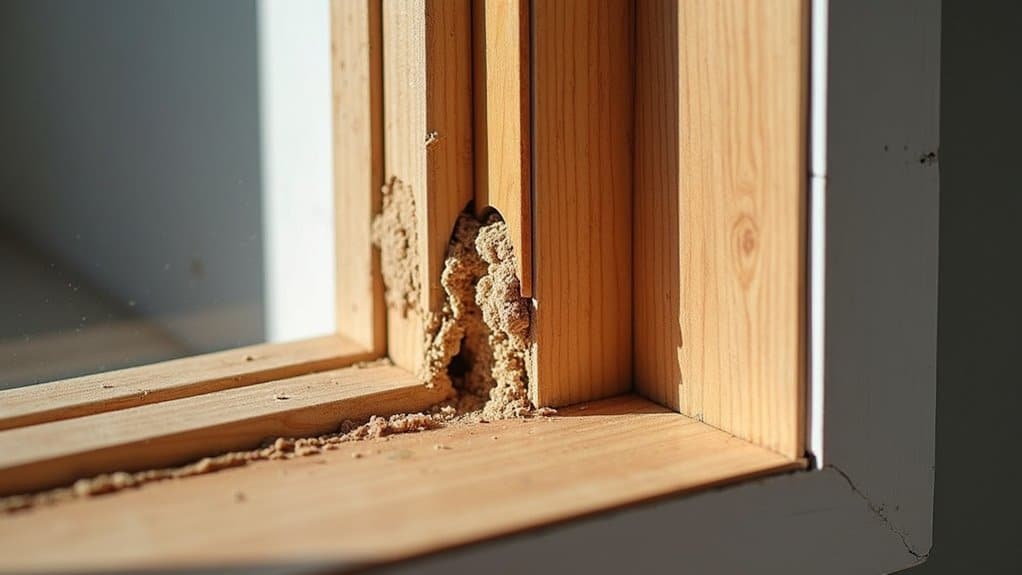
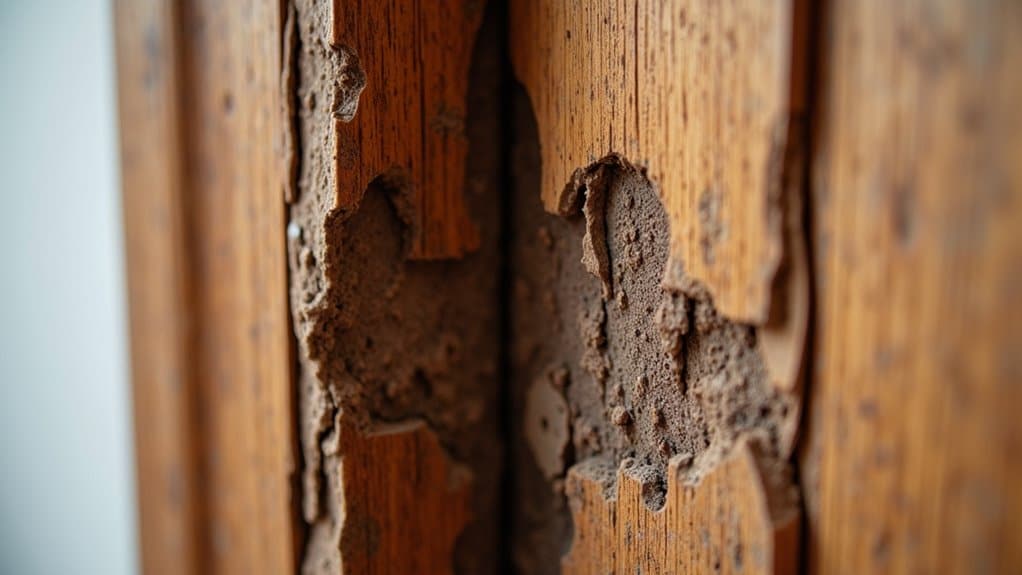
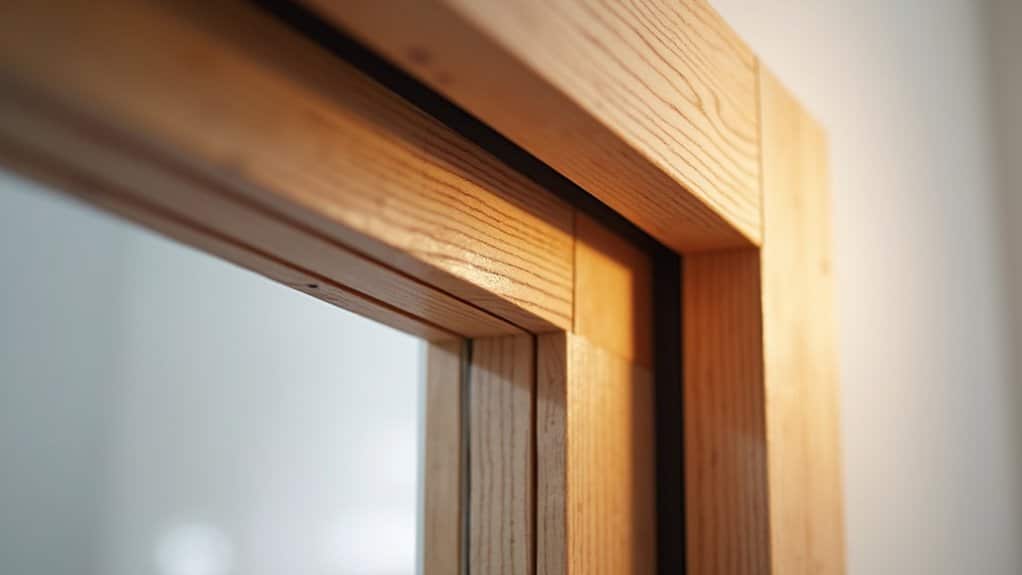
Since door frames form the structural foundation of any door assembly, you’ll want to comprehend their core components and how they work together to provide both security and weather protection. Your door frame consists of three essential parts: the head jamb (top), side jambs (vertical), and sill or threshold (bottom). These components work together to create frame structure integrity by supporting the door slab and distributing loads evenly. The side jambs anchor your hinges and strike plates, while the sill provides base stability and weatherproofing. Mullions may divide multi-panel doors into sections. The casing conceals the space between the frame and the wall, providing both aesthetic appeal and additional protection. Understanding structural load requirements helps you recognize that larger openings demand thicker frames to prevent warping or sagging. Signs of frame weakness such as visible cracks or splits in the wood indicate that reinforcement may be necessary.
Locating Your Door Frame Using Hinges and Hardware
You’ll identify your door frame’s exact location by examining hinge placement patterns, which reliably mark the vertical alignment of the jamb along the door’s edge. Your exterior hardware, locksets, deadbolts, and strike plates, provides vital reference points for frame mapping, as these components align with standardized bore locations and reinforcement zones. By measuring from your door’s top and bottom edges to each hinge and hardware element, you’ll establish the precise coordinates needed for effective storm reinforcement installation. Door handing determines whether hinges are positioned on the left or right side of your door, which directly influences how you’ll approach reinforcement placement and hardware alignment.
Identifying Hinge Placement Patterns
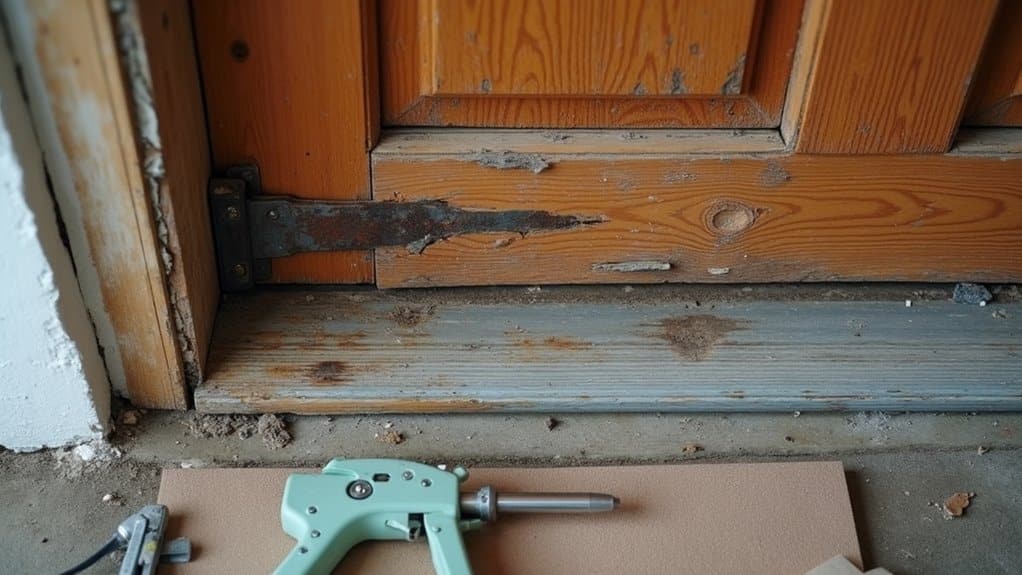
Door hinges serve as reliable reference points for determining frame boundaries and structural integrity. You’ll typically find the top hinge positioned 5, 7 inches from the door’s upper edge, while the bottom hinge sits 10, 11 inches from the lower edge. Middle hinges, when present, space evenly between these points.
Examining visual consistency along the frame’s stile reveals the hinge alignment pattern and indicates whether you’re evaluating an original or modified installation. Standard butt hinges display three knuckles toward the frame and two toward the door. For enhanced storm protection, fixed pin hinges provide superior security by preventing removal from the exterior. Measure center-to-center distances between screw holes and verify leaf width, typically 3.5″ to 5″, to confirm hinge compatibility. Heavier doors may require three to four hinges for optimal safety and stability during severe weather events.
Deviations from expected spacing, mismatched leaf sizes, or uneven placement suggest previous repairs or frame distortion requiring reinforcement examination. Short screws that only anchor into door frame trim rather than wall studs can gradually loosen over time, compromising the structural integrity of your installation and requiring immediate screw replacement with longer fasteners for proper wall stud penetration.
Reading Exterior Hardware Clues
While hinge placement patterns reveal internal frame geometry, the hardware surrounding your door, strike plates, closers, weatherstripping, and security reinforcements, tells a similarly vital story about frame boundaries and structural weaknesses. You can trace your door frame perimeter by following weatherstripping continuity along all edges, identifying where it separates or gaps to pinpoint vulnerability zones. Strike plates mark your latch-side jamb’s midpoint, while threshold hardware defines your lower frame boundary. Examine fastener types and hardware finish corrosion avoidance methods: galvanized coatings indicate steel frames, whereas brass suggests wood construction. The sill/threshold at the bottom of your door frame serves as a critical attachment point to the floor that anchors your entire entry system. The head/header at the top horizontal section provides essential structural support against wind uplift and lateral storm forces. Door closers automatically seal the entry after opening and enhance weatherproofing during severe weather events. Loose or misaligned hardware signals frame movement, rot, or structural compromise. Pay attention to mounting depth and anchor patterns, these reveal frame durability and load-bearing capacity, essential indicators for storm readiness assessment.
Determining Your Door’s Swing Direction and Handing
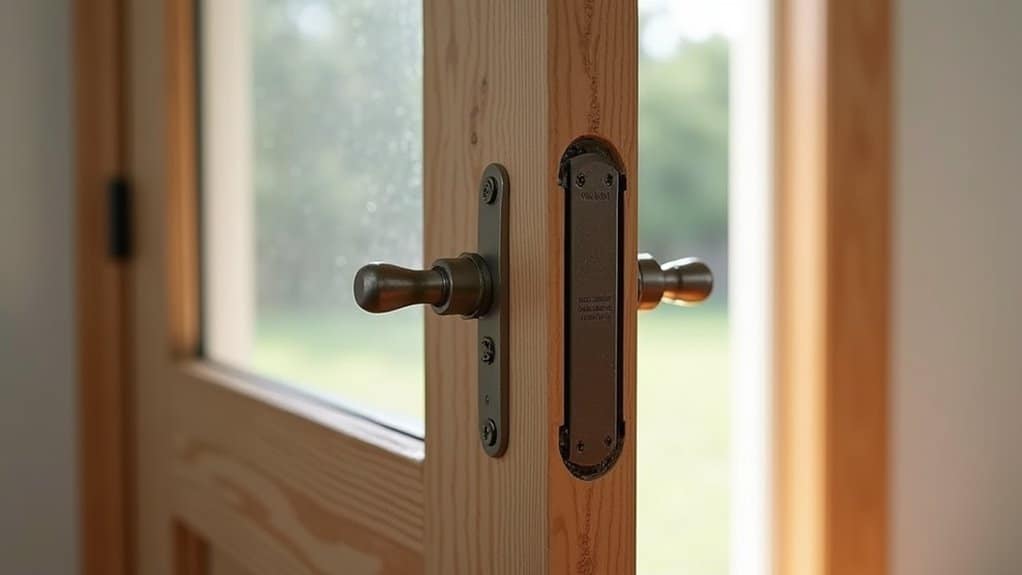
Two critical factors, swing direction and handing, determine how a door functions within your frame and whether it’ll meet building codes, security requirements, and operational needs. You’ll identify handing by standing with your back to the hinges; the arm closest to the doorknob indicates whether you have a left or right-handed door. For exterior doors, observe from the secure side to guarantee proper assessment. Understanding reverse handing configurations becomes essential when you’re installing panic hardware or fire exit devices, which often dictate opposing swings. Double doors require coordinated handing evaluation, particularly when addressing egress door requirements for emergency exit corridors. Interior doors generally swing into the room, opening towards the nearest perpendicular wall to maximize usable space. The rails and stiles that comprise your door panel provide structural support essential for weathering storm conditions. Accurate door swing identification ensures proper hardware and fit for your specific installation requirements. You must verify that your door’s swing direction aligns with traffic flow and doesn’t obstruct furniture placement. Building codes frequently mandate specific swing directions for safety compliance, making accurate handing determination critical before installation.
Identifying Critical Reinforcement Points on Your Frame
Once you’ve confirmed your door’s swing direction and handing, you’ll need to assess where your frame is most vulnerable to forced entry and storm damage. Start by analyzing frame vulnerabilities at five critical zones: the strike plate area, hinge locations, jamb material, lock attachment points, and corner connections.
Understanding force distribution patterns helps you prioritize reinforcement efforts. The strike plate receives concentrated impact during kick-ins, while hinges experience prying stress. Soft jamb materials split easily under lateral pressure, and hardware mounting points concentrate breaking forces at discrete locations. Frame corners succumb to racking forces during storms. Reinforced hinges prevent sagging and maintain proper door alignment during extreme weather conditions.
Evaluate each zone for existing weaknesses, soft wood, short fasteners, or loose connections. This systematic assessment reveals which areas require immediate upgrading for ideal storm and security protection.
Selecting Materials for Effective Door Frame Reinforcement
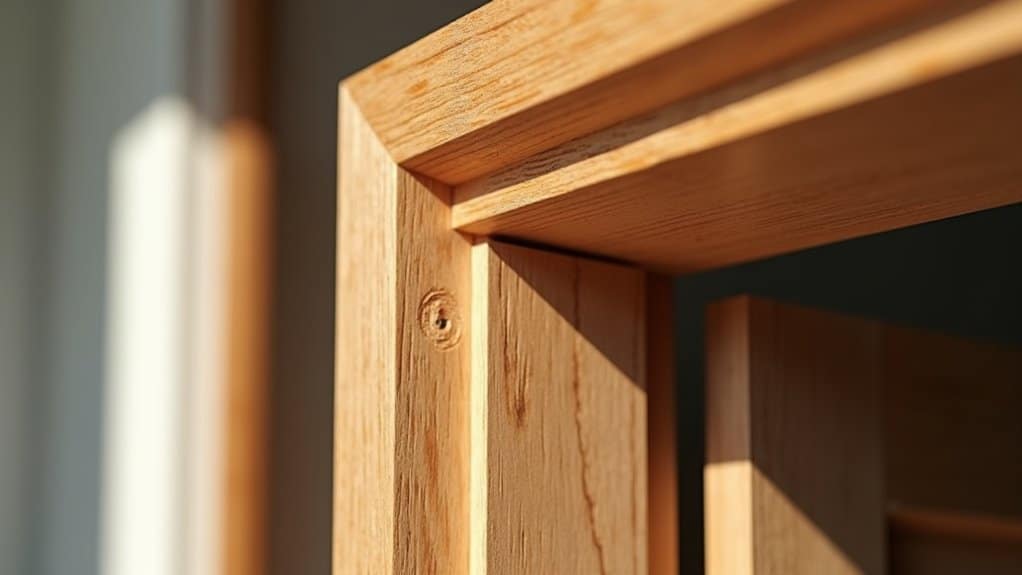
Choosing the right materials makes or breaks your reinforcement strategy. You’ll find that hardwoods like oak and maple outperform pine in impact resistance, though they require sturdy moisture control considerations to prevent degradation. Steel frames deliver maximum security and are industry standard for hurricane-rated applications, while aluminum offers rust resistance at the cost of lower strength.
Composite material advantages prove compelling for severe weather zones. These reinforced polymers resist splitting and warping while maintaining stability across temperature swings. You’ll invest more upfront but gain extended service life and reduced maintenance costs.
Pair your chosen frame material with galvanized or stainless steel fasteners, 3-inch screws minimum, anchored into wall studs. Heavy-duty strike plates distribute impact forces effectively. Compatible hardware amplifies your reinforcement’s comprehensive effectiveness and durability.
Installing Heavy-Duty Hardware and Metal Reinforcements
You’ve selected the ideal frame materials, now you’ll anchor them in place with heavy-duty hardware that transforms your door assembly into a genuine barrier against impact and forced entry. Proper anchored strike plate alignment guarantees maximum load distribution across wall studs. Install 3 to 4-inch screws through all holes, penetrating solid framing rather than trim. Hardened steel jamb extensions fortify vulnerable lock-side areas, reducing prying vulnerabilities. Position shields flush against frames, extending above and below strike plates for continuous protection. At hinge locations, substitute standard screws with 3-inch heavy-duty fasteners anchored into studs. Pilot holes prevent frame splitting during installation.
| Component | Fastener Length | Penetration Depth |
|---|---|---|
| Strike Plate | 3, 4 inches | Into studs |
| Jamb Shields | 3, 4 inches | Full engagement |
| Hinges | 3 inches | Stud penetration |
| Cross-bracing | 2.5, 3 inches | Structural framing |
| Metal strips | 2.5 inches | Frame anchoring |
Implementing Storm Protection Upgrades for Maximum Safety
With your door frames properly anchored and reinforced, the next critical phase involves selecting and installing storm-rated components that’ll transform your entry into a certified weather barrier. Your door hardware features must meet stringent impact-resistance standards, including multi-point locking systems and Grade 1 deadbolts that distribute force effectively across the frame structure.
Prioritize these upgrades:
- Install reinforced steel strike plates and deadbolt shrouds to prevent localized failure under extreme pressure
- Deploy permanent or retractable storm shutters for glass-heavy doors to eliminate debris penetration
- Implement a seasonal maintenance schedule encompassing hardware inspection, gasket replacement, and fastener verification
Longer screws anchoring hinges and locks directly into wall studs guarantee superior holding capacity. This integrated approach, combining certified components with professional-grade installation, establishes thorough storm protection that maintains manufacturer warranties and building code compliance.
Maintaining Your Reinforced Door Frame Year-Round
Once you’ve installed storm-rated components and reinforced your door frame’s structural integrity, the focus shifts in the direction of preserving that protection through consistent maintenance. Conduct seasonal maintenance checks to identify emerging vulnerabilities before they compromise your frame’s performance. Inspect hinges, strike plates, and connection points for loose fasteners that undermine stability. Clean frames with mild soap and soft cloths, avoiding abrasive materials that degrade finishes. Lubricate moving hardware every 6, 12 months using silicone spray or light oil. Examine weatherstripping for cracks or gaps, implementing periodic weatherstripping replacement when degradation appears. Address minor damage immediately, loose screws, small dents, or compromised seals, to prevent escalation. Professional assessment helps detect hidden structural issues requiring advanced repairs or full replacement, ensuring your reinforced frame maintains ideal storm resistance year-round.
Frequently Asked Questions
How Often Should I Inspect My Door Frame for Signs of Damage or Wear?
You should conduct regular visual inspections of your door frame every six months at minimum, with annual professional door frame assessments by qualified inspectors. High-traffic buildings like schools and hospitals require more frequent checks. You’ll want to inspect immediately after installation and following any maintenance work. Document all findings thoroughly. This consistent inspection schedule guarantees you’re identifying structural compromises, seal failures, and deterioration early, maintaining compliance with NFPA 80 standards and protecting your building’s safety.
What Is the Cost Difference Between Basic and Storm-Rated Door Frame Systems?
You’ll encounter significant cost differences between basic and storm-rated systems. Basic frames run $500, $1,500, while storm-rated systems cost $1,500, $4,000+. The premium reflects superior material durability, steel and fiberglass versus aluminum, and installation complexity requiring specialized labor. You’re investing in reinforced corners, heavy-duty hardware, and advanced glazing that demand precise engineering. Storm-rated frames justify their higher expense through reduced maintenance, boosted energy efficiency, and potential insurance discounts offsetting initial investment.
Can I Reinforce an Existing Door Frame, or Must I Replace It Entirely?
You can reinforce your existing door frame through strategic upgrades like security strike plates, jamb shields, and heavy-duty hinges. However, your frame reinforcement options depend heavily on frame material considerations, wood frames with rot or severe warping won’t support retrofit hardware effectively. If you’ve got structural damage, persistent water infiltration, or termite infestation, you’ll need complete replacement instead. Professional assessment helps you determine whether reinforcement suffices or replacement’s necessary for ideal protection.
Which Door Frame Materials Offer the Best Protection in Hurricane-Prone Regions?
You’ll find that steel and fiberglass offer superior hurricane protection through their door frame construction materials. Steel delivers maximum strength and security with corrosion-resistant protective coatings like galvanized or powder-coated finishes, preventing rust in coastal environments. Fiberglass resists warping and moisture absorption while withstanding Category 5 pressures. Aluminum’s naturally corrosion-resistant properties and multi-chambered designs provide excellent performance. You should prioritize these materials’ proven impact resistance and durability ratings when selecting frames for hurricane-prone regions.
Do I Need Permits to Upgrade or Reinforce My Exterior Door Frames?
Yes, you’ll likely need permits for exterior door frame reinforcement. Building code regulations typically mandate approval for structural modifications, especially when installing heavy-duty or impact-resistant doors. You’re required to obtain local municipality approval before commencing work. Permits guarantee your upgrades comply with fire safety, security, and structural standards. Skipping permits risks insurance claim denials, fines, and resale complications. Always verify specific requirements with your local building department.