
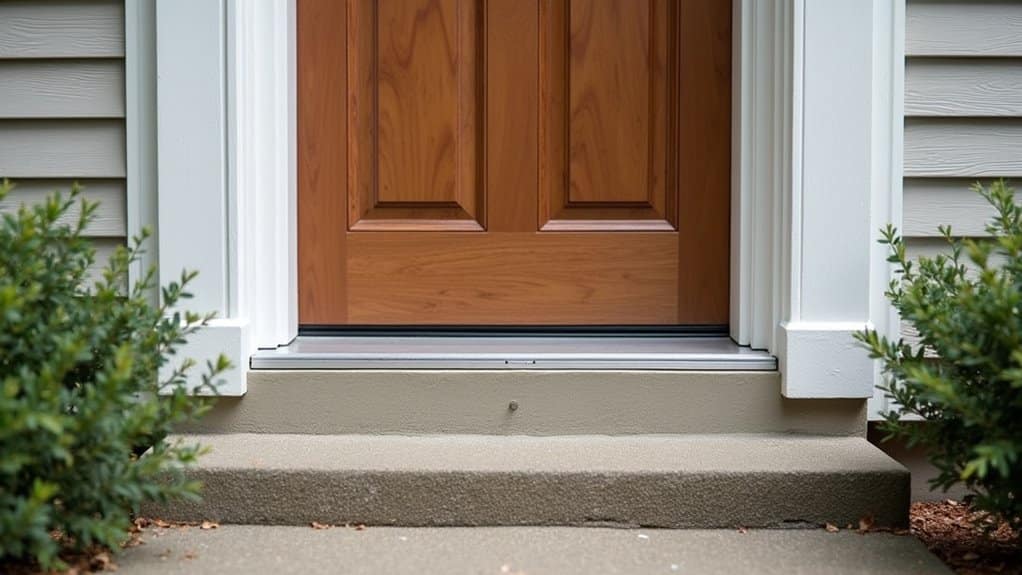
To protect your door lock, you’ll need to address mechanical wear, environmental exposure, and forced-entry vulnerabilities simultaneously. Choose locks with hardened steel bolts and ANSI Grade 1 ratings, apply graphite or silicone lubricants biannually, and inspect for rust, loose screws, and keyway scratches every three to four months. Marine-grade finishes resist corrosion in harsh climates, while reinforced strike plates prevent frame failure during attacks. Each step below breaks down exactly what to do.
The Hidden Forces That Break Door Locks Prematurely
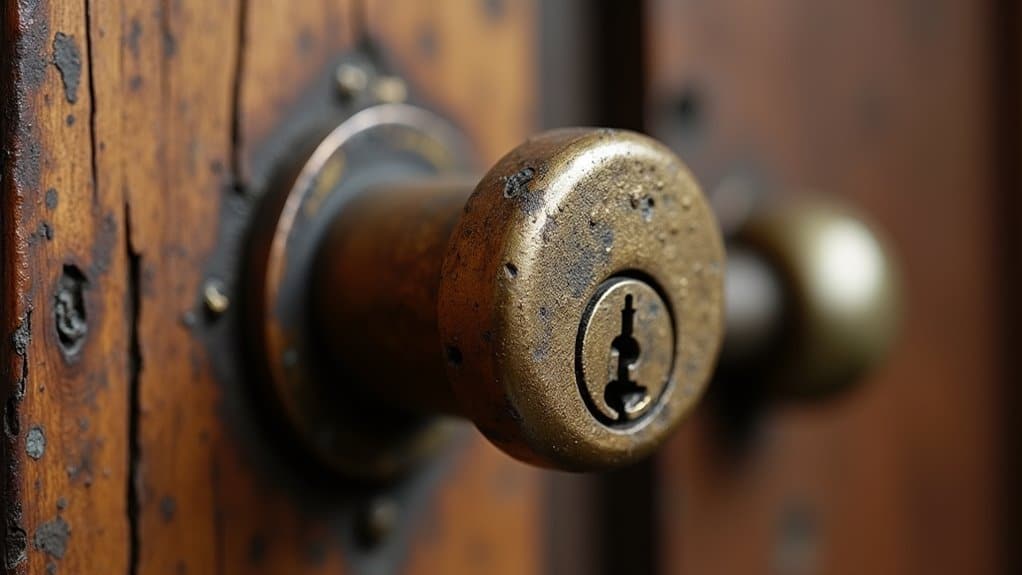
Door locks face threats beyond everyday wear, lockpicking, bumping, brute force, and mechanism bypasses each attack a lock’s integrity in distinct ways, leaving behind telltale signs if you know what to look for. Lockpicking subtly realigns internal pins, leaving microscopic marks inside the cylinder. Bumping files key teeth to sharp points, striking tumblers one click at a time; inexperienced attackers fail at concealing lock tampering signs, exposing scratches and bright metal edges. Brute force leaves unmistakable evidence, bent deadbolts, splintered wood, and displaced door frames. Mechanism bypasses, particularly on Adams Rite-style storefront doors, exploit unshielded bolt systems, achieving entry within seconds. Withstanding bumping attacks requires retrofit solutions like blocking pins and anti-bump cylinders, while high-security cylinders with hardened steel cores counter drilling and snapping attempts effectively. Locks with a greater number of pins in the cylinder require a thief to manipulate more components, making unauthorized access significantly more difficult.
Choose a Door Lock Built to Resist Forced Entry
When choosing a door lock built to resist forced entry, you’ll want to prioritize construction materials above all else. Hardened steel bolts, manganese anti-drill plates, and reinforced strike plates secured with heavy-duty screws determine how well a lock withstands physical attacks. You should also verify that any lock you consider carries a Grade 1 ANSI rating, which confirms it meets the highest standards for forced-entry resistance in both residential and commercial applications. For advanced protection, consider upgrading to a lock equipped with biometric access and remote monitoring capabilities, which add an additional layer of security beyond traditional mechanical defenses.
Lock Materials Matter Most
Choosing the right lock material is the first line of defense against forced entry. Steel outperforms wood and FRP doors across ASTM F3038 and U.S. Department of State forced entry tests, making it the clear standard for high-safeguard applications. Steel thickness variations directly influence breach resistance, thicker gauge sheets extend deeper into the wall, reinforcing the entire assembly against impact and kick-in attempts. You’ll want 20-gauge or heavier steel for maximum protection.
Specialized steel assemblies take shielding further. Bullet-resistant configurations meet UL 752 levels 1, 10, while blast-resistant designs withstand peak pressures up to 50 psi. Pair these with hardened steel deadbolts, anti-drilling cylinder rings, and steel strike plates to create a fully integrated forced entry solution that addresses every critical vulnerability point. ASTM F3038-21 serves as the industry benchmark for evaluating these systems, measuring time to breach and attack complexity to provide verified, measurable data on how well a door assembly performs under real-world forced entry conditions.
Ratings and Certifications Count
Even the toughest steel assembly falls short if the lock itself isn’t rated to match it. Federal defense standards like SD-STD-01.01 demand multi-attacker resistance under continuous clock pressure, no pauses, no resets. For residential entry fortification, EN1627 RC3 or ANSI Grade 1 sets your baseline. Match the rating to your actual threat environment.
| Standard | Key Requirement |
|---|---|
| SD-STD-01.01 FE5 | 6 attackers, 5 min per point |
| EN1627 RC3 | 1 attacker, 5 active minutes |
| ASTM F3038 | Timed mob-style breach simulation |
| UL 437 | Pick, drill, forced-entry resistance |
| ANSI Grade 1 | Highest commercial durability rating |
Don’t assume time ratings are equivalent across standards, testing conditions differ dramatically, and those differences determine real-world performance.
Shield Your Lock From Rain, Rust, and Extreme Heat
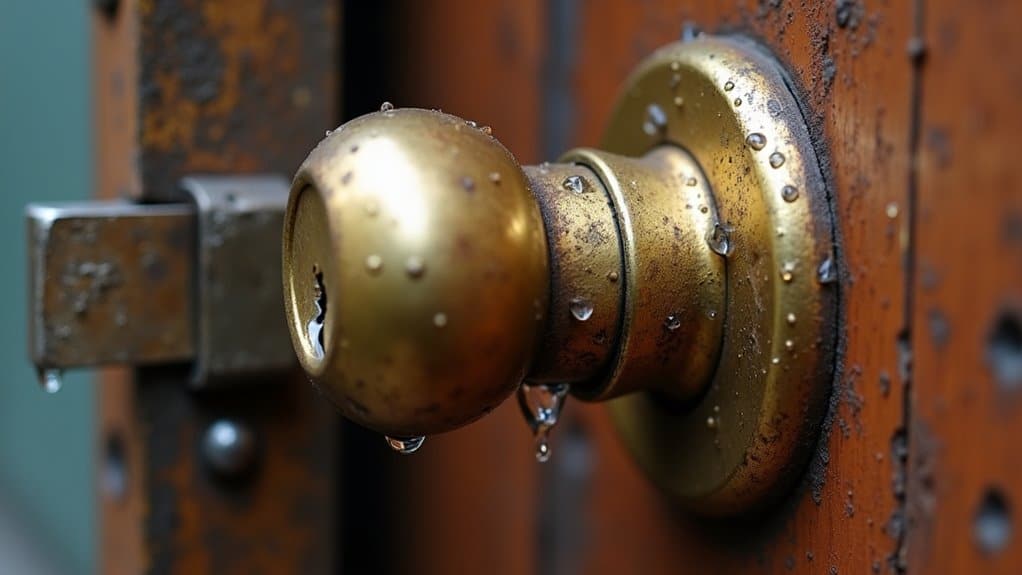
Whether you’re dealing with coastal humidity, freezing winters, or scorching summers, your door lock’s material composition is the first line of defense against environmental damage. Durable weatherproofing starts with selecting the right materials and weather-resistant finishes that actively repel corrosion, UV degradation, and moisture infiltration.
Prioritize these material-based protections:
- Stainless steel or brass construction resists corrosion from rain, snow, and salt-laden air
- BHMA-certified finishes prevent rust, tarnishing, and deterioration in extreme climates
- Advanced polymer components block UV radiation, preventing fading and structural breakdown from prolonged sun exposure
Marine-grade finishes withstand 1,000+ hours of salt spray testing, making them essential for coastal installations where environmental exposure is relentless and accelerated.
Reinforce the Door Frame So Your Lock Actually Holds
A weather-resistant lock loses its value fast if the door frame behind it can’t withstand a forced entry attempt, 74% of commercial forced entries exploit frame compromise, and residential burglaries follow the same pattern. Steel reinforced door jambs and interlocking door frame components distribute impact forces across wider structural areas, preventing single-point failure.
| Reinforcement Component | Key Specification |
|---|---|
| Strike Plate Screws | 3-inch minimum into studs |
| Extended Lip Strike Plate | 800% greater forced entry resistance |
| Jamb Reinforcement Kit | $20, $50, full vertical coverage |
| Heavy-Duty Hinges | 0.123-inch minimum thickness |
| Steel Frame Reinforcing | 0.067-inch minimum gauge |
Install reinforcement kits along strike plate and hinge zones, anchoring every screw directly into wall studs.
Maintain Your Lock With These Simple Habits
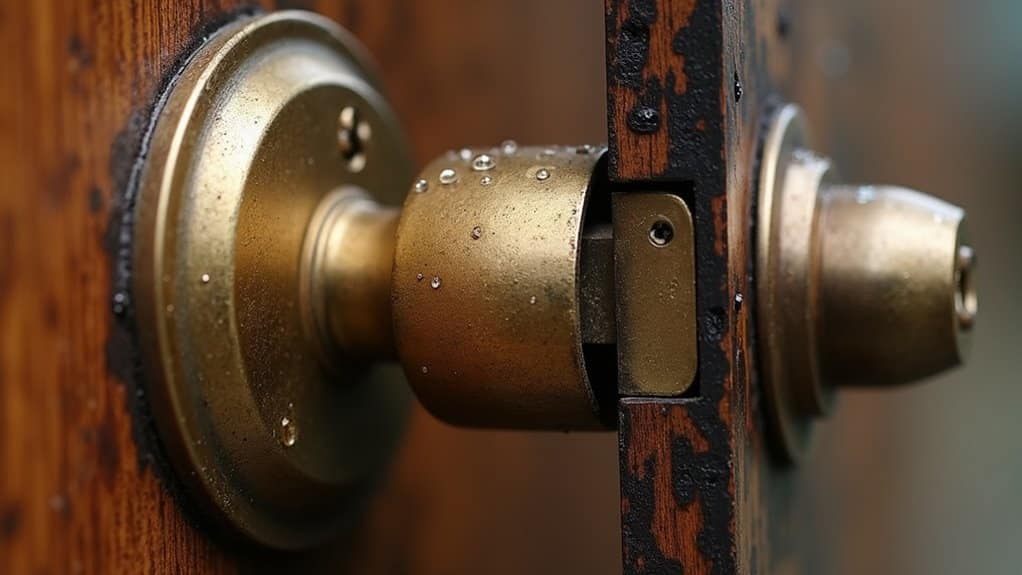
Keeping your lock functional starts with three core habits: cleaning, lubricating, and inspecting. Every few months, wipe down the exterior, clear debris from the keyhole with an alcohol-dampened swab, and blast internal components with compressed air. Follow that with a graphite or dry Teflon application to the keyhole, silicone lubricant on moving parts, and a close check for rust, loose screws, and key wear.
Clean Locks Regularly
Follow these essential cleaning practices:
- Blow compressed air into the keyhole in short bursts to dislodge loose debris before wiping surfaces
- Use mild soapy water with a soft cloth on handles, plates, and cylinder barrels, then dry immediately
- Avoid oil-based products like WD-40, abrasive tools, and strong solvents, as they damage finishes and attract additional dirt
Consistent maintenance prevents costly repairs and keeps your locks functioning reliably year-round.
Lubricate Moving Parts
Even the cleanest lock will seize up without proper lubrication, so you’ll need to apply the right product to keep internal components moving freely. Use graphite powder to keep keyway clean and functioning smoothly, as it resists dust accumulation unlike petroleum-based alternatives. Apply PTFE-based sprays to deadbolts and latch faces, and silicone sprays to external components. Before applying any lubricant, clear debris with compressed air, then insert the nozzle directly into the cylinder. Cycle your key several times to distribute lubricant through the pins and tumblers, then wipe away excess residue. Inspect linkages routinely for corrosion or stiffness, and lubricate twice yearly under standard conditions. Coastal or high-use locations require attention every three to four months.
Inspect For Wear
Regular inspection catches wear before it compromises your lock’s safeguard, so you’ll want to examine the lock body and keyway for scratches, dents, or corrosion every few months. Monitor environmental factors like moisture, which produces rust or green corrosion signaling deeper internal damage. Inspect internal components by checking your key for bent edges, worn teeth, or cracks, then insert it slowly to detect grinding or stiffness.
Perform these targeted checks every six months:
- Strike plate and door frame: Confirm no loose screws, cracks, or bolt hole damage exists
- Hinges: Tighten any loose screws preventing door sagging that forces misalignment
- Handle and spindle: Secure the grub screw using an Allen key if wobbling occurs
Replace any lock showing severe rust, cracks, or irreparable damage immediately.
Use Tamper Alerts to Catch Lock Threats Before They Escalate
When someone tries to force open or disable your electronic door lock, tamper alerts give you a critical head-start before a threat escalates. Modern tamper alert integration triggers both audible alarms and immediate smartphone notifications the moment forced entry or internal cable removal is detected. Alarm notification systems connect directly with platforms like inTouch™, enabling coordinated responses across your entire protective setup.
Contact sensors reinforce this layer by detecting unauthorized door movement while your system is armed, automatically activating connected cameras for visual verification. Professionals monitoring your system can alert police if necessary, adding another critical response tier. Some locks, like the YDG413A, also support fake PIN codes, preventing attackers from identifying your real access credentials under pressure.
When to Replace a Door Lock That’s Past Protecting
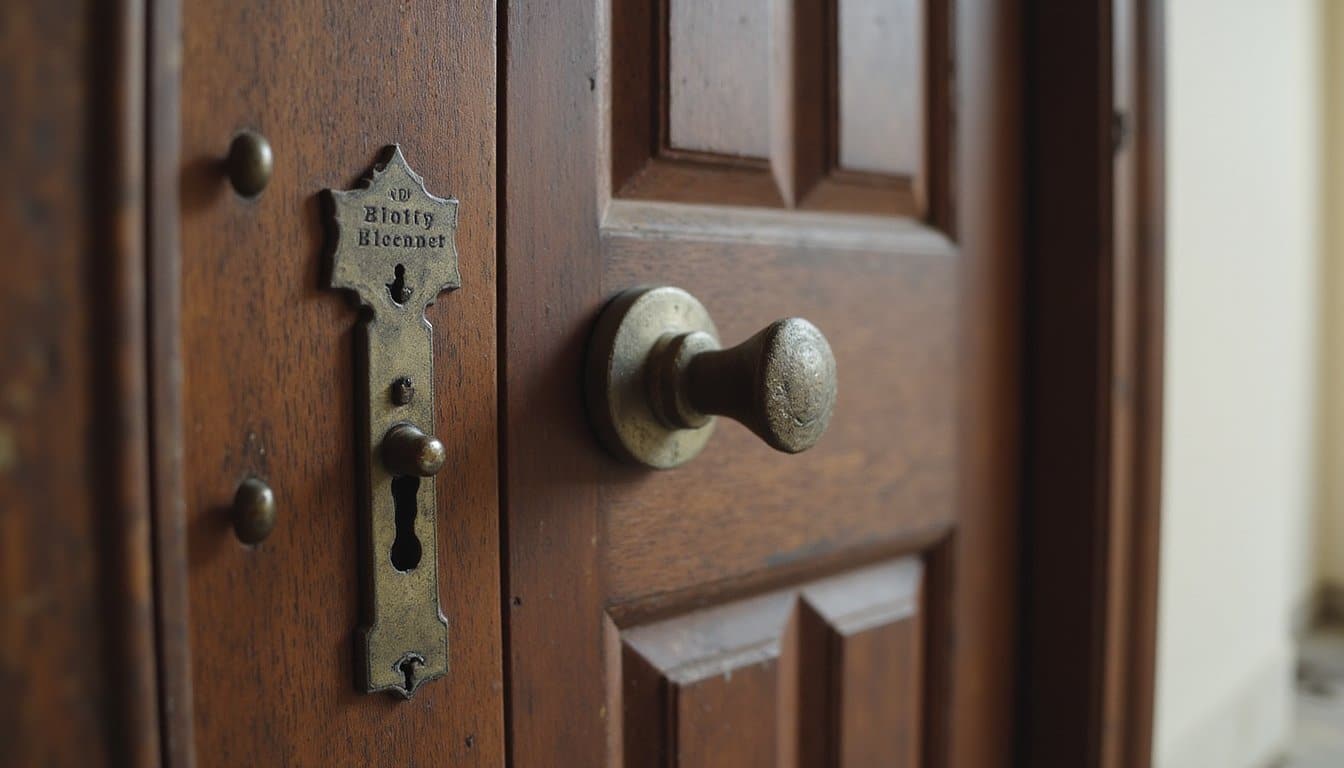
Most door locks communicate their decline long before they fail completely, and catching those signals early keeps your protection intact. Indicators prone to physical deterioration, cracked zinc alloy escutcheons, chipped powder coat finishes, faded header signs, signal replacement immediately. Internal mechanism failure points compound the risk when slide mechanisms stop holding locked positions or vertical actuators misalign with indicator readings.
Watch for these critical replacement triggers:
- Indicator displays incorrect status, showing locked when the door remains open
- Pin attachments loosen from deadlock pivots, binding up-and-down movement
- Hardware strips door prep holes, making reinstallation structurally unreliable
Once functional inaccuracy or ADA compliance failure appears, no amount of maintenance restores reliable protection. Replace the lock before the door’s actual state becomes unverifiable.
Frequently Asked Questions
Can Smart Locks Be Integrated With Existing Home Security Alarm Systems?
Yes, you can integrate smart locks with existing home protection alarm systems through compatible home automation integration protocols. You’ll leverage wireless lock connectivity options like Z-Wave Plus, Wi-Fi, PowerG, or Bluetooth to sync brands like Schlage, Yale, and Kwikset with platforms including Ring Alarm, Qolsys, Control4, and Vivint. These integrations enable remote lock/unlock capabilities, real-time notifications, and automation triggers, though some configurations require active subscriptions or additional bridge adapters.
What Lock Brands Are Recommended for Extreme Cold Climates?
For extreme cold climates, you’ll want to contemplate SMONET’s Y1 and A1 models, both rated down to -22℉, or the Yale Assure Lock, which operates to -30℃ with weatherproof lock housings and an iPX5 rating. Medeco and Mul-T-Lock also provide dependable performance through high-security cylinder designs constructed for harsh conditions. Use lithium batteries to preserve excellent function when temperatures decrease dramatically.
Does Homeowner’s Insurance Cover Lock Replacement After a Break-In?
Yes, your homeowner’s insurance typically covers lock replacement after a break-in under dwelling coverage. You’ll need to file promptly, document damage with photos, and save receipts for reimbursement. Keep claim deductibles in mind, as costs below your threshold won’t warrant filing. Review your policy’s exclusions carefully, coverage gets denied if you’ve failed to report the burglary within the required timeframe or lack mandated safeguards. Contact your agent to confirm specific locksmith service limits.
Are Fingerprint Locks More Reliable Than Keypad Locks for Daily Use?
Fingerprint locks offer stronger biometric safeguard dependability for daily use, as they eliminate code-sharing risks and provide instant access without memorization. However, they’re more vulnerable to scanner wear and shorter battery life. Keypad locks deliver longer mechanical durability and simpler maintenance. You should consider key backup options on either model to prevent lockouts. For high-traffic environments, keypads outperform fingerprint scanners due to fewer component failures over time.
How Do I Choose Locks for a Door With a Large Glass Panel?
When choosing locks for a door with a large glass panel, you’ll want to prioritize glass lock compatibility by selecting models designed for your specific glass thickness, typically 5, 12 mm. Confirm the lock uses protective pads to distribute clamping force without cracking tempered edges. For glass panel durability, opt for cam or mortise locks that secure without drilling. Complement the setup with defensive film and laminated glass for reinforced protection against forced entry.