
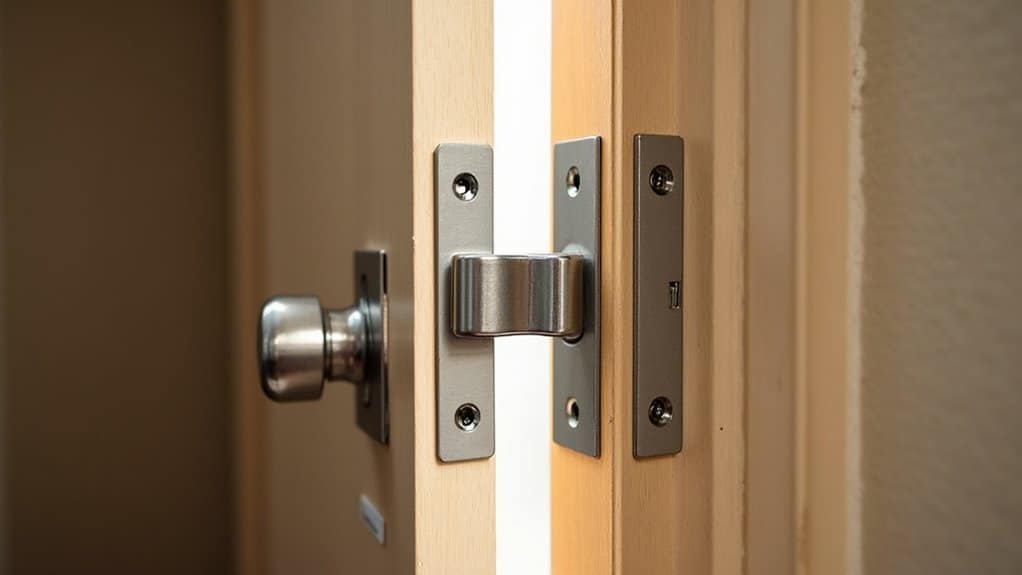


To protect your kids from door injuries, install hardware-mounted safety gates at stair tops and pressure-mounted gates in doorways. Add pinch guards on hinge-side gaps, door stoppers to prevent slamming, and hinge covers over exposed hardware. Replace gates once your child exceeds 36 inches or 30 pounds. These steps matter because doors send 1.4 million children to emergency rooms in a single decade, and the right combination of solutions can keep your child out of that statistic.
Why So Many Kids End Up in the ER From Door Injuries
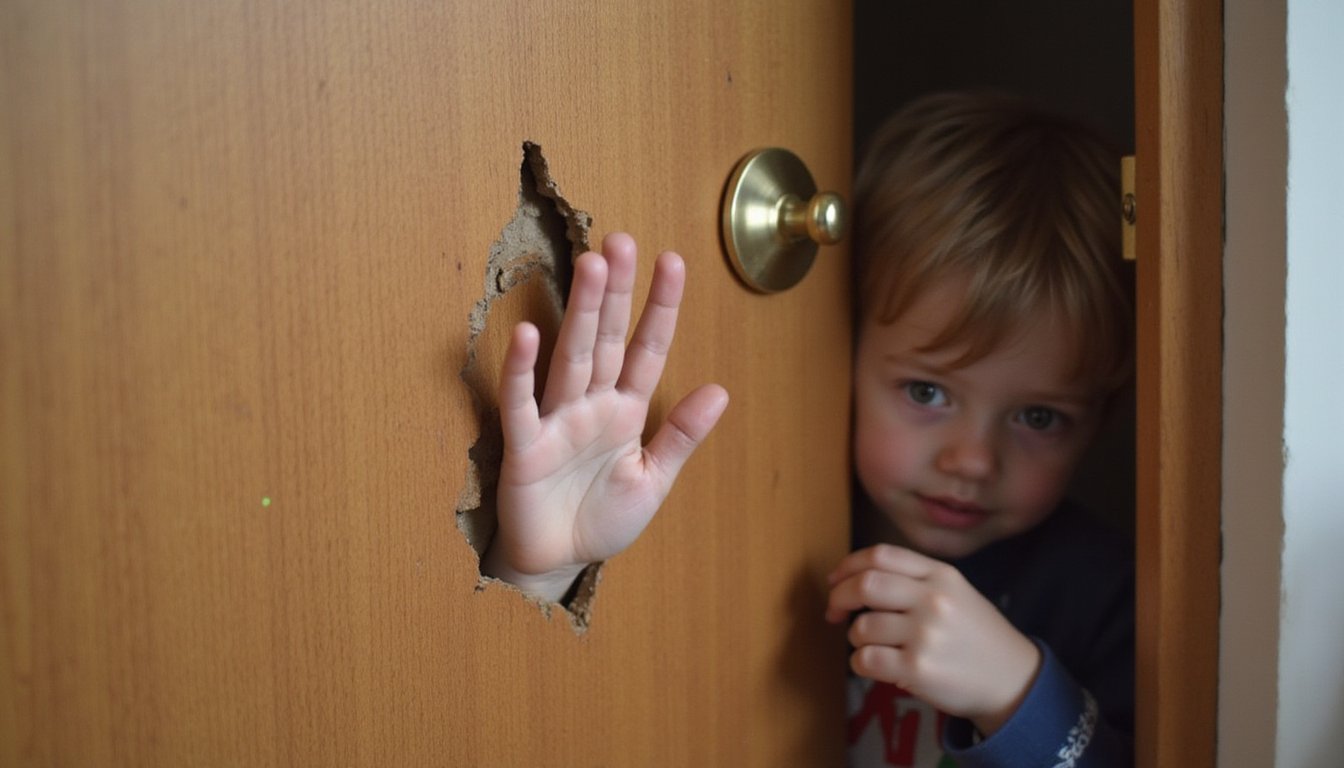
Between 1999 and 2008, an estimated 1.4 million U.S. children aged 17 and under were treated in emergency departments for door-related injuries, that’s roughly one child every four minutes. Understanding common injury patterns helps you target the risky home door locations where incidents happen most.
Boys account for 55.4% of cases, and children four and under represent 41.6% of all injured kids. Pinching injuries drive 54.8% of ER visits, while impact injuries contribute another 42.0%. Younger children face the greatest danger from pinch and impact mechanisms, while older kids increasingly encounter glass door hazards. Amputations carry the highest hospitalization rate at 32.0%, making door injuries far more serious than most parents expect. Injury rates also escalated substantially throughout the study period, signaling a growing problem you can’t afford to ignore. The data was drawn from the National Electronic Injury Surveillance System, providing a broad national picture of how frequently these incidents occur across the country.
The Doors and Stairways Most Likely to Hurt Your Child
Not all doors in your home carry equal risk, and knowing which ones cause the most harm can help you protect your child most effectively. Standard door dangers dominate emergency visits, causing most pinch and impact injuries, especially in children under 4. Automatic door hazards are far more severe, garage doors have caused at least 85 permanent brain injuries or deaths since 1974.
| Door Type | Primary Risk | Most Affected Age |
|---|---|---|
| Standard doors | Pinch & impact injuries | Under 4 years |
| Automatic garage doors | Entrapment, brain injury, death | Ages 2, 14 |
| Glass doors | Lacerations, impact injuries | Older children |
Stairways compound these risks when baby gates fail, causing falls that frequently result in traumatic brain injuries, particularly in children under 2. Injuries at the hinge side of the door are the most serious, as closing pressure in that zone can reach up to 40 tons per square inch.
Choose the Right Safety Gate for Stairs, Doorways, and Halls
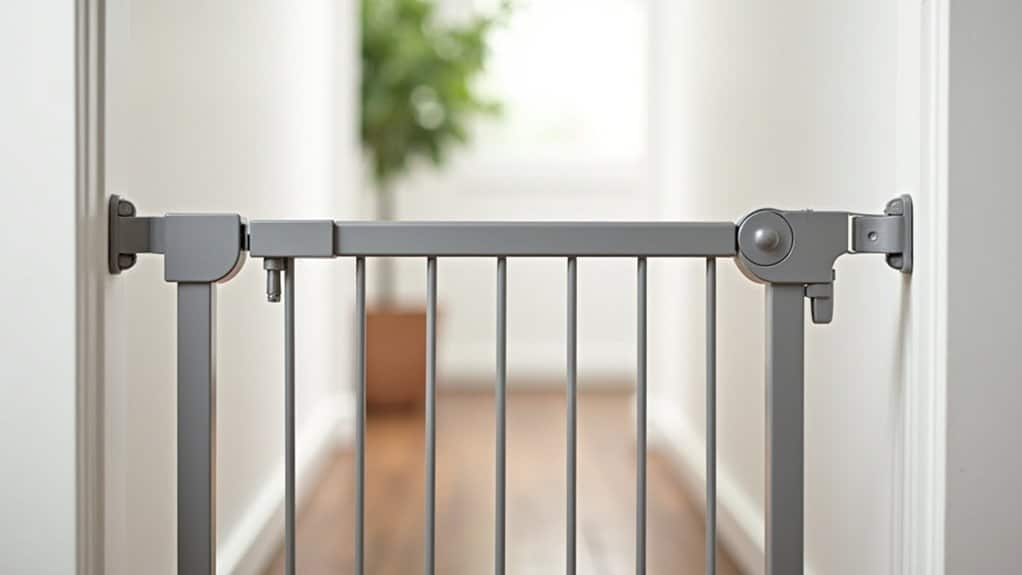
When a toddler reaches the top of an unguarded stairway, a safety gate is the only thing standing between curiosity and a serious fall. Following gate installation guidelines guarantees/assures/ascertains you pick the right type for each location.
- Hardware-mounted gates bolt into framing and meet gate anchor strength requirements for stair tops
- Pressure-mounted gates suit doorways and hallways, resisting up to 150, 200 pounds
- Retractable gates offer one-handed operation and auto-close convenience for passages
- Proper fit matters, measure openings precisely, targeting heights between 30, 36 inches
Avoid accordion-style gates with diamond-shaped openings, which create entrapment hazards. Look for JPMA-certified models with slats spaced to prevent head or limb entrapment. Matching the gate type to the specific location keeps your child protected where danger is highest. Never use a pressure-mounted gate near a stairway, as the lower rail trip hazard can cause adults and children to fall down the stairs when the gate swings open.
How to Install a Hardware-Mounted Gate So It Won’t Budge
Once you’ve chosen the right hardware-mounted gate, one rated for stairs or doorways based on your specific measurements, you’re ready to follow a precise installation process that anchors it securely into wall studs or with appropriate wall anchors. You’ll work through each step methodically, from drilling pilot holes and attaching brackets to configuring spacers and tightening jam nuts, ensuring no gaps larger than 2.5 inches remain between the gate and wall. After installation, you must test the gate’s swing, latch engagement, and overall stability to confirm it’ll hold up against a child’s pushing, pulling, and climbing.
Choosing The Right Gate
Hardware-mounted gates are the gold standard for keeping kids safe near stairs and high-risk doorways, and installing one correctly starts with choosing the right fit. Customized gate sizing guarantees the gate aligns properly with your opening, while specialty mounting options address irregular spaces or baluster posts.
Measure your doorway width precisely and match it to the correct P number using the provided chart. Consider these critical factors:
- Inside vs. outside mounting affects your measurement range
- Extension kits handle wider-than-standard openings
- Baluster clamp kits protect woodwork from drilling damage
- Threshold hardware suits irregular or unusually wide spaces
Account for baseboard thickness and confirm your gate swings toward the landing, never over the stairs.
Step-By-Step Installation Guide
Installing a hardware-mounted gate correctly is the difference between a barrier that holds and one that fails when it matters most. Follow these tips for measuring: align the hinge bracket perpendicular to the floor, mark hole locations using provided templates, and mount brackets 6 inches off the floor to clear baseboards.
| Step | Action | Key Detail |
|---|---|---|
| 1 | Measure and mark | Use templates for accuracy |
| 2 | Choose right spacers | P1, P6: four spacers; P7, P8: two |
| 3 | Secure hinge rod | Lock with key ring and Allen wrench |
Pre-drill pilot holes, insert wall anchors, and tighten all set screws. Test the swing-open function by pressing the pressure lock. Adjust extension knobs to no more than 2.5 inches.
Testing Gate Stability Afterward
After securing every bracket and screw, you’ll want to confirm the gate actually holds before trusting it with your child’s safety. Gate rigidity testing and securing brackets tightly are non-negotiable final steps.
Push and pull the gate firmly in multiple directions, simulating the force a child might apply. Look for movement, gaps, or loosening hardware immediately.
Check these critical points:
- No visible shifting when horizontal pressure is applied at corners and center
- Zero gaps exceeding safe limits along the frame edges
- Brackets remain flush and screws stay fully tightened under pressure
- Latch engages consistently without sticking or partial closure
If instability appears, readjust before use. Reapply pressure after every adjustment to confirm corrections held. A gate that moves even slightly isn’t ready.
Pinch Guards, Door Stoppers, and Hinge Covers That Prevent Injuries
When it comes to shielding your child’s fingers from dangerous door gaps, three protective devices stand out: pinch guards, door stoppers, and hinge covers. Each targets specific injury points where doors exert up to 40 tons per square inch of closing pressure, force no child can escape without intervention.
Pinch guards cover hinge-side gaps, door stoppers limit slamming force, and hinge covers shield exposed hardware where fingers commonly get crushed. Since doors cause over 3 million nonfatal pediatric injuries annually, multi room installation across your entire home substantially reduces risk.
Follow maintenance recommendations by inspecting each device monthly for wear, loose fittings, or displacement. Children under 4 represent 41.6% of door injuries, making consistent upkeep as critical as the initial installation itself.
Baby Gate Mistakes Parents Make That Put Kids at Risk
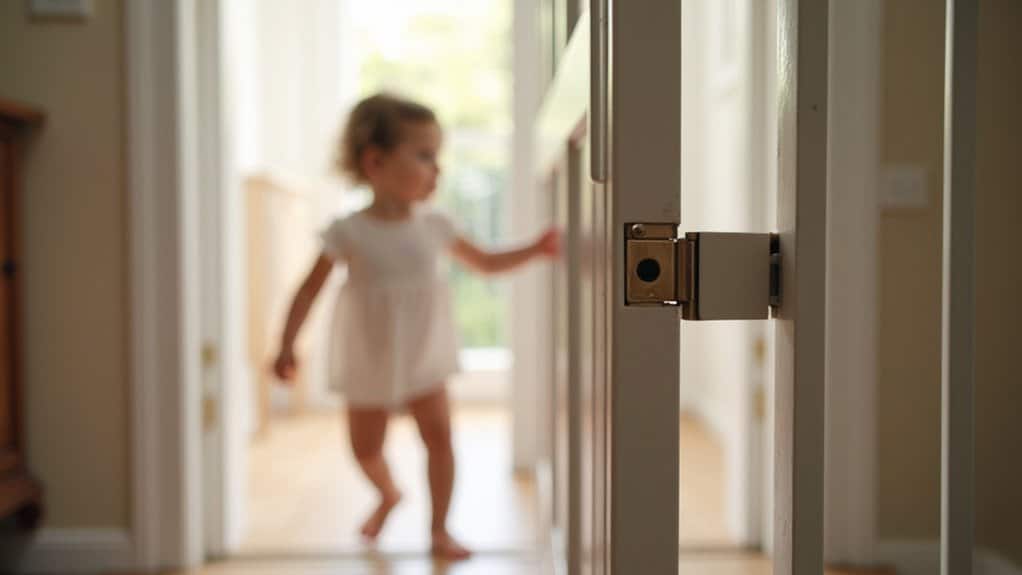
Baby gates seem like a straightforward safety solution, but parents make preventable mistakes that turn them into hazards rather than protections. Selecting approved gate models matters enormously, and monitoring gate condition over time prevents dangerous deterioration. Research shows injury rates nearly quadrupled between 1990 and 2010, reaching 12.5 per 100,000 children.
Baby gates seem simple, but preventable mistakes can transform them from protections into hazards.
Avoid these critical mistakes:
- Using pressure-mounted gates at stair tops, only hardware-mounted gates belong there
- Leaving gates open, over 60 percent of injuries under age 2 involve unsecured or collapsed gates
- Keeping gates past developmental milestones, remove them once your child turns 2 or demonstrates climbing ability
- Using accordion-style gates, they’re banned due to strangulation risks
Grandparents and alternate caregivers need this same education since unsafe homes extend beyond yours.
When to Replace Safety Gates and Door Locks as Kids Grow
As your child grows, you’ll need to recognize when safety equipment has become ineffective or even hazardous, gates rated for children under 23 months can’t withstand the strength and climbing ability of an older toddler. Watch for physical signs like your child’s chin reaching the gate’s top, their ability to manipulate latches, or damage from repeated impact, all of which signal it’s time to replace or remove the barrier. Door locks and hardware-mounted gates also require age-based upgrades, since pressure-mounted gates become dangerous once your child develops enough strength to dislodge them.
Signs Gates Need Replacing
Safety gates don’t last forever, and knowing when to replace them is just as important as installing them correctly. Recognizing gate durability indicators early keeps your child safer longer. Most safety gate age limits align with key developmental milestones, typically around age two.
Watch for these replacement signs:
- Height and weight thresholds met: Replace gates once your child exceeds 36 inches or 30 pounds
- Latch mechanism failure: Unreliable clicks, faded color indicators, or failed auto-close features signal immediate replacement
- Pressure-mounted looseness: Persistent tightening needs indicate structural degradation
- Entrapment gaps present: Accordion-style or open V-shape designs without horizontal filler bars require urgent replacement
Don’t wait for an incident to act. Regular inspections help you catch these warning signs before they become dangerous.
Age-Based Lock Upgrades
Your child’s ability to outsmart safety devices grows faster than most parents expect. Basic door knob covers work well during infancy, but toddlers quickly develop the fine motor skills to defeat them. By ages two to four, you’ll need reinforced locks as climbing and problem-solving abilities emerge.
Follow installation guidelines carefully when upgrading, adhesive-mounted devices suit children under 40 inches tall, while screw-mounted hardware becomes necessary as kids grow taller and reach higher surfaces.
Cost-effective solutions exist at every stage. Modular safety systems let you upgrade incrementally rather than replacing everything at once. Children with developmental delays may need extended protection beyond typical age ranges.
Inspect all devices regularly, ensuring they meet current child safety standards and remain fully functional.
Outgrown Safety Equipment
Knowing when to remove safety equipment matters just as much as knowing when to install it. Gate removal timing directly affects your child’s safety, keeping gates too long creates gate overextension risks that cause climbing falls and mechanism tampering.
Follow these evidence-based transitions:
- Remove low-risk area gates between 18, 24 months as mobility increases
- Keep stair, kitchen, and bathroom gates until age 3, 4
- Watch for your child disengaging or pushing gates over, both signal outgrown equipment
- Replace gates with supervision, cabinet locks, and cleared stairways
CPSC data links 42% of gate-related injuries to children aged 2, 5, confirming that outdated equipment becomes a hazard. Assess your child’s size, temperament, and dexterity before deciding when each gate comes down.
Frequently Asked Questions
Are Door Injuries More Common Indoors or in Vehicles for Children?
Indoor door injuries are far more common for your children than vehicle door injuries. Over a 10-year period, indoor doors caused approximately 1.39 million emergency visits, averaging one injury every four minutes. While outdoor entryways and vehicle access points both pose risks, closing vehicle doors account for only 53% of 92,000 annual non-crash injuries. You’ll find children under four face the greatest risk, with boys comprising 55.4% of all cases.
What Age Should Parents Start Using Baby Gates at Home?
You should start using baby gates before your child turns 6 months old, making it an early priority to know when to install gates. As your little one begins crawling and pulling up, *appropriate gate placement* becomes critical, position gates at stair tops, bottoms, and between rooms. Hardware-mounted gates work best at stair tops. Guarantee bars are spaced no more than 2.5 inches apart, keeping your child safely contained as mobility rapidly increases.
Do Accordion-Style Gates Pose Dangers Beyond Just Falling for Kids?
Yes, accordion-style gates pose serious dangers beyond falling. Their gate design limitations create deadly V-shaped and diamond-shaped openings that can trap your child’s head or neck, causing strangulation. The CPSC has documented 7 deaths and 17 near-misses from these hazards. As your child’s developmental stage advances and they become more curious and mobile, the risks increase substantially. You should choose mesh-style gates instead, as they’ve recorded zero entrapment deaths.
Can Safety Gates Reduce Injuries From Furniture Falls in Children?
Yes, safety gates can reduce your child’s risk of furniture falls. When you combine proper gate installation techniques with furniture stability measures like wall anchors and drawer stops, you’re creating multiple layers of protection. Research on 672 children confirms that families who didn’t use safety gates saw more furniture-related falls. You’ll want gates that meet current standards, installed correctly at stairways and danger zones, to meaningfully cut your child’s injury risk.
How Often Do Door-Related Child Injuries Occur Across the United States?
Door-related injuries are among the most common household hazards your child faces, occurring every 4 minutes across the United States. Between 1999 and 2008, over 1.3 million children under 17 received emergency treatment for these injuries. You’ll notice seasonal injury patterns often spike during active play periods. Boys account for 55.4% of cases, and children 4 and younger represent 41.6% of all door-related emergency visits.