
Modern entryway design hinges on ten key elements that transform your entrance into a sophisticated welcome. You’ll want to incorporate statement lighting fixtures, sleek storage solutions, and natural materials for texture. Add strategic mirror placement, sculptural furniture, and functional wall elements to optimize both style and space. Consider indoor greenery, mixed metal accents, and seamless flow principles. Each element works together to create an impactful primary impression and there’s much more to uncover about perfecting this essential space.
The Art of Statement Lighting
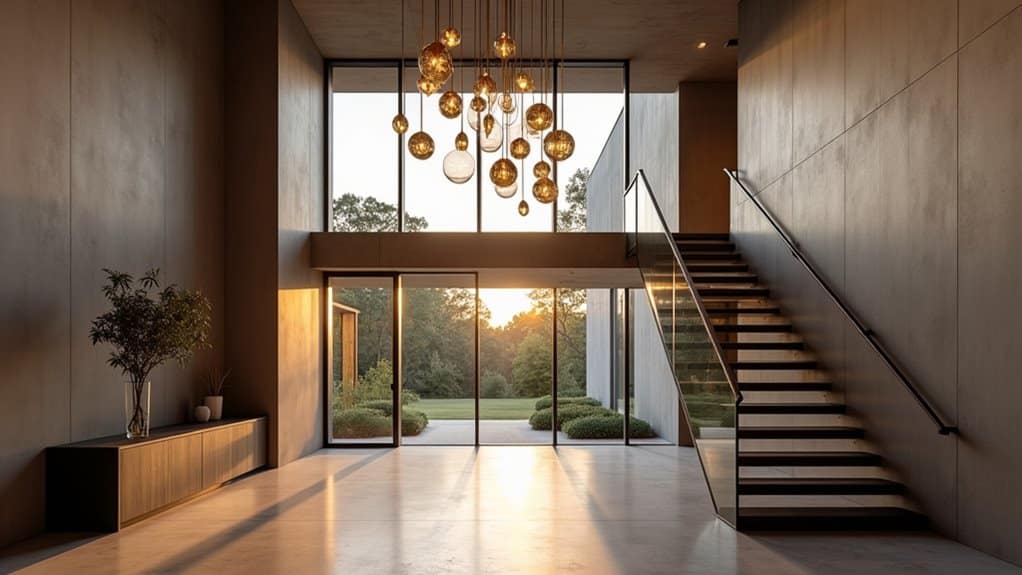
When designing a modern entryway, statement lighting serves as both a functional necessity and an artistic centerpiece that sets the tone for your entire home. You’ll find that oversized pendant lights and sculptural chandeliers create an immediate visual impact while establishing a distinctive focal point.
Modern lighting design thrives on strategic layering. By combining ambient, task, and accent lighting fixtures, you’re able to craft depth and dimension throughout your entryway space. Install dimmable options to seamlessly shift from bright, welcoming illumination to subtle, atmospheric lighting. Consider incorporating wall-mounted or recessed fixtures to highlight architectural details and artwork while maintaining clean lines.
Select lighting fixtures that feature geometric shapes or natural materials to reinforce your modern aesthetic. These elements work together to create a cohesive, sophisticated entrance that reflects contemporary design principles.
Minimalist Storage Solutions
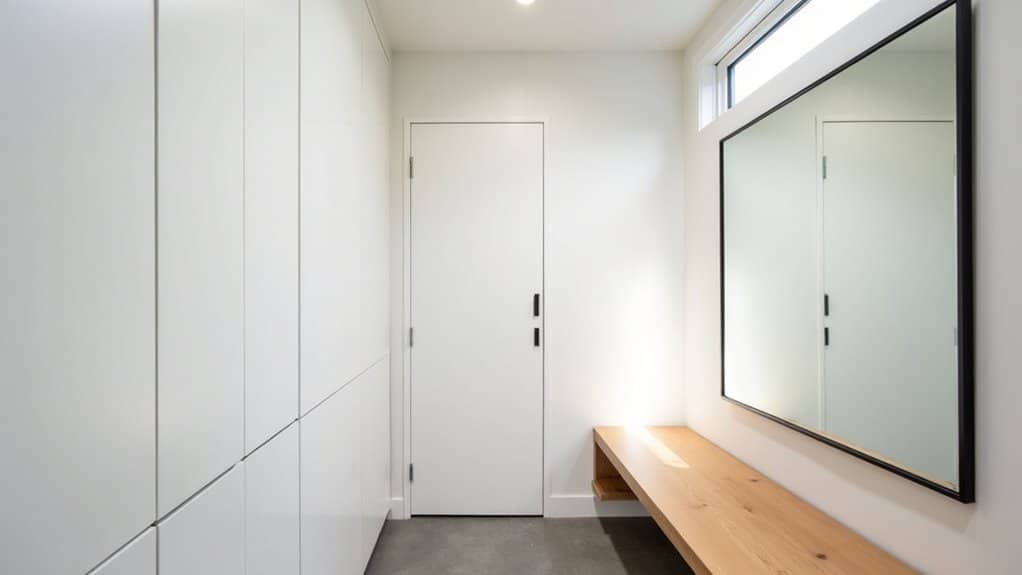
Transform your entryway’s functionality with hidden storage panels that seamlessly integrate into modern wall designs, creating an uncluttered aesthetic while concealing everyday items. Wall-mounted floating shelves offer a sophisticated storage approach, combining visual lightness with practical organization that draws the eye upward and optimizes vertical space. Clean-line cabinet solutions, featuring minimalist hardware and flush surfaces, provide essential storage while maintaining the sleek, contemporary character of your modern entryway.
Hidden Storage Behind Panels
Modern entryway design reaches new heights of sophistication through hidden storage panels that seamlessly integrate with wall surfaces. You’ll find sleek lines and flush-mounted doors that conceal shoes, bags, and everyday items while maintaining a clean, modern aesthetic. These novel storage solutions eliminate visual clutter without compromising functionality.
Recessed panel designs transform your walls into practical storage spaces through integrated shelves and cubbies that remain completely hidden from view. Touch-latch mechanisms provide quick access to frequently used items while preserving the minimalist appearance. By incorporating these creative panels, you’ll avoid the bulk of traditional storage furniture, creating an uninterrupted visual plane that defines contemporary design. The result is a refined entryway that balances form and function through clever concealment techniques.
Wall-Mounted Floating Shelves
Building upon the concept of streamlined storage, wall-mounted floating shelves offer a sophisticated alternative to traditional entryway organization. You’ll find these sleek installations create an illusion of expanded visual space while providing practical storage for everyday essentials.
By selecting floating shelves in materials that complement your modern design scheme – whether wood, metal, or acrylic you’re adding both functionality and aesthetic appeal. Their clean lines and invisible mounting systems eliminate visual clutter, drawing the eye upward and making your entryway feel more spacious.
Position these versatile storage solutions strategically to display decorative elements or keep frequently used items within arm’s reach. The minimalist profile of wall-mounted floating shelves transforms your entryway into an efficient, contemporary space that maintains the sleek aesthetics demanded by modern design principles.
Clean-Line Cabinet Solutions
While traditional entryway storage often relies on bulky furniture pieces, clean-line cabinet solutions deliver sophisticated organization through seamless integration with your space. Modern design principles shine through flush-mounted cabinets with touch-latch mechanisms, creating an uninterrupted wall surface that conceals everyday items.
You’ll find creative solutions like wall-mounted cubbies and customizable modular systems that adapt to your entryway’s specific dimensions. These design elements combine practicality with aesthetic appeal through integrated bench seating featuring hidden storage compartments. When you’re working with a compact space, sliding or pocket doors offer streamlined access while maintaining the minimalist aesthetic.
Your entryway’s storage potential expands through these contemporary solutions, which prioritize both form and function without compromising your home’s modern design sensibilities.
Natural Materials and Textures
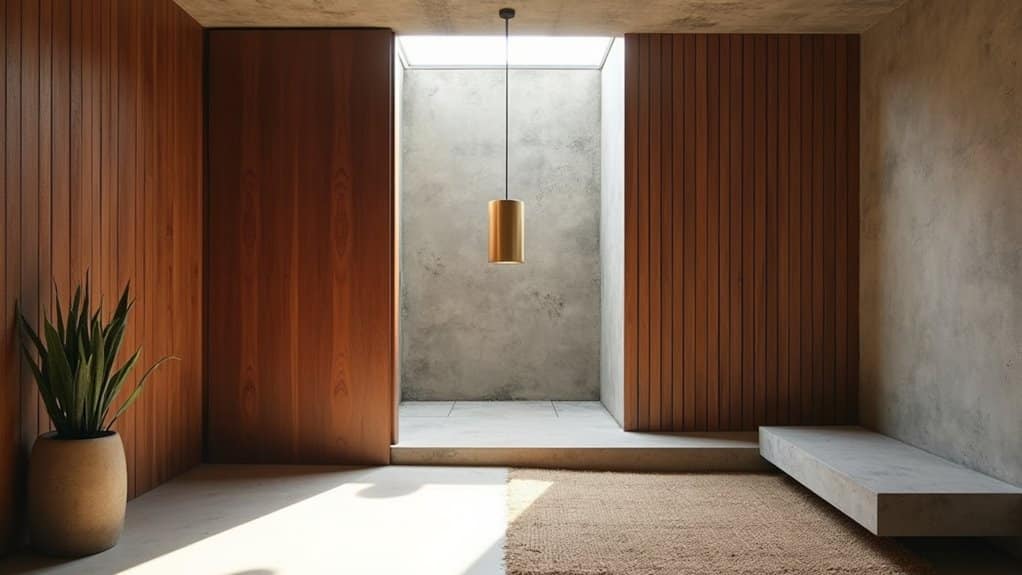
Incorporate organic elements like natural stone, raw wood, and living plants to create visual depth and ground your modern entryway’s aesthetic appeal. You’ll find that woven materials, including jute rugs, rattan accents, and wicker baskets, introduce essential warmth while maintaining contemporary sophistication. Raw finishes on metal fixtures, concrete surfaces, and untreated woods amplify your entryway’s modern style by creating an authentic interplay between refined design and natural textures.
Organic Elements Add Depth
Despite the sleek minimalism of modern entryway design, organic elements serve as essential counterpoints that add critical depth and visual interest to the space. You’ll find that incorporating natural materials like wood, stone, and jute creates a harmonious balance against clean-lined architecture while softening the comprehensive aesthetic.
Strategically placed organic shapes transform your entryway through curved benches and freeform wall art, breaking up rigid industrial elements. Potted plants introduce movement and life, establishing a relaxed atmosphere that counters stark surfaces. When you combine these elements with floating shelves and extended wood paneling, you’ll achieve a sophisticated visual rhythm that flows naturally through the space. The interplay between vertical and horizontal planes, bolstered by natural elements, creates an entryway that’s both modern and invitingly organic.
Woven Materials Create Warmth
To uplift your modern entryway beyond its minimalist foundations, woven materials serve as essential texture-building elements that instantly create warmth and tactile interest. Layer a woven jute rug beneath your sleek console table to establish an organic addition that catches natural light beautifully throughout the day.
Position strategically placed woven baskets to introduce functional storage while adding dimensional textures to add visual complexity to your space. Consider incorporating rattan benches or bamboo accent pieces that complement your modern furnishings without overwhelming the clean aesthetic. Wall-mounted fiber art or textured throws draped over minimalist seating provide additional layers of organic warmth. These natural elements work together to transform potentially stark modern spaces into welcoming, balanced environments that maintain sophistication while embracing comfort and tactile appeal.
Raw Finishes Enhance Style
Raw finishes serve as foundational elements in modern entryway design, where natural materials and textured surfaces create depth beyond mere aesthetics. Your space’s initial impression hinges on the thoughtful integration of these elements, establishing a sophisticated yet welcoming atmosphere.
- Combine exposed brick or rough-hewn stone with Modern Wall treatments to create dynamic visual tension that raises your entryway’s character
- Balance sleek look furnishings with organic materials like rattan and jute, introducing warmth while maintaining contemporary appeal
- Incorporate brushed metal finishes and matte surfaces alongside polished accents, such as glass or brass fixtures, for compelling material contrast
- Add natural wood elements through console tables or accent pieces, complemented by strategic placement of greenery to forge a seamless indoor-outdoor connection
These raw material combinations transform your entryway from a simple passage to an engaging design statement.
Strategic Mirror Placement
While many entryway design elements bolster aesthetics, strategic mirror placement serves both form and function in modern spaces. You’ll add significant visual impact by positioning a large mirror opposite your front door, creating depth and maximizing natural light reflection. For striking initial impressions, consider offsetting your mirror to create asymmetrical interest rather than defaulting to center placement.
Choose a mirror with a metallic or intricately designed frame to improve your entryway’s style quotient while maintaining functionality. Mount it at or slightly above eye level to guarantee practical usability. When placed near your entryway’s primary activity zone, a mirror becomes both a convenient last-minute check point and a space-expanding design element. This dual-purpose approach exemplifies modern entryway design’s emphasis on combining beauty with practicality.
Sculptural Furniture Pieces
Modern entryways demand sculptural furniture pieces that move beyond mere functionality to become artistic statements within your space. By incorporating key design elements like curved benches and organically-shaped tables, you’ll create a dynamic feel that softens rigid architectural lines while making a bold visual impact.
Sculptural furnishings elevate modern entryways from simple transition spaces into artistic expressions that captivate and inspire from the first step inside.
- Position sculptural pieces asymmetrically to guide the eye through your entryway and create an engaging spatial flow
- Make intentional contrasts by pairing organic forms with sleek, minimalist accessories
- Choose natural materials like wood or stone to anchor the space and add warmth
- Create a focal point using a statement piece, such as an artisanal vase or sculptural object, placed strategically on console tables
These sculptural elements transform your entryway from a mere passage into an artfully curated introduction to your home’s design narrative.
Harmonious Color Schemes
Building upon the sculptural elements of your entryway, a harmonious color scheme modifies the space into a cohesive design statement. You’ll find that clean lines paired with neutral colors create a sophisticated foundation, while strategic color choices establish visual hierarchy and flow.
| Approach | Effect | Application |
|---|---|---|
| Monochromatic | Sophisticated unity | All-white or gray palettes |
| Natural | Organic warmth | Wood tones and earth hues |
| Complementary | Dynamic contrast | Navy blue with ochre yellow |
| Gradient | Visual movement | Subtle wall shifts |
Consider incorporating soft beiges and muted greens for a calming atmosphere, or make a bold statement with an accent wall. When working with complementary color pairings, maintain balance through thoughtful distribution. The key is selecting a palette that reflects modern sensibilities while creating an inviting shift into your home’s interior spaces.
Functional Wall Elements
Intelligent wall design transforms your entryway into a highly functional space without compromising aesthetic appeal. By incorporating well-planned elements, you’ll optimize vertical storage while maintaining a clean, modern aesthetic.
- Mount sleek floating shelves to create additional storage for shoes and decorative items, establishing a balanced blend of form and function.
- Install wall-mounted organizers with integrated key holders and mail slots to keep essential items within arm’s reach.
- Position strategically placed hooks at varying heights to accommodate coats, bags, and seasonal accessories.
- Add wall sconces for targeted lighting, complementing your modern design while illuminating dark corners.
Consider incorporating a stylish message board for family communications, enhancing your entryway’s functionality. These thoughtful wall elements work together to create an organized, efficient space that welcomes you home while maintaining a sophisticated appearance.
Indoor Greenery Integration
To create a modern, nature-inspired entryway, you’ll want to start with low-maintenance plants like succulents, ZZ plants, or philodendrons that can thrive in varying light conditions. Position your greenery at different heights consider placing larger floor plants in corners, medium-sized varieties on consoles, and compact specimens on wall-mounted shelves to establish visual rhythm and depth. You can keep your entryway fresh throughout the year by rotating seasonal plants, such as incorporating flowering varieties in spring and evergreen options during winter months.
Low-Maintenance Plant Selection
Selecting the right low-maintenance plants for your entryway creates a welcoming atmosphere while minimizing upkeep demands. As the initial piece of greenery visitors encounter, these plants should complement your space while requiring minimal attention.
- Position trailing pothos or philodendrons on an entry table or suspended from above, allowing their vines to create dynamic visual movement without consuming floor space.
- Install air plants in wall-mounted displays or terrariums, adding dimension while needing only weekly misting for maintenance.
- Place hardy succulents like jade plants or ZZ plants in varying light conditions, perfect for entryways with inconsistent natural light exposure.
- Incorporate compact peace lilies or nerve plants for their self-indicating watering needs and striking foliage patterns, ensuring your entryway maintains its polished appearance with minimal effort.
Strategic Placement Tips
Thoughtful plant placement transforms your modern entryway into a curated indoor sanctuary while maximizing available space. To create a welcoming atmosphere, position your greenery strategically near natural light sources, using the interplay of shadows and illumination to add visual interest.
Make an entryway come alive by incorporating multi-level displays that adds depth to your space. Mount floating shelves at varying heights to showcase trailing pothos, while positioning taller snake plants as striking focal points. You’ll want to arrange plants in odd-numbered groupings, varying their sizes and textures for maximum impact. Consider hanging planters near windows or installing wall-mounted vessels to utilize vertical space effectively. For optimal growth, guarantee each plant receives appropriate light exposure, supplementing with subtle ambient lighting when necessary.
Seasonal Greenery Rotation
While modern entryways maintain their sleek aesthetic year-round, strategic rotation of indoor greenery keeps the space dynamic and seasonally relevant. Making the space feel fresh and inviting requires thoughtful plant selection that sets the tone for your entire home while helping the area feel larger through strategic placement.
- Integrate winter-themed elements like pine boughs, holly, and eucalyptus during holiday months to create a welcoming space that adapts to the season
- Transform your entryway with large-scale leafy plants like fiddle-leaf figs during spring and summer to establish a bold, contemporary presence
- Incorporate low-maintenance succulents and air plants as year-round anchors that complement modern design elements
- Create seasonal vignettes by combining potted plants with complementary decorative accents to augment your entryway’s architectural features while maintaining design coherence
Mixed Metal Accents
Modern entryway design transcends traditional rules by embracing mixed metal accents, creating a sophisticated interplay of finishes that uplifts your space’s visual appeal. When you pair a brass light fixture with a stainless steel statement piece, you’ll achieve a layered aesthetic that makes your entryway feel more dynamic and intentional.
To optimize impact, position a steel-framed mirror against an accent wall, complemented by a copper planter or hammered metal bowl. You’ll find that combining matte and polished finishes adds dimensional depth, while a place to sit featuring mixed metal hardware reinforces the design’s cohesiveness. Consider incorporating brushed nickel elements alongside warmer metallic tones to create visual harmony. By strategically balancing different metal textures and finishes, you’ll transform your entryway into an artfully curated space that exemplifies contemporary sophistication.
Seamless Flow and Movement
Creating seamless flow and movement in your entryway requires strategic placement of design elements that guide visitors naturally through the space. You’ll want to carefully consider how to create transitions that set the tone for your entire home while maintaining functionality and visual harmony.
- Position furniture and decor pieces to establish clear pathways, allowing for at least 36 inches of walking space between key elements
- Incorporate directional lighting that illuminates the path forward and highlights architectural features
- Use continuous flooring materials or gradual shifts to draw the eye and foot traffic into interior spaces
- Install strategically placed mirrors and reflective surfaces to visually expand the space and create depth, enhancing the natural movement patterns
These design choices help your entryway become a fluid, welcoming access point that connects smoothly with adjacent rooms.
Frequently Asked Questions
How Do I Protect My Entryway Floor From Heavy Foot Traffic?
You’ll want to invest in durable floor coverings specifically designed for high-traffic areas. Consider resilient flooring options like luxury vinyl tiles or porcelain that can withstand constant wear. Install slip-resistant surfaces near the entrance to prevent accidents, especially during wet weather. Choose moisture-resistant materials such as sealed natural stone or treated hardwood. Don’t forget to add heavy-duty entrance mats to trap dirt and protect your flooring investment.
What’s the Ideal Temperature and Humidity Level for an Entryway Space?
You’ll want to maintain your entryway at 68-72°F (20-22°C) with 45-55% relative humidity to protect material durability and guarantee comfort. Good air circulation requirements include proper ventilation to prevent moisture buildup, especially if you’ve got entryway storage needs. Consider how lighting considerations affect temperature – natural light can warm the space, while LED fixtures generate minimal heat. Install a digital thermometer/hygrometer to monitor conditions and adjust your HVAC settings accordingly.
Should Entryway Design Match Adjacent Room Styles Exactly?
You don’t need to match adjacent rooms exactly, but you should create a cohesive flow using complementary color schemes and connecting design elements. Consider incorporating material contrast accents that bridge different spaces while maintaining visual harmony. Strategic lighting placement can help define the entryway as its own space while ensuring it doesn’t feel disconnected. Think of your entryway as a mediator that gracefully introduces visitors to your home’s comprehensive design story.
How Do I Soundproof My Entryway From Street Noise?
You’ll achieve effective entryway soundproofing through a multi-layered approach. Start with soundproof door installation, using solid core doors with weatherstripping and door sweeps. Add soundproof materials like acoustic panels or insulation within walls. Install double-pane or laminated glass windows, then amplify them with sound-dampening window treatments like cellular shades or heavy drapes. Consider your soundproof entryway layout by creating a buffer zone with furniture placement and sound-absorbing rugs.
What’s the Recommended Ceiling Height for a Modern Entryway Design?
For a modern entryway, you’ll want a minimum ceiling height of 9 feet, though 10-12 feet is ideal for incorporating statement lighting fixtures and creating an airy atmosphere. This height allows you to augment natural elements while maintaining a minimalist aesthetic focus. You’ll have ample space for strategic storage placement without compromising the room’s flow. Consider pendant lights or chandeliers that complement your higher ceilings and amplify the general spatial dynamics.