
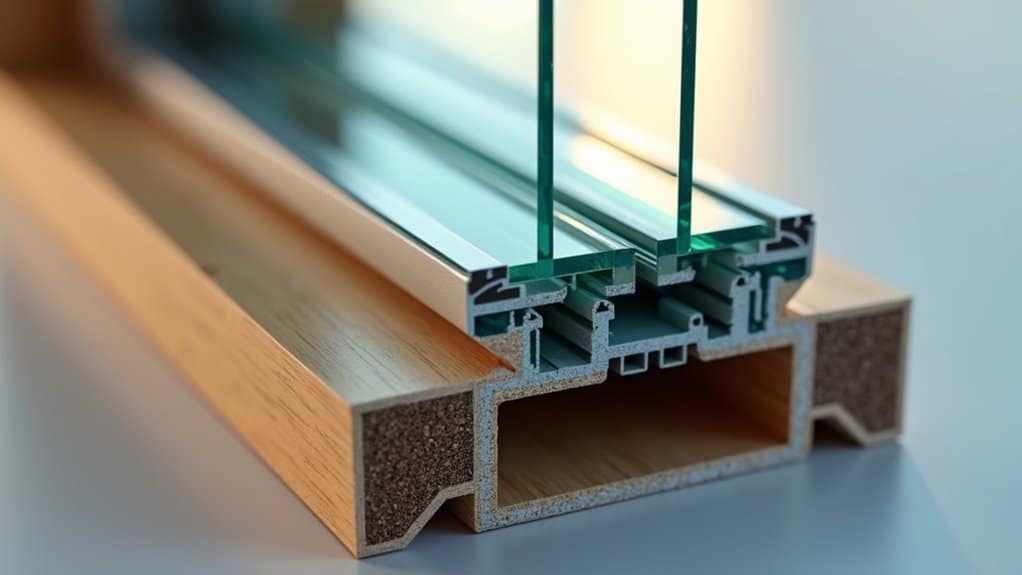
Typical Installed Price Range for Storm-Resistant Glass Doors
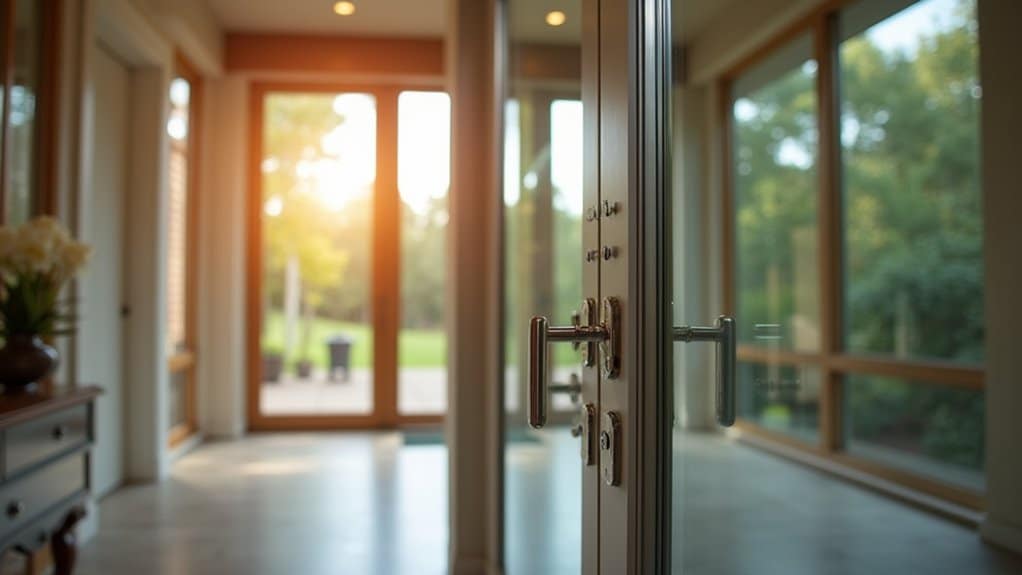
You’ll find that installed storm-resistant glass doors typically range from $595 to $3,414+, with costs varying considerably based on door type and installation intricacies. Full-view storm doors cost $200, $900 installed, while sliding glass doors with impact or hurricane-rated glass reach $2,000, $3,414. Custom or oversized formats may exceed $5,000.
Several factors influence your final price. Labor costs add $250, $450 per door, with metro areas commanding premium rates. Coastal regions requiring hurricane-rated glass pay $500, $2,000 more than standard models. Installation complexities like structural retrofits increase costs by $200, $1,000+. Many installers use security service protection to verify proper measurements and prevent errors during the installation process. Accurate cost estimates using the unit cost method based on successful project data ensure you receive transparent pricing aligned with current market rates.
You should budget for maintenance requirements and annual warranty costs separately. Low-E glass upgrades add $25, $80 per pane, while security features add $100, $500. Warranty packages typically cost $50, $200 per door.
Material Costs and Glass Panel Options
While installation labor and regional factors considerably impact your total door investment, the materials themselves, particularly the glass panels and frames, represent the largest cost component. You’ll find hurricane-rated glass ranges from $120, $140 per square foot, compared to $50, $80 for standard glass. Frame material variation drastically affects pricing: aluminum frames run $750, $2,500, fiberglass $1,500, $2,500, and composite options $600, $1,200. Your aesthetic glass choices, including Low-E coating ($300, $1,000), laminated layers, or tinted finishes, add 10, 30% to base costs. Double-pane insulation adds $250, $800, while decorative upgrades increase expenses further. Two-panel configurations cost $400, $1,500 in materials alone, whereas multi-panel units reach $3,500, $6,500. Panel thickness, quantity, and protective coatings directly influence your final material expenditure. Tempered glass and laminated glass options both provide superior protection during severe weather events. Enhanced security features such as impact-resistant glass can substantially increase your overall investment depending on your geographic location. Professional installation labor typically costs $70 to $100 per hour, which should be factored into your overall budget planning.
Labor and Installation Expenses
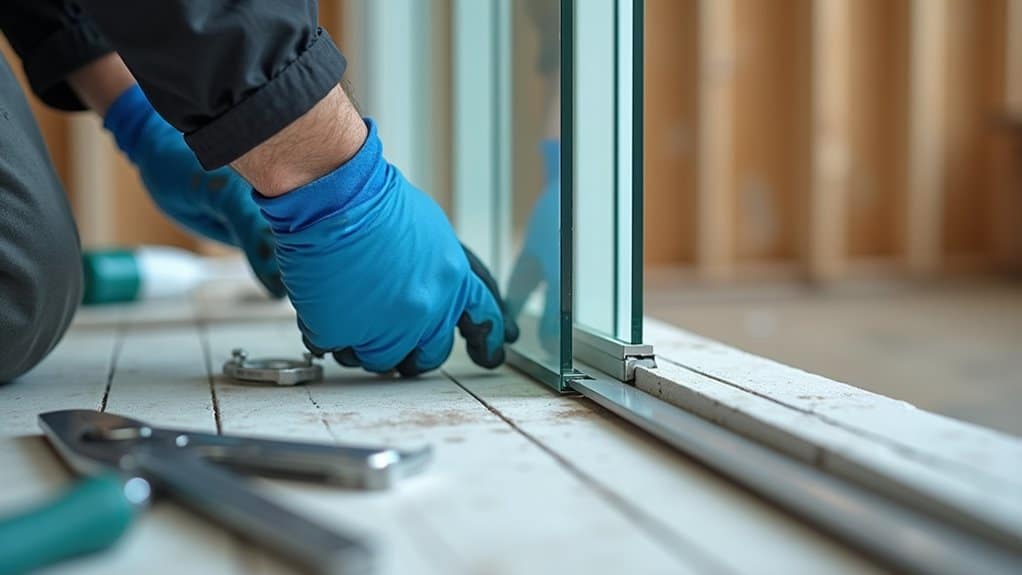
When you’re budgeting for storm-resistant door glass installation, you’ll encounter labor costs ranging from $250, $450 for standard installations, though premium and complex projects can push expenses to $300, $600 or beyond depending on custom sizing, reinforced framing, and accessibility challenges. Your total project cost will shift based on removal of existing doors, required permits and inspections, and regional hourly rates ($30, $90/hr), which vary considerably between urban and rural areas. Understanding these labor components upfront, including mobilization fees, debris disposal, and minimum service charges, helps you obtain accurate quotes and avoid unexpected cost overruns. HomeWyse data suggests that average labor costs typically range from $979 to $1,498 per sliding door installation when accounting for professional expertise and project scope. Most professional estimates use the Unit Cost Method to provide up-to-date pricing that accounts for your specific location and project requirements.
Standard Installation Labor Rates
Because labor represents a significant portion of your total storm-resistant door glass project cost, understanding prevailing rates is essential for budgeting. Standard installation labor ranges from $175, $350 for storm doors, though specialized work commands higher fees. Door installation professionals typically charge $70, $100 per hour, while handypersons bill $30, $40 hourly and contractors $40, $90 per hour. Your location matters, urban areas lean toward the upper range. Installation schedules vary based on job complexity and specialty installer availability in your region. Removal and disposal of old doors add $50, $100 to labor charges. These rates typically include setup, mobilization, delivery, site protection, and cleanup. Hardware components such as hinges and locks can range from $50 to $250 depending on quality and security features. Using the unit cost method ensures clear communication between contractors and homeowners, establishing realistic expectations and fair pricing. Complex fitment, frame repairs, or customization work increases total labor costs substantially beyond standard estimates. Properly installed storm doors can last 15-20 years, making the upfront labor investment worthwhile for long-term energy efficiency and weather protection.
Premium and Complex Installations
Several factors can drastically increase your storm-resistant door glass installation costs beyond standard rates. Expert installers typically charge 25, 50% premiums over standard labor when handling high-value materials and complex specifications. Custom design considerations often require specialized teams, adding $150, $400 in mobilization fees alone.
You’ll encounter extra expenses for precision alignment, weather sealing, and supervised quality inspections, ranging from $100, $300 per door. Multi-pane or large-format glass handling extends installation timelines greatly, increasing labor complexity and costs.
Procurement timelines matter too; expedited sourcing can raise expenses drastically. Non-standard openings demand skilled carpentry, costing $300, $900 extra. Multi-level or difficult-access installations incur additional charges of $100, $500 depending on scaffolding requirements. Integration with home automation systems adds $250, $1,000 to your total project investment.
Removal and Permit Expenses
As you plan your storm-resistant door glass installation, removal and permitting costs represent significant line items that’ll vary based on your property’s condition and local regulations. You’ll typically spend $50, $100 removing existing doors, with frame adjustments adding $75, $200. Disposal fees range $20, $50 per unit. Building permits cost $50, $200, while inspection fees add $40, $75 each. Historic districts or condo associations may require supplemental approvals, costing $50, $150 per door. Hazardous material remediation, addressing lead or asbestos, significantly increases expenses beyond $200. These safety regulations and maintenance requirements vary by municipality; some waive permits for simple replacements. Using the unit cost method promotes clear communication and sets realistic expectations between you and the service professional. Verify local codes to avoid fines or rework. Expedited permits cost 25, 50% more than standard rates when urgency demands faster approval timelines.
Cost Breakdown by Door Type
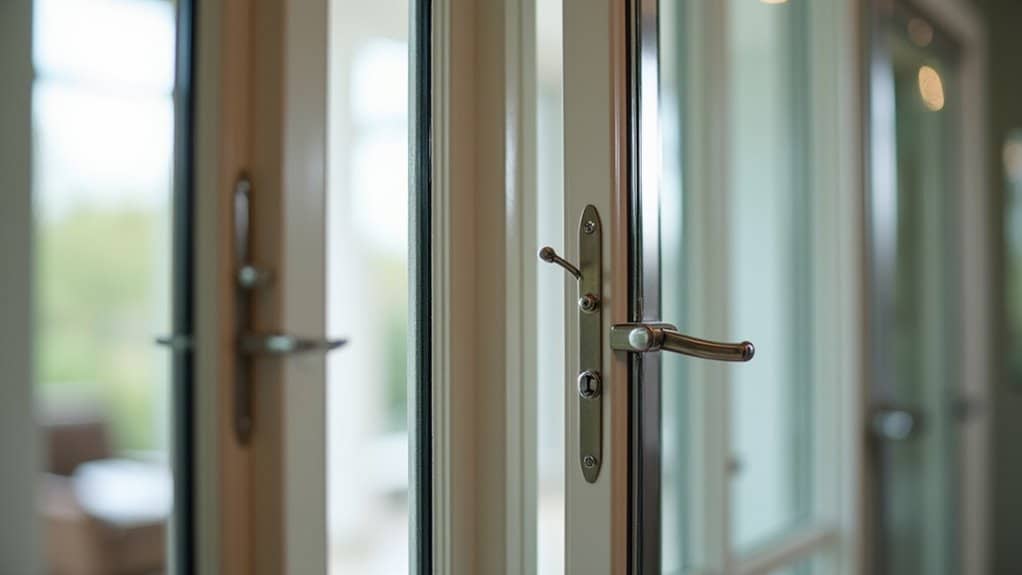
The total expense for storm-resistant door glass varies considerably depending on which door style you’re choosing. Entry-level full-view doors run $595, $908 installed, while double French doors climb to $1,000, $2,600 with impact-rated glass. Sliding glass models demand $2,000, $5,000 for premium configurations with reinforced frames and custom features. Security doors with laminated hurricane-rated glass typically cost $700, $1,700 installed. Specialty custom designs exceed $1,800, $5,000+ when featuring arched frames, extra-large panels, or imported glass. Regional pricing variations and market differences substantially influence these costs, as labor rates, material availability, and local building codes fluctuate across regions. Your final investment depends on glass upgrades, installation complexity, and customization requirements.
Impact of Door Size, Thickness, and Resistance Rating
When you’re evaluating storm-resistant door glass, you’ll find that door dimensions directly drive material volume and labor requirements, standard 36″ × 80″ units cost less than custom sizes, which demand reinforced framing and multi-panel configurations. Your choice of glass thickness (typically 5/16″ or 7/16″) fundamentally affects both impact protection and pricing, with thicker assemblies providing superior hurricane resistance and noise reduction but requiring advanced laminating techniques. Ultimately, you’ll encounter certification price premiums tied to resistance ratings like Miami-Dade TAS 201-203 or ASTM E1886/E1996 compliance, where higher categories demand tougher interlayers (PVB, EVA, or Sentryglas Plus) and often bundled security features that substantially increase your total investment. The laminated construction of hurricane-resistant glass maintains structural integrity even if the outer pane breaks, which influences both the material specifications and installation complexity that drive your final costs. Most manufacturers apply a flat rate curbside delivery fee at checkout to standardize logistics across different order sizes and geographic locations.
Door Dimensions and Material Volume
Several critical factors directly influence your storm-resistant door glass costs: size, thickness, and resistance rating. Your door’s dimensions determine the glass surface area required, with standard single entry doors measuring 36″ x 80″ and French double doors reaching 72″ x 80″ or larger. Larger dimensions escalate material expenses greatly. Thickness specifications, typically ranging from 1.75″ to 2.5″ for premium models, drive up costs through increased frame selection requirements and structural reinforcement needs. Your resistance rating, Miami-Dade or ASTM certified, mandates specific glass glazing considerations, including laminated or multi-layer tempered units costing 30, 60% more than standard glass. Higher ratings require certified hardware, improved weatherstripping, and multi-point locking systems, adding $100, $450 per door and extending installation complexity significantly.
Glass Thickness Standards and Ratings
Your door’s thorough dimensions and intended resistance rating directly determine the glass thickness you’ll need to specify, which fundamentally shapes your project’s cost and performance. Larger panels exceeding 80 inches in height require 10mm or thicker laminated glass for structural integrity. Standard residential doors typically use 5mm, 8mm thickness, while hurricane-prone regions demand ASTM E1996 certification with 7/32″ minimum specifications. Tempered and laminated glass serve different purposes; laminated glass outperforms in severe weather due to its ability to remain intact post-impact. Specialized installation methods become critical with premium ratings, as proper glazing guarantees warranty considerations are honored. Thicker glass correlates directly with higher impact-resistance certifications and increased costs, premium options run 40, 70% more than standard glass.
Impact Certification Price Premiums
Impact-certified glass doesn’t come cheap, you’ll pay 30, 60% more than standard non-impact glass due to reinforced materials and mandatory testing protocols. If you’re in hurricane-prone coastal regions, expect steeper premiums reflecting obligatory compliance with strict codes like Miami-Dade or ASTM E1996/E1886.
Your certification costs aren’t purely upfront expenses. Many insurers offer discounts for certified installations, offsetting initial investment over time. Geographic risk directly influences pricing; high-risk zones command higher premiums than inland areas.
Installation labor also increases. Extra compliance steps add $100, $400 per door to labor charges alone. Specialty hardware, multi-point locks and reinforced hinges, becomes mandatory for high-resistance doors, further raising costs. Understanding these certification premiums helps you budget accurately and utilize insurance incentives effectively.
Customization and Design Premium Factors
When you choose storm-resistant door glass beyond standard options, customization premiums can substantially increase your total project cost. Your decorative options and architectural integration decisions directly impact pricing and installation complexity.
Consider these key cost drivers:
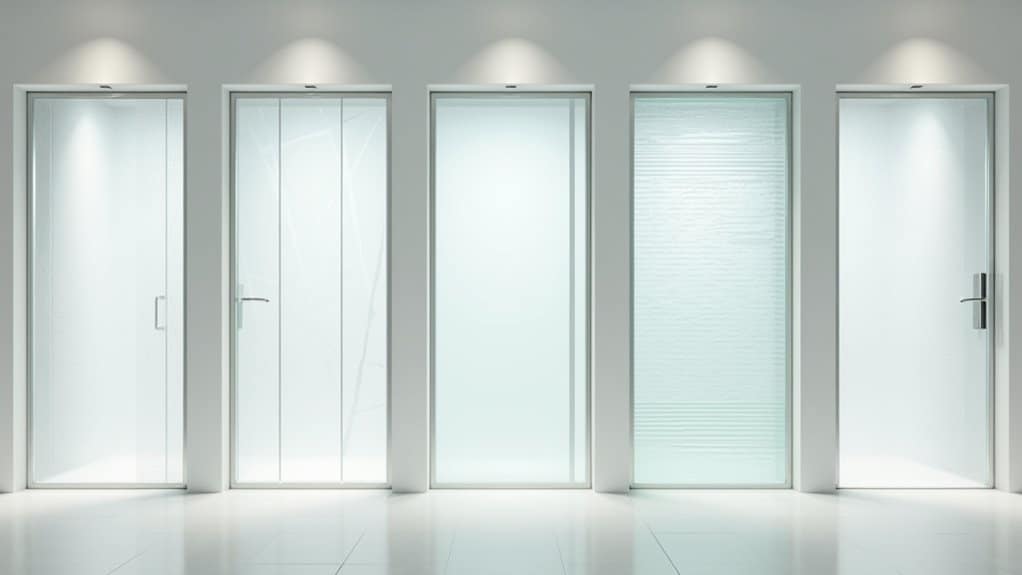
- Decorative treatments, Frosted, etched, or patterned glass adds $150, $900 versus clear panels
- Architectural matching, Historic patterns, sidelights, and transoms command $500, $2,500+ premiums for tailor-made work
- Smart integration, Blinds between glass, remote locking, and sensors add $200, $1,000+ per unit
- Custom artwork, Engraved branding or address numbers cost $75, $400 per design
Designer-exclusive models can reach $4,000, $6,000 installed. Specialized glaziers handle these projects with labor fees running $100, $450 higher than standard installations. Your specific customization choices determine final expenses.
Regional Pricing Variations and Market Differences
While customization premiums can inflate costs substantially, geographic location often becomes the primary price determinant for storm-resistant door glass installations. You’ll encounter significant variation, coastal states like Florida and Louisiana gravitate toward $3,000 for hurricane-rated sliding doors, whereas southern and midwestern regions average closer to $900. Labor rates fluctuate between $40, $90 hourly in urban centers versus $30, $40 in rural areas. Material surcharges of 20, 30% apply in remote zones due to extended material lead times and limited supply chains. Contractor reliability varies regionally too; labor shortages in high-demand markets augment installation rates. High-cost states (California, New York, Hawaii) consistently exceed $1,100 per installation. Permitting fees add $100, $400 in hurricane-prone coastal jurisdictions, directly impacting your total investment.
Energy Efficiency Upgrades and Additional Features
Beyond baseline storm resistance, you’ll find that modern door glass technology substantially reduces your heating and cooling costs through advanced insulation features. These upgrades meaningfully impact your total investment while delivering measurable returns.
Consider these energy-enhancing options:
- Low-E coatings and inert gas fills minimize energy loss by 30-50% compared to traditional glass
- Triple-pane construction with polyurethane foam cores raises R-values up to 43% above standard doors
- Smart glass technology adjusts tint automatically, optimizing comfort and reducing HVAC strain
- UV-blocking capabilities protect furnishings while lowering cooling demands
Advanced models now incorporate sensor and monitoring capabilities that track thermal performance, while automated maintenance notifications alert you to seal degradation or efficiency drops. Professional installation guarantees these systems perform at their best, maximizing your energy savings and warranty coverage throughout the door’s lifespan.
Long-Term Savings and Return on Investment
Your initial investment in premium storm-resistant door glass translates into quantifiable financial returns across multiple categories. When you calculate your payback period, factor insurance discounts (5, 15% annually), reduced maintenance expenses, and avoided repair costs following weather events. A replacement cost comparison reveals standard glass requires frequent replacements after storms, whereas impact-resistant options withstand severe conditions, dramatically lowering lifecycle expenses.
You’ll recoup your upfront investment within 5, 10 years through cumulative savings alone. Extended warranties covering 10, 20 years further protect your financial commitment by eliminating unexpected repair expenditures. Energy efficiency gains contribute additional utility savings of 7, 15% annually. Combined with amplified property resale value in coastal markets, your storm-resistant glass upgrade delivers substantial long-term ROI beyond immediate weather protection.
Frequently Asked Questions
Do Storm-Resistant Glass Doors Qualify for Energy Tax Credits or Rebates in 2026?
No, you won’t qualify for federal energy tax credits with storm-resistant glass doors in 2026. While they offer impact resistance requirements for hurricane protection, they don’t meet Energy Star’s energy efficiency ratings standards. The IRS and Energy Star don’t recognize storm doors under current federal guidelines. You’ll need doors with certified U-factor and SHGC ratings instead. Verify any contractor claims independently through Energy Star’s official site before proceeding.
How Much Does Removing and Disposing of an Old Door Typically Cost?
You’ll typically spend $50, $150 removing and disposing of an old door, though urban areas charge higher rates. Your costs depend on door material, accessibility, and local disposal fees. If you’re removing hazardous materials like lead paint, expect $50, $150 surcharges. Many regions enforce recycling requirements that affect final pricing. Complex removals or oversized doors can exceed $200. Bundling multiple doors often yields per-unit discounts, reducing your comprehensive expenditure.
What’s the Price Difference Between Hiring a Handyperson Versus a Licensed Contractor?
You’ll pay $50, $75/hr for a handyperson versus $70, $150/hr for a licensed contractor. While handypersons cost $80, $200 for standard jobs, contractors charge $200, $500+ because they provide warranty coverage, insurance protection, and code compliance documentation. You’re investing in superior quality of workmanship and reliable timeliness of installation. Contractors deliver structural expertise, specialized tools, and guaranteed accountability, critical for storm-resistant applications where installation failures pose safety risks and potential insurance complications.
Are Permits and Inspection Fees Required for Storm Door Installation in Most Areas?
You’ll likely need building permits and municipal inspections for your storm door installation, though requirements vary by location. Many municipalities require permits for exterior door replacements, especially if structural changes occur. You should verify with your local permit office beforehand, failure to obtain permits can result in fines, stop-work orders, or insurance claim denials. Inspection fees typically range from $50, $150, often bundled with permit costs. Licensed contractors usually handle these applications as part of their bid.
Can Specialty Locks and High-Security Hardware Significantly Increase the Total Installation Cost?
Yes, specialty locks and high-security hardware can substantially increase your installation costs by 10, 40%. You’ll face increased maintenance costs with smart locks and advanced systems, plus potential upgrading challenges if you later need integration with alarms or remote monitoring. Grade 1 deadbolts, multi-point mechanisms, and reinforced strike plates add $100, $350 each. For a $2,000 door, expect your total installed price to reach $2,400, $2,800 with bolstered security features.