
Three factors drive your wood door’s final cost: species and size, design complexity, and hardware with installation. Pine starts at $200, while mahogany exceeds $5,000, and premium cuts like Rift Cut White Oak reach $61 per square foot. Intricate carvings add 20, 50%, and stained glass raises costs by 30, 60%. Custom hardware alone can exceed $2,457 per door. Keep going to break down each cost factor in detail.
Wood Species and Door Size Set the Starting Price
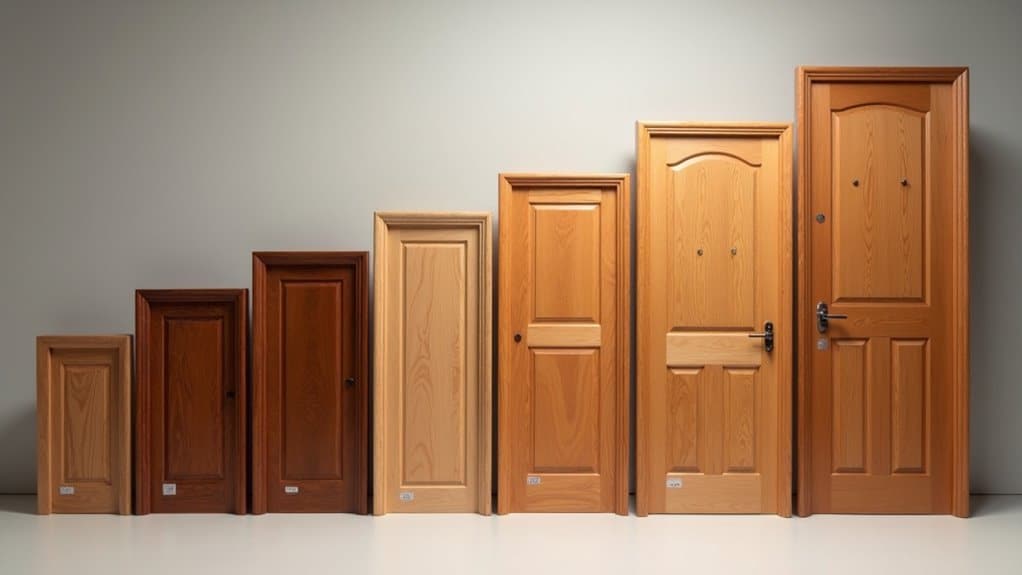
The wood species you choose sets the floor, and often the ceiling, of what you’ll pay for a door. Pine starts at $200, while mahogany climbs past $5,000, a range driven entirely by wood quality variations between species. Size compounds the cost immediately. Standard-height exterior doors priced in Red Oak carry a 1.0 multiplier, but switching to Walnut applies a 1.55 multiplier before you add a dollar for size upgrades. A 7/0 height adds $100; an 8/0 adds $200. For exterior applications, species like African Mahogany, Cypress, and White Oak are recommended because of their natural resistance properties. Materials for harsh climates often require additional considerations when selecting wood species. Investing in high-quality materials for harsh climates can ultimately save costs on repairs and replacements in the long run. Enhancing home entrance aesthetics is crucial for creating a welcoming atmosphere. Choosing the right door not only improves curb appeal but also adds value to your property.
Specialty wood grains escalate pricing further at the per-square-foot level. Rift Cut White Oak exceeds $61 per square foot versus Red Oak’s $26. Every species decision you make directly determines your baseline before style, finish, or hardware enters the equation.
Design Details That Push the Total Cost Higher
Once you’ve locked in a species and size, design decisions take over as the next major cost driver. Intricate carvings add 20, 50% to the base price, with hand-carved motifs often doubling material expenses. Multi-layered relief carvings escalate costs further by requiring specialized tools and multi-stage finishing processes. Baroque or Victorian-style engravings extend production timelines through prolonged sanding and sealing stages, pushing labor rates higher.
Glass inserts compound these increases substantially. Stained glass panels raise costs by 30, 60%, while tempered glass with etched designs inflates both material and cutting fees. Frosted or beveled glass requires additional polishing and sealing treatments. Each decorative layer you add introduces another fabrication variable, making cumulative design choices the most significant pricing factor beyond base material selection. Working with a reputable manufacturer ensures you receive fair pricing despite the complexity of these layered design costs. Door sealers for moisture are essential in maintaining the integrity of your doors, especially in humid environments. By effectively blocking moisture infiltration, these sealers extend the lifespan of the door and enhance energy efficiency.
What Hardware, Finish, and Installation Actually Add
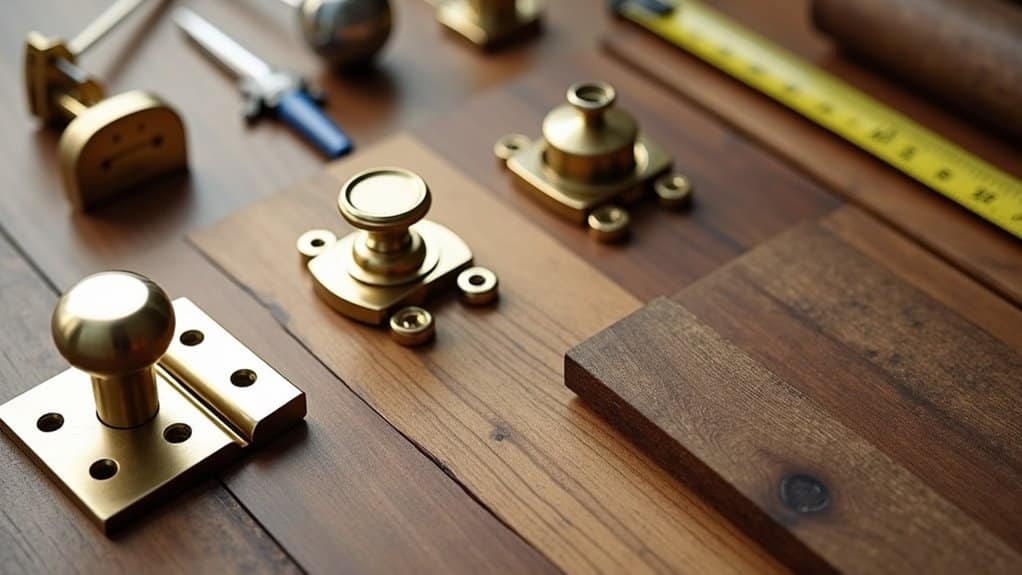
Hardware, finish, and installation costs accumulate faster than most buyers anticipate, often rivaling the base door price itself. Surface type variations directly influence pricing, Oil Rubbed Bronze and Polished Nickel finishes command premiums over standard options. Custom hardware components like mortise lock combos reach $2,457.02 per door, while exit devices climb to $5,051.44 for pairs. Installation labor adds $152, $363 per door before contractor overhead.
Hardware and finish upgrades don’t just add up, they often match or exceed the base door cost entirely.
Three cost drivers you’ll encounter:
- Hardware type, leversets start at $2,138.09; exit device combos exceed $3,064.77
- Finish selection, premium finishes like US14 Lifetime considerably increase unit pricing
- Labor and supplies, job supplies add $44.41, $69.78, with a mandatory two-hour minimum charge
Unique requirements and details of your project, including schedule difficulty, local labor shortages, or high-demand craftsmen, can push costs well beyond standard estimates.
Frequently Asked Questions
How Long Do Wood Doors Typically Last Before Needing Replacement?
Wood doors typically last 20, 60 years, depending on wood type and application. Interior doors average 30, 60 years, while exterior doors range 20, 40 years. With proper maintenance, refinishing every 3, 8 years and monthly cleaning, you’ll greatly extend their lifespan. Proper installation using quality hardware, like ball-bearing hinges, prevents premature failure. Premium hardwoods like mahogany can exceed 60 years, while well-maintained old-growth wood doors remarkably endure 80, 100 years.
Are Wood Doors Energy-Efficient Compared to Fiberglass or Steel Doors?
Wood doors don’t offer strong energy-efficient features compared to fiberglass or steel alternatives. Their insulation properties fall short because wood lacks advanced polyurethane foam core technology. You’ll also find that wood expands and contracts with humidity, creating gaps and drafts that increase heat loss. Fiberglass delivers the highest efficiency, followed by steel. Both outperform wood considerably, helping you reduce annual heating and cooling costs by up to 10%.
Can Wood Doors Be Repaired if Damaged, and What Does That Cost?
Yes, you can repair most damaged wood doors using common wood door repair methods like wood filler, putty, hinge adjustments, and hardware replacement. The average cost to repair wood doors ranges from $75 to $1,050, depending on damage severity and door type. Minor cosmetic fixes run $15, $100, while frame or glass repairs reach $350, $850. You’ll find repair is typically more cost-effective than replacement unless damage compromises structural integrity or safety.
How Do Climate and Weather Conditions Affect Wood Door Durability?
Climate and weather conditions markedly reduce your wood door’s lifespan through two primary mechanisms: exposure to moisture and temperature fluctuations. Humidity causes wood fibers to expand and contract, leading to warping, swelling, and frame binding. UV radiation breaks down surface finishes, accelerating degradation. In regions like Colorado, freeze-thaw cycles blister coatings and compromise structural integrity. You’ll need to maintain humidity levels between 30% and 50% to minimize these damaging effects.
Do Wood Doors Require Permits or Inspections During Installation?
When installing wood doors, you’ll need to check if permits are required based on your location and door type. For exterior doors, local building code compliance is typically mandatory, especially for new installations. Interior replacements usually don’t require permits unless structural changes are involved. You should consult your local building department before starting work, as regulations vary by municipality. Non-compliance can result in fines, legal action, or safety risks.