
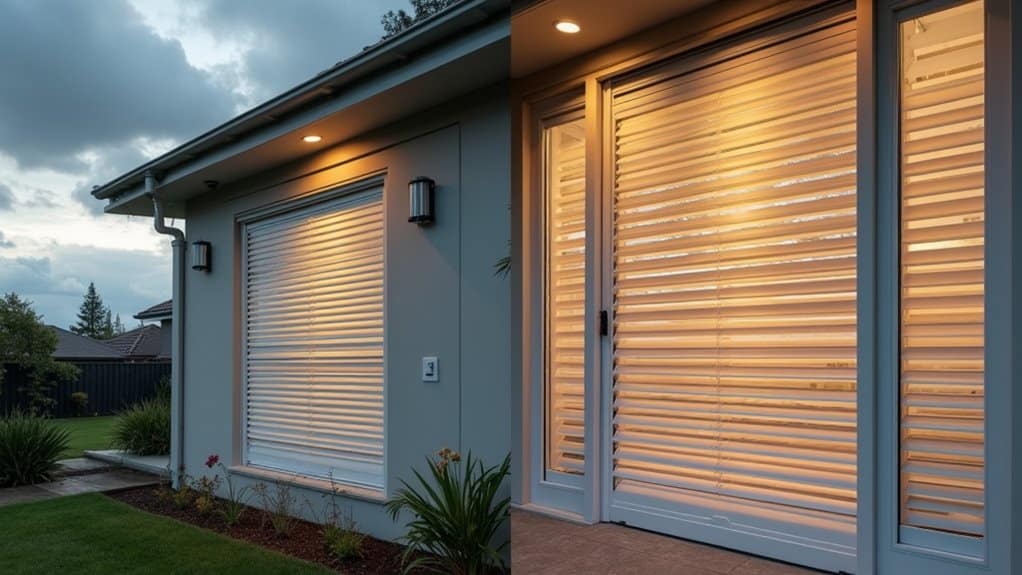

Window ventilation locks are critical because 83% of burglars scout for visible security measures before targeting homes. You’re creating a psychological barrier that signals your property isn’t an easy target, deterring up to 60% of potential intruders. These locks secure ventilation openings without compromising airflow, reducing energy loss by 30% while maintaining indoor air quality. They also prevent child and pet falls by restricting openings to four inches. Understanding how layering this protection with further measures creates total home security reveals why many homeowners underestimate their significance.
Burglary Prevention Through Visible Security Measures
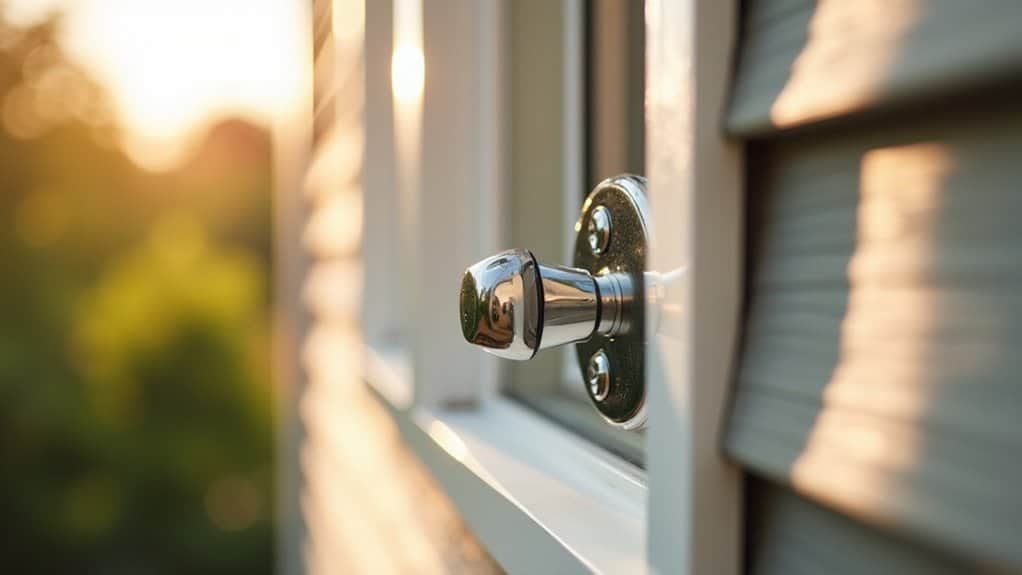
When 83% of would-be intruders actively scout for visible security systems before targeting a home, the deterrent value of window ventilation locks becomes clear. You’ll find that prominently displayed locks function as psychological barriers, signaling that your property isn’t an easy target. These physical security enhancements deter up to 60% of potential burglars from attempting entry. Combined with audible deterrents like alarm stickers, window ventilation locks create a robust security profile visible from approach paths. Homes displaying such measures experience 300% fewer burglary attempts than unsignposted properties. Installing window stops on first-floor windows prevents prying open and adds an additional layer of physical protection to your security strategy. Auto locking systems that automatically secure windows when closed eliminate the common oversight of leaving windows unlocked. Since first-floor windows account for 23% of burglary entries, securing these vulnerable points should be a priority in your overall security plan. By installing visible locks, you’re leveraging criminal decision-making patterns, most offenders abandon targets exhibiting protective devices. This cost-effective strategy addresses the opportunistic nature of 41% of burglars who exploit visible vulnerabilities, making it foundational to your home’s security posture.
Balancing Ventilation With Unwanted Access
The fundamental challenge in home security lies in maintaining healthy indoor air circulation while preventing unauthorized entry through partially open windows. You’ll find that ventilation locks directly address this dual concern by securing ventilation openings without compromising airflow. These devices enable continuous air exchange while reducing indoor pollutants by up to 25%, simultaneously fortifying your defense against intrusion. Window screens with fine mesh and tamper-resistant features provide an additional layer of protection against pest and allergen entry while maintaining proper ventilation.
Ground-floor windows remain primary targets for 23% of break-ins, making balancing accessibility and security essential. Ventilation locks allow you to maintain natural airflow during warmer months while keeping potential entry points restricted. Keyed locks offer higher security compared to non-keyed alternatives, making them particularly suitable for ground-floor applications. By combining secure ventilation methods with reinforced window frames and multiple locking points, you create layered protection that guards against forced entry. This approach guarantees you’re not sacrificing safety for comfort, you’re achieving both.
Protecting Children and Pets From Window Falls
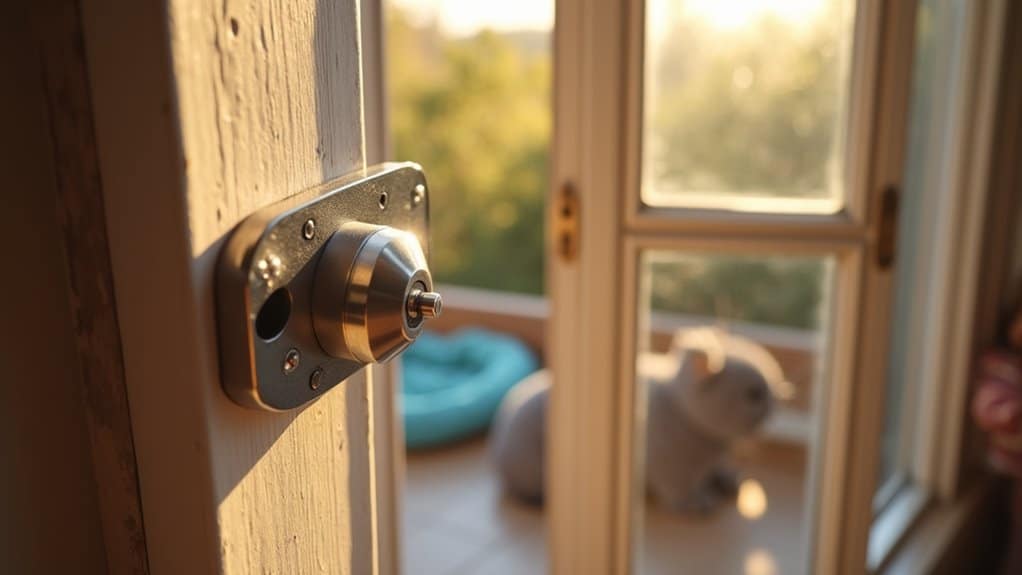
While ventilation locks secure your home against intruders, they’re just as crucial for safeguarding the youngest and most susceptible residents, your children and pets. Window falls represent a significant threat: over 3,300 children under five sustain injuries annually, with one in three requiring hospitalization. Head and facial trauma dominate injury patterns, often necessitating long term rehabilitation and extended care.
Seasonal risks escalate during spring and summer when windows remain open longer. Ventilation locks restrict openings to four inches, preventing child and pet passage while maintaining airflow. Standard screens prove inadequate, lacking structural integrity against pressure. Vent locks come in various designs with the primary function to limit window opening while preventing falls. Young children should never be left unsupervised at home, as this significantly reduces window fall risks.
You should install quick-release guards on all upper-floor windows, ensuring adult emergency egress remains viable. Positioning furniture away from windows eliminates climbing access points. These measures directly mitigate fall risks while preserving necessary home ventilation balance.
Reducing Energy Loss and Lowering Utility Costs
Beyond protecting your family, window ventilation locks play a critical role in your home’s thermal performance and energy efficiency. By maintaining airtight seals, you reduce air infiltration that accounts for up to 30% of heating energy loss. Quality locks guarantee windows close tightly, minimizing unwanted airflow and reducing HVAC cycling demands.
Adjustable ventilation locks enable controlled air exchange without significant energy compromise, lowering utility consumption while preserving indoor air quality. Properly sealed windows support thermal comfort augmentation by keeping interior surfaces closer to indoor temperatures, eliminating cold spots. This also facilitates condensation risk mitigation; warmer window interiors in winter prevent moisture accumulation that damages property. Weatherstripping around window edges provides an additional barrier that blocks drafts and further enhances the seal integrity that locks maintain. Installing lockable window restrictors allows homeowners to open windows for fresh air circulation while maintaining security and preventing excessive heat loss during cooler months. Window coverings such as operable shades and blinds can be strategically opened and closed throughout the day to maximize thermal performance benefits alongside your locked windows.
ENERGY STAR certified window improvements yield average household energy bill reductions of up to 13%. Strategic retrofit investments in locks and seals deliver substantial savings across climate zones, making them cost-effective substitutes for complete window replacement.
Durability and Ease of Use in Daily Operations
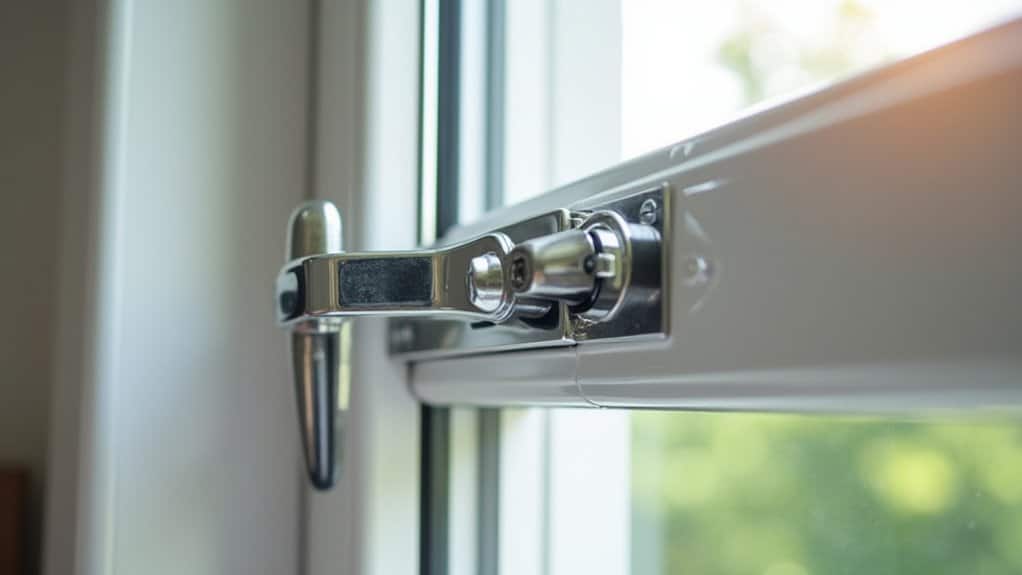
Window ventilation locks deliver energy savings only when they’re built to withstand years of regular use without degradation or operational failure. You’ll benefit from tight engineering tolerances that guarantee smooth locking/unlocking action, eliminating frustrating sticking or jamming. Corrosion resistant components, like stainless steel and coated zinc, protect against rust and material fatigue, particularly in humid or coastal climates. High-quality locks maintain structural integrity under frequent handling and accidental impacts, while cheaper alternatives degrade quickly, compromising security. Ergonomic knobs and levers simplify daily operation for all household members. Most superior locks require only periodic lubrication and minimal maintenance, reducing replacement costs. Hinged wedge locks and vent stops allow you to crack windows for airflow while keeping them secure without sacrificing protection. Tamper-resistant screws discourage unauthorized adjustment. Installing contact sensors on windows provides immediate notification if ventilation locks are bypassed or tampered with. Multi-point locking systems enhance protection by locking at multiple points along the window frame. You’ll extend your investment’s lifespan through routine inspections and proper upkeep, ensuring reliable ventilation control throughout your home.
Smart Lock Integration With Home Automation Systems
Modern smart window locks transform your home security infrastructure by connecting seamlessly to established automation platforms like Amazon Alexa, Google Home, and Apple HomeKit, enabling centralized control alongside door locks, security cameras, and alarm systems. You’ll benefit from advanced routines that automatically lock windows when security systems activate or doors close. Remote management capabilities allow you to monitor and control windows from anywhere via smartphone apps, receiving real-time notifications for unauthorized access attempts. Temporary access provisioning lets you grant contractors or visitors restricted window control within specified timeframes. However, you must verify protocol compatibility, Zigbee, Z-Wave, or Wi-Fi, since requirements vary by manufacturer. Some setups necessitate dedicated bridge devices. While smart locks provide convenience and monitoring capabilities, proper window locks remain the essential foundation of home security, as installing cameras and alarms alone is insufficient if windows lack quality locking mechanisms. Combining smart locks with traditional reinforcements guarantees robust security outcomes despite potential connectivity vulnerabilities.
Layering Security Measures for Maximum Protection
You’ll strengthen your home’s security by establishing multiple obstacles that force intruders to navigate successive barriers, window ventilation locks paired with door reinforcements, perimeter sensors, and motion-activated lighting create escalating friction that discourages break-in attempts. Integrating contact sensors on your windows with your alarm system provides real-time detection, ensuring that any bypass attempt triggers an immediate response before an intrusion progresses. An all-encompassing defense strategy combines physical hardening, electronic monitoring, and environmental controls into a unified system where each component amplifies the effectiveness of the others.
Multiple Obstacles for Intruders
The most effective home security strategy doesn’t rely on a single protective measure; it compounds multiple defensive layers that force intruders to expend substantially more time, effort, and resources than they’re typically willing to invest. By implementing overlapping physical deterrents, reinforced locks, window restrictors, laminated glass, and security bars, you create escalating obstacles that dramatically increase entry difficulty. Simultaneously, leveraging multiple psychological barriers through visible cameras, alarm signage, and strategic lighting amplifies perceived risk of detection. Burglars inherently seek quick, low-risk targets; when encountering numerous interconnected security measures at one location, they’ll typically move on. This layered approach eliminates single-point vulnerabilities while reducing blind spots across your entire perimeter, making your home substantially less attractive to potential intruders.
Combining Locks With Sensors
How effectively can you defend your windows against determined intruders? Pairing ventilation locks with window sensors creates a formidable dual-layer defense. While locks physically restrict entry, sensors detect unauthorized breaches through vibration, magnetic, or contact detection, distinguishing genuine tampering from normal ventilation. You’ll benefit from real-time alerts sent directly to your smartphone via integrated smart home platforms, enabling immediate response. Remote monitoring capabilities allow you to oversee your property constantly, regardless of location. During security audits, professionals often recommend this combination, as homes utilizing both measures experience 40% fewer break-in attempts. The integration streamlines management through a single app, automating responses when you’re absent. This synergistic approach optimizes protection while maintaining natural airflow and qualifying you for reduced insurance premiums.
Creating Comprehensive Defense Systems
Building on the sensor and lock integration you’ve established, a thorough window security system requires layering multiple defensive measures that work synergistically to eliminate vulnerabilities. You’ll strengthen your monitored location surveillance by combining motion-activated lights with security cameras covering window-adjacent areas, 63% of homes with outdoor cameras significantly reduce break-in risk. Integrate occupancy simulation strategies using automated timers for lights and televisions, preventing targeting during absences. Reinforce physical barriers with security films and reinforced frames while maintaining secondary locking points. Regular maintenance inspections identify structural weaknesses before exploitation. This extensive approach, blending environmental deterrents, integrated sensors, physical reinforcements, and behavioral protocols, creates overlapping defensive layers that considerably increase apprehension risk and discourage opportunistic criminals seeking vulnerable entry points.
Establishing Safe Window Locking Habits
You’ll strengthen your home’s security posture by incorporating daily lock inspection routines into your household schedule, verifying that each window’s locking mechanism operates smoothly and engages fully. Teaching family members, particularly children, to consistently secure windows reinforces behavioral patterns that eliminate gaps in your security envelope and reduce your vulnerability to opportunistic entry. These foundational habits transform window locking from an occasional afterthought into an automatic daily practice that protects against the nearly 25% of burglaries that exploit unsecured windows.
Daily Lock Inspection Routines
Establishing a daily lock inspection routine forms the foundation of effective home security, as it’s the most reliable method for detecting vulnerabilities before they’re exploited. You’ll want to conduct consistent maintenance protocols by examining each window lock for wear, corrosion, or damage. Test the locking mechanisms to guarantee they engage smoothly and verify that windows close securely. Inspect surrounding frames for cracks or warping that compromise lock function. By performing thorough security audits at the same time daily, you’ll establish a sustainable habit that prevents small issues from escalating into major security breaches. Document your findings and schedule periodic deeper inspections weekly or monthly. This systematic approach reduces break-in risk, maintains energy efficiency, and helps you identify maintenance needs early, ultimately saving costly repairs while supporting insurance compliance.
Teaching Family Security Practices
Your family’s window security depends fundamentally on consistent, educated practice, and research demonstrates that households implementing structured key training experience up to 40% fewer break-in attempts than those relying on ad-hoc measures.
Engaging multi-generational participation guarantees comprehensive household coverage. You’ll strengthen security by leveraging shared responsibilities through:
- Assigning specific window-securing duties to each household member, establishing clear accountability
- Conducting practical demonstrations showing correct locking, opening, and partial ventilation procedures
- Scheduling rotating duties that distribute responsibility and prevent oversight
- Linking window checks to daily routines, evening shutdown or departure, creating automatic security habits
Regular family meetings allow you to review protocols, modify procedures for new locks or structural changes, and amplify the dual benefits of ventilation locks: enhanced security and improved indoor air quality through controlled circulation.
Frequently Asked Questions
Can Window Ventilation Locks Be Installed on Existing Windows Without Replacement?
Yes, you can absolutely install ventilation locks on your existing windows without replacement. You’ll find retrofit options and custom window hardware options designed specifically for older and modern frames alike. Most DIY window lock installation projects take under 30 minutes using basic tools. Surface-mounted designs require only screws, while clamp or wedge models need no drilling. You’re preserving your windows’ integrity while enhancing security effectively.
What Types of Windows Are Compatible With Modern Ventilation Lock Systems?
You’ll find modern ventilation locks work with virtually all versatile window designs, single-hung, double-hung, sliding, casement, awning, and tilt-and-turn models. Each type requires specific lock mechanisms: sash locks for hung windows, track locks for sliders, and multi-point systems for casements. You can achieve optimal ventilation performance across wood, uPVC, aluminum, and composite frames. Universal mounting kits accommodate retrofit installations, though professional consultation guarantees compatibility with heritage windows.
How Often Should Window Locks Be Inspected and Maintained for Optimal Security?
You should inspect your window locks every six months for mechanical wear and visible defects as part of your routine maintenance schedule. Professional inspection recommendations suggest a thorough evaluation every two to three years for most homes. However, if your windows exceed ten to fifteen years old or face harsh climates, you’ll need annual inspections. High-risk properties warrant more frequent assessments. Consistent lubrication and functional testing guarantee ideal security performance.
Do Window Locks Interfere With Emergency Egress or Fire Escape Routes?
No, when you’re selecting properly designed window locks, they won’t interfere with emergency egress. You’ll find that modern ventilation locks prioritize rapid manual disengagement, ensuring your escape routes remain unobstructed. However, you must verify ventilation lock compatibility with existing windows and confirm they don’t limit escape routes. Keyed locks are prohibited on egress windows. You’re protected when you choose non-keyed mechanisms that balance security with immediate emergency accessibility from inside.
What Is the Average Cost Difference Between Basic and Smart Window Locks?
You’ll find that the average lock cost difference between basic and smart window locks ranges from $100, $300 per unit, excluding installation. Basic window security typically costs $5, $50, while smart locks retail between $150, $350. Professional installation for smart locks adds $150, $250, whereas basic locks often support DIY installation. You should also factor in ongoing maintenance costs for smart locks, including battery replacement and software updates, which basic mechanical locks don’t require.