
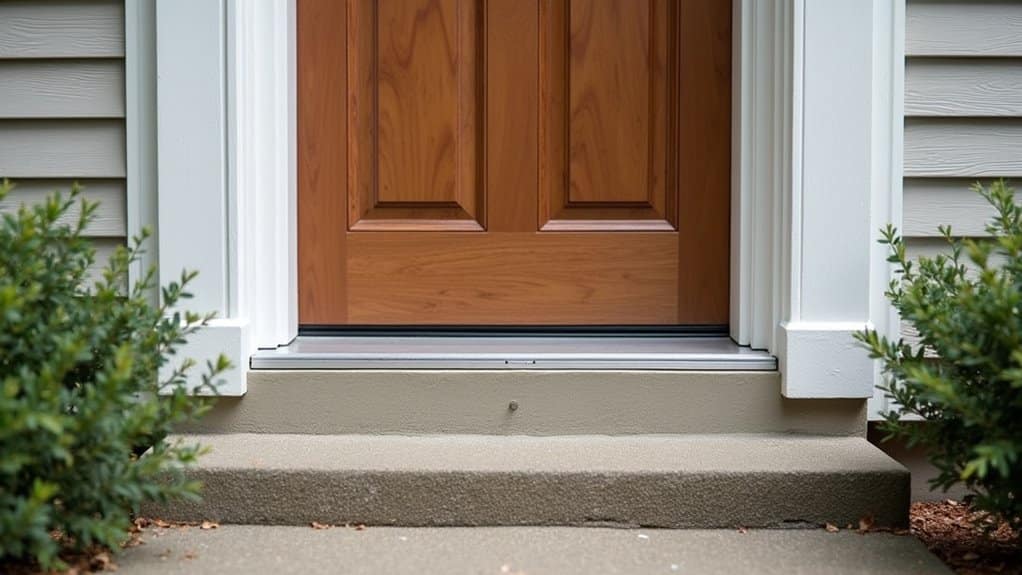
You can transform how daylight and fresh air move through your home by choosing the right windows and doors. Casement windows swing outward to capture cross-breezes, while bay configurations boost natural light by up to 60%. Strategic placement, south-facing for solar gain, north-facing for glare-free illumination, maximizes both warmth and airflow. Glass door systems eliminate barriers between indoor and outdoor spaces. Understanding window and door design ideas and the right glazing choice ties everything together, with considerably more to uncover about each approach below.
Casement and Awning Windows for Natural Light and Airflow
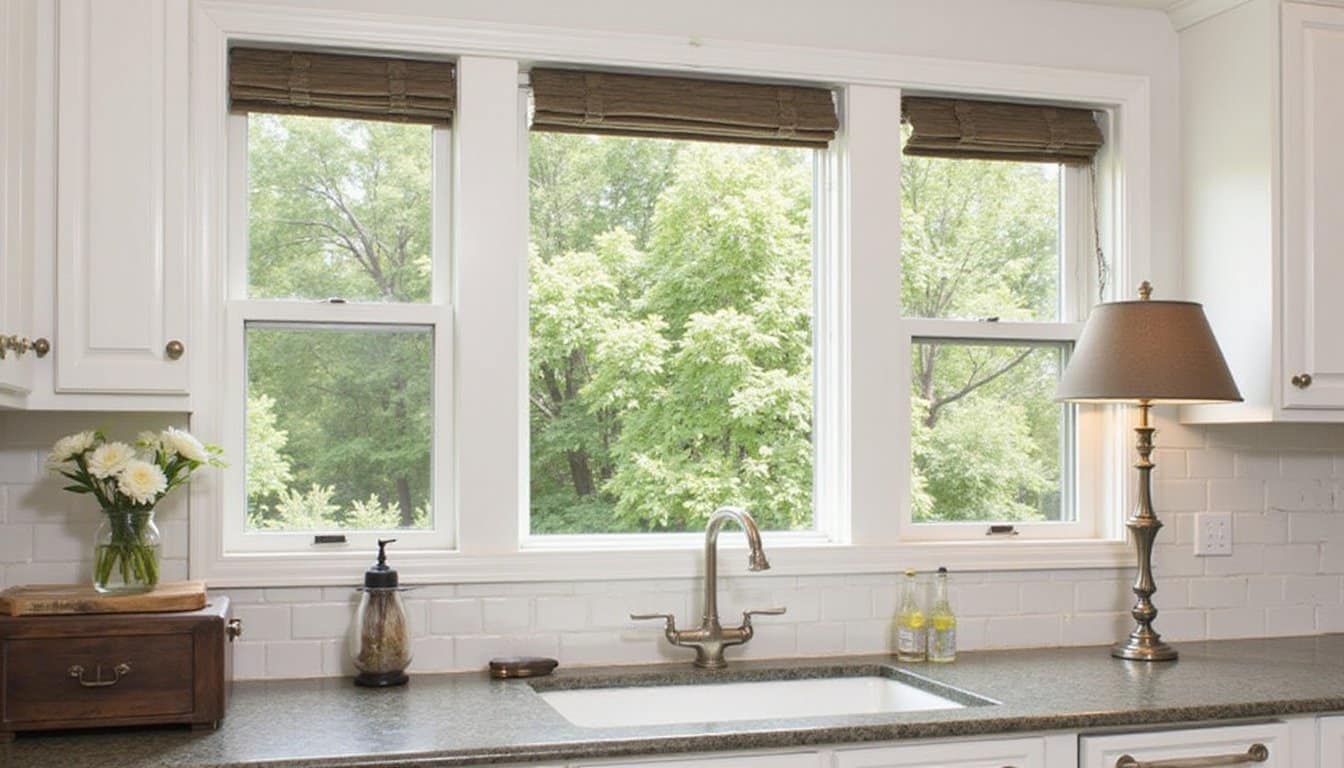
Casement and awning windows are two of the most effective window styles for maximizing natural light and airflow in your home. Casement windows are side-hinged and swing outward at opening angles up to 90 degrees, capturing breezes from multiple directions while eliminating obstructive frames that reduce light entry. Their airtight seals also minimize condensation control issues by reducing moisture infiltration when closed. Awning windows, top-hinged at opening angles reaching 45 degrees, suit narrower or elevated wall spaces like clerestories. Their outward-tilting design deflects rain, letting you maintain ventilation during light precipitation. Both window types feature crank mechanisms for precise control, double glazing for energy efficiency, and large glass areas that reduce your dependence on artificial lighting and mechanical cooling systems throughout the day. Casement windows are particularly well-suited for rooms that require strong ventilation, as their full outward opening allows maximum fresh air to flow inside while their tight seal helps lower energy bills over time.
How Bay and Bow Windows Pull Light From Every Direction
Bay and bow windows redefine how your rooms receive natural light by projecting outward from your wall plane and gathering sunlight from multiple angles simultaneously. Bay windows use three angled panels for geometric design maximization, capturing morning and afternoon exposure while pushing light deeper into your interior. They increase natural light by 40, 60% over standard flat windows and require only 40 inches of wall space.
Bow windows feature four to five equal panels in a gentle arc, achieving curved surface light distribution that softens shadows and floods north-facing rooms evenly. They need 80 inches of wall space but deliver broader daylight coverage and wider sightlines. Both configurations reduce your artificial lighting dependency, lower energy consumption, and create perceived spaciousness through panoramic views and uniform illumination. A 6-foot bay window projecting 18 inches creates 9 square feet of usable floor space beyond your exterior wall, forming a natural alcove for seating, plant displays, or storage.
The Best Window Placement for Sun and Airflow
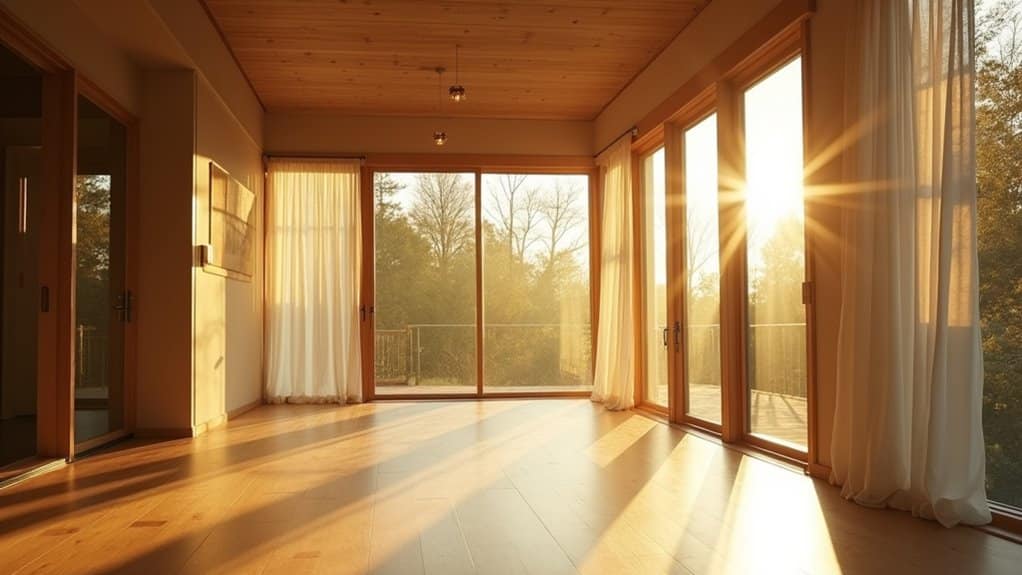
While bay and bow windows maximize light capture through their outward projection, where you place any window on your home’s walls determines how much sun you actually harvest and how well your rooms breathe. Orientation and placement drive every lighting and ventilation outcome in your home.
South-facing windows anchor passive solar design, capturing daylight throughout the day and reducing winter heating loads. Add low-e coatings to control summer heat gain. East-facing windows deliver soft morning light, making them ideal for bedrooms and kitchens. West-facing windows intensify afternoon warmth in living and dining spaces, so low-e glass helps manage temperature spikes. North-facing windows provide glare-free, consistent illumination for offices and workspaces. Position windows high on walls to push light deeper into rooms while improving airflow and privacy simultaneously. For homeowners seeking the greatest solar exposure, pairing south and west facing windows captures maximum sunlight throughout the entire day.
Glass Doors That Add Light and Ventilation Like Windows
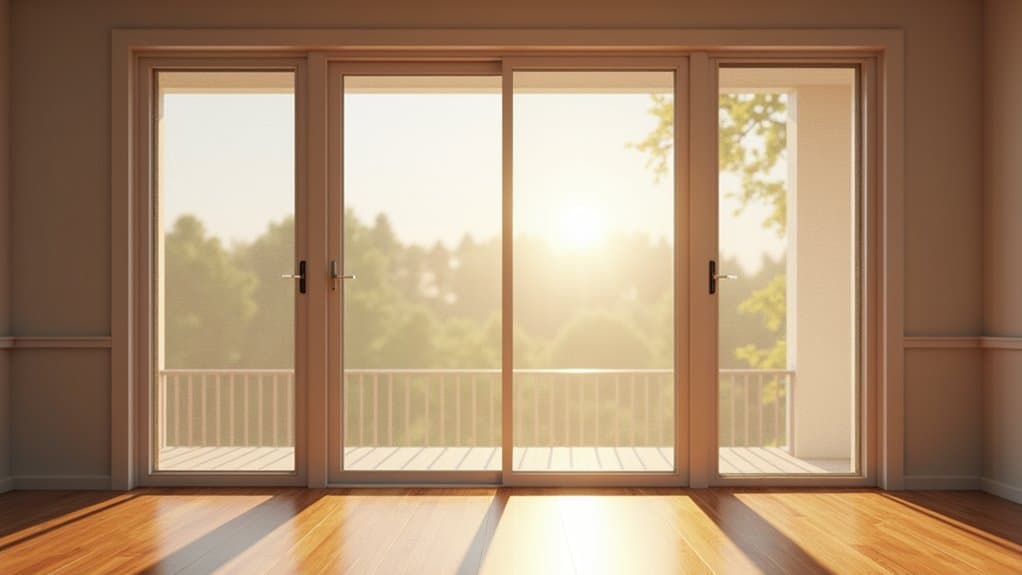
Glass doors pull double duty as both entryways and light-harvesting panels, functioning much like oversized windows when you select the right type and placement. Sliding glass doors for modern shifts work well in space-constrained rooms, eliminating swing clearance while maximizing light intake. Bi-fold and folding systems create wider openings than conventional doors, improving airflow considerably. Full-height glazing and clearer glass technology enhance light transmission, reducing your dependence on artificial lighting during daylight hours.
Glass door systems for indoor outdoor living, including multi-slide configurations, establish seamless spatial connections while promoting consistent ventilation. Pair your glass doors with screen inserts to circulate fresh air without admitting insects. Position south-facing installations to capture peak daylight. These design choices collectively support better mood, vitamin D production, and reduced eyestrain throughout your home.
Which Glazing Works Best for Light, Heat, and Privacy?
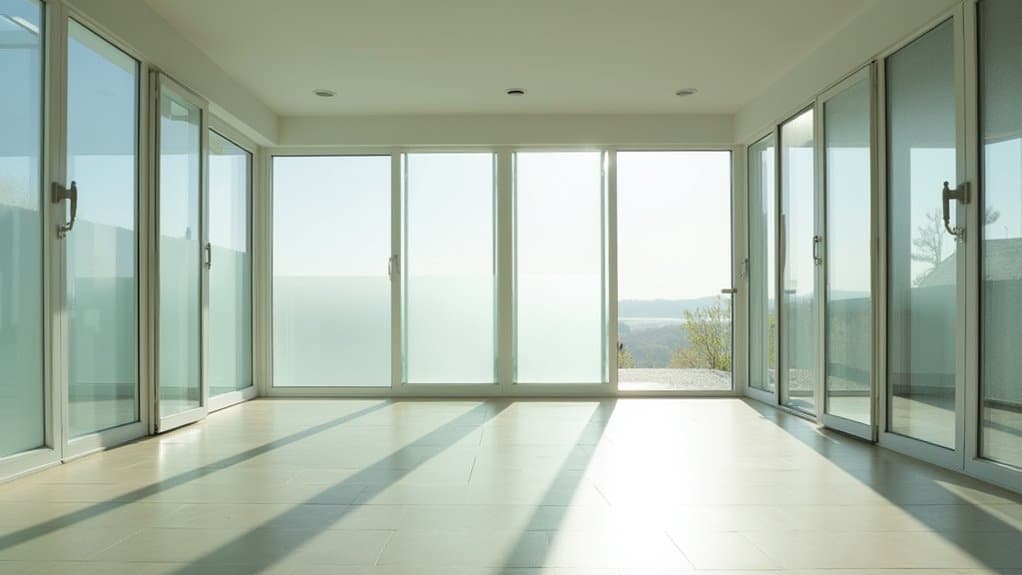
Choosing the right glazing type determines how well your windows and doors balance light transmission, thermal performance, and privacy, and it’s a decision that carries as much functional weight as the glass door configurations covered above.
Double-pane low-E glass reflects interior heat back inward during winter while blocking outdoor heat in summer, achieving 75-77% light transmittance. Selectively tinted solar control glass transmits 60-70% of light while blocking 63-72% of solar heat, ideal for south- or west-facing exposures.
| Glazing Type | Key Performance |
|---|---|
| Double Pane Low-E | Blocks 84-95% UV rays |
| Selectively Tinted Solar Control | Blocks 63-72% solar heat |
| Obscured/Frosted | Diffuses light, guarantees privacy |
Match your glazing choice to your climate, orientation, and privacy requirements.
Frequently Asked Questions
Can Sliding Windows Effectively Balance Both Natural Light and Cross Ventilation?
Yes, sliding windows can effectively balance both natural light and cross-ventilation in your home. You’ll maximize natural light through their expansive glass panes, which offer high visible transmittance ratings. By optimizing window orientation, you’ll capture prevailing winds, boosting ventilation efficiency, end-slider types outperform side-hung windows by 17.2% in mean age of air metrics. Position them on opposite walls to enhance cross-ventilation while flooding your interiors with abundant sunlight simultaneously.
How Does Window Size Directly Impact the Intensity of Natural Light Indoors?
Larger windows directly boost indoor light intensity by increasing the area through which daylight enters your space. When you optimize window orientation alongside size, you’ll maximize daylight harvesting efficiency considerably. Workers near windows receive 3.00 log lux versus 2.58 log lux without them. Raising your interior reflectance from 0.2 to 0.8 further amplifies daylight autonomy from 26.4% to 41.5%, ensuring you consistently achieve the recommended 218 lux minimum between 09:00 and 13:00.
What Are the Key Differences Between Bay and Bow Window Designs?
Bay and bow windows offer distinct unique architectural details that affect your home’s light and ventilation. Bay windows feature three panels with a large fixed center flanked by angled sides, creating sharp projections. Bow windows use four or more equally sized panels in a gentle curve, delivering softer aesthetics and panoramic views. You’ll find flexible window configurations in both styles, though bow windows cost more due to their complex installation requirements.
How Does North-Facing Window Placement Affect Indoor Light Consistency Year-Round?
North-facing windows give you consistent, indirect light throughout the year, eliminating the seasonal light variation that south-facing orientations experience. You’ll benefit from steady illumination without glare or intense heat gain, making it a preferred window orientation for studios, offices, or artwork spaces. However, you’ll need a higher window-to-wall ratio to achieve adequate circadian light levels. Increasing surface reflectance from 22.5% to 72.5% daylight autonomy greatly compensates for the reduced solar exposure.
Can Smart Glass Dynamically Adjust Both Light Transmission and Privacy Simultaneously?
Smart glass can’t truly offer simultaneous dynamic light-transmitting capability and privacy-adjusting functionality across a continuous spectrum. You’re working with binary states, clear or opaque, rather than gradual shifts. PDLC switches between 77, 83% transmission and full opacity, while PNLC delivers 88% transmission when off. CLC provides graduated control at 38% powered-on versus 6% powered-off. Each technology prioritizes either maximum light or complete privacy, not seamless simultaneous adjustment.