
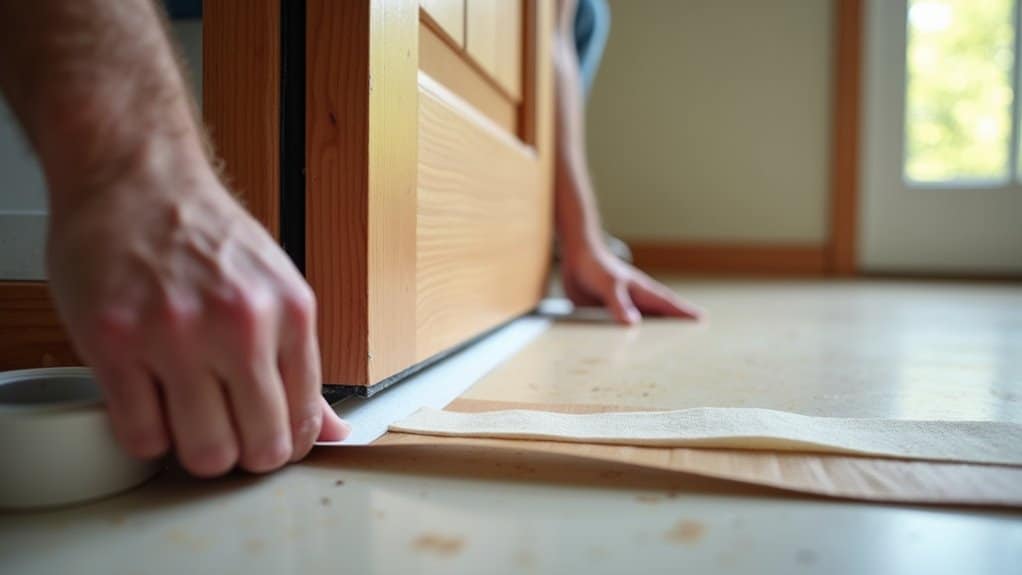
You’ll need to integrate modern technologies and eco-friendly solutions for effective window edge maintenance in 2025. Start with advanced self-healing sealants and IoT-enabled monitoring systems to track seal conditions. Implement regular cleaning using biodegradable products, and apply high-quality silicone sealants for deteriorating caulking. Don’t forget to install weather stripping and foam insulation tapes. Understanding these cutting-edge maintenance strategies will transform your approach to window care.
Advanced Sealant Technologies and Materials
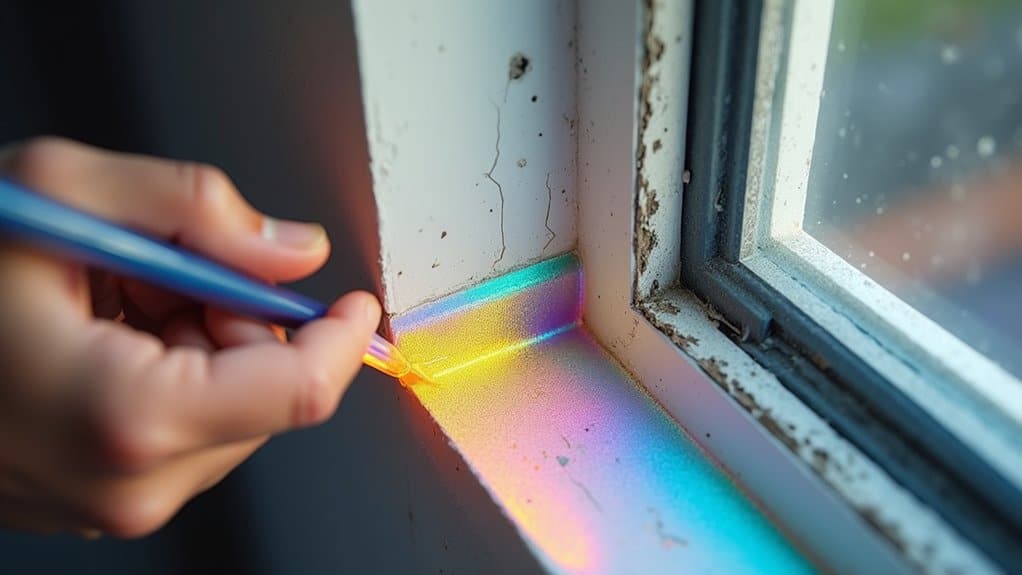
The latest advancements in window sealant technology have revolutionized edge maintenance practices. You’ll find new flexible sealants featuring advanced adhesive properties that create impenetrable, long-lasting barriers against water infiltration while maintaining ideal performance through temperature variations and UV exposure.
When establishing your maintenance schedule, consider incorporating self-healing sealants equipped with micro-encapsulated repair agents. These eco-friendly products automatically address minor imperfections, reducing the need for frequent cleaning agents and manual intervention. Before applying cleaning solutions, follow safety protocols by wearing personal protective equipment (PPE). You’ll achieve Best Practices by selecting transparent, high-performance sealants that complement your window frames’ aesthetics while delivering superior thermal insulation. The rapid-curing formulas require minimal cleaning and use less water during installation, making them an eco-friendly cleaning choice for efficient window edge maintenance.
Smart Monitoring Systems for Edge Protection
While traditional window maintenance relies on visual inspections, modern smart monitoring systems revolutionize edge protection through integrated sensor networks. You’ll find IoT-enabled devices that continuously track window seal conditions, instantly alerting you to potential issues before they escalate. These systems enhance your window cleaning practices by providing data-driven insights for maintenance scheduling.
The integration of predictive analytics transforms cleaning methods by forecasting edge deterioration patterns. You can optimize your cleaning services through augmented reality applications that precisely identify problem areas during the cleaning process. Cloud-based platforms streamline your window cleaning tasks by consolidating sensor data into an actionable dashboard. This technological advancement guarantees you’re always ahead of maintenance requirements, maximizing the efficiency of your cleaning practices while minimizing potential damage to window edges.
Preventive Maintenance Strategies
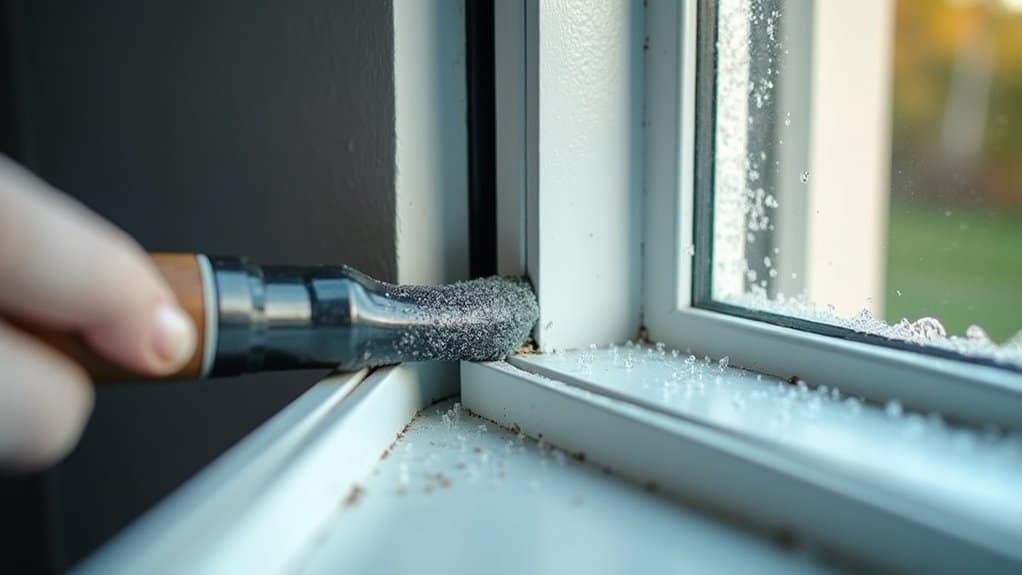
Effective preventive maintenance strategies form the cornerstone of window edge longevity and performance. You’ll need to implement a systematic approach that aligns with local regulations regarding safety and environmental standards.
Start by conducting regular inspections of your window seals without the need for specialized tools. Remove dirt and grime using eco-friendly cleaners to maintain clean windows and verify the effectiveness of the cleaning process. To guarantee robust protection, apply high-quality silicone sealants when you spot deterioration in the caulking. There’s a growing awareness about incorporating weather-stripping solutions to enhance energy efficiency.
Schedule professional inspections annually, as experts can identify potential issues that might escape untrained eyes. This proactive approach helps you maintain the structural integrity of your window edges while maximizing their protective capabilities and extending their service life.
Eco-Friendly Edge Cleaning Solutions
Natural cleaning solutions provide powerful alternatives to conventional chemical cleaners for window edge maintenance. As sustainable practices become increasingly important, you’ll find that vinegar, lemon juice, and baking soda-based formulas are ideal for cleaning while protecting both health and the environment.
To adopt techniques that minimize environmental impact, switch to biodegradable cleaning products and refillable containers. These new cleaning systems not only reduce packaging waste but also deliver effective results. You can create concentrated solutions that eliminate the need for ladders by using extension tools with eco-friendly cleaners.
While the industry continues to evolve, adhering to safety standards remains pivotal when implementing green cleaning methods. By migrating to water-based and non-toxic formulas, you’ll maintain pristine window edges while supporting sustainability initiatives in 2025.
Weather-Proofing Techniques and Tools
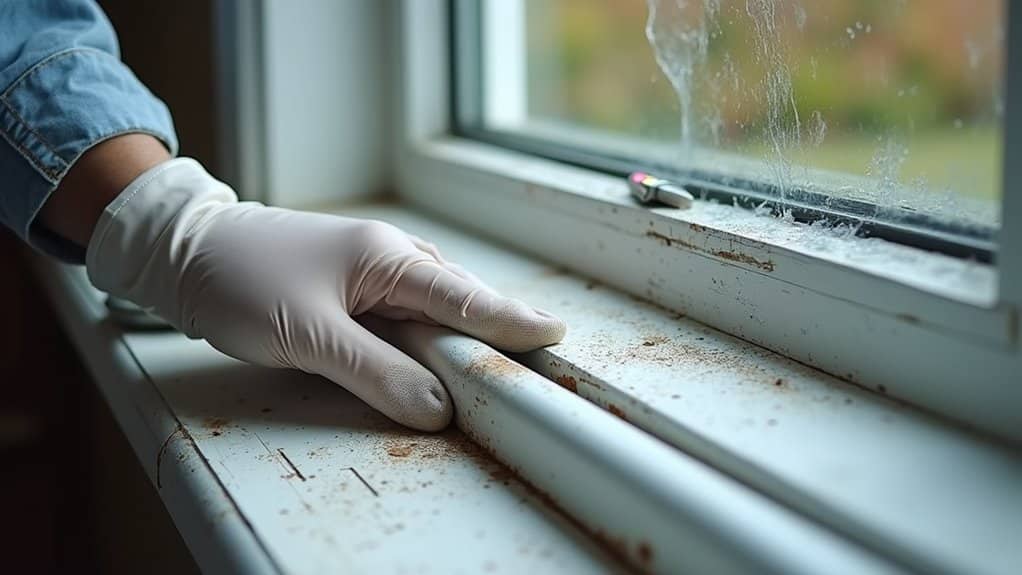
Building upon eco-conscious maintenance practices, proper weather-proofing stands as a technical cornerstone of window edge protection. To achieve excellent cleaning results in diverse environments, you’ll need to apply high-quality silicone sealants strategically around window frames while maintaining elevated surfaces in good condition.
You’ll maximize maintenance tasks by implementing flexible foam insulation tapes to seal gaps, complemented by expandable window brush seals that adapt to movement. The right techniques include installing weather stripping along perimeters to minimize the risk of accidents while ensuring thermal efficiency. For extensive protection, integrate window frame gaskets that create a continuous barrier against environmental elements. These components work synergistically to maintain your windows’ integrity, particularly when cleaning windows in challenging weather conditions, ensuring long-term performance and durability.
Frequently Asked Questions
How Often Should I Calibrate My Window’s Automated Cleaning Sensors?
You’ll need to calibrate your window’s automated cleaning sensors every 4-6 months, depending on your performance monitoring data. Start by accessing your remote diagnostics integration through the user interface design. Check sensor fault detection readings and adjust automated adjustment settings accordingly. For ideal results, combine calibration with annual inspection protocols, ensuring proper edge sealant materials and cleaning solution composition aren’t interfering with sensor accuracy. Keep detailed sensor calibration frequency logs.
Can Window Edge Maintenance Systems Be Retrofitted to Older Window Installations?
Yes, you can retrofit window edge maintenance systems to older installations, but you’ll need to evaluate compatibility with legacy systems first. Consider having professional inspection services assess your windows before proceeding. DIY installation guides are available, though integrated smart sensors may require specialized expertise. You’ll want to apply weather-resistant sealant options and consider window insulation upgrade options. A long-term cost analysis will help determine if energy-efficient window replacements might be more cost-effective than retrofitting.
What Backup Systems Exist if Smart Monitoring Features Fail?
You’ll find multiple backup systems to safeguard against smart monitoring failures. Start with emergency backup controls and manual override options that let you maintain control even during sensor failure. Your system should include predictive maintenance algorithms that detect potential issues before they occur. For thorough protection, implement edge case scenario planning and use installation troubleshooting guides. Don’t forget to guarantee cross-compatibility with legacy hardware and maintain environmental impact mitigation protocols through extensive troubleshooting checklists.
Are There Special Considerations for Window Maintenance in Coastal Areas?
You’ll need specialized systems for coastal window maintenance due to corrosive conditions. Install impact-resistant glazing with self-healing polymer sealants to prevent salt water damage. Integrate automated mist cleaning cycles and microclimate humidity regulation to protect surfaces. Your windows should feature wireless sensor connectivity monitoring saltwater exposure. Energy-efficient tinting modes and integrated solar shading controls, powered by solar operating systems, help manage intense coastal sunlight and reduce salt accumulation.
How Do Extreme Temperature Fluctuations Affect New Sealant Technologies?
You’ll find that modern sealant technologies with ideal thermal expansion properties respond differently to temperature swings. Advanced elastomeric formulations maintain flexibility between -40°F and 180°F, while silicone-based sealant performance excels in extreme conditions. Heat resistant adhesive technologies and moisture curing sealant chemistries work together to guarantee longevity of edge sealants. For best results, choose cutting-edge weatherproofing materials that create energy efficient insulation barriers in fluctuating temperatures.