



A window ventilation stop restricts your sash movement to predetermined distances, typically under 4 inches, giving you precise airflow control. You’ll benefit from two primary types: friction stops that add resistance and snap-on stops creating physical barriers. This mechanism prevents excessive drafts while maintaining fresh air intake, enhancing energy efficiency and indoor air quality. You can manually disengage stops for wider openings when needed. Understanding how these systems adapt to seasonal conditions and specific household requirements reveals significant comfort advantages.
The Mechanism Behind Vent Stops and Partial Window Openings

When you’re looking to control how far a window opens, a ventilation stop does the heavy lifting by restricting the sash movement to less than 4 inches, creating a precise opening that balances airflow with safety and security. These devices mount directly on your window frame or sash using durable materials like metal, plastic, or wood. You’ll encounter two primary types: friction stops that add resistance at a fixed point, and snap-on stops that create physical barriers. Both mechanisms enable you to achieve optimum internal airflow while fine tuning ventilation rates for your specific needs. Proper installation is critical to ensure these stops function correctly and maintain their effectiveness in controlling airflow. The stops release manually or semi-automatically, allowing wider openings only when you disengage them, giving you complete control over your window’s operational range. These stops play an important role in enhancing energy efficiency by preventing excessive drafts and reducing heating and cooling costs. Window ventilation stops work seamlessly with passive ventilation strategies like the stack effect to maintain consistent indoor air quality without requiring electricity. By limiting window openings to controlled positions, ventilation stops help dilute indoor pollutants while maintaining the security and comfort of your living space.
Regulating Fresh Air Flow for Optimal Indoor Comfort
Because indoor air quality directly impacts occupant health and comfort, you’ll need to maintain consistent fresh air exchange through controlled ventilation stops and related mechanisms. Window ventilation stops enable you to regulate airflow precisely, preventing excessive draft while ensuring adequate oxygen supply. You’ll benefit from heightened thermal insulation when using modern systems incorporating heat exchangers that pre-warm incoming air during winter months. Year-round temperature regulation becomes achievable through programmable ventilation settings that adapt to seasonal conditions and occupancy patterns. You can adjust flow rates responsively using sensor-based automation that monitors humidity, temperature, and air quality metrics. This strategic approach allows you to balance pollutant removal, moisture control, and energy conservation simultaneously, optimizing both comfort and operational efficiency throughout your space. The thermostatically controlled valves automatically adjust ventilation based on outdoor temperature to maintain optimal comfort without manual intervention. These systems must operate continuously, even when unoccupied, to prevent humidity accumulation and maintain consistent air quality standards. Unlike traditional locks, vent stops allow homeowners to maintain security while still enjoying the benefits of natural air circulation during warmer months.
Balancing Security and Ventilation in Your Home
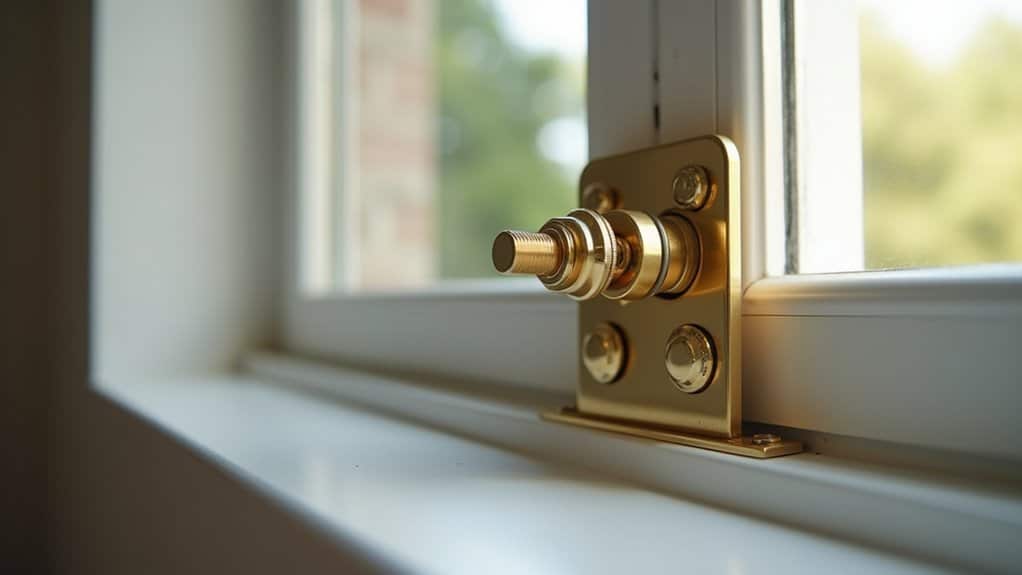
You can utilize window ventilation stops to simultaneously address three critical security concerns: they restrict opening distances to prevent unauthorized entry while maintaining fresh air intake, they protect children from accidental falls by limiting how far windows open, and they enable you to maintain nighttime ventilation without fully disengaging windows that would otherwise compromise your home’s security perimeter. Since indoor pollutants can be up to 5 times more concentrated than outdoor air, maintaining proper ventilation through controlled window openings becomes essential for reducing health risks while keeping your home secure. Research from FSEC demonstrates that properly working mechanical ventilation systems can reduce CO2 levels by 30% and decrease harmful contaminants like radon and nitrogen dioxide by 42%, underscoring the importance of effective ventilation strategies in occupied homes. For enhanced control and consistency, whole-house ventilation systems provide continuous air exchange throughout your entire home, ensuring indoor air quality is maintained regardless of weather conditions or manual window operation.
Preventing Unauthorized Entry Points
While fresh air circulation remains essential for healthy indoor environments, it shouldn’t come at the expense of home security. Window ventilation stops provide unauthorized entry deterrence by restricting opening widths below 100 mm, preventing intruder passage while maintaining regulated air circulation. You’ll benefit from improved lock designs that resist external tampering and forced entry attempts. These devices work seamlessly across single-hung, double-hung, sliding, and casement windows, offering broad applicability throughout your home. Strategic placement of ventilation stops on ground-level windows creates layered security without sacrificing airflow. When combined with reinforced frames, impact-resistant glass, and tamper-resistant fasteners, you establish multiple barriers against breach attempts. Professional installation ensures correct placement, secure mounting, and compliance with fire safety regulations. This layered approach also reduces moisture accumulation that could otherwise compromise window integrity and create conditions favorable to mold development. Vent locks are particularly effective at preventing falls from windows while simultaneously enhancing your home’s security posture. This systematic approach balances your need for fresh air intake with thorough intrusion prevention, particularly during vulnerable periods when your home remains unoccupied.
Safe Opening for Children
Most households with children face a critical challenge: windows must remain secure enough to prevent falls while still delivering the fresh air that growing bodies need. You can achieve this balance through strategic solutions:
- Window restrictors limit opening width to under 100mm, preventing falls while maintaining airflow accessibility for improved monitoring of your home’s ventilation performance.
- Trickle vents provide continuous, low-level air exchange when windows remain fully closed and locked, eliminating the need for unsupervised wide openings. These vents are particularly effective at reducing condensation and preventing mold growth in children’s bedrooms and bathrooms.
- Micro-ventilation settings permit controlled, narrow gaps that safeguard children while sustaining air renewal without compromising security.
You’ll find thorough guidelines embedded in modern building regulations requiring these mechanisms for new installations. This integrated approach protects your children while ensuring consistent indoor air quality and respiratory health throughout your living spaces. Sash window vent stops are particularly effective in heritage homes where maintaining original character is essential while upgrading safety features. Proper window positioning at height ensures optimal airflow circulation while keeping openings out of children’s unsupervised reach.
Night-Time Security Peace
Balancing fresh air intake with home security represents one of the most pressing challenges homeowners face, particularly during evening hours when vulnerabilities feel most acute. You can establish your evening routine safety by installing window restrictors that limit opening angles while maintaining airflow. These devices eliminate psychological concerns about unauthorized entry without sacrificing ventilation.
For enhanced domestic space privacy, consider tilt-and-turn windows paired with security locks. This combination permits controlled partial opening while preserving your perimeter defense. Alternatively, trickle vents and louvres deliver continuous low-level airflow without requiring window operation.
You’ll achieve ideal results by implementing passive ventilation strategies, positioning openings on opposite sides of your home facilitates cross-ventilation. For ground-floor or basement windows, security grilles provide dual functionality: they enable nighttime opening while maintaining physical barriers against intrusion. Professional installation ensures both effectiveness and insurance compliance.
Protecting Children and Pets While Maintaining Airflow
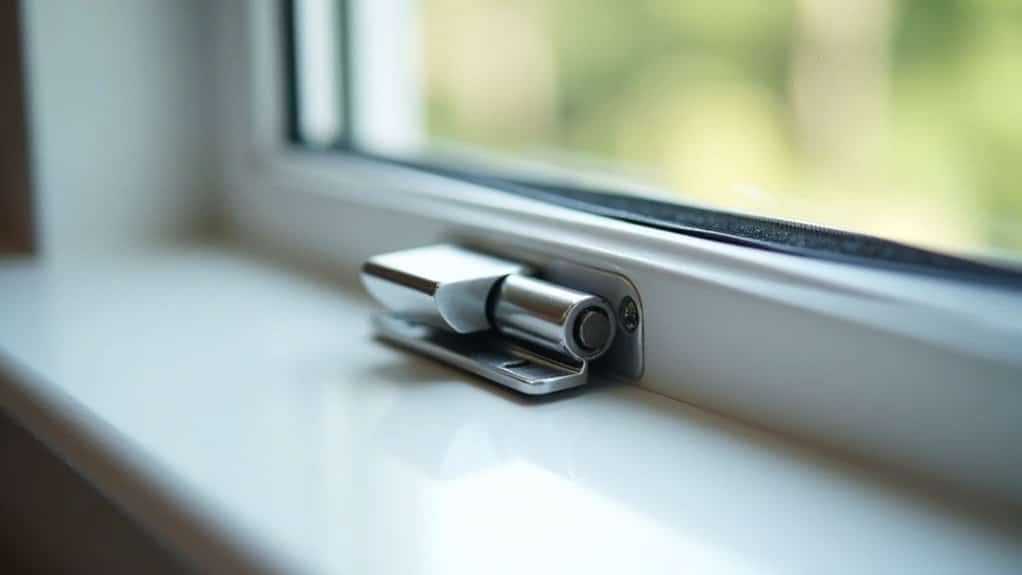
Window ventilation stops and vent locks address a critical household safety challenge: they restrict window openings to safe distances, typically 4 inches or less per ASTM F2090-21 standards, while preserving your home’s ability to exchange fresh air.
You’ll find these devices effectively balance dual objectives:
- Reducing risk of falls by limiting opening distances that prevent children and pets from accessing dangerous gaps
- Preventing pet escape through tamper-resistant stops designed to withstand forceful attempts by curious or persistent animals
- Maintaining airflow by enabling adjustable ventilation without compromising safety parameters during warm weather
You can customize opening limits based on your household’s specific needs, supporting natural cross-ventilation and indoor air quality. Tool-only removal requirements add security against tampering, while high-strength materials guarantee durability throughout active household use.
Enhancing Indoor Air Quality Through Continuous Exchange
How does your home’s air quality directly impact your family’s health and cognitive performance?
Continuous mechanical ventilation systems deliver measurable improvements through optimized HVAC integration and whole home air filtration. You’ll achieve a 20% reduction in PM2.5 particulate matter, protecting against respiratory and cardiovascular conditions. Simultaneously, you’re reducing carbon dioxide levels by 13%, directly enhancing cognitive function and productivity for occupants.
Your kitchen exhaust ventilation eliminates formaldehyde by 44%, a known carcinogen originating from household materials and furnishings. You’re also reducing carbon monoxide concentrations by 25%, preventing dangerous accumulation from combustion appliances.
Balanced ventilation systems that simultaneously exhaust and supply air maintain consistent pollutant reduction. Fresh air exchange dilutes volatile organic compounds, allergens, and dust while regulating moisture levels to prevent mold proliferation. This systematic approach guarantees you’re maintaining ideal indoor air quality throughout your entire home.
Managing Condensation and Moisture With Controlled Ventilation
When warm, moisture-laden air contacts cooler surfaces, particularly during winter months, you’re witnessing condensation in action: water vapor shifting into liquid droplets that accumulate on windows, external walls, and other thermal weak points.
Your moisture mitigation strategies should employ controlled ventilation to counteract this process. Window ventilation stops enable consistent background airflow, diluting humidity before condensation occurs. Implement these condensation prevention techniques:
- Install trickle vents for constant, adjustable air exchange even with windows closed
- Maintain regular air movement in high-moisture zones, bathrooms, kitchens, and bedrooms, where occupant activities generate substantial humidity
- Monitor ventilation performance against your building’s moisture load and occupancy patterns
This systematic approach prevents mold colonization, protects structural integrity, and eliminates conditions where wood decay fungi thrive. You’ll drastically reduce repair costs while extending component lifespan.
Reducing Energy Consumption With Passive Airflow Systems
Passive ventilation systems harness natural forces, wind-driven pressure and thermal stack effect, to circulate indoor air without relying on mechanical fans or powered equipment. Your energy efficiency considerations should prioritize window placement aligned with prevailing wind patterns and strategic inlet-outlet positioning to maximize cross-ventilation effectiveness.
Comparative performance analyses reveal that well-designed passive systems reduce cooling energy by 20, 24%, with ideal scenarios achieving 71.1% yearly savings versus mechanical cooling. You’ll eliminate fan and blower electrical consumption, typically 20% of HVAC energy use, reducing operational demand by up to 2,100 kWh annually.
Window ventilation stops enable precise airflow control, preventing over-ventilation that wastes heating or cooling energy. You’ll decrease maintenance expenses through reduced mechanical wear while lowering your building’s operational carbon footprint substantially.
Adapting Ventilation Stops to Different Window Types and Seasons
Because window designs vary remarkably across residential and commercial applications, you’ll need to select ventilation stops that match your specific window configuration. Modern adjustable mechanisms accommodate single-hung, double-hung, sliding, and casement windows without compromising aesthetics or operation.
Tuning ventilation for changing seasons requires strategic reconfiguration:
- Increase opening width during summer months for bolstered cross-ventilation and pair stops with screens to block insects
- Diminish opening width in winter to minimize drafts while managing condensation buildup
- Install multiple stops per window to achieve varying controlled airflow levels
Customizing stops for your window type involves selecting appropriate materials, metal or engineered plastics, that guarantee durability across seasonal cycles. Quick-release features enable swift adaptation between seasons. This systematic approach balances indoor air quality with energy efficiency while maintaining security throughout the year.
Frequently Asked Questions
What Is the Typical Cost of Installing Window Ventilation Stops on Existing Windows?
You’ll typically invest $50, $150 for full-service installation across multiple windows in a standard home. Hardware costs range from $2, $8 per stop, while labor averages $30, $75 per window depending on your contractor’s rates and location. You’ve got homeowner installation options available, DIY setup can dramatically reduce expenses since the hardware’s straightforward to install. Bulk pricing discounts apply when you’re outfitting several windows simultaneously, further optimizing your investment.
How Long Do Vent Stops Last Before Requiring Replacement or Maintenance?
Your vent stops typically last 10, 20 years with proper care, though environmental factors like humidity or coastal exposure can shorten this timeframe. You’ll need regular maintenance, cleaning twice yearly and lubricating moving parts, to optimize their lifespan. You should inspect them annually for cracking, warping, or loss of tension. Once you notice functional issues persisting after tightening hardware, you’ll want to replace them. High-traffic windows may require earlier replacement.
Can Vent Stops Be Easily Removed or Adjusted by Homeowners Without Professional Help?
You can easily remove or adjust most vent stops yourself using basic tools like a screwdriver. Sash stops and cable restrictors unfasten quickly, while adjustable restrictors feature sliding mechanisms for seasonal adjustments. Factory-fitted restrictors on modern uPVC windows require manufacturer-specific instructions. You’ll find these stops suit diverse window types, sash, sliding, and casement, making them adaptable to your ventilation needs without professional assistance or specialized skills.
Do Ventilation Stops Work Effectively in Extreme Weather Conditions or High Winds?
Yes, ventilation stops effectively manage extreme weather when you install quality, reinforced models. You’ll benefit from controlled airflow during high winds, stops prevent dangerous swinging while maintaining partial openings. Their insulated designs improve energy efficiency and thermal insulation by enabling narrow openings that reduce heat loss in winter or heat gain in summer. However, you’ll need professional installation and high-performance products; basic models may fail during severe storms or extreme temperature conditions.
Are There Any Building Codes or Regulations Governing the Use of Vent Stops?
You’ll find that building codes don’t specifically mandate vent stops, but they do reference operable window features in whole-house ventilation strategies. During building inspections, you’re required to demonstrate that your passive ventilation system meets minimum air change rates. Local climate factors profoundly influence compliance requirements, warmer regions may have different standards than colder zones. You’ll need to quantify your vent stop’s airflow contribution and document how it maintains indoor air quality while meeting energy efficiency regulations.