
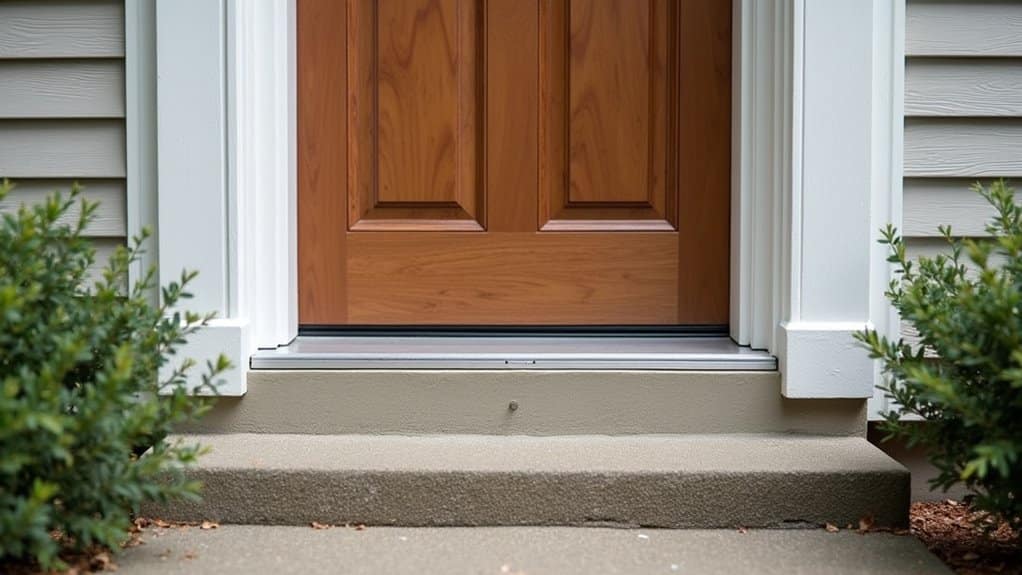
Your front door gives you just 8 seconds to make buyers stop and take notice. Choose a classic raised-panel design in Douglas fir or sapele mahogany for immediate visual impact. Go bold with navy blue or jet-black paint to create stunning contrast. Embrace rustic charm with knotty alder and diagonal bracing. Upgrade your hardware with multi-point locking systems. Keep exploring to discover which wood door investments deliver the strongest returns.
Classic Wood Front Doors That Buyers Notice First
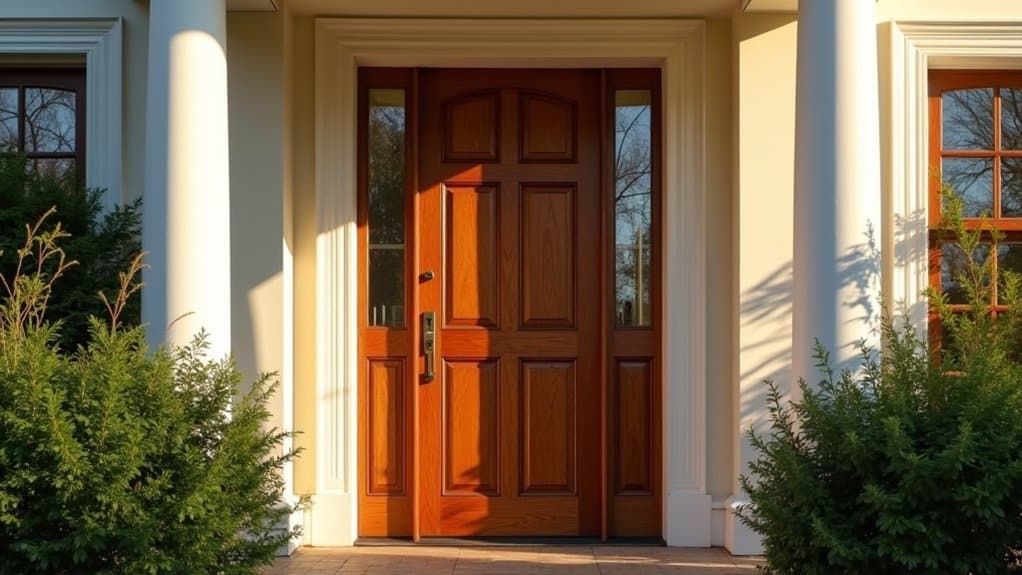
Your front door sets the tone before a buyer ever steps inside, and classic wood designs are among the most effective ways to make that first impression count. Real estate experts confirm you have roughly eight seconds to capture attention, so oversized doors in Douglas fir, Western Hemком, or sapele mahogany deliver immediate visual impact. Traditional door silhouettes featuring raised or flat panels complement Colonial homes and established neighborhoods while recouping approximately 80% of their cost upon sale. Adding sidelights and transoms frames the entrance beautifully and draws the eye upward. Eye catching wood grains in timeless proportions signal quality to high-end buyers across architectural styles. Choosing solid wood with small top glass panels balances grandeur with classic restraint, making your home unmistakably inviting. In fact, natural materials like wood are preferred by 75% of homeowners for their timeless appeal, making classic wood doors a universally recognized symbol of quality and craftsmanship.
Wood Door Designs That Deliver the Highest Home Value
When it comes to maximizing resale value, not all wood doors are created equal. Warm wood tones like mahogany, oak, and walnut consistently outperform alternatives, delivering 2, 5% higher sale prices. You’ll recover roughly 70, 80% of your investment, beating steel and fiberglass options considerably. These versatile interior designs extend beyond entryways, strengthening your home’s overall market appeal.
| Door Material | Average ROI | Sale Price Boost |
|---|---|---|
| Wood | 70, 80% | 2, 5% |
| Steel | 60, 65% | Minimal |
| Fiberglass | 55, 60% | Minimal |
| Reinforced Wood | 75, 80% | 3, 5% |
| Premium Hardwood | 78, 80% | 4, 5% |
Prioritize hardwood species with advanced locking mechanisms and superior insulation. These features attract buyers who value both protection and energy efficiency, helping your home sell faster. Wood doors also bring natural grain and richness that create a visually warm, inviting atmosphere other door materials simply cannot replicate.
Bold Colors That Make Wood Front Doors Pop
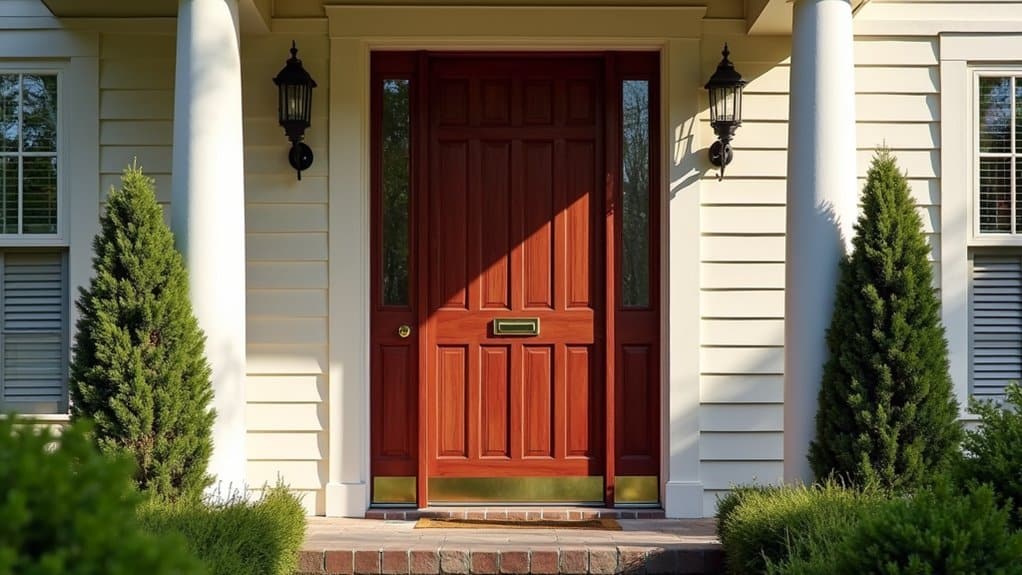
Choosing the right color for your wood front door can transform your home’s entire street presence. In 2025, bold shades are driving standout curb appeal across architectural styles.
Navy blue creates dramatic color contrasts against light exteriors while complementing natural walnut or teak grains. Coral delivers an energetic, fresh personality that catches attention against neutral siding. Moss green grounds your entryway naturally, pairing beautifully with eco friendly wood finishes like responsibly sourced mahogany. Golden yellow radiates warmth, boosting property value up to 10% according to National Association of Realtors data.
If you want maximum impact, consider jet-black. It’s versatile, sleek, and yields an 80% return on investment at resale. Whatever shade you choose, bold colors turn your front door into your home’s most powerful first impression. Bold front door colors like these also reflect your personal style while increasing your home’s overall value.
Rustic Wood Front Door Styles for Timeless Charm
Few door styles capture lasting appeal quite like rustic wood designs, which trade polished perfection for raw, natural character that only genuine materials can deliver. Farm-style diagonal braces in X or Z patterns, visible knots, and plank construction define this aesthetic immediately.
Your wood species selection shapes everything. Knotty Alder, Tight Knot Cedar, and Knotty White Oak all deliver authentic texture and grain that polished alternatives simply can’t replicate. Rustic Maple adds striking color variation, ranging from white streaks to reddish-brown bands.
Finishing techniques determine how that character reads. Dark walnut stains deepen grain patterns, weathered oak finishes suggest age, and natural clear finishes let the wood speak without interference. Pair any of these with sparse, textured glass accents, and you’ve got a front door with genuine staying power.
Custom Wood Door Hardware and Glass Inserts Worth the Upgrade
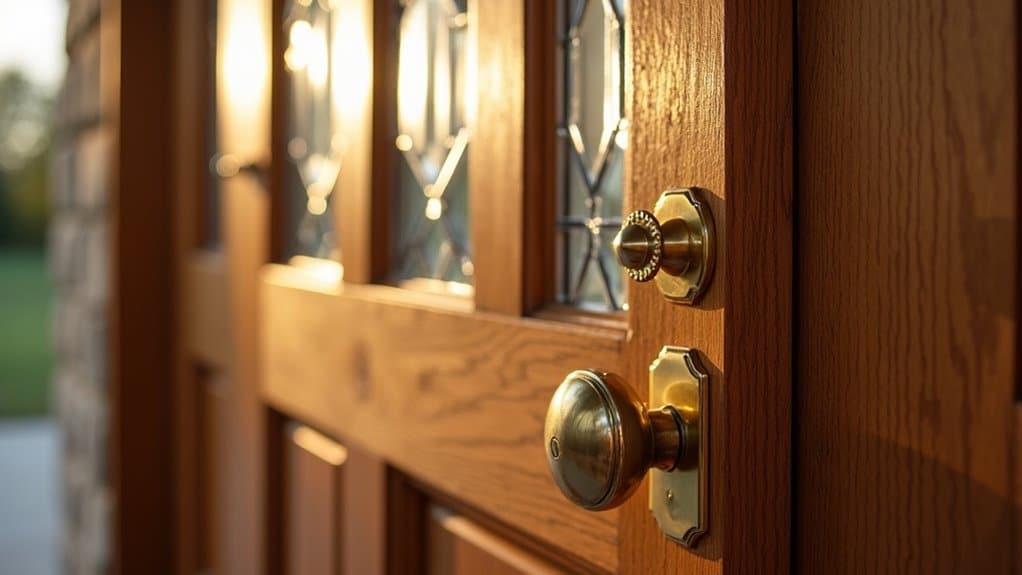
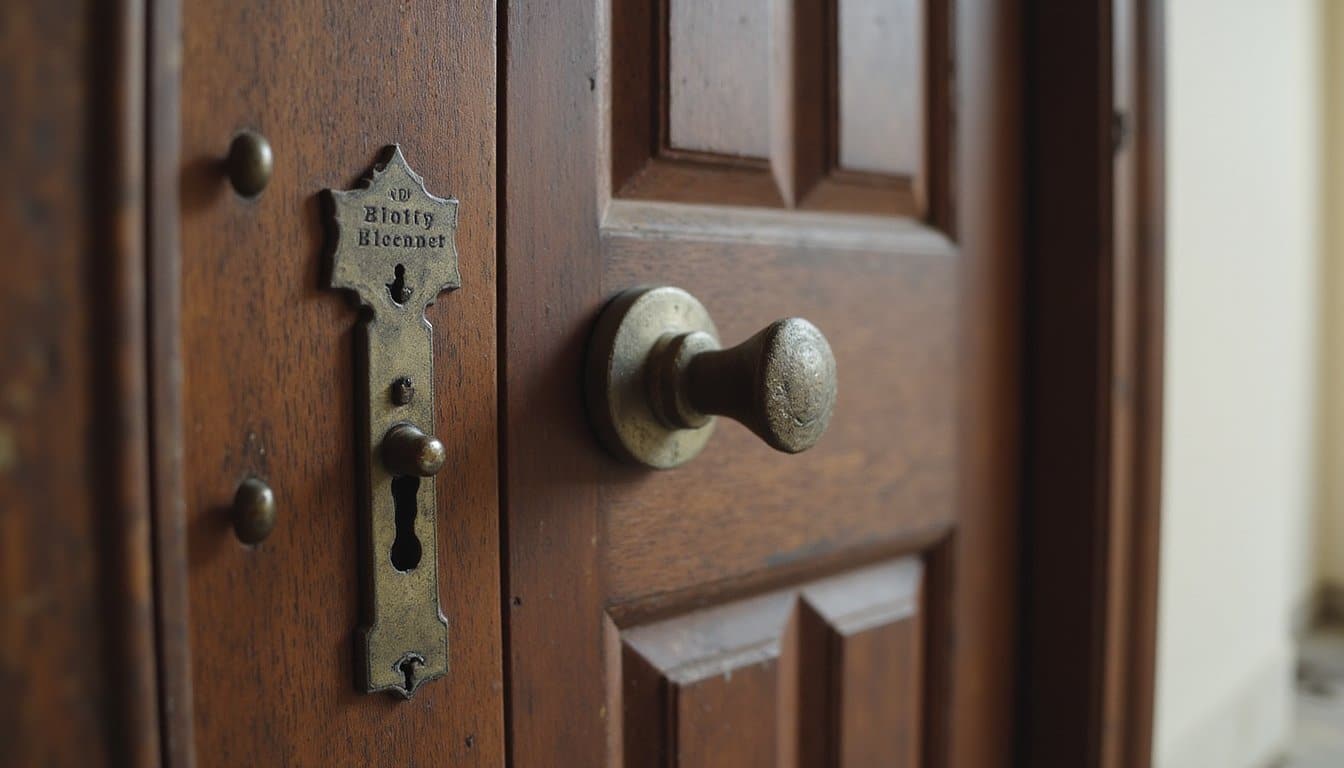
Hardware and glass inserts are where a custom wood door stops being merely functional and starts becoming a design statement. When you upgrade to multi-point locking systems and reinforced deadbolts, you’re adding protection without sacrificing style. These hardware choices deliver an average 95% ROI, making them one of your smartest renovation investments.
Glass inserts let you control natural light while maintaining privacy, and pairing them with energy efficient materials like weatherstripped, thermally sealed frames keeps your heating and cooling costs down. Choose inserts that complement your wood species and stain to create visual cohesion at your entryway.
Don’t overlook complementary lighting designs alongside your hardware selection. Coordinated exterior fixtures reinforce your door’s architectural character, elevating your home’s curb appeal while making your entrance both welcoming and distinctly yours.
Frequently Asked Questions
How Do Wood Front Doors Compare to Steel or Fiberglass for Energy Efficiency?
Wood doors fall short of steel and fiberglass in thermal insulation properties, offering R-values of just 2.0-3.0 compared to fiberglass’s impressive 5.6-7.1. You’ll also notice wood’s weather sealing features deteriorate faster, as expansion and contraction create air leakage gaps over time. Fiberglass leads overall efficiency, followed by steel, with wood ranking last. Upgrading to fiberglass can save you $200-$400 annually on energy bills.
What Maintenance Is Required to Keep Wood Front Doors Weather-Resistant Long-Term?
To keep your wood front door weather-resistant long-term, you’ll need consistent cleaning, periodic sanding, and applying sealants regularly. Wash it monthly with mild soap and a soft cloth, then dry it thoroughly. Inspect the topcoat annually for flaking, and reseal every few years. Sand lightly before applying fresh water-based finishes every 2-3 years. Don’t forget to check weatherstripping and hardware, ensuring you’re blocking moisture and drafts effectively year-round.
Can Wood Front Doors Qualify Homeowners for Insurance Discounts in Hurricane-Prone Areas?
Wood doors can qualify you for insurance discounts, but door material durability plays a critical role in homeowner insurance considerations. Your wood door must carry Miami-Dade NOA approval and cover all openings to access savings of 5-25% on premiums. Standard wood doors typically won’t meet impact-resistance requirements, but impact-rated wood composite doors can. You’ll need a Uniform Mitigation Verification inspection confirming your door withstands hurricane-force conditions before insurers apply meaningful windstorm premium reductions.
How Much Does Professional Installation of a Wood Front Door Typically Cost?
When installing a wood front door professionally, you’ll typically spend $1,000 to $2,200 total. Your average installation cost covers three to five labor hours, ranging $100 to $500, plus the door itself at $500 to $3,000. Your local labor rates directly influence this range, with installers charging $30 to $90 hourly. Solid wood’s weight demands precise fitting, increasing complexity. Professional installation guarantees proper weatherproofing, protective alignment, and building code compliance throughout the process.
Which Hardwoods Are Most Durable for Wood Front Doors in Coastal Climates?
For coastal rot resistance, you’ll want teak or mahogany as your top hardwood choices. Sapele mahogany delivers exceptional moisture resistance with striking reddish-brown graining that elevates curb appeal beautifully. Teak paired with marine varnish creates an incredibly durable barrier against salt air. Apply humidity resistant finishes regularly to protect your investment. Oak and walnut also perform well where temperature fluctuations are significant, offering reliable thermal stability for coastal environments.