
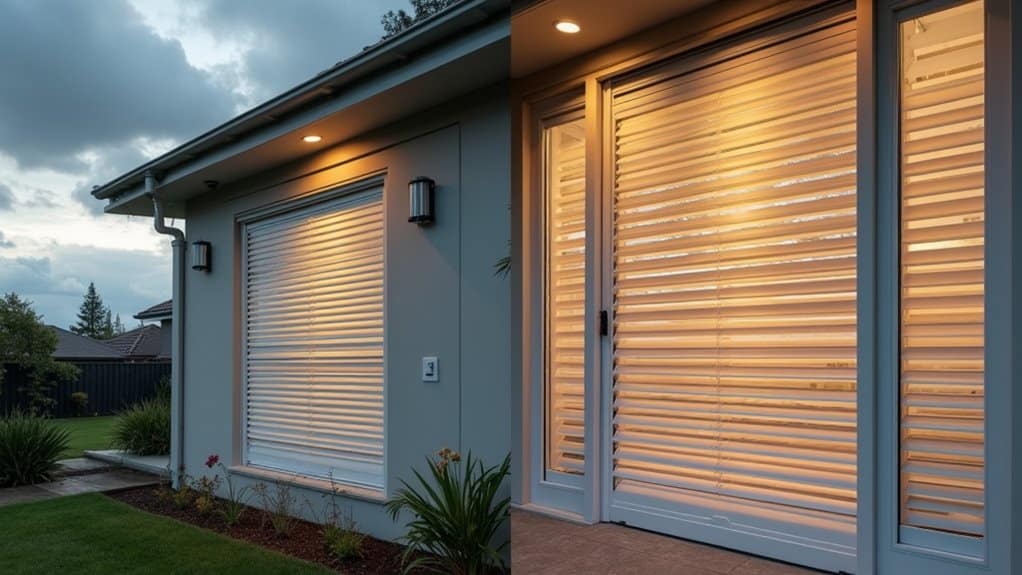


Motorization won’t improve your shutters’ impact rating, protection depends on engineering, storm-zone rating, and correct installation. Both systems withstand winds up to 200 mph if rated properly. What you’re really paying for is convenience. Manual shutters cost $10 to $30 per square foot; motorized ones run $40 to $55. If you deploy often or want minimal physical strain, motorized makes sense. The right choice depends on factors worth weighing carefully below.
How Manual and Motorized Shutters Actually Work
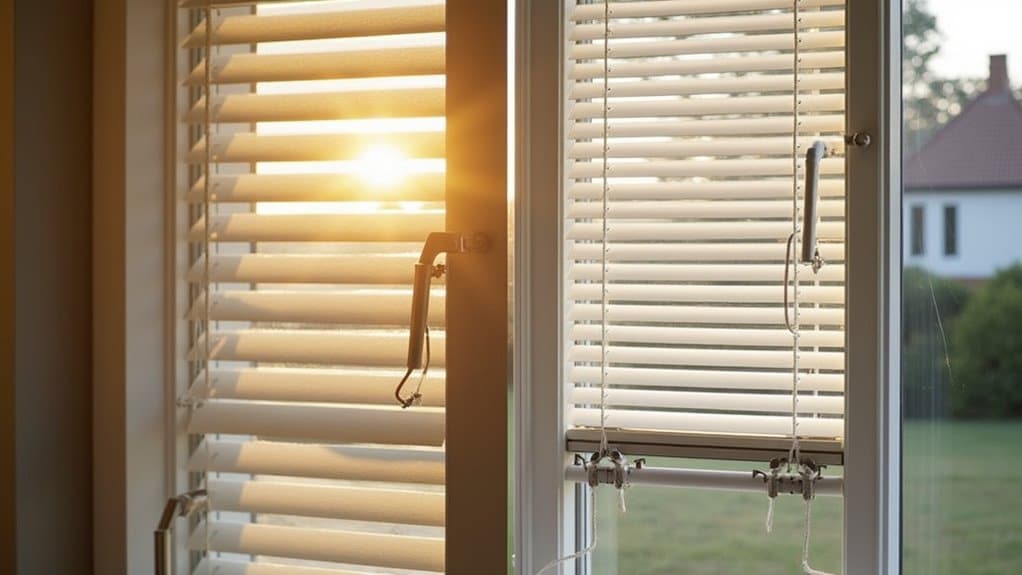
Manual and motorized shutters reach the same end result, a sealed curtain over your opening, but they get there through very different mechanics. With manual hurricane shutters, you attach or position a hand crank or pull strap at the wall gearing interface, then turn it. Gearing converts your hand motion into curtain movement, raising or lowering it along guide tracks into a compact housing. You stop at the limit; forcing past it damages the system. A built-in down limit setting prevents over-rotation at full closure. Despite requiring more effort, non-motorized shutters provide the same level of protection as motorized versions.
Motorized hurricane shutters use an electric or solar motor, usually tubular and housed inside the assembly. You press a wall switch, remote, or app, and the shutter stops automatically at full open or closed, quick, effortless, no cranking required.
Do Motorized Shutters Offer Better Storm Protection?
Now that you understand how each system operates, you’re probably wondering whether that effortless button-press actually buys you stronger storm protection. The honest answer: not directly. Motorization doesn’t improve a shutter’s impact rating, protection depends on engineering, the storm-zone rating, and correct installation. Motorized roll-down shutters can be rated to withstand winds up to 200 mph, but so can well-built manual systems. Since hurricane-force winds start at 74 mph and often exceed 130 mph, both options must meet local code to perform.
Where hurricane shutter automation helps is deployment consistency. With one button press, you’re more likely to secure every opening, including hard-to-reach or upper-story windows, before conditions worsen. That uniform closure eliminates weak points, improving real-world outcomes even when the underlying material and rating match manual versions. Many motorized systems even include a battery-powered motor that keeps them operable during power outages.
What Manual vs. Motorized Shutters Cost
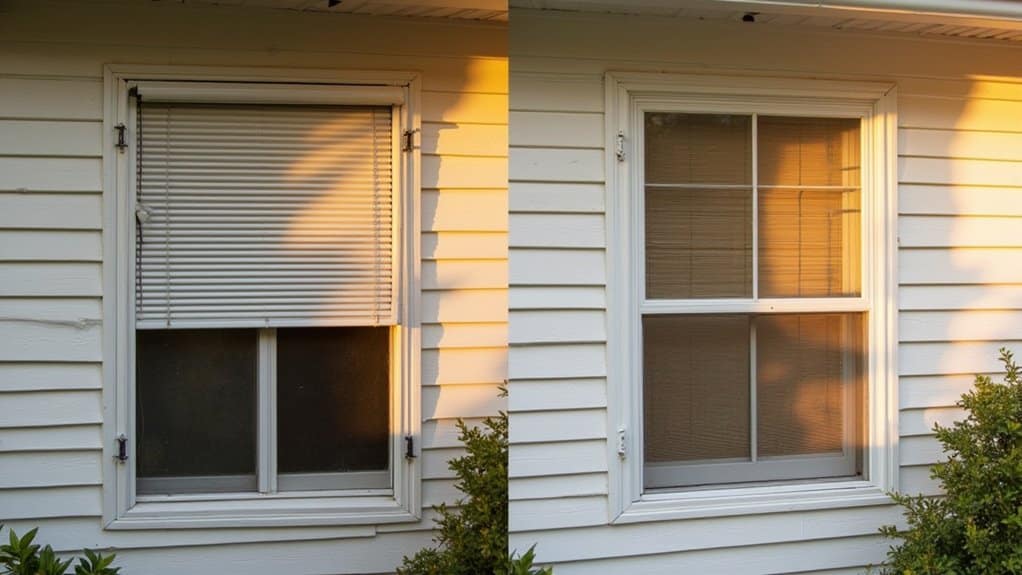
If deployment consistency sold you on motorization, the price tag is where you’ll feel the trade-off. In any hurricane shutter cost comparison, manual systems win on upfront cost: storm panels run $10 to $20 per square foot, accordions $15 to $30, and manual roll-downs $25 to $35. Motorized shutters average $40 to $55 per square foot, with battery-operated roll-downs reaching $45 to $60. For a standard 24″ x 42″ window, you’ll pay roughly $105 to $245 manual versus $280 to $420 motorized. Across motorized vs manual shutters, that gap widens with quantity, larger Florida homes with twelve-plus openings can see a $5,000-plus difference. Factor in labor at $45 to $100 per hour, plus two-story or angled openings, and complexity often rivals material choice. Either way, expect to budget for a building permit, which typically costs $45 to $140 and averages around $85.
Daily Use and Upkeep Compared
Cost is one variable; how often you’ll touch these shutters is another. For daily use, motorized shutters win on convenience, you operate them from a wall switch, remote, or smartphone app, with minimal physical strain. Manual shutters rely on a hand crank or strap system, which is slower and more labor-intensive, especially across multiple openings.
Upkeep flips the equation. Manual shutters need minimal care: inspect the tracks, slats, and mechanism, and you’re done. Motorized shutters add maintenance points, check the electric motor, verify the remote, and test backup power or manual override to confirm operation during outages.
Either way, cycle both types every few months. Regular movement keeps parts lubricated and prevents the motor or manual mechanism from seizing, supporting smoother long-term reliability.
Which Hurricane Shutter Is Right for You?
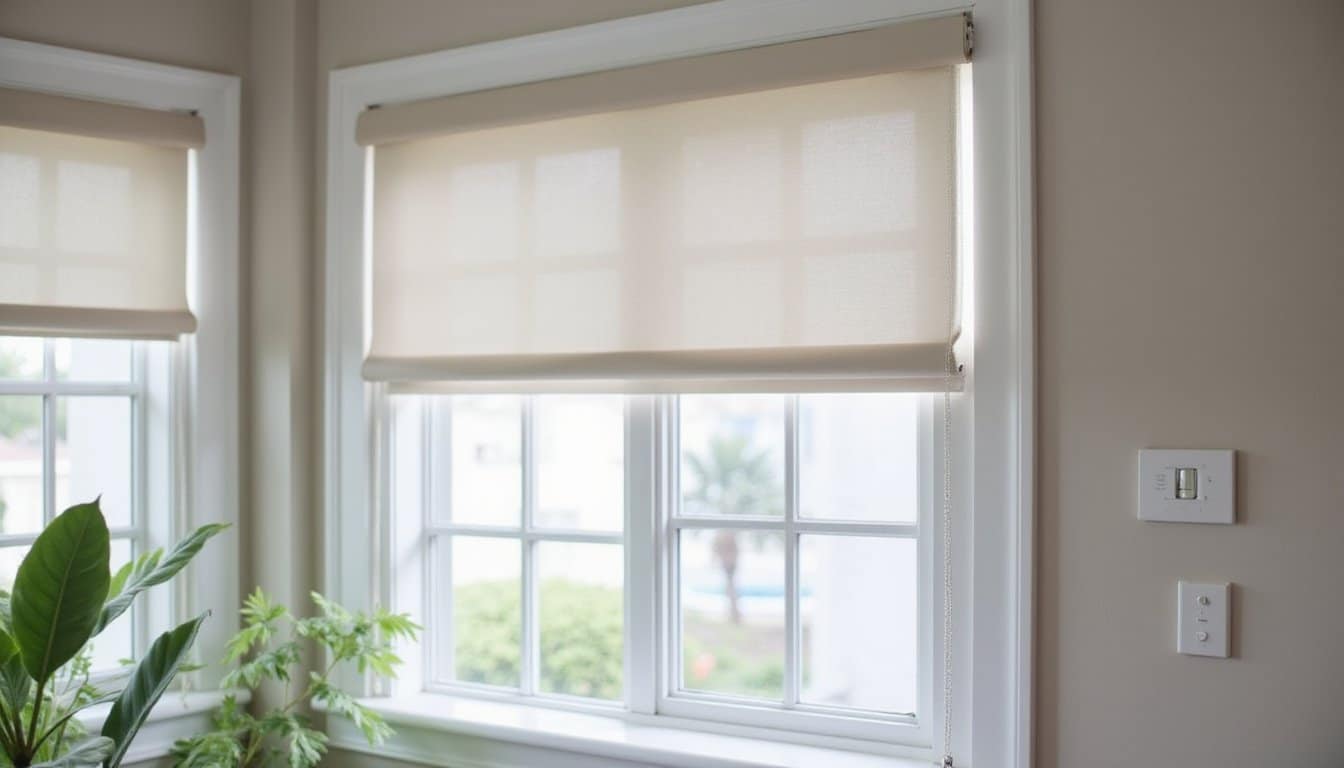
Where you land on the manual-versus-motorized question comes down to four practical factors: budget, deployment frequency, who’s operating the shutters, and how you weigh long-term maintenance against day-to-day convenience.
If upfront cost drives your decision, manual hurricane shutters win at $20, $35 per square foot versus $30, $50+ for motorized. They’ve got fewer electrical parts, so maintenance stays simpler over decades of coastal exposure.
Choose motorized hurricane shutters if you deploy frequently, manage multiple openings, or have older residents who’d struggle with cranking. Wall switch, remote, or app control eliminates physical effort, and a manual override handles power outages.
Skip the cranking, motorized shutters handle frequent deployments and multiple openings with a switch, remote, or app.
Worried about reliability? Motorized systems add motors, switches, and controls that increase complexity. For storm protection alone, both deliver identical performance when properly installed and rated to your local wind-pressure standards.
Find the Right Storm Protection for Your Home
Choosing the right hurricane shutters means balancing cost, looks, and storm performance, and the right team makes the choice easier. At Innovative Storm Defense serving Jupiter, FL, our experienced team provides trusted Storm Window & Shutter Solutions with expert installation and premium materials. Call (561) 517-9399 today and book your free consultation.
Frequently Asked Questions
Can I Retrofit My Existing Manual Shutters to Become Motorized Later?
Yes, you can often retrofit manual roll-down shutters to motorized operation if your system has standard housing and compatible hardware. A tubular motor needs to fit inside the existing barrel or housing without interfering with slats or tracks. You’ll want to verify structural condition, alignment, track integrity, and power availability first. Crank-only or spring-tension designs may require extra modification. Final feasibility depends on site-specific measurements and your original installation’s specs.
Do Motorized Hurricane Shutters Lower My Homeowners Insurance Premiums?
Yes, often, but not because they’re motorized. Your savings come from risk reduction, so your shutters must meet Florida Building Code or Miami-Dade approval and pass a wind mitigation inspection. Expect roughly 10%, 30% off your wind/hurricane premium portion, depending on your carrier, home, and documentation. You’ll need product approval numbers, permits, and receipts. Cover all openings to maximize credit. Some insurers also reduce your windstorm deductible when protection’s verified.
How Long Do Motorized Shutter Motors Typically Last in Coastal Climates?
You’ll typically get 10, 20 years from motorized shutter motors in coastal climates, with premium tubular motors reaching 15, 25 years when properly sized and maintained. But if you’re right on the shoreline, salt air, moisture, and dust can cut that down to 5, 8 years. Your actual lifespan depends heavily on cycling frequency, surge protection, and upkeep. Schedule professional servicing every 12, 18 months and rinse off salt regularly to maximize your motor’s life.
Are Permits Required to Install Hurricane Shutters in Florida?
Yes, you’ll generally need a building permit before installing hurricane shutters in Florida. Roll-down, accordion, Bahama, and colonial systems usually count as permanent installations that trigger permitting, and motorized units often face added electrical review. You’ll typically submit the shutter type, manufacturer, and product approval number or Miami-Dade NOA. After installation, expect an inspection verifying anchors and attachment. Skipping permits risks failed insurance payouts, so confirm your local jurisdiction’s specific requirements.
Can Motorized Shutters Be Operated During a Complete Power Outage?
Yes, you can operate many motorized shutters during a complete outage if your system includes a manual override or battery backup. With manual override, you’ll attach a hand crank, sometimes to a wall pivot, and turn it to engage the gearing and move the shutter mechanically. Don’t force it if you hit resistance, since that’ll damage the mechanism. Battery-backup motors run like normal. Verify your specific model’s backup method before relying on it.