
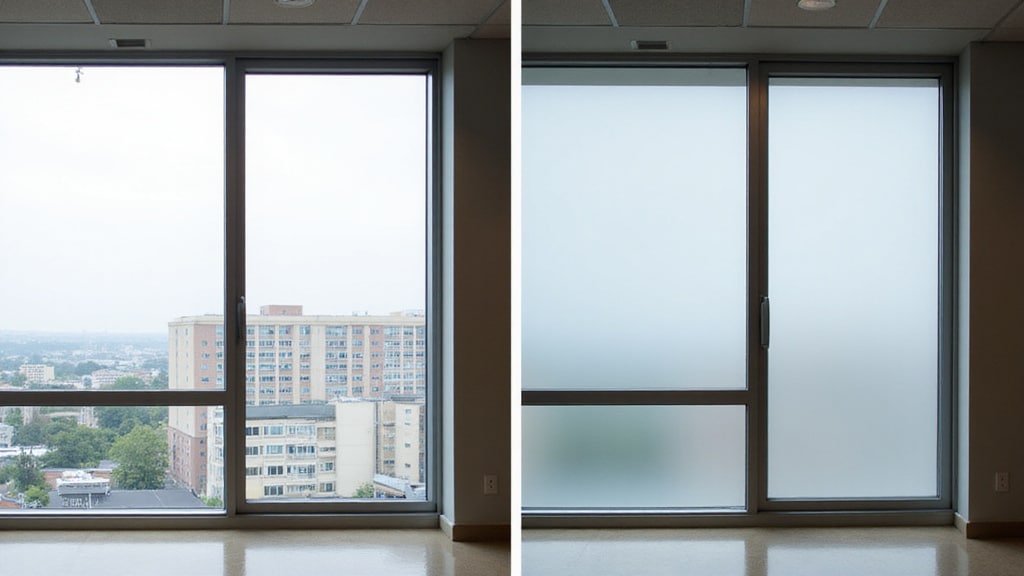
Low-E coatings cut your solar heat gain by 30% to 40% by reflecting infrared radiation while letting visible daylight pass through. These microscopically thin metallic layers drop your glass emissivity to about 0.04, redirecting long-wave heat back outside before it enters your home. In Florida’s intense sun, you’ll want surface #2 placement and an SHGC between 0.25 and 0.30. Want to know exactly how much you’ll save and which metrics matter most? Keep going.
What Low-E Coatings Actually Do
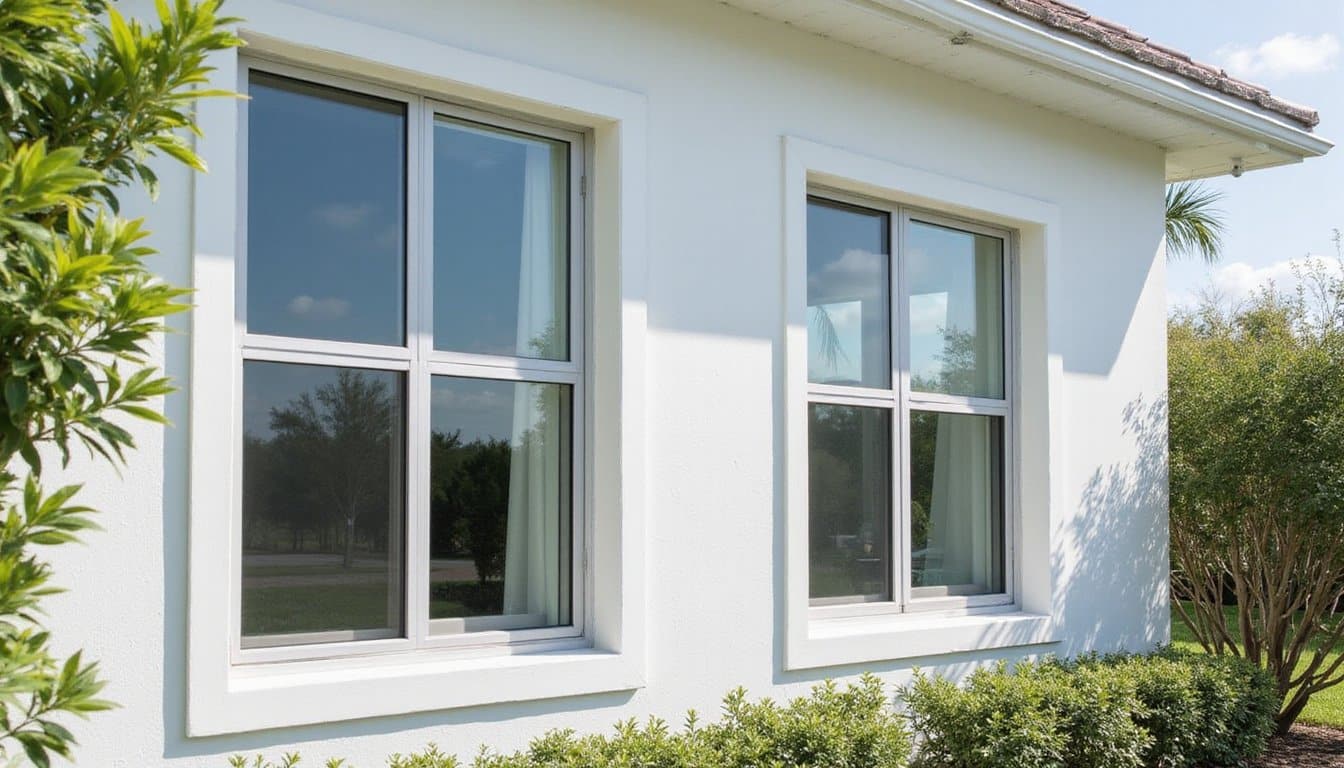
Although the term sounds complex, “Low-E” simply means low emissivity, a measure of how little radiant heat a surface emits. Low-E window coatings are microscopically thin metallic or metallic-oxide layers applied to glass during manufacturing. They’re transparent, so visible light still passes through while radiant heat transfer drops sharply. These coatings reflect infrared heat and lower the glass surface’s emissivity to roughly 0.04, with high-performance products reaching about 0.02. By reducing emissivity, the glass absorbs less heat and re-radiates less heat. The coating also cuts ultraviolet and infrared transmission while leaving daylight largely intact. In hot Florida conditions, solar-control Low-E lowers the solar heat gain coefficient, limiting heat entering your home. The result acts like a selective thermal filter rather than plain glass.
How Low-E Blocks Florida’s Solar Heat
Most of Florida’s cooling load comes from solar radiation, and Low-E coatings target it directly. Sunlight strikes your windows as short-wave energy, while the coating reflects long-wave infrared heat before it becomes indoor heat. This selective barrier separates light transmission from heat transmission, so daylight enters while much of the thermal energy gets redirected outside. The coating itself is a microscopically thin, invisible coating that blocks infrared and ultraviolet light without obstructing your view.
The Solar Heat Gain Coefficient, or SHGC, is the key metric. A lower SHGC means less solar heat transmits through the glass. For Florida homes, you want values below 0.25, and ENERGY STAR southern-climate windows require 0.25 or less. Many high impact windows meet these thresholds while adding storm protection.
Surface placement matters too. Low-E glass in Florida performs best on surface #2, the inside of the outer pane, which minimizes inward heat transfer and cuts your air-conditioning demand. Laminated glass offers exceptional safety and sound insulation, making it ideal for urban settings. Architects often consider the best uses for laminated glass in high-traffic areas, where noise reduction is a priority.
Why Low-E on Surface #2 Wins in Hot Climates
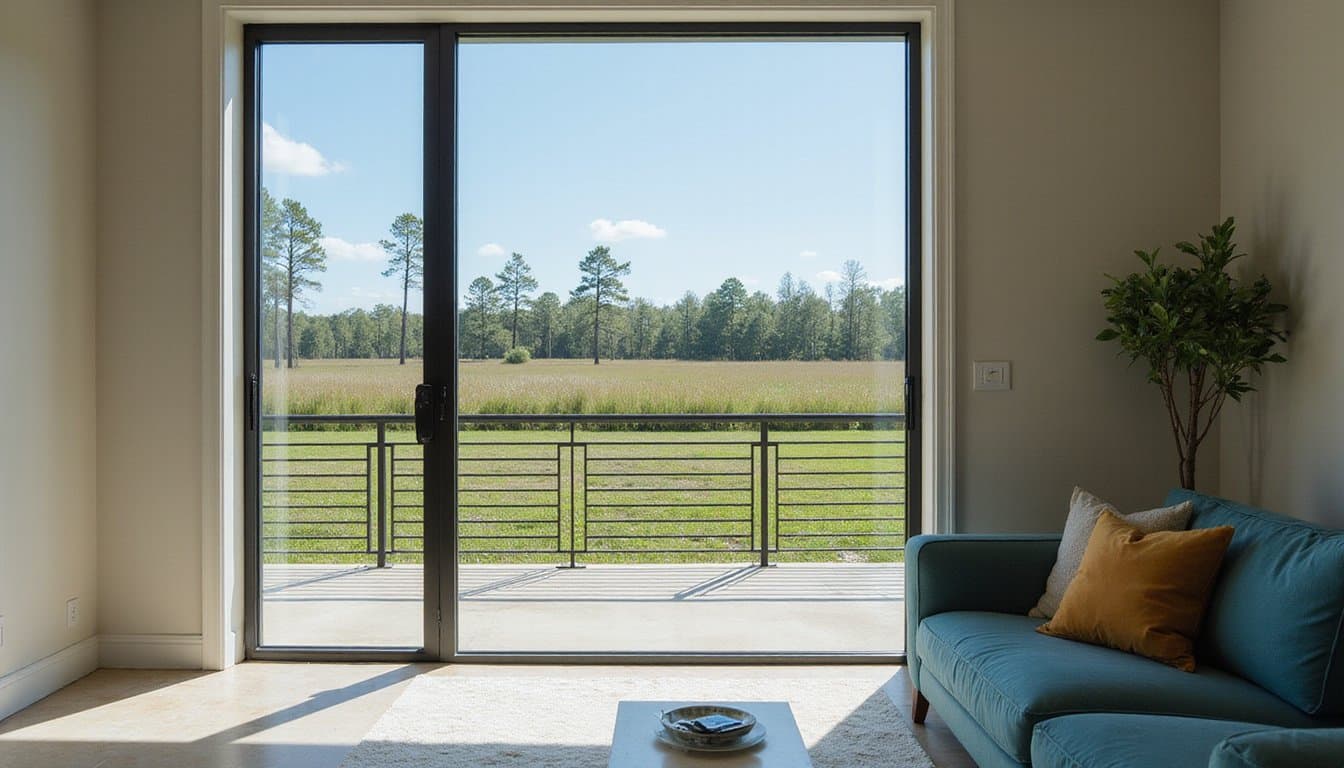
When you’re fighting Florida’s heat, where you place the Low-E coating inside the glass unit matters as much as the coating itself. In a cooling-dominated climate, surface #2, the inside face of the outer pane, keeps radiant heat on the hotter, exterior side. This positioning makes low-e coatings work where your cooling demand is highest. Low-e glass achieves this with an emissivity range of 0.35 to 0.05, far lower than clear glass’s 0.84 to 0.92, which dramatically reduces radiant heat transfer.
Here’s what surface #2 placement does for your energy efficient window coating:
- Reflects infrared energy before it penetrates the inner pane
- Blocks heat radiating from hot driveways and sidewalks
- Lowers SHGC while keeping U-factor constant
- Aligns solar control with summer cooling loads
Because the coating’s position changes SHGC, not thermal transmittance, surface #2 reduces solar heat gain precisely where Florida homes need it most.
SHGC, U-Factor, and Air Leakage Targets
Three numbers on the NFRC label tell you whether a window will actually perform in Florida’s heat: U-Factor, SHGC, and air leakage. SHGC carries the greatest weight here because solar heat gain drives cooling loads from March through October. Target SHGC at 0.25, 0.30, with 0.40 as your absolute ceiling. Lower values mean less solar radiation enters and becomes interior heat.
For u-factor windows, Florida guidance sets 0.40 as the baseline, but aim for ≤0.30 for stronger insulation against non-solar heat flow. Air leakage should measure ≤0.30 to prevent conditioned air escaping and outdoor air infiltrating.
Read these together, not in isolation. A strong Florida package combines U ≤ 0.30, 0.40, shgc ≤ 0.30, and air leakage ≤ 0.30, all verified on whole-window NFRC ratings.
What Low-E Windows Save You in Florida
Those NFRC numbers translate directly into dollars off your cooling bill. In typical Florida homes, Low-E impact windows cut cooling expenses by roughly 15% to 25%, with independent research citing $200 to $400 in annual savings. West-facing layouts and high glass exposure can push savings above $500 per year.
Here’s what the numbers deliver:
The numbers don’t lie: smarter windows mean lower bills, year after year, decade after decade.
- $200, $400 yearly off cooling costs in typical homes
- 30% to 40% reduction in solar heat gain versus standard windows
- $7,000 to $10,000 in electricity savings over a 25-year lifespan
- 15% to 30% lower cooling-related energy use after upgrading
While hard-coat Low-E runs slightly less efficiently than soft-coat, both meet the ENERGY STAR windows in Florida requirements. Replacing outdated single-pane units with insulated Low-E delivers the biggest measurable gains.
Choose the Right Glass for Florida Sunshine
Glass options like Low-E, laminated, and tinted can dramatically change your home’s comfort and energy bills. At Innovative Storm Defense serving West Palm Beach, FL, our skilled team offers reliable Stylish & Quality Windows with premium glass options and expert installation. Call (561) 517-9399 today and schedule your consultation.
Frequently Asked Questions
What’s the Difference Between Hard-Coat and Soft-Coat Low-E?
Hard-coat (pyrolytic) Low-E gets fused to the glass during float production while it’s still hot, making it durable and easy to fabricate, but it carries higher U-values and SHGC, so it lets more solar heat through. Soft-coat (sputtered) Low-E gets applied in a vacuum chamber using multiple silver layers, delivering lower emissivity, better U-factor, and stronger heat rejection. For Florida’s cooling loads, you’ll want soft-coat’s superior solar control and clarity.
Can Low-E Coatings Be Added to Existing Windows?
Yes, you can retrofit existing windows with low-E film applied directly to the installed glass, no unit replacement required. It works on many window types and rejects up to 70% of heat gain, cutting cooling loads. One test showed U-value dropping from 2.63 to 1.54 W/m²K. Placement matters, though: exterior-facing coatings reject heat best, while existing between-pane low-E surfaces affect results. You’ll save cost and avoid full-replacement disruption.
Does Low-E Glass Make Windows Look Tinted or Reflective?
Yes, but the effect’s subtle. You’ll typically see a faint green, gray, or bronze cast from the microscopic metallic coating, most noticeable when comparing Low-E directly against untreated clear glass. The reflective metallic layer that bounces back infrared and UV energy can make the glass appear slightly mirror-like from outside, though far less than dedicated reflective glazing. Florida’s solar-control coatings show more coloration than passive types, but daylight and views stay clear.
How Long Do Low-E Coatings Last Before Degrading?
You can expect your Low-E coating to last the life of the glass unit, typically 20+ years, as long as the insulated glass unit (IGU) stays properly sealed and undamaged. The coating itself doesn’t wear out under normal use. What forces replacement isn’t coating degradation; it’s the window assembly failing, like seal failure, condensation between panes, or storm damage. In Florida’s harsh climate, the sealed unit’s condition determines longevity, not the coating.
Can Low-E Be Combined With Hurricane Impact Glass?
Yes, you can combine Low-E with hurricane impact glass in a single assembly. The Low-E coating sits on the glass surface, while impact resistance comes from bonded glass layers and a PVB interlayer, two independent functions in one unit. You’ll get storm protection, reduced UV transmission, and lower cooling loads, with low-solar-gain soft-coat versions delivering SHGC values below 0.25. Remember, Low-E doesn’t add impact strength; the laminated construction handles debris and wind pressure.