
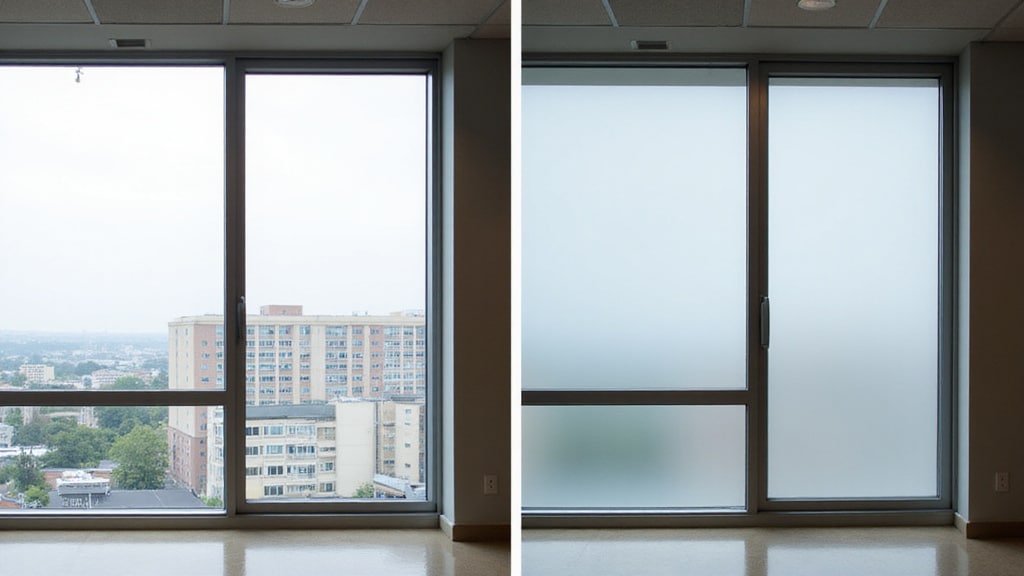
Laminated glass is generally the better choice for security, noise reduction, UV protection, and keeping a barrier intact after breakage, while tempered glass is better suited to applications that prioritize impact strength, thermal resistance, and safe breakage. Laminated glass consists of 2 or more glass plies bonded with a plastic interlayer that holds the pieces together if the glass breaks, while tempered glass is heat-treated to become about 4, 5 times stronger than annealed glass and typically breaks into small granular pieces. Laminated glass can block up to 99% of UV transmission when made with a suitable UV-absorbing interlayer and can provide improved acoustic performance. For homes, laminated glass is commonly considered for skylights, security glazing, and noise-sensitive areas, while tempered glass is widely used for doors, shower enclosures, tabletops, and other locations where impact and thermal resistance are important.
How Laminated and Tempered Glass Are Made
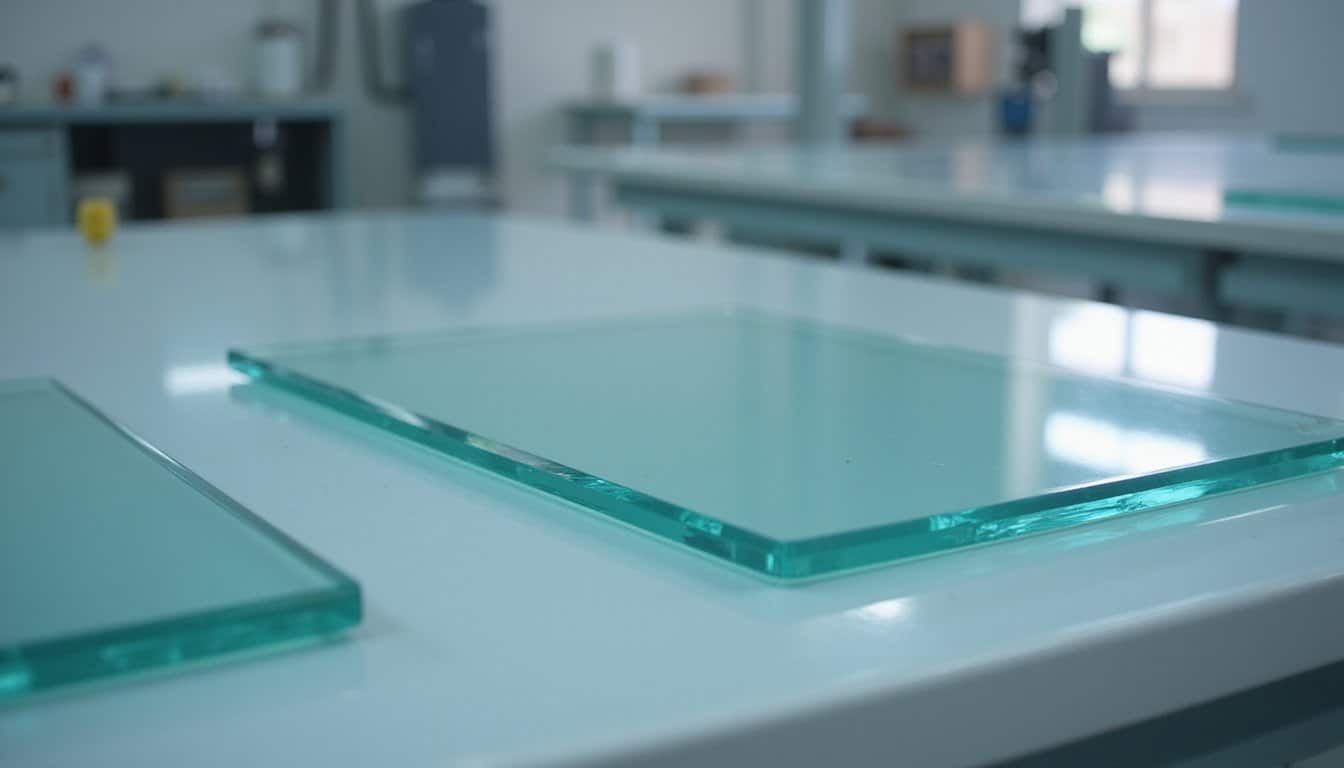
Manufacturing drives the core difference between these two glass types. When you compare laminated glass vs tempered glass, you’re really comparing bonding against thermal treatment.
To make laminated glass, you cut the glass plies to size, then sandwich a polymer interlayer, commonly PVB, EVA, ionoplast, or TPU, between them. You remove air pockets with rollers or vacuum bagging, heat the assembly to start bonding, then finish it under pressure in an autoclave. Heat and pressure create a permanent glass-to-polymer bond. A typical laminated makeup uses 2.5mm glass with a 0.38mm interlayer and another 2.5mm glass for a 5.38mm total.
Tempered glass follows a different path than laminated and tempered glass products. You heat a pre-cut pane and rapidly quench it through controlled cooling, creating compression on the surfaces and tension inside. Because tempered glass cannot be cut or drilled after treatment, all sizing and fabrication must be completed beforehand.
What Happens When Each Type Breaks
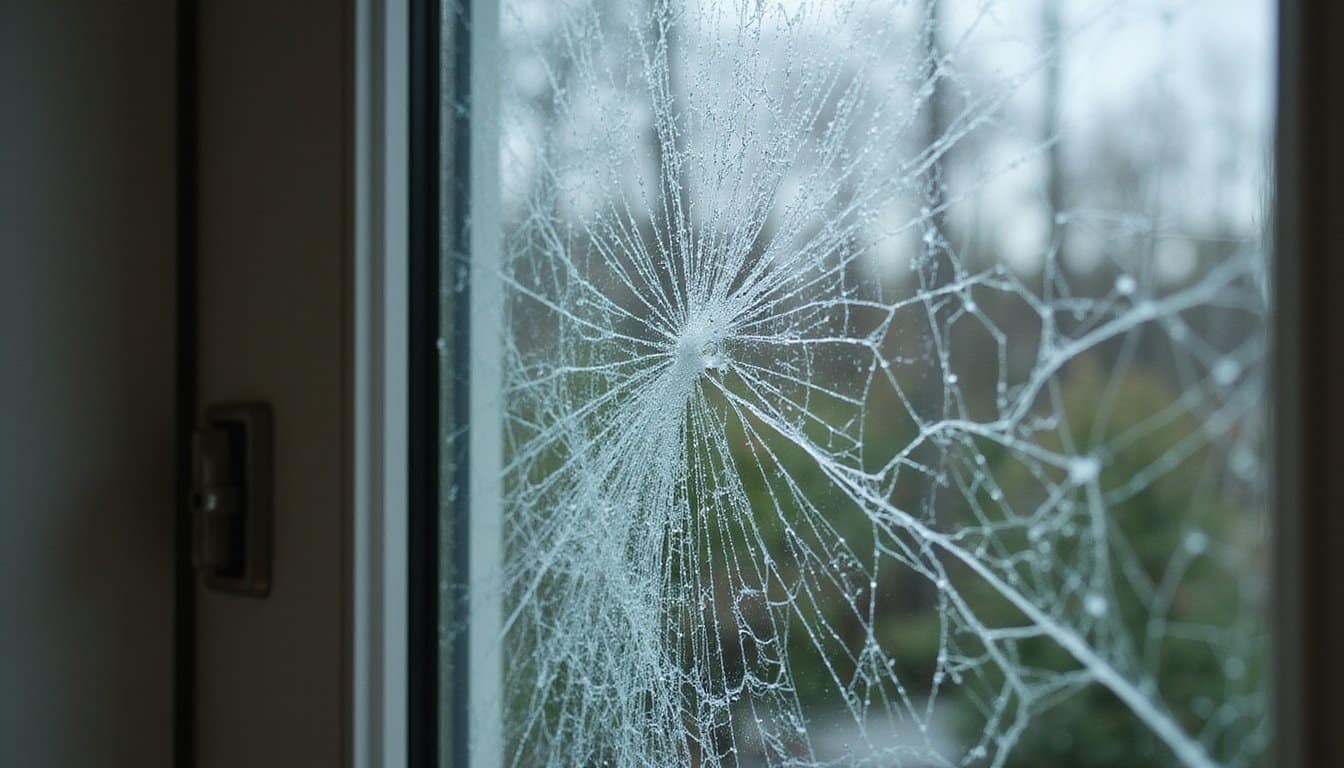
When you break laminated glass, you’ll see a spider-web pattern of radial and concentric cracks, because the PVB or SentryGlas interlayer holds the fragments together and keeps the panel partly intact. Tempered glass behaves the opposite way: it shatters all at once into small, blunt, granular pellets, releasing its high stored internal stress in seconds. The internal tension created during the tempering process is what causes this glass to release all of its stored energy at once when it fails. Understanding these two breakage modes tells you whether a broken pane stays bonded as a temporary barrier or clears out rapidly.
Laminated Glass Breakage Behavior
Because the PVB or SentryGlas interlayer bonds the glass plies together, laminated glass doesn’t fall apart when it fractures. Instead, broken pieces stay adhered to the polymer interlayer, so the pane keeps its overall shape. You’ll typically see radial and starburst cracking from the impact point, then a spiderweb-like pattern as cracks propagate over time. The damaged ply remains supported, so crack growth can continue without fallout. This fragment retention drives most laminated glass uses where reduced fallout matters. In overhead applications, Ionomer interlayers have demonstrated effective Fall Through resistance where EVA, PVB, and Stiff PVB laminates collapsed upon impact. The assembly also retains post-breakage load-carrying capacity, overhead glazing must stay on its supports for at least 30 minutes after the top layer breaks. Larger fragments and stiffer interlayers improve residual strength, though PVB’s softness allows a “blanket effect” in larger panels, varying with temperature and load duration.
Tempered Glass Breakage Behavior
When comparing tempered glass versus laminated glass, the main difference becomes clear when either glass breaks. Laminated glass typically stays held together by its interlayer, while tempered glass shatters into many small, blunt, cube-like fragments. This dicing pattern results from the compressive outer layer and tensile core created during the tempering process.
When a crack penetrates that compressive surface and reaches the tensile core, stored energy releases instantly, producing branching cracks that propagate from a single origin point across the entire lite. The glass disintegrates almost immediately.
You should know tempered glass can fail without warning. Edge chips, thermal stress, frame binding, and nickel sulfide inclusions all trigger sudden breakage. These risks shape tempered glass uses, favoring locations where safer fragmentation matters most.
Which Glass Is Stronger Under Impact and Heat

When you compare raw strength, tempered glass wins on both mechanical impact and thermal stress, running about four to five times stronger than annealed glass thanks to its heat-treated surface compression. That same tempering process improves its durability under temperature swings, making it the better pick for high-heat or rapid-change environments. Laminated glass is strong, but its PVB interlayer adds containment rather than the heat-strengthening you get from tempering, so it’s typically less resistant to direct blows and thermal stress.
Mechanical Impact Strength
Strength is a two-part question, and the answer depends on whether you’re measuring resistance to the first hit or what happens after the glass cracks. For direct force and bending loads, tempered glass wins. The controlled heating and rapid cooling create internal surface compression that makes it about four to five times stronger than annealed glass, so it absorbs more initial impact before failing. Laminated glass behaves differently. It resists penetration well because the PVB or SentryGlas interlayer absorbs impact energy and keeps fragments attached after cracking. Under repeated or forceful blows, tempered glass performs better initially, but laminated glass maintains a barrier after damage. For forced-entry resistance, laminated glass is the stronger choice because it’s much harder to fully breach.
Thermal Stress Resistance
Because uneven heating builds internal stress that can crack a pane, thermal performance comes down to how well each glass type resists rapid temperature swings, and here tempered glass holds the clear advantage. Manufacturers heat tempered glass to roughly 600°C, then cool it rapidly, creating surface compression and a tension core that delivers thermal stress resistance 4 to 5 times greater than annealed glass. That structure lets it withstand thermal shock in shower doors, oven-adjacent windows, and sun-loaded panes. Laminated glass behaves differently. Its PVB or EVA interlayer doesn’t raise raw thermal-stress strength; it holds fragments together after cracking. If you need both heat resistance and post-breakage retention, tempered laminated glass combines tempering’s thermal durability with lamination’s barrier function, the most robust option for demanding heat-loading scenarios.
Comparing Laminated vs Tempered Glass Cost
Two factors separate these glasses at the register: manufacturing complexity and material count. Comparing laminated vs tempered glass cost starts with construction. Tempered glass uses a single heat-and-cool treatment, so you’ll pay around $18 to $30 per square foot, averaging near $25. A standard 4×8 sheet runs roughly $400 to $550, and tempered windows typically land between $200 and $750.
Laminated glass adds multiple panes plus a PVB or SentryGlas interlayer, requiring extra heat-and-pressure processing. That pushes pricing into a wider band, from about $125 to $2,750 per window, with protection-grade options cited around $400 to $900.
Thickness, shape, size, edge finish, and cutouts drive cost for both. For budget replacements, tempered wins. For storm-rated or acoustic performance, laminated justifies its premium.
How Laminated Glass Boosts Home Security
Although laminated glass costs more than tempered, it pays you back in safety because its construction resists forced entry rather than just surviving impact. When you bond two or more panes around a PVB or SentryGlas interlayer, you create a composite barrier that’s far harder to defeat than annealed or even tempered glass.
Here’s how laminated glazing strengthens your home’s safety:
- Fragment retention keeps the broken pane in its frame, forcing intruders to keep working through it.
- Delayed entry buys you time to react or trigger alarms.
- Repeated-impact resistance slows break-in attempts at vulnerable openings.
- Dual-purpose protection means hurricane impact laminated glass also defends against flying debris.
Install it on front doors, street-facing windows, and accessible ground-floor openings for layered defense. For broader protection across your home, consider impact window installation as part of the same upgrade.
Does Laminated Glass Block Noise and UV Better?
Beyond protection, laminated glass delivers two performance benefits you’ll notice daily: quieter rooms and reduced UV exposure.
The PVB interlayer dampens vibration and decouples sound, lowering transmission. Standard laminated glass already improves sound control, but acoustic laminated glass uses a sound-blocking interlayer that cuts noise far more effectively. Expect STC ratings around 40, with higher numbers requiring combined strategies. Greater glass thickness, a larger air gap, and double-pane assemblies all boost performance. It’s ideal for traffic noise, street sounds, construction noise, and speech privacy. Mind your framing and sealing, though, since sound travels through gaps and frame paths.
The interlayer also blocks much of the UV radiation, protecting furniture, flooring, and fabrics from fading. Just remember UV performance depends on interlayer type and overall glazing construction.
Where Tempered Glass Works Best at Home
Because tempered glass shatters into small, dull pellets instead of large shards, you’ll find it specified wherever breakage risk and occupant safety intersect. Running a safety glass comparison, tempered’s 4-to-5-times strength and 5-to-8-times impact resistance over annealed glass make it the default for high-contact and heat-exposed surfaces throughout your home.
- Heat-exposed fixtures: oven and microwave doors, fireplace doors, and protective screens that tolerate thermal stress without cracking
- High-traffic surfaces: glass tabletops, patio furniture covers, cabinet doors, and decorative inserts exposed to repeated edge impact
- High-use openings: interior and exterior patio doors and skylights needing strength plus light transmission
- Light-filled spaces: clear tempered panels delivering maximum transparency with no tint or distortion
Choose tempered wherever safety, visibility, and durability matter simultaneously.
Best Home Uses for Laminated Glass
Where the interlayer’s fragment-retention behavior becomes the priority, laminated glass takes over from tempered. In your windows, you’ll get retained fragments, better sound insulation than monolithic glass of equal thickness, and UV-blocking interlayers that cut indoor ultraviolet exposure. Use laminated glass in exterior and entry doors, where it resists break-through and stays in place rather than collapsing outward after impact. Skylights and overhead glazing benefit most, since broken glass stays bonded to the interlayer above occupied spaces. For railings and balustrades, the bonded layers hold shards together while preserving an open visual style. Near busy streets, airports, or other noisy environments, you’ll combine acoustic performance, safety, and solar control. Tailor glass and interlayer combinations to your insulation, tint, and performance goals.
When to Choose Laminated Tempered Glass Instead
When you need tempered glass’s strength but can’t accept its fallout behavior, laminated tempered glass gives you both. By bonding tempered panes to a PVB or SentryGlas interlayer, you get the four-to-five-times strength of tempered glass plus the retained barrier of laminated glass. Choose this combination when fragment containment, protection, and post-breakage integrity all matter in one opening.
- Protection: The laminated structure preserves the barrier after impact, delaying forced entry where low replacement cost isn’t the priority.
- Containment: Broken fragments stay bonded to the interlayer, reducing fallout and keeping the opening covered.
- Acoustics: The layered construction dampens noise in bedrooms, studies, and rooms near roads.
- UV control: The interlayer blocks ultraviolet exposure, protecting furnishings, flooring, and artwork in sun-exposed spaces.
Choose the Right Glass for Florida Sunshine
Glass options like Low-E, laminated, and tinted can dramatically change your home’s comfort and energy bills. At Innovative Storm Defense serving West Palm Beach, FL, our skilled team offers reliable Stylish & Quality Windows with premium glass options and expert installation. Call (561) 517-9399 today and schedule your consultation.
Frequently Asked Questions
Can Laminated or Tempered Glass Be Cut or Resized After Manufacturing?
You can cut laminated glass after manufacturing, but you can’t resize tempered glass. To cut laminated panes, you’ll score both glass plies, break along the score lines, then cut or melt through the PVB interlayer. Use proper tools, cutting wheels, crusher rollers, foil blades, for clean edges that won’t tear the interlayer. Tempered glass shatters under any surface disturbance, so you’ll order it final-sized before heat treatment and replace, not alter, it.
How Long Does Laminated Glass Typically Last Before the Interlayer Degrades?
You can expect laminated glass to last 15, 25 years, with high-quality assemblies reaching 20, 25 years and standard grades closer to 10, 15. The interlayer won’t fail all at once, it degrades gradually as moisture, UV, and heat reduce bond strength and shear stiffness. PVB’s especially vulnerable, losing significant strength under saturation. Watch for delamination, bubbling, edge moisture, or discoloration. Protect your edges from moisture and you’ll maximize service life.
Does Either Glass Type Require Special Cleaning or Maintenance?
Yes, laminated glass demands more care than tempered. You’ll need to avoid corrosive cleaners, solvents, acids, and bases, since they can damage the PVB interlayer. Clean it with mild glass cleaner and a soft, lint-free cloth, and inspect regularly for delamination or chips. Tempered glass is simpler, it resists scratches and weather, so you’ll just use non-abrasive products and soft tools. For both, rinse off debris first and skip sharp tools.
Can Existing Windows Be Retrofitted With Laminated or Tempered Glass?
Yes, you can retrofit existing windows, but you’ll typically replace the pane rather than convert the glass in place. For laminated glass, you’ll swap in a laminated unit, provided your frame accepts the added thickness and weight. For tempered glass, you’ll remove the original and install a tempered pane cut to fit. Your frame and sash must be in serviceable condition, and you may need adjustments or a site survey first.
Are Laminated and Tempered Glass Recyclable at End of Life?
Yes, you can recycle both, but neither goes in your curbside bin. Laminated glass needs specialized separation equipment because the glass is bonded to a PVB interlayer; dedicated processors recover nearly 100%, turning it into cullet, fiberglass, or concrete admixtures. Tempered glass requires separate crushing and remelting, becoming fiberglass, glassphalt, or aggregate. Check your local facility’s acceptance rules first, and remove frames, seals, and hardware before dropping anything off.
Laminated and Tempered Glass Better for Bathroom Privacy?
Both can work, but laminated glass offers more privacy options because it can use frosted, tinted, or opaque interlayers between the panes. Tempered glass is mainly chosen for safety. For bathroom applications, glass around 1/4 to 3/8 inch thick is common depending on the panel size and design.
Tempered Glass vs Laminated Glass Better for Shower Doors?
Tempered glass is usually better for shower doors because it is strong and breaks into small, less-sharp pieces if damaged. Frameless shower doors commonly use 3/8-inch or 1/2-inch tempered glass, while framed doors often use thinner panels.
Tempered Glass Versus Laminated Glass Better for Patio Doors?
Laminated glass is often better when security, impact resistance, and sound control matter, while tempered glass is a common safety-glazing choice. Laminated patio-door glass typically uses 2 glass layers bonded with a plastic interlayer, helping the panel stay together if it cracks.
Laminated Glass vs Tempered Better for Soundproofing Interior Rooms?
Laminated glass is generally better for sound reduction because its interlayer helps damp vibrations. Using thicker or asymmetrical laminated glass can improve performance further, with many interior acoustic glass systems reaching roughly STC 35 to 45, depending on thickness, framing, and installation.