
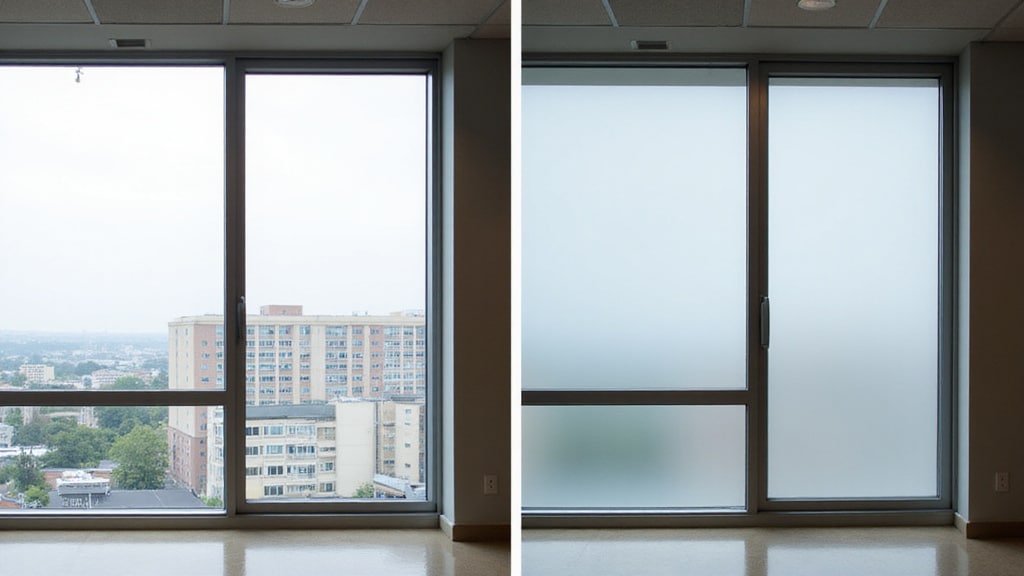
Tinted and reflective glass gives you three performance wins at once. Tinted glass absorbs solar energy, cutting glare up to 60% and dropping interior surface temps by 20 degrees. Reflective coatings bounce radiation outward, while spectrally selective and ceramic films block up to 99% of UV rays. You’ll also gain privacy, since darker tints obscure interiors and conceal valuables. Want to know which film category delivers the highest IR rejection? Keep going.
How Tinted and Reflective Glass Actually Works
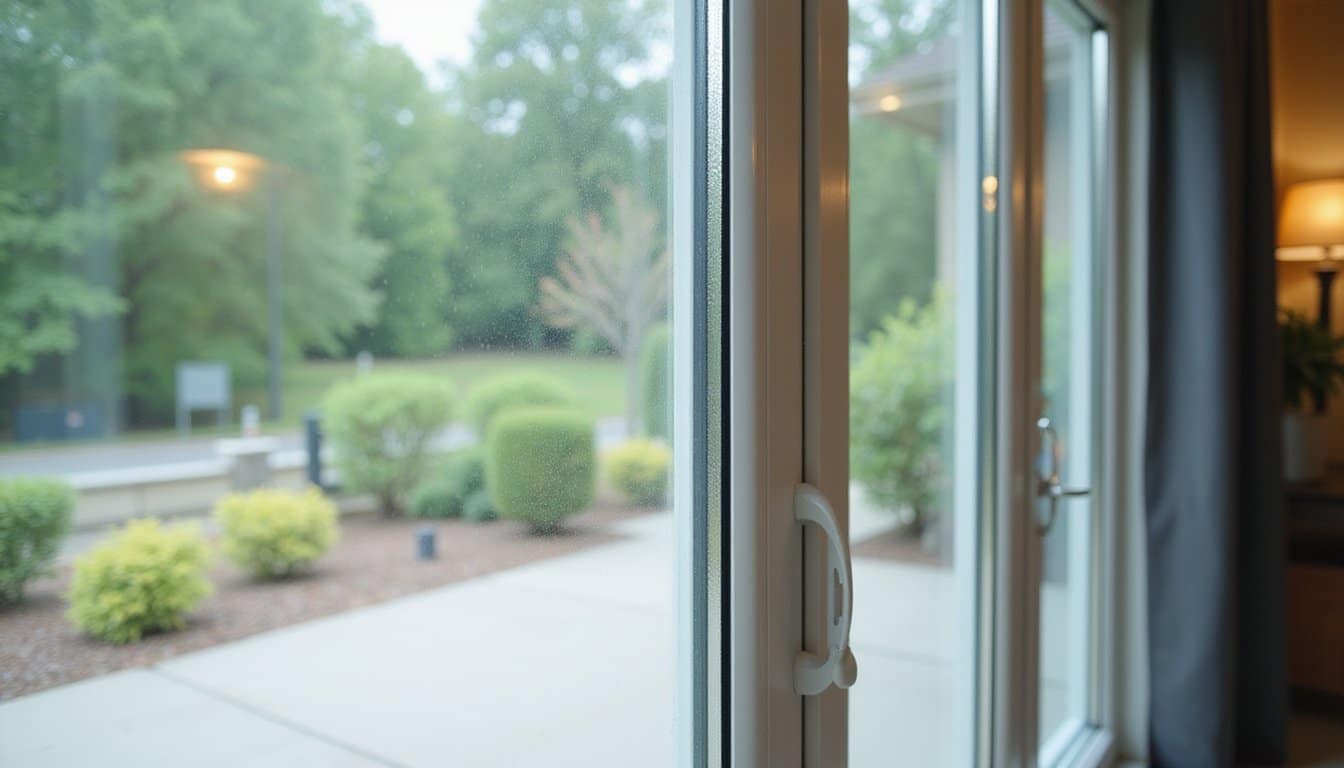
Although both products manage solar energy, tinted and reflective glass work through fundamentally different mechanisms. Tinted window glass absorbs part of the sun’s energy, reducing heat gain and visible light transmission. By contrast, reflective window glass bounces incoming solar radiation off a thin metal or metal oxide coating before it enters your interior. This difference in construction also affects appearance, since tinted glass looks the same from both the interior and exterior, while reflective glass appears standard from the inside.
You can understand the difference through the RAT relationship: reflection + absorption + transmission = 100%. Tinted glass shifts that balance toward absorption, while reflective glass increases reflection.
For glare reduction windows, both lower visible light transmittance (VLT), but tinted glass dims light uniformly, while reflective glass diffuses and bounces it back. Tinted glass embeds color during manufacturing, absorbing up to 45% of solar heat, whereas reflective glass depends on a surface coating. These options can be combined with impact window replacement for storm protection alongside heat control.
The Privacy Benefits of Tinted Glass
Because tinted glass darkens and obscures your interior, it delivers privacy that ranks as its most distinctive benefit across residential, commercial, and vehicle applications. Privacy window glass reduces outside visibility while preserving daylight, so you skip curtains and blinds without sacrificing brightness. Concealing bags, electronics, and valuables discourages opportunistic theft and adds a measurable layer of protection. The use of tinted toughened glass, such as laminated or tempered, enhances security further.
Your privacy level scales directly with tint darkness:
| Tint Darkness | Privacy Performance |
|---|---|
| Light | Subtle daytime concealment |
| Medium | Strong glare and sightline control |
| Dark | Maximum visual obscurity |
Residential window tint protects home windows, glass doors, and shower enclosures, while offices use it to shield sensitive information. Pair UV blocking glass with privacy film to add radiation protection. Verify local regulations before specifying darker configurations.
How Tinted Glass Cuts Glare and Eye Strain
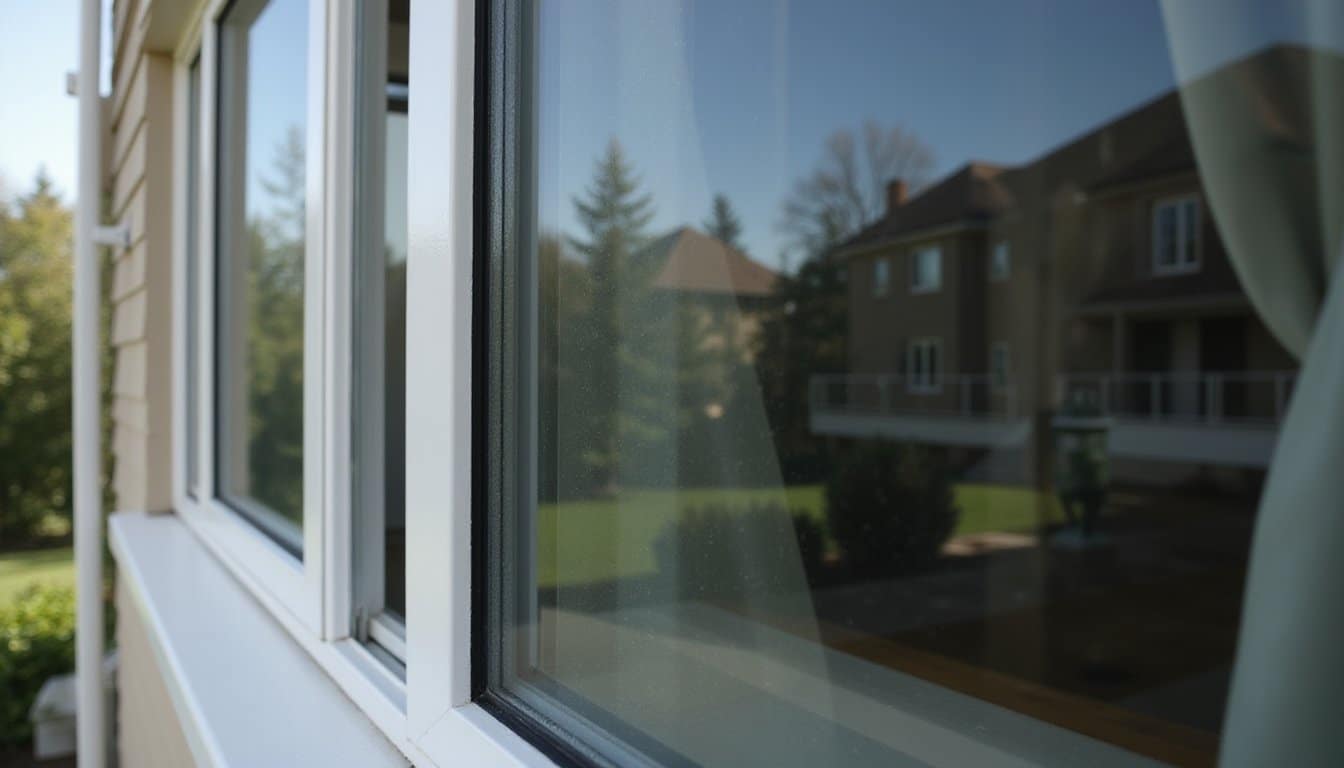
When sunlight floods through untreated windows, tinted glass steps in as a light-control filter, cutting glare by absorbing and reflecting part of the incoming spectrum before it reaches your eyes. You’ll see brightness drop, one estimate puts glare reduction near 60%, which softens harsh rays from roads, water, and overhead sources. With less intense light, you’ll squint less, easing the workload on your eye muscles and reducing fatigue during driving or screen use. Solar control glass and reflective coating glass push more energy outward, while spectrally selective tint blocks infrared and UV yet preserves visible light, so your interior won’t feel dim. A balanced tint maintains contrast and visual acuity, letting you distinguish road signs and edges. For light-sensitive eyes, that steadier visual environment delivers measurable comfort. Beyond comfort, modern window films block up to 99% of harmful UV rays, offering long-term defense against ocular health risks like cataracts and retinal damage.
Can Tinted Glass Block 99% of UV Rays?
You’ll see 99% UV blocking advertised constantly, but that figure depends entirely on the product type, ceramic and premium UV films hit 99% to 99.9%, while standard dyed tint often blocks only 50, 60%. The 99% claim is a film specification, not a guarantee that ordinary factory tint performs the same way. Always check whether the rating covers both UVA and UVB, since spectrum coverage and test methods determine what that number actually means for your home.
UV Blocking Capabilities
Although “tinted glass blocks 99% of UV rays” is a common marketing claim, it’s accurate only for specific high-performance products, not ordinary tint. Standard factory tint is engineered primarily for solar heat gain and glare reduction, with UV blocking as a secondary effect. You’ll typically see only partial UV-A rejection, often 25, 70%, depending on the product and treatment.
Performance varies sharply by category. Dyed films block roughly 50, 60%, metalized films reach 80, 90%, and premium ceramic or nano-ceramic films exceed 99%. When you evaluate window tint Florida options, don’t assume any tint guarantees near-total protection. Tinted glass colors like bronze, gray, green, and blue affect light transmission, but color alone won’t determine UV rejection. For 99%+ blocking, specify high-performance film.
Film Versus Privacy Glass
The 99% UV claim depends entirely on which product you’re specifying, so you need to distinguish two categories that often get conflated: privacy glass and window tint. Privacy glass adds pigment into the pane during manufacturing, while window tint is film applied afterward. The UV specifications diverge accordingly.
| Specification | Performance |
|---|---|
| Aftermarket window tint | Blocks up to 99% UV |
| Ford privacy glass | Blocks 98% UV |
| Generic privacy glass | Limited, inconsistent UV |
| Combined film over glass | Darker, higher rejection |
Don’t treat these as identical products. UV performance varies by glass type, vehicle make, and whether film’s installed. If you’re targeting the 99% threshold, you’ll specify quality aftermarket film, privacy glass alone delivers modest, variable protection that depends heavily on the manufacturer’s coating.
How Tinted Glass Rejects Heat for Comfort
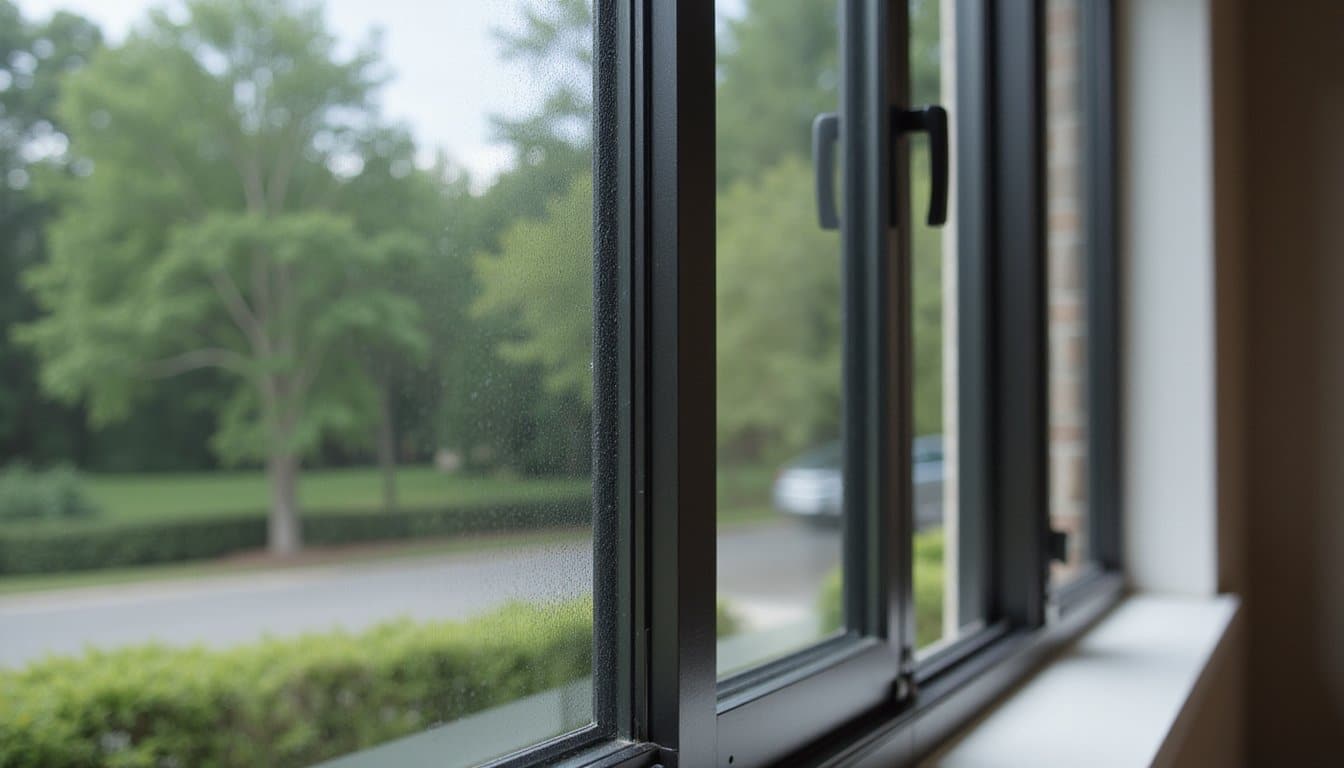
When you choose tinted glass, you’re targeting infrared rejection, the wavelengths that carry most of the sun’s thermal energy, before they warm your interior surfaces. By filtering this radiation at the glass level, you’ll lower interior surface temperatures and cut radiant heat gain, with some installations reducing peak temperatures by up to 20 degrees. That reduced solar heat load eases your air-conditioning demand, improving both comfort and energy efficiency across your home’s sun-exposed elevations.
Infrared Heat Rejection
Because infrared radiation drives the bulk of solar heat gain, tinted glass controls temperature primarily by rejecting infrared and near-infrared wavelengths before they pass through the pane and warm your interior surfaces. This rejection happens at the glass level, so solar energy never reaches your floors, furniture, or fixtures. Don’t assume darker glass performs better, lighter advanced films often outperform darker basic tints through targeted IR filtering rather than simple shading.
Modern films use specialized coatings and nano-particle technologies to maximize infrared rejection (IRR):
- Ceramic films delivering up to 95% to 99% IR rejection
- Premium carbon films blocking 50% to 75% of solar energy
- Metallic films rejecting more heat but interfering with cellphone and GPS signals
Match film construction to your performance requirements.
Lower Cabin Temperatures
Although tint won’t cool your cabin air directly, it cuts radiant heat gain by stopping solar energy at the glass surface before it reaches your interior. Lower glass temperatures reduce secondary heat radiation into the cabin after sunlight strikes the window. You’ll notice slower heat accumulation during long drives and while parked in direct sun. Comfort comes from less radiant energy entering, not from chilled air.
| Film Type | Heat Rejection | Primary Mechanism |
|---|---|---|
| Dyed | Low | Absorption/darkness |
| Carbon | Moderate | IR limiting |
| Ceramic | High (60, 98%) | Nano-particle IR block |
| Spectrally Selective | High | IR/UV rejection |
| Clear (untreated) | None | Baseline |
Performance scales with infrared rejection, glass angle, surface area, and exposure duration. High-quality films deliver stronger, longer-lasting solar control in intense, high-temperature climates.
Reduced Air-Conditioning Load
While darkness alone won’t lower your air-conditioning load, infrared rejection will. Your tint reduces AC demand by limiting solar infrared and near-infrared radiation before it heats the glass and interior surfaces. Less heat buildup means your system doesn’t work as hard to reach and hold a comfortable temperature. Performance depends on the film’s IR rejection rating, glass angle, surface area, and sun-exposure duration:
- Ceramic films block 60, 95% of IR radiation, with advanced products rejecting up to 98%.
- High-performance films reject up to 71% of thermal energy versus 40% for entry-level options.
- TSER measures total solar energy your tint blocks, quantifying overall thermal control.
How Tinted Glass Boosts Security and Safety
When you tint your home’s glass, you’re adding a passive protection layer that works around the clock without alarms or locks. Lower transparency limits sightlines, hiding electronics, packages, and interior layouts from passersby. Opportunistic thieves can’t assess what’s inside, so they’re less likely to target your space. Safety-oriented films reinforce the pane, holding shattered shards together to delay forced entry and reduce cuts from flying glass.
| Threat | Tint Response |
|---|---|
| Visible valuables | Concealed from view |
| Quick “what’s inside” checks | Blocked sightlines |
| Forced entry | Delayed glass failure |
| Flying shards | Retained by film |
| UV exposure | Up to 99.9% UVA blocked |
You gain layered deterrence, injury reduction, and UV protection, protection that never sleeps.
Tinted Glass vs. Factory Privacy Glass
Because manufacturers build factory privacy glass with tint dyed directly into the pane during production, you can’t remove or adjust it later, unlike aftermarket window film, which applies to the interior surface and stays replaceable. Factory privacy glass runs about 15%, 26% VLT, dark enough to obscure occupants but engineered for privacy, not solar control. Expect limited performance gains compared with film:
- UV protection: Factory glass mainly blocks UVB, while window film rejects up to 99% of UVA and UVB rays.
- Heat rejection: Factory glass delivers almost no infrared control, leaving cabin temperatures higher than film-treated surfaces.
- Glare control: Film reduces outside brightness more aggressively, improving visual comfort.
You can layer clear or near-clear film over privacy glass to add UV and infrared rejection.
Window Tint Film or Tinted Glass: Which Wins?
You’ve seen how factory tint locks performance into the pane, so now compare your two real options head-to-head: window tint film versus tinted glass. Film, a polyester laminate applied to existing glass, blocks up to 99% of UV rays and filters wavelengths that fade furniture, upholstery, and carpets. Tinted glass adds pigments during production but doesn’t guarantee meaningful UV protection. Film wins on flexibility: you select light-transmission levels, swap it later, and bundle glare reduction, heat rejection, and privacy in one product. Tinted glass stays permanent, built into the manufacturing, and costs more since it requires full replacement. Film generally runs cheaper. Watch one tradeoff, though: combining film with already-tinted glass can darken the window past your usable-daylight requirements. For most retrofits, film wins. When considering the differences between laminated and tempered glass, you should note that laminated glass is known for its safety features, as it holds together when shattered. On the other hand, tempered glass is significantly stronger and is designed to break into small, less harmful pieces if it shatters.
Tint Laws and Other Privacy Glass Options
Although film wins most retrofit decisions, you can’t apply it freely, tint legality depends entirely on your state’s rules, not a single national standard. Legal front-side VLT ranges from 20% to 70%, with California enforcing 70% and Texas permitting 25%. Remember, VLT measures combined glass-plus-film transmission, so your installer must verify the post-installation reading with calibrated equipment.
Watch these specification-driven compliance factors:
- Windshield limits: Only a non-reflective top strip above the AS-1 line, or within a 4-, 5-, or 6-inch band.
- Reflectivity and color: Mirrored films and red, amber, or blue tints can trigger violations even at legal darkness.
- Rear-window leniency: Some states allow 5% VLT or any VLT with dual side mirrors present.
Verify everything against official DMV code.
Choose the Right Glass for Florida Sunshine
Glass options like Low-E, laminated, and tinted can dramatically change your home’s comfort and energy bills. At Innovative Storm Defense serving West Palm Beach, FL, our skilled team offers reliable Stylish & Quality Windows with premium glass options and expert installation. Call (561) 517-9399 today and schedule your consultation.
Frequently Asked Questions
How Much Does Tinted or Reflective Glass Installation Typically Cost?
You’ll typically pay $435, $1,145 for residential window tinting, averaging around $706, with installed pricing running about $6, $8 per square foot. Higher-grade films push you to $7, $10 or even $5, $15 per square foot. Reflective and premium products cost more than basic dyed films because they deliver stronger heat rejection. Expect added charges for tall windows, unusual shapes, or difficult access, sometimes $0.50, $1.50 extra per square foot. Larger commercial-scale jobs can drop to $5, $7.
How Long Does Window Tint Film Last Before Needing Replacement?
You’ll typically get 5 to 10 years from standard window tint film, while high-quality residential film lasts 10 to 20 years. Premium ceramic and carbon films often hit 15 to 20+ years. Your film type, installation quality, and sun exposure drive these numbers, south- and west-facing windows degrade faster. Watch for bubbling, peeling, or fading as replacement signals. Check your warranty, which ranges from 10 years to lifetime, for expected durability.
Can Tinted Glass Be Cleaned With Regular Glass Cleaners?
Not always, you need to check the formula first. Many regular glass cleaners contain ammonia, which dries out tint film and causes fogging, fading, and peeling over time. Skip alcohol-based and heavy-duty cleaners too, since they degrade plastic film. Instead, use an ammonia-free cleaner labeled tint-safe, applying it to a microfiber cloth rather than spraying the glass directly. For newly installed film, stick with water until it’s fully cured.
Does Tinted Glass Affect Cell Phone or Wifi Signals?
It depends on the film type. Standard factory-tinted glass has very little RF impact, so you won’t notice signal loss. Metalized tint films and Low-E coatings are the culprits, their metallic layers reflect radio frequencies, weakening cell, Wi-Fi, Bluetooth, and GPS reception, especially in already-weak-signal areas. Choose non-metallic ceramic or carbon films for signal-friendly performance. You can also relocate your router away from coated glass to minimize dead spots.
Will Tinted Glass Void My Window Manufacturer’s Warranty?
Not automatically, it depends on your warranty’s exact language and the specific claim. Aftermarket film carries higher risk on dual-pane insulated and Low-E glass, where it can increase thermal stress or affect seals. Some manufacturers treat film as an alteration that voids coverage, but many review claims case by case. Protect yourself: check the warranty first, use approved film and a certified installer, and get written manufacturer approval before installation.