
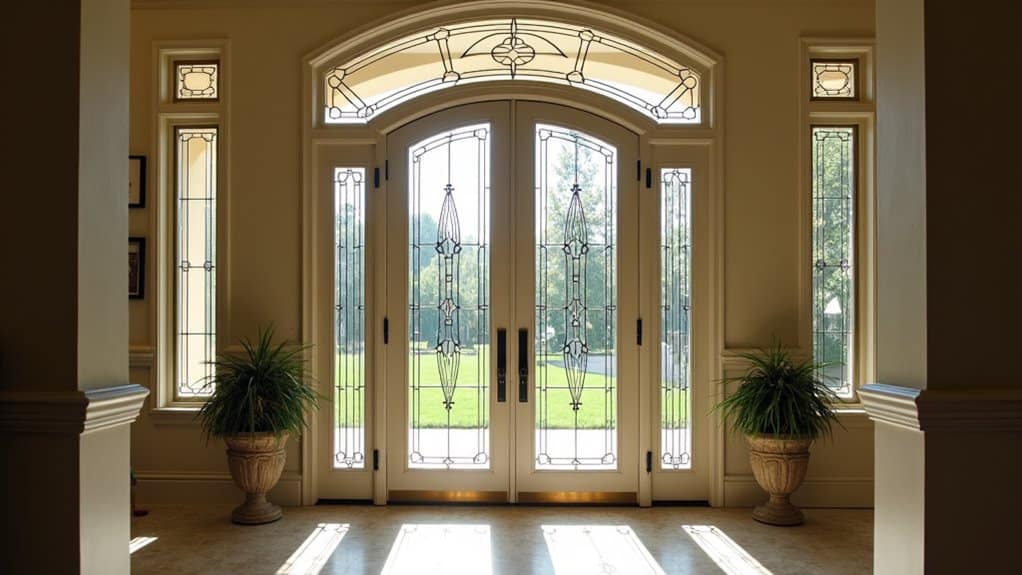
For hurricane protection, fiberglass wins for most homes. It resists dents, moisture, and splintering, lasts 50+ years, and needs minimal upkeep. Steel delivers maximum stiffness and the lowest upfront cost ($200-$1,500), but you’ll fight rust and dents. Wood looks great, yet it’s costly and vulnerable in wet climates. Whatever you choose, verify Florida Product Approval or Miami-Dade NOA labels and demand quality installation. Keep going to see which door fits your climate best.
What Makes a Front Door Truly Hurricane-Rated
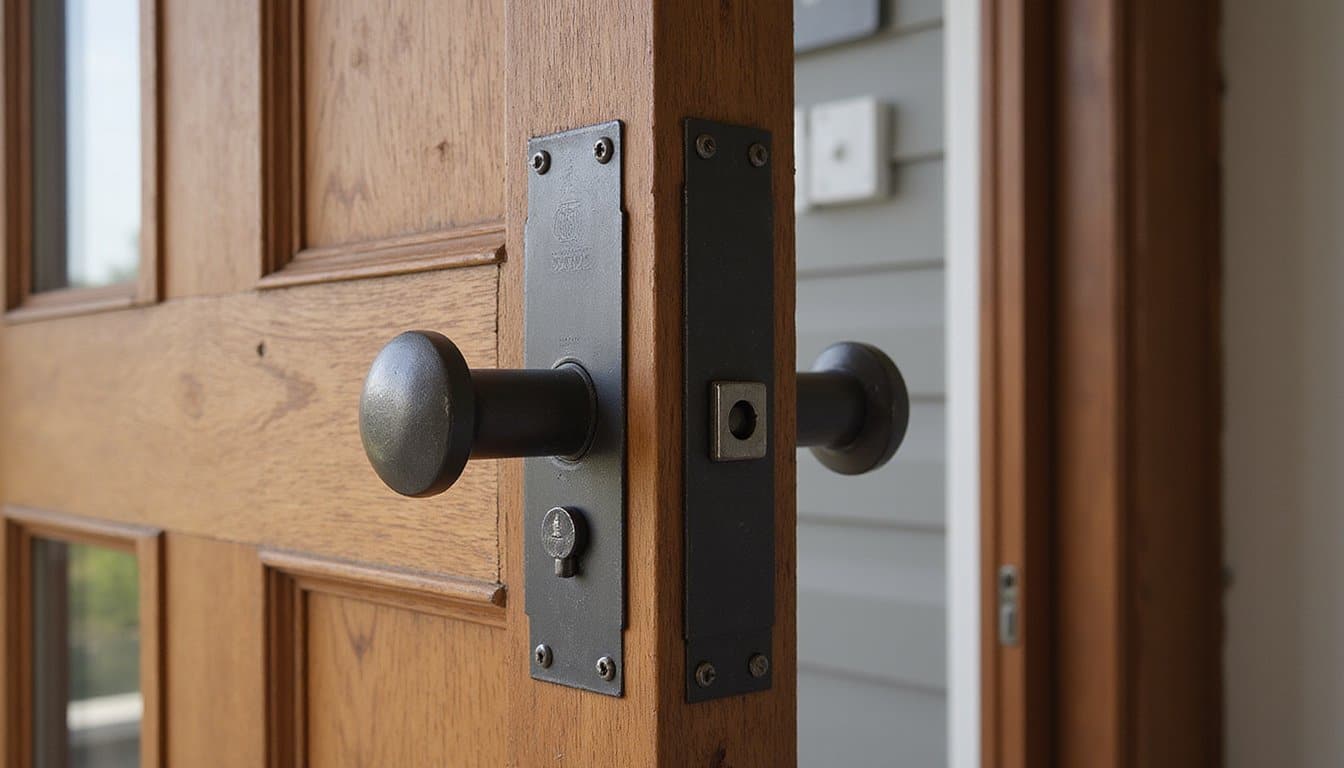
When you shop for a hurricane-rated front door, you’re not just buying a heavy slab, you’re buying an engineered system tested and approved as a complete assembly. That assembly includes the door, frame, glazing, hardware, fasteners, and anchoring working together. Reinforced frames in heavy-gauge steel, aluminum, or fiberglass transfer wind loads across the opening, keeping it attached to your home’s structure. By sealing out wind and debris, these doors also mitigate internal pressure buildup during hurricanes, reducing the risk of roof or wall collapse.
Certification separates a true hurricane rated front door from a thick-looking imitation. Whether you choose an impact rated fiberglass door or a steel hurricane door, it must pass large missile testing, a 9-pound 2×4 fired at 50 feet per second, with no penetration. Then it endures 9,000 cyclic pressure cycles. Verify Florida Product Approval or Miami-Dade NOA labels, and confirm the Design Pressure meets your opening’s requirements.
How to Compare Fiberglass, Steel, and Wood Doors
When you’re comparing fiberglass, steel, and wood doors, you’ll weigh three factors that directly affect storm performance and long-term value: strength and durability, insulation and efficiency, and cost and maintenance. Each material handles wind-driven rain, humidity, and heat transfer differently, so the right choice depends on your coastal exposure and how much upkeep you’re willing to manage. Fiberglass doors can last 50 years or more with minimal maintenance, making them especially well-suited for harsh coastal environments. Understanding these tradeoffs helps you match a hurricane-rated slab to your home’s specific demands without sacrificing code compliance.
Strength And Durability
Because hurricane ratings hinge on a door’s ability to survive large-missile impact and sustained pressure cycling, you need to weigh strength and durability across three distinct measures: brute-force impact resistance, weather resistance, and long-term lifespan. An impact rated steel door delivers the highest raw structural integrity, especially at heavier gauges, though it needs paint and rust prevention to hold up in coastal exposure. A fiberglass hurricane door resists dents, moisture, warping, and temperature swings, making it the best weather performer and often the longest-lasting at 50 years or more. Fiberglass doors carry a low dent risk compared to the medium dent risk of steel doors, which varies depending on thickness. A wood hurricane door offers unmatched aesthetics but stays most vulnerable to moisture, scratches, and dents, lasting roughly 10, 30 years and demanding constant maintenance. Match your choice to your climate, exposure, and upkeep tolerance.
Insulation And Efficiency
Strength and durability tell you which door survives the storm, but insulation and efficiency tell you what it costs to live behind it year-round. For hurricane door insulation, the core matters more than the skin. A well-made fiberglass door can hit a U-value of 0.09, while a standard 1-inch wood door sits near 0.65, lower numbers mean better heat resistance. In the fiberglass vs steel front door comparison, both perform well with polyurethane foam or mineral wool cores, though steel needs thermal breaks and tight sealing to offset its conductivity. Wood typically insulates least and can swell, loosening seals over time. Fiberglass resists warping, so it holds its R-5 to R-6 rating. For the best hurricane rated front door on efficiency, choose fiberglass with professional installation.
Cost And Maintenance
Three cost factors decide which hurricane-rated door pays off: upfront price, maintenance over time, and replacement risk. When you compare hurricane door materials, steel wins on initial price, often $200 to $1,500-plus, but rust and dents raise replacement risk in coastal exposure. Fiberglass runs about $1,500 to $5,000 installed and demands little upkeep, roughly $200 to $500 over 30 years, lasting 30 to 50-plus years. In the fiberglass vs wood door comparison, wood carries the heaviest burden: $9,000 to $18,000 in 30-year maintenance, plus $300 to $600 yearly refinishing. For your Florida front door material decision, weigh long-term ownership cost against budget. Fiberglass typically delivers the best low-maintenance value, while steel suits tight budgets and wood rewards owners willing to fund ongoing care.
Which Hurricane Door Survives Flying Debris Best?
When you’re choosing a hurricane door to survive flying debris, you’re really evaluating two things: the slab material and the laminated impact glass. Your door must pass the large-missile impact test, which launches a 9-pound 2×4 at high speed to simulate wind-borne debris. Fiberglass leads here for its impact resistance and refusal to splinter, while steel holds up well and properly engineered wood can meet the same code, though the evidence favors fiberglass for raw debris-strike survival.
Laminated Impact Glass
Although the door’s material shapes its look and longevity, the laminated impact glass is what actually stops flying debris from breaching your home. Whether you choose a fiberglass, steel, or mahogany hurricane door, the glazing relies on two or more glass layers bonded by a tough PVB or EVA interlayer. When debris strikes, the outer glass cracks but the fragments adhere to the interlayer instead of scattering. That retained barrier preserves your building envelope, limiting wind and water intrusion after impact.
Don’t assume the glass works alone. Code-compliant performance depends on the whole system, reinforced aluminum, steel, or composite frames, strong seals, and proper installation. Check published specs for thicknesses like 5/16 or 7/16 inch, and verify the assembly meets your local building codes.
Material Debris Resistance
Because every hurricane-rated slab must pass the same large missile impact test, you might assume all three materials shrug off flying debris equally, but they don’t. Once certified, real-world performance diverges based on how each material handles repeated strikes and cosmetic damage:
- Fiberglass, Your safest choice. It resists denting, cracking, warping, and splintering while limiting visible damage after a strike.
- Steel, Maximum strength and penetration resistance, but expect dents from heavy debris and rust if storm impacts expose the surface.
- Wood, The weakest option. It splinters, dents, warps, and absorbs moisture, degrading its ability to survive repeated impacts.
How Each Door Handles Extreme Wind Pressure
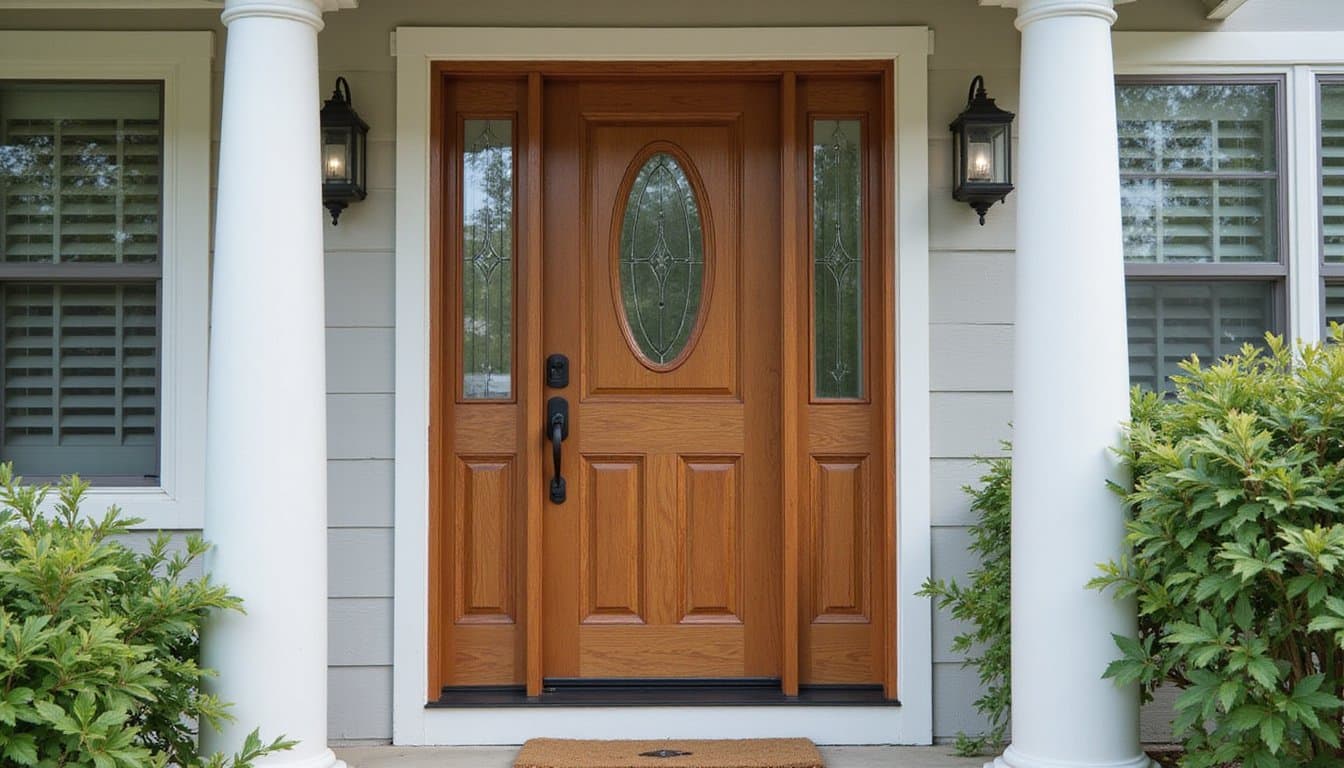
Three factors determine how a door survives extreme wind pressure: the material’s stiffness, the strength of the frame and hardware, and the quality of the installation. Steel delivers the best structural stiffness, resisting flex under sustained loads. Reinforced fiberglass resists flexing better than hollow construction, especially when paired with laminated glazing. Wood flexes more and can lose seal integrity as moisture causes movement and gaps.
| Material | Wind Pressure Behavior |
|---|---|
| Steel | Highest stiffness; minimal flex |
| Reinforced Fiberglass | Strong with composite core |
| Wood | Greater flexing risk |
| Frame/Hardware | Common failure point |
| Installation | Critical for rated capacity |
Insulation and Energy Savings by Door Material
While wind resistance keeps your family safe during a storm, insulation determines what you’ll pay to stay comfortable the rest of the year. Fiberglass leads here, delivering R-5 to R-6 thanks to polyurethane or polystyrene cores that limit conductive heat transfer. Steel can match it when built with foam-filled cores, though steel conducts heat, so construction quality matters. Wood offers good insulation, but it trails both when leaks develop around the frame.
Insulation won’t keep you safe in a storm, but it decides what comfort costs the rest of the year.
When you’re ranking energy performance, consider these factors:
- Core type, foam-filled cores outperform natural wood fibers
- Heat absorption, fiberglass runs cooler than steel
- Air sealing, weatherstripping and caulking cut infiltration losses
- Installation quality, square framing guarantees a tight jamb seal
Choose fiberglass for high-heat, humid Florida conditions.
Dents, Rust, and Warping: Real-World Durability
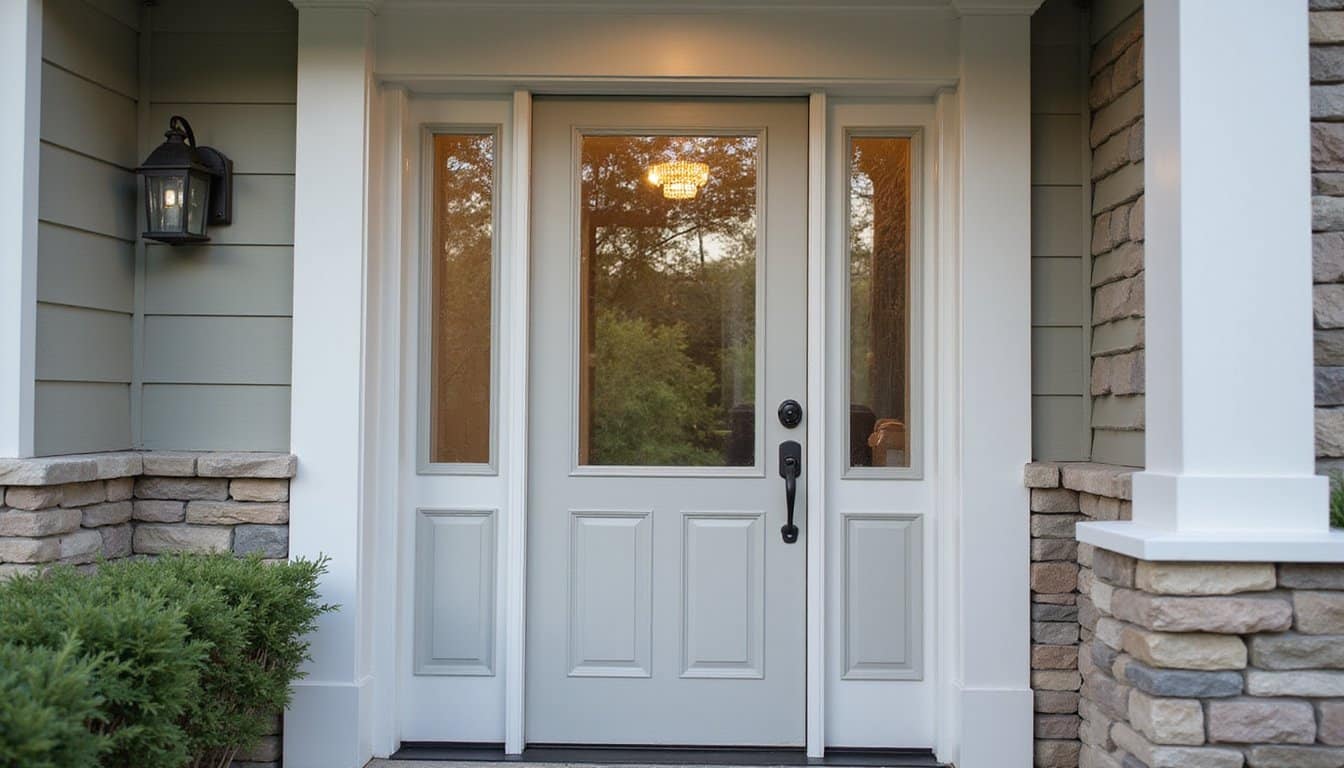
When you compare real-world durability, you’ll find each material fails differently: steel dents and develops rust spots, wood warps, swells, and rots, while fiberglass resists all three. In Florida’s wet, salt-laden coastal air, that distinction determines how your door holds up between hurricane seasons. You’ll get the longest low-maintenance service from fiberglass, since it won’t rust like steel or deteriorate from moisture like wood.
Material Damage Comparison
Because each material fails in its own predictable way, you’ll get the most from a hurricane-rated door by matching its weakness to your site conditions. Each slab carries a distinct failure mode you can’t ignore in coastal exposure zones:
- Steel resists forced entry best but dents on impact and rusts once you compromise the finish, especially in salt air.
- Fiberglass shrugs off dents, rot, and rust, yet concentrated force can crack, chip, or split the skin.
- Wood delivers unmatched looks but warps, swells, and rots fastest under moisture, demanding relentless upkeep.
- Service life tells the story: steel and fiberglass reach 30-plus years, while wood often fails at 10.
Choose the weakness you can actually maintain.
Wet Climate Performance
Florida’s wet climate punishes the wrong material fast, so durability comes down to how each slab handles moisture intrusion and dimensional change. Fiberglass leads here: it won’t absorb moisture, warp, crack, or rust, holding its shape and finish through rain, sun, and temperature swings with minimal upkeep. You’ll get the most resilient performance even in exposed locations. Steel performs well, but only while the finish stays intact, any scratch or dent exposes the metal to corrosion, so you’ll need prompt touch-up painting and ideally a covered entry. Wood ranks last because repeated wetting and drying drives swelling, warping, and rot, demanding regular maintenance to stay sound. For wet-climate durability, you should rank fiberglass first, steel second, and wood last when specifying your hurricane-rated door.
Maintenance Demands in Wet, Stormy Climates
Although every hurricane-rated door can withstand large-missile impact, the materials don’t age equally once humidity, salt air, and wind-driven rain go to work on them. Your long-term upkeep depends heavily on the slab you choose and how diligently you maintain seals:
- Fiberglass demands the least care, it resists warping, rust, and corrosion, holding stable in coastal salt air.
- Steel needs moderate attention, since exposed finishes can rust without consistent repainting and protective coatings.
- Wood carries the heaviest burden, requiring frequent sealing, painting, and inspection to limit swelling and moisture damage.
- Every material relies on intact weatherstripping, adjustable thresholds, and drainage systems to channel wind-driven rain away.
Inspect seals annually, because degraded weatherstripping invites air leakage and water intrusion.
What Each Hurricane Door Costs Before Install
Maintenance costs tell only half the story, what you’ll pay upfront varies just as widely by material. Before installation, steel runs the lowest, commonly starting around $2,000, $3,200 depending on finish quality and hardware. Fiberglass sits slightly higher at $2,200, $3,800, reflecting its molded polymer skin and foam core. Wood occupies the premium tier, since custom mahogany, alder, and oak slabs demand laminated glass inserts and reinforced frames to meet impact certification.
Several factors push these numbers upward. Glass design complexity, divided lites, decorative panels, or large glass areas, adds cost. Door size matters too: standard 36-inch openings price at the low end, while oversized or double-door systems climb notably. Certified impact performance itself commands a premium, so don’t expect builder-grade pricing on code-compliant slabs.
Why Fiberglass Wins for Most Homeowners
When you weigh storm protection against everyday performance, fiberglass earns its reputation as the best all-around hurricane-rated door for most homeowners. It pairs large-missile-impact ratings with R-5 to R-6 insulation, so your entry resists flying debris while limiting daily heat transfer. Its moisture-resistant skin won’t warp, rot, or swell in coastal salt air, preserving seal performance and weather protection over time.
Here’s why fiberglass wins:
- Storm-ready strength that protects against heavy winds, rain, and debris.
- Superior insulation that lowers cooling demand in hot, humid climates.
- Moisture resistance that prevents warping, rotting, and seal failure.
- Low maintenance that spares you the constant upkeep wood demands.
At two thousand to four thousand installed, you get balanced value without compromise.
When Steel or Wood Is the Smarter Hurricane Pick
Fiberglass fits most homes, but steel and wood each win specific projects where their strengths outweigh the all-around pick. Choose steel when maximum impact resistance and design-pressure performance drive the decision. Steel’s higher density resists flying debris better than wood, and reinforced construction with heavy-duty frames delivers superior protection and structural durability in exposed coastal zones. Specify steel as a listed opening assembly with design pressure values that meet or exceed your engineer’s calculated requirement for each opening. Confirm Missile Level D testing and verify glazing, fire rating, and panic hardware needs.
Pick wood when aesthetics or matching an existing home outweigh raw storm performance. Wood isn’t the strongest impact material, so it depends on added reinforcement or protected placement, and you’ll accept demanding maintenance tradeoffs.
Secure Your Home With a Hurricane-Rated Door
Your front door is the first line of defense against storm damage, so choosing one built for Florida weather makes all the difference. At Innovative Storm Defense serving Boynton Beach, FL, our experienced team provides trusted Storm Doors with premium materials and lasting craftsmanship. Call (561) 517-9399 today and protect your home for years to come.
Frequently Asked Questions
How Long Does It Take to Install a Hurricane-Rated Front Door?
You’ll typically need 4, 8 hours for a professional single-door install. That window covers removing the old door, prepping the rough opening, setting the new unit, and applying the specialized anchoring and fasteners that impact-rated systems require. If your installer hits rotten subfloor, an out-of-square frame, or sill damage, expect extra hours, sometimes a full workday. Straightforward prehung replacements can finish in 1, 2 hours, but don’t count on it during hurricane season.
Do Hurricane-Rated Front Doors Qualify for Insurance Discounts in Florida?
Yes, hurricane-rated front doors can qualify for Florida windstorm discounts, but it’s not automatic. You’ll need proper documentation: product approval, impact certification, and a wind mitigation inspection form listing the door as approved opening protection. In HVHZ areas like Miami-Dade and Broward, you’ll need a Miami-Dade NOA. Savings vary by insurer, some homeowners save up to 15%. Professional installation matters too, since poor work can undermine your certification’s value.
Can I Add a Hurricane-Rated Door to an Existing Frame?
Sometimes, yes, but only if your existing frame’s structurally sound. It can’t have rot, corrosion, warping, or loose anchoring, since a weak frame becomes the failure point under storm loading. Your opening must match the new door’s dimensions, hinge locations, and threshold details, and the anchoring must handle reinforced hardware. Check whether the manufacturer allows existing-frame installation or requires a tested full-frame assembly, then verify everything against local code and product approvals.
Are Hurricane-Rated Front Doors Required by Florida Building Codes?
Not statewide. You’ll only need a hurricane-rated front door if your property sits in a Wind-Borne Debris Region, where design wind speeds can exceed 140 mph. If you’re in a High-Velocity Hurricane Zone like Miami-Dade or Broward, expect the strictest impact-protection rules. Inland properties often face lower requirements. Since rules depend on your exact address and wind zone, verify with your local building department before you buy or install.
How Often Should a Hurricane-Rated Door Be Inspected or Recertified?
You should inspect your hurricane-rated door periodically, ideally before each hurricane season and after any major storm. Check hardware, latches, weather stripping, and the slab for corrosion, warping, or cracked glazing. There’s no annual recertification rule, impact ratings come from testing and labeling. However, if your door’s been damaged, modified, or reinstalled outside its tested configuration, it may no longer meet its certification. Always defer to local code and manufacturer documentation.