
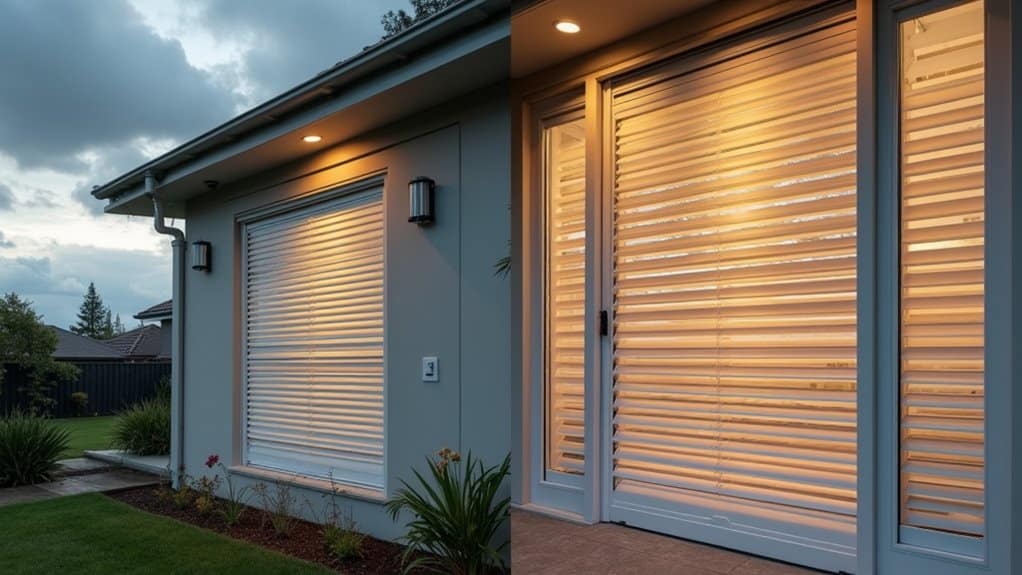
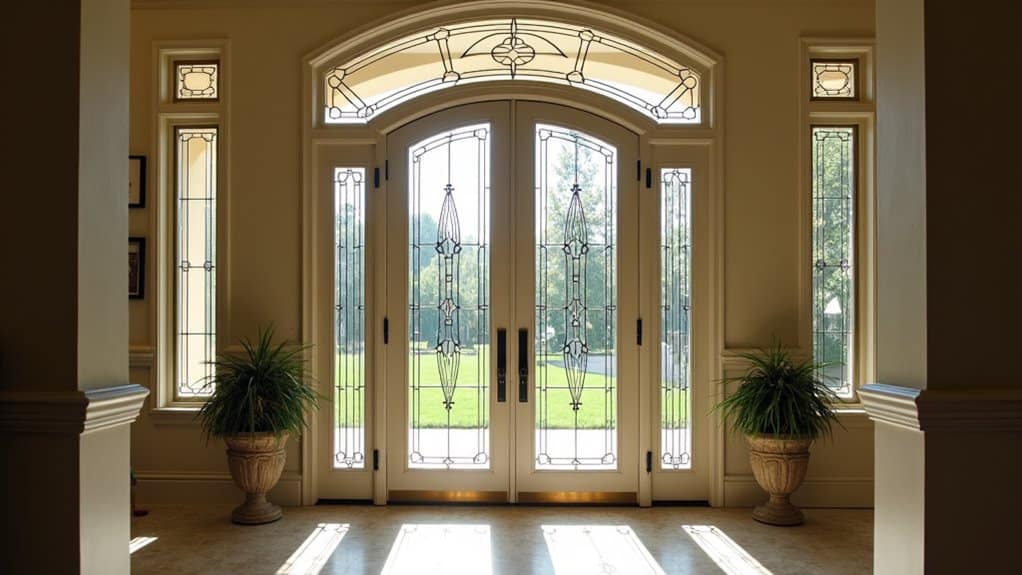
Solid roof lanais hold up better in hurricanes. They channel wind load through continuous structural paths, tied into hurricane straps and engineered connections. Pool cages, by contrast, rely on screen mesh as a sacrificial element that releases under severe pressure. While reinforced cages can hit 150 mph, standard ones rate 100 to 140 mph. Florida Building Code treats both as structural entities. Keep going to learn how debris, codes, and combinations shape your choice.
How Pool Cages and Solid Roof Lanais Differ
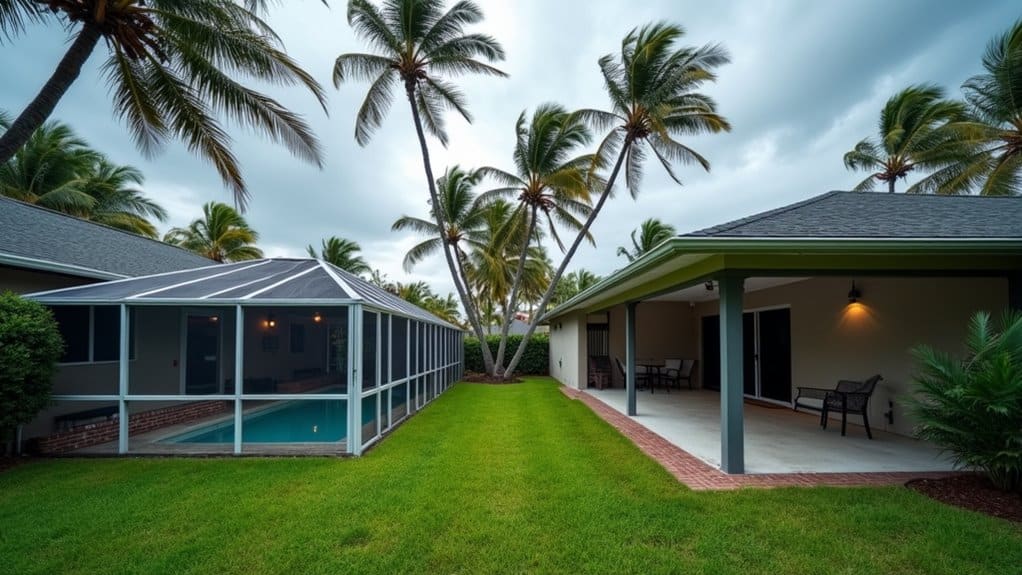
Although both structures shield your pool from insects, debris, and sun, they handle wind load in fundamentally different ways. A pool cage uses lightweight aluminum framing with screen panels that act as sacrificial elements, releasing under severe wind load to transfer less force to the frame. During a pool cage hurricane event, that screen mesh is your weakest component by design. A solid roof lanai works differently: it’s a permanent roofed structure meeting building requirements similar to your home, tied into continuous load paths from roof to foundation using hurricane straps and clips. While a solid roof lanai adds wind load to your home’s roof and walls, proper tie-ins channel that force safely. A pool cage is typically built from an aluminum frame and polycarbonate board, which influences how it responds to extreme wind. Each approach demands different structural attention.
Which Holds Up to 150 MPH Hurricane Winds?
When you’re comparing how these two structures hold up to 150 mph winds, the answer hinges on engineering and code compliance, not the material alone. A pool screen cage Florida installation can survive 150 mph or more, but only when its frame is engineered with reinforced connection points, deep-set footings, cross-bracing, and corrosion-resistant fasteners. The screen itself is the weak link: it transfers wind loads into the frame, and partially attached panels still stress framing members. A solid roof lanai depends on structural members and connections rather than tensioned mesh, eliminating screen flap-induced stress transfer. When engineered to meet or exceed local and national codes, the roof structure becomes the deciding factor. Both structures must adhere to the Florida Building Code and Miami-Dade County standards to ensure verified wind resistance. Generally, the solid roof lanai delivers more consistent wind resistance at 150 mph.
Why Debris Hits Pool Cages Harder
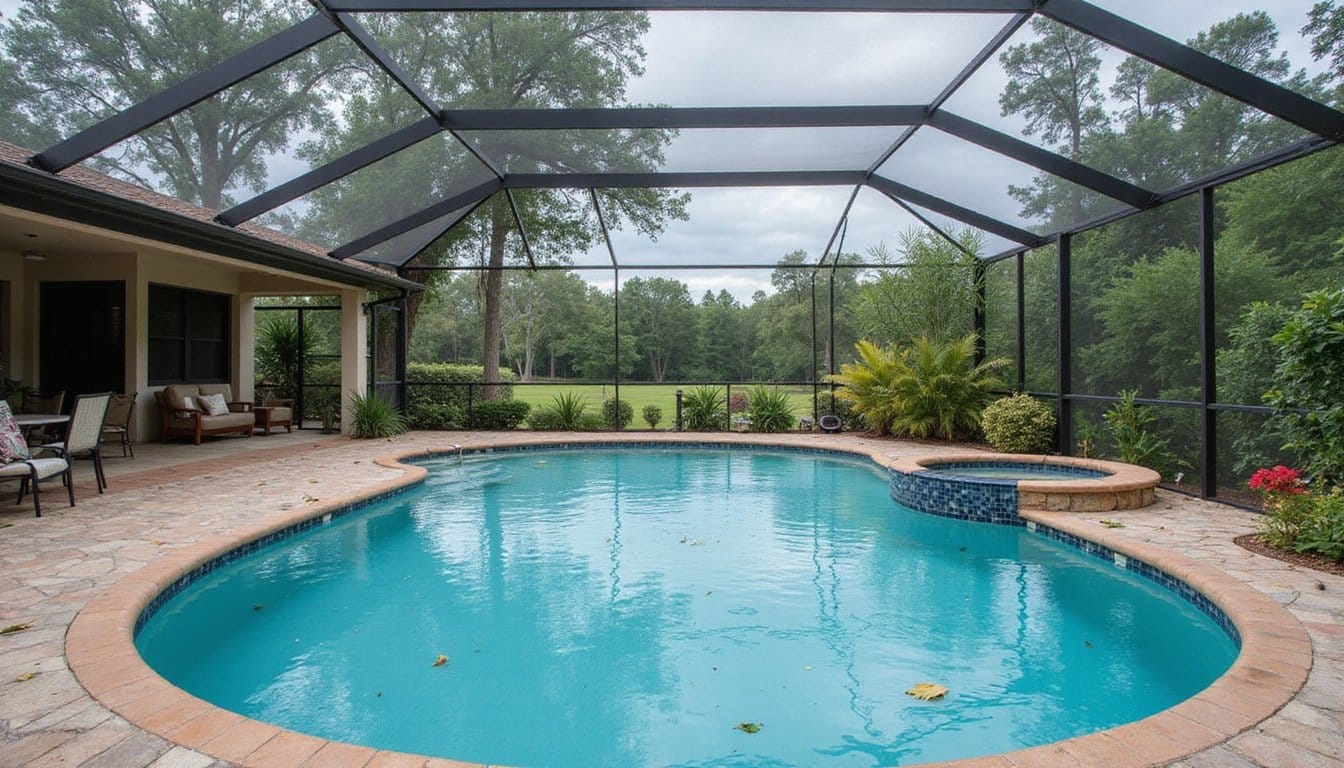
Because a pool cage is designed to block debris while passing air, it acts like a filter that captures everything wind throws at it. Unlike a solid roof that deflects material off a rigid surface, your screen mesh becomes the direct impact point for storm-borne debris. In the pool cage vs lanai comparison, this distinction drives surface loading on your hurricane pool enclosure. Modern enclosures rely on fine-mesh screening mounted on a sturdy aluminum frame to create this physical barrier.
Here’s how debris concentrates on your screen:
- Fine mesh openings stop leaves, twigs, petals, seeds, and dust that would otherwise pass through.
- Continuous perimeter intercepts material across a broad surface, not isolated points.
- Wet debris clumps add weight, increasing the effective load on aluminum framing.
- Worn or corroded screens fail faster under this added strain.
More capture means more cleanup.
What Florida Wind-Load Codes Require
If you think your screen enclosure is just a decorative add-on, Florida Building Code disagrees. Under Section 2002.4, screened enclosures count as structural entities, engineered to resist wind in two orthogonal directions using code-table pressures. Movable structures must withstand 75 mph in the open position, and certain configurations require a 15 psf roof live load. Your aluminum pool cage wind rating ties directly to safety, structural performance, and permit approval, not appearance.
Because Florida wind codes have grown stricter over time, older cages may fail current wind-zone standards. Inspectors evaluate wind compliance alongside structural integrity, and noncompliant frames won’t pass. Local jurisdiction and code edition matter too. So before you schedule a pool screen replacement or major modification, confirm your enclosure meets the current Florida Building Code.
Which Enclosure Should You Choose?
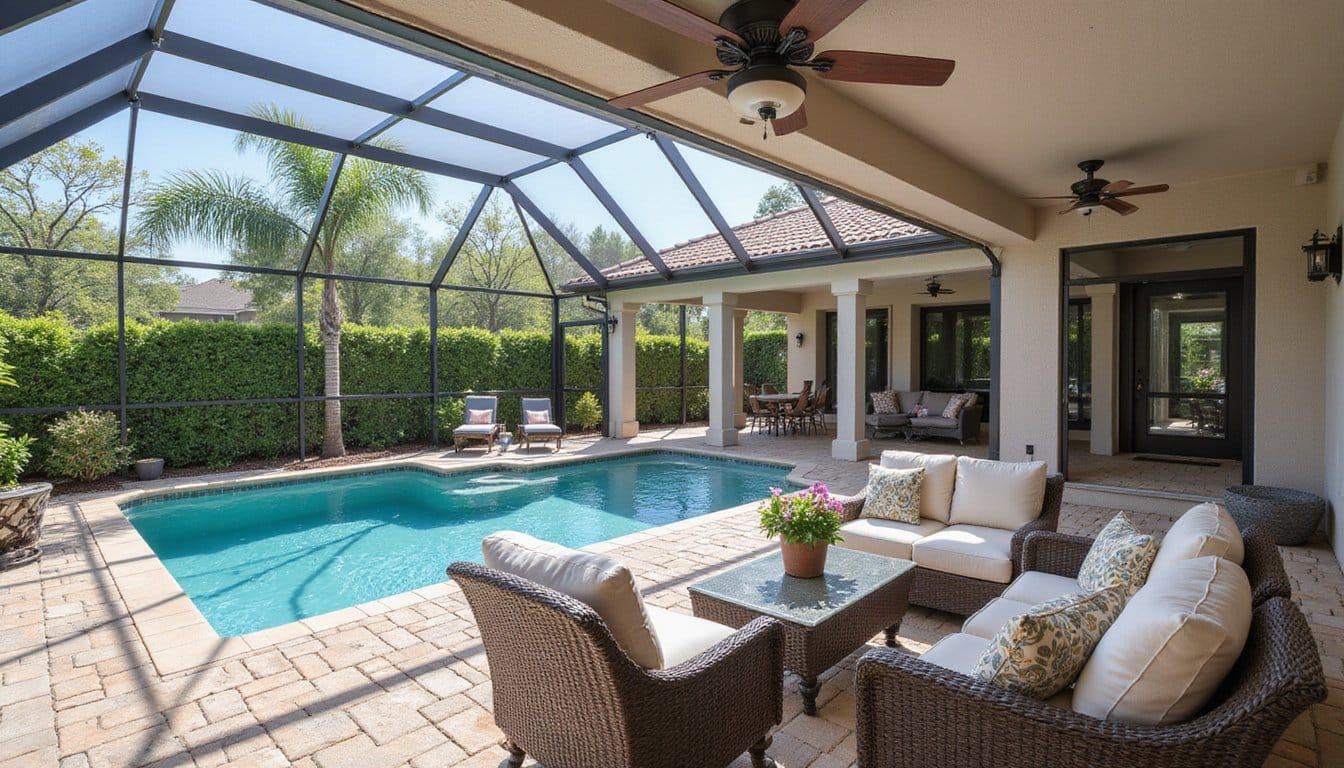
Once you’ve confirmed your enclosure meets current code, the choice between a pool cage and a solid roof lanai comes down to how you weigh storm performance against everyday use. For maximum hurricane resistance, solid roof lanais win because the permanent roof eliminates the large flexible screen surface that debris can puncture.
- Prioritize storm durability: Choose a solid roof lanai or a hurricane-rated screen system tested to ASTM E1886/E1996 or Miami-Dade TAS 201/202/203.
- Prioritize airflow and cost: Choose a standard pool cage rated 100 to 140 mph, accepting screen as a sacrificial element.
- Balance both: Combine a solid roof over seating with a screen cage over the pool.
- Verify connections: Confirm hurricane straps, clips, and continuous load paths at every tie-in.
Get Outdoor Protection Built for Florida Weather
From hurricane garage doors to lanai enclosures, smart outdoor upgrades protect your investment and extend the life of your home. At Innovative Storm Defense serving Boynton Beach, FL, our experienced team delivers dependable Storm Protection Services built for Florida’s toughest weather. Call (561) 517-9399 today and protect what matters most.
Frequently Asked Questions
How Much Does It Cost to Replace Screen Panels After a Hurricane?
You’ll typically pay roughly $1,500 to $4,000 to re-screen an average residential cage, though small single openings run just under $200 for a 3×5 section. Your cost depends on panel size, access difficulty, and screen type, hurricane-rated mesh costs more than standard insect screen. When wind loads bend framing, loosen anchors, or break braces, you’re looking at $5,000 to $15,000 for multi-component repairs, since failed panels often spread damage.
How Long Do Pool Cages Typically Last Before Needing Replacement?
You’ll typically get 7 to 10 years from a well-maintained pool cage, though the range runs 5 to 20-plus years depending on material quality and construction. Durable aluminum with marine-grade stainless fasteners can push you to 20 to 25 years. Florida’s humidity and coastal exposure accelerate corrosion at screws and anchors, weakening load paths. Watch for rusted fasteners, bent frames, and leaning posts, they signal your connections won’t hold design wind loads.
Can I Combine a Solid Roof Lanai With a Screen Cage?
Yes, you can combine them, but only as an engineered, permitted hybrid, not by bolting a solid roof onto a standard cage. Adding that roof changes your load paths, uplift forces, and connection demands, so you’ll need a licensed structural engineer to verify posts, beams, and anchors. Your screen walls still won’t resist debris unless upgraded, so don’t assume the solid roof certifies the assembly for hurricane-force winds.
Does Homeowners Insurance Cover Pool Cage or Lanai Hurricane Damage?
Yes, but typically under your policy’s “other structures” coverage, capped at 10% of your dwelling limit. You’ll face your hurricane deductible first, plus depreciation reductions. Wind-damaged framing’s often covered if no exclusions apply, though standard screens aren’t hurricane-rated, so insurers focus on the structure’s load-bearing components. Check your declaration page for dwelling limits, other structures caps, and deductibles. Document code-rated framing and continuous load-path connections with photos and receipts.
How Often Should I Inspect My Enclosure’s Bolts and Connections?
Inspect your bolts, screws, brackets, and anchor points at least once a year, ideally before hurricane season, plus a second check after any major storm. Focus on roof beams, corner posts, roof-to-wall connections, and slab anchor points, since these transfer storm loads through the frame. If your enclosure’s older than 10 years or shows rust, check more often. Tighten loose fasteners and schedule a professional inspection if you spot corrosion or frame movement.