
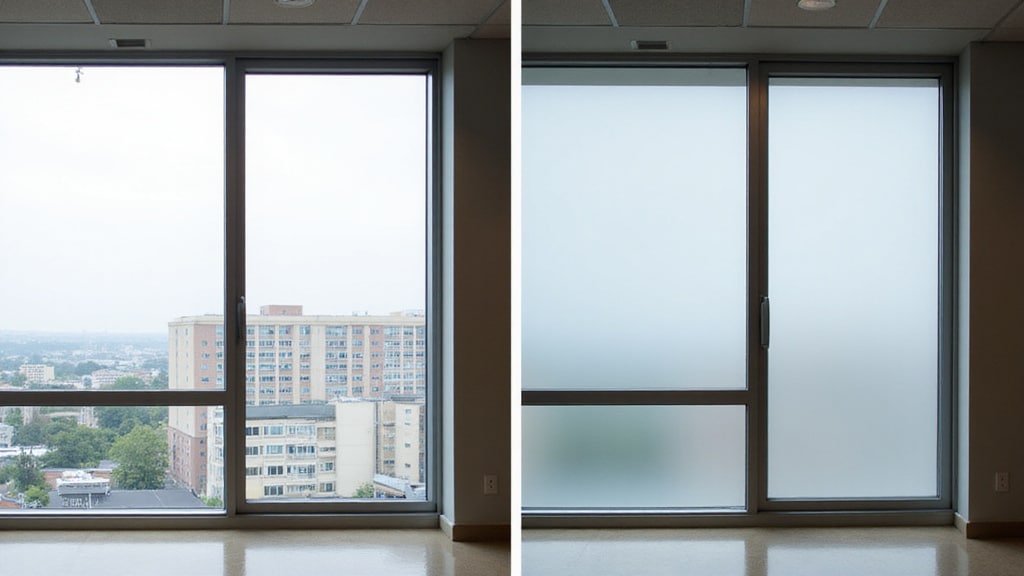
To storm-proof your outdoor living, you’ll need code-compliant upgrades engineered for Florida’s cyclone-force winds, wind-borne debris, and relentless UV. Choose powder-coated aluminum framing, impact-resistant glass, and Miami-Dade-certified systems for proven performance. Layer your defense with motorized hurricane screens, accordion or roll-down shutters, and impact glass, then qualify for wind-mitigation discounts up to 45%. Add UV-stable materials like marine-grade aluminum and teak for sun resistance. Keep going to discover which upgrades deliver the strongest protection and value.
What Makes an Outdoor Upgrade Storm-Smart?
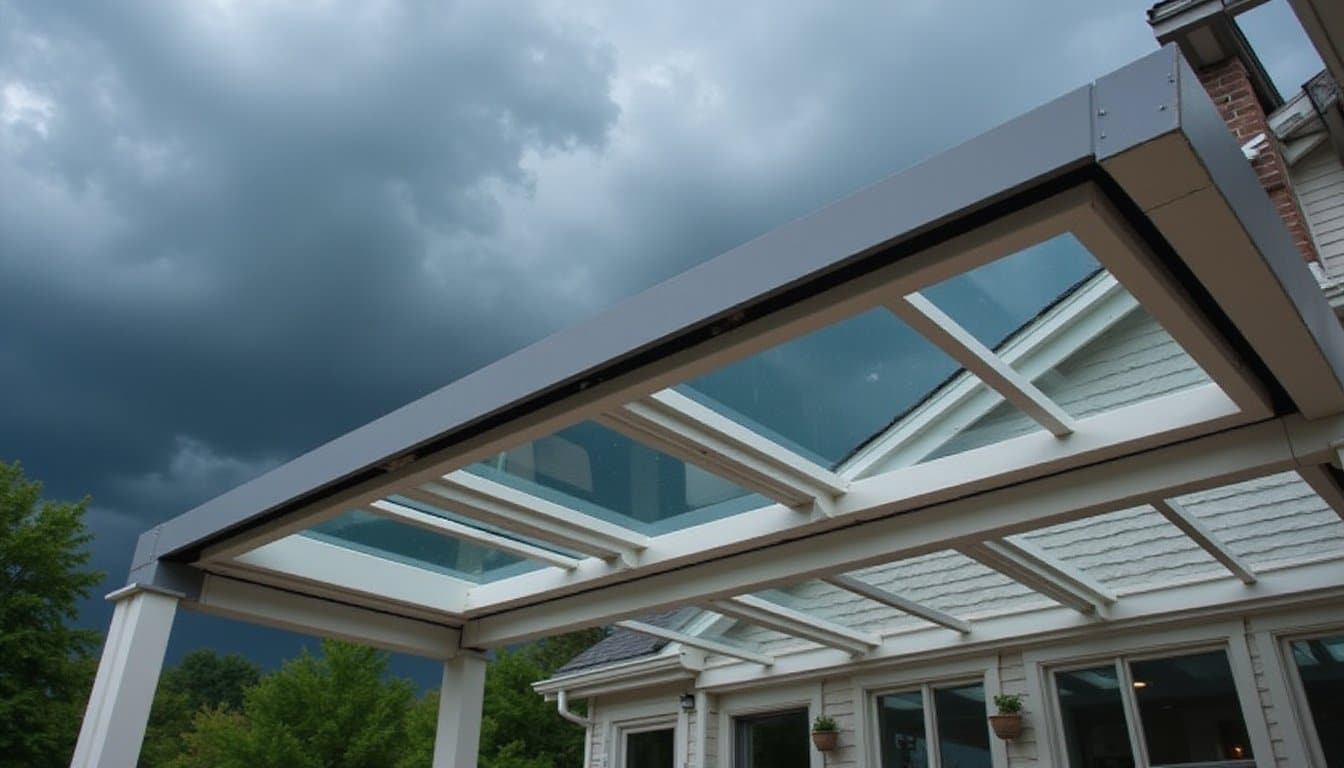
Because South Florida’s outdoor spaces face sustained winds, wind-driven debris, intense rain, and relentless UV and salt exposure, a storm-smart upgrade starts with materials and systems engineered to perform under all of these loads. You want powder-coated aluminum framing, marine fabric, and impact-resistant glass selected for cyclone-force winds, intense rain, and extreme heat. Effective hurricane resistant outdoor design requires components rated to withstand high wind pressures and flying debris, verified by manufacturer certifications and test results. These long-lasting materials ensure structural soundness over time, preserving both performance and appearance across seasons.
Confirm your storm-rated patio meets Florida Building Code or Miami-Dade County standards, impact-rated systems outperform non-certified decorative products. A wind-rated pergola with motorized louvers can be engineered for 140-mph zones when properly anchored. Prioritize easy, retractable deployment so you balance everyday usability with reliable protection before each storm arrives.
Motorized Hurricane Screens for Wind and Shade
When you need a system that handles both daily sun and seasonal storms, motorized hurricane screens deliver dual-purpose performance over large openings like lanais, patios, balconies, and entryways. These Florida outdoor upgrades close over exposed spans to resist high winds, wind-borne debris, and wind-driven rain, while solar mesh blocks up to 95% of UV rays.
| Performance Factor | Standard Systems | High-Performance Systems |
|---|---|---|
| Wind Rating | 25, 50 mph | Up to 200 mph |
| Approvals | Limited | Miami-Dade, Florida State |
| UV Blocking | Solar control | 91, 95% |
| Operation | Motorized | Motorized + crank backup |
| Cooling Savings | Moderate | 25, 49% |
For hurricane patio upgrades, verify aluminum framing, self-tensioning sidetracks, and code approvals before installation. Many advanced models include obstacle detection features that stop and reverse screen movement to enhance convenience and protection. Retract standard screens above 35 mph to limit wear and prevent load transfer to adjacent structures.
Storm Catcher Screens That Cut Wind by 95
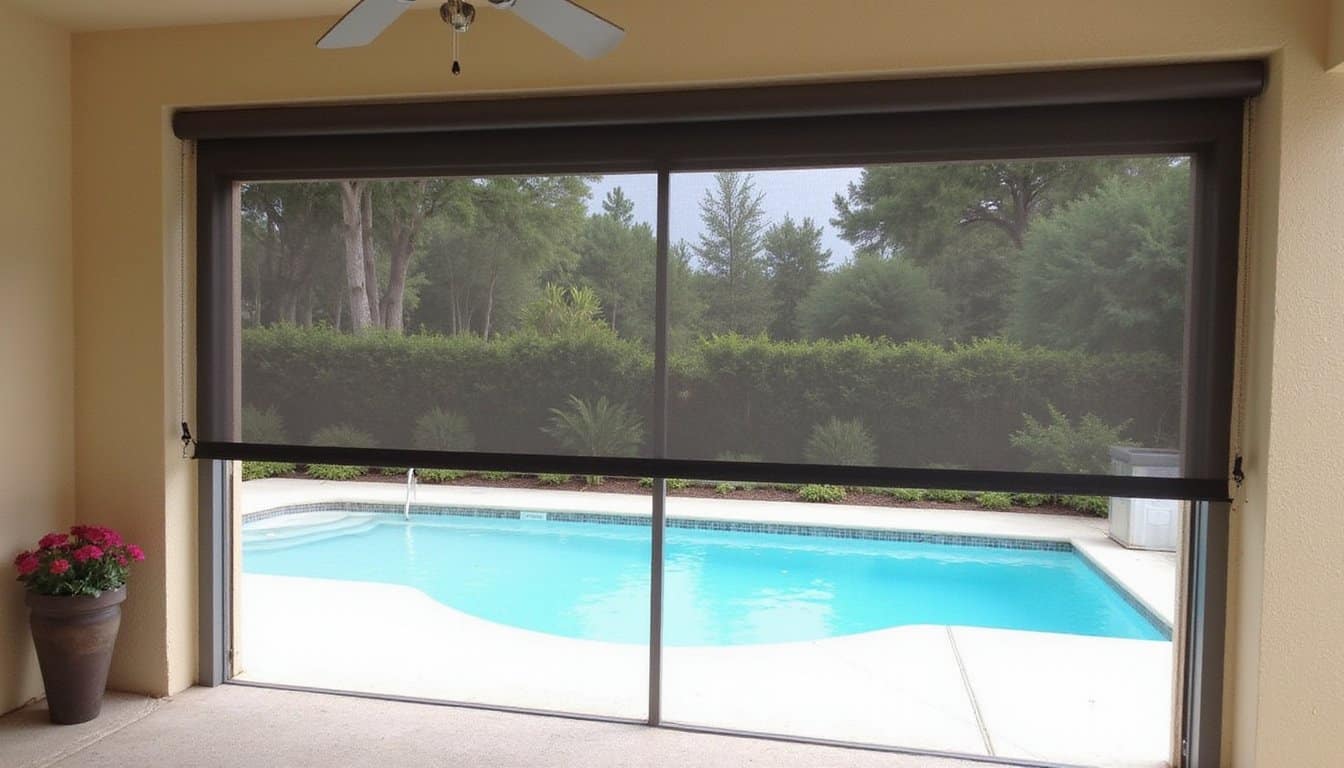
Although they look like ordinary mesh, Storm Catcher Wind Abatement Screens are engineered to cut wind velocity by up to 95%, turning hurricane-force gusts into remarkably calmer air behind the screen. You get protection against driving rain and flying debris without rigid shutters, while preserving your view. Made from advanced monofilament fabric, these screens are effective against gusts of up to 150 mph. For hurricane outdoor living, you can specify roll-down versions on large openings like lanai enclosures and entryways, operating them remotely, even by phone, for fast storm preparation. The manufacturer presents the 95% figure as a performance claim, not independent lab data, so verify approval scope for your jurisdiction. Installation allows two opposite side attachments with no deflection requirements unless you’re in the HVHZ or certain Miami-Dade conditions. When protecting a pool cage hurricane setup, confirm attachment method, opening size, and Florida code documentation.
Accordion Shutters for Everyday Storm Defense
If you want dependable storm defense without the hassle of removable panels, accordion shutters deliver fast, permanent protection that’s ready before every forecast. These permanently mounted systems use interlocking aluminum panels guided by top and bottom tracks, sliding across sliding glass doors and large windows. You fasten tracks to structural framing, concrete block, or poured concrete for code-compliant load transfer.
| Feature | Specification | Benefit |
|---|---|---|
| Operation | Manual fold/unfold | No power needed |
| Rating | Category 5 certified | FBC compliant |
| Anchoring | Studs, block, concrete | Proper load transfer |
| Panels | Interlocking aluminum | Debris resistance |
When you protect your Palm Beach outdoor living areas or shield an outdoor kitchen Florida setup, accordion shutters resist wind pressure and flying debris while supporting everyday readiness, safety, and durability.
Aluminum Roll-Down Shutters for Coastal Homes
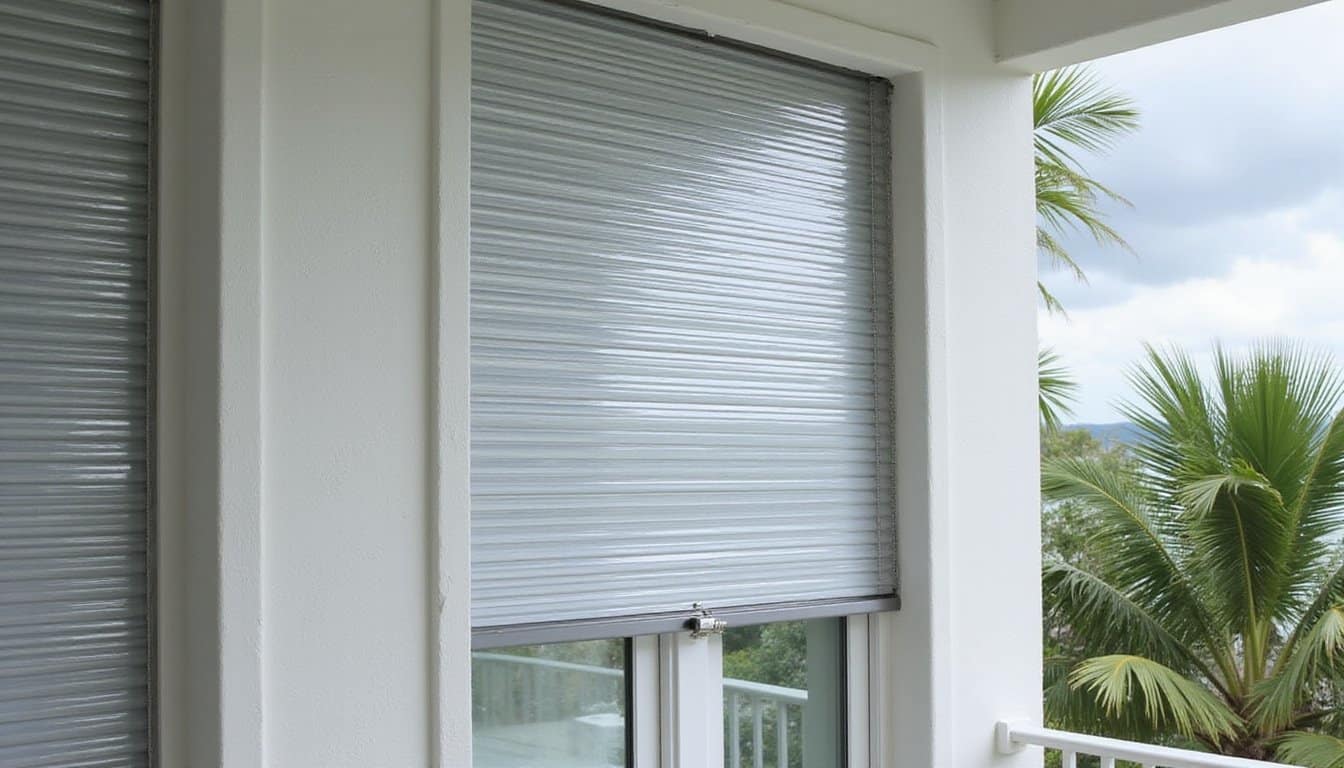
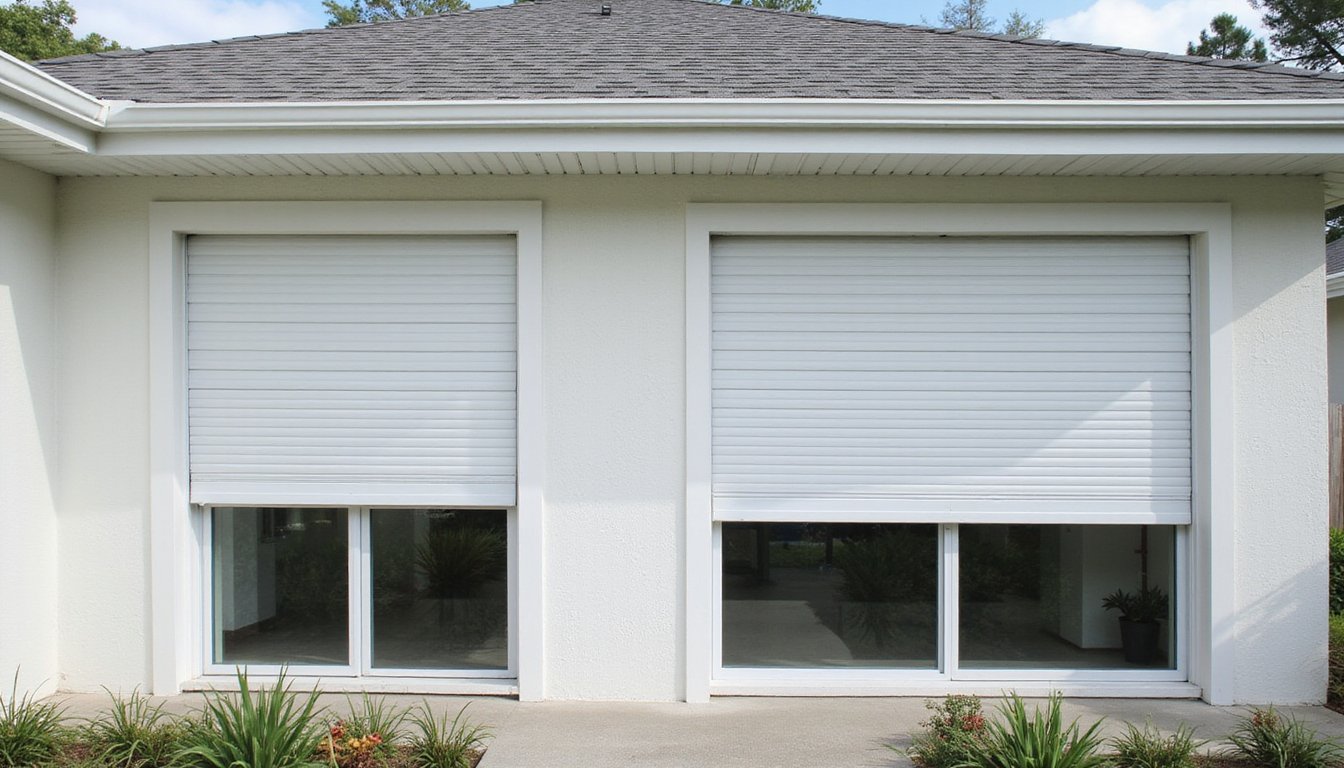
Because coastal salt air corrodes steel and shortens the life of many storm products, aluminum roll-down shutters give you a longer-lasting, code-compliant defense for your openings. Aluminum resists corrosion far better than steel-based systems, and quality units commonly last 20-30 years with proper maintenance, well beyond the 10-15 years you’d get from fabric screens. Choose Miami-Dade or Florida Building Code-approved products, and look for end-retention track systems that keep slats engaged under storm pressure. Some aluminum systems carry CAT-5 ratings for the highest wind category, shielding glass from flying debris, wind-driven rain, and intense Florida sun. You deploy them quickly from a single operating point, gaining protection, noise control, and reduced solar heat gain. Expect $25-50 per square foot installed, reflecting that added convenience and defense.
Impact Windows and Doors for Year-Round Protection
While roll-down shutters protect openings on demand, impact windows and doors defend your building envelope 24/7 without any setup before a storm. Their laminated glass holds shattered fragments in place after impact, limiting openings that admit wind and rain, while reinforced frames complete the system. You’ll find design pressure (DP) ratings indicate how much wind load and suction each assembly withstands. In wind-borne debris regions and HVHZ counties like Miami-Dade and Broward, these products meet strict impact standards when carrying Miami-Dade NOA or Florida Product Approval labels. Beyond debris resistance, you’ll gain noise reduction, UV protection, improved safety, and lower cooling loads. You may also qualify for wind-mitigation insurance credits and increased property value, all without sacrificing aesthetics to visible exterior shutters year-round.
Shutters vs. Screens vs. Impact Glass: Which Wins?
When you’re choosing storm protection for your outdoor openings, you’re weighing three systems that meet code differently: shutters, screens, and impact glass. High-quality shutters can match impact glass for debris resistance at the same certification tier, but they demand active deployment before each storm, while impact glass delivers passive, year-round protection at a higher upfront cost. Your decision comes down to protection strength, cost and convenience, and which system fits the opening you’re covering, whether that’s a window, a garage, or a wide lanai.
Protection Strength Compared
If you’re weighing shutters, hurricane screens, and impact glass against one another, you’ll find that none of them wins every category outright. Each system targets a different priority, so your choice depends on opening size, deployment tolerance, and envelope goals.
| Priority | Best Option |
|---|---|
| Maximum rigid impact blocking | Shutters |
| Uninterrupted 24/7 protection | Impact glass |
| Flexible coverage of large openings | Hurricane screens |
| Forced-entry resistance | Impact glass |
| Visibility and lifestyle balance | Hurricane screens |
Shutters give you the hardest physical shield, but they demand pre-storm deployment. Impact glass protects continuously since it’s built into the window, though it’ll crack under sufficient force. Screens cover lanais and garages while preserving light, yet they’re less rigid. All three reduce debris penetration and help maintain envelope integrity.
Cost and Convenience
Protection strength tells only half the story; what you’ll pay upfront and live with day to day often decides the final call. Storm panels win on price at $7, $20 per square foot installed, but you’ll manually mount, remove, and store each one. Accordion shutters run $15, $30 per square foot and stay attached, though you still deploy them before every storm. Roll-down shutters cost $25, $60 per square foot and deploy fast, especially motorized. Hurricane screens at $7, $20 per square foot balance permanence with easy deployment across large lanais. Impact glass demands the most upfront, $1,000, $3,000 per window, but needs zero pre-storm setup. Both shutters and impact glass qualify for 10%, 45% wind-mitigation discounts. Choose panels on tight budgets, accordions for moderate value, impact glass during whole-home replacement.
Best Use Cases
Because no single product wins every scenario, you’ll match each system to the opening it defends and the way you plan to live with it.
- Standard windows and doors: Choose impact glass when you want a permanent, always-ready system with a reinforced frame and design-pressure rating, no deployment steps required.
- Existing windows you won’t replace: Install hurricane shutters as exterior barriers that deflect debris before impact reaches the glass, deployed only when a storm approaches.
- Wide lanai and patio openings: Specify motorized impact screens, woven high-strength fabric engineered for large, exposed spans that standard window systems can’t cover.
- Garages and open-air rooms: Pair retractable screens with rated framing so you preserve open-air living while maintaining a deployable storm barrier.
Beating Florida Sun, Heat, and UV Damage
While hurricanes grab the headlines, Florida’s relentless sun, heat, and UV exposure damage your outdoor living space every single day. Choose UV-stable materials that withstand sustained exposure: marine-grade aluminum resists rust, HDPE stays impermeable and low-maintenance, and Grade A teak’s natural oils handle humidity. Skip natural wicker and rattan, they absorb moisture and rot. For decking, specify ipe, cumaru, garapa, travertine, or porcelain pavers, which stay cooler underfoot than many composites.
Add shade with aluminum pergolas, retractable awnings, or sail shades, all finished with fade-resistant, powder-coated coatings for corrosion and UV resistance. Plant native, drought-tolerant species and position shade trees on west and south exposures.
Extend usability with outdoor fans, misting systems that drop temperatures 10, 15 degrees, and low-voltage LED lighting that adds light without heat.
Which Upgrades Add the Most Home Value?
Where should you invest your renovation budget for the strongest resale return? Focus on exterior replacements that improve first impressions without altering layout, since these consistently outperform large remodels. Garage door replacement leads the field, especially when you specify a wind-rated, impact-resistant unit that protects this large opening from pressurization failure during sustained storm loads.
Prioritize these high-return upgrades:
- Garage door replacement, reported ROI from 102.7% to 349.3%, plus critical wind-load defense.
- Steel entry door replacement, reported ROI near 100.9% to 216%.
- Manufactured stone veneer, reported ROI around 102.3% with strong curb appeal.
- Fiber-cement siding replacement, reported resale recovery around 97% to 114%.
Pair these with landscaping cleanup and power-washing to sharpen first impressions affordably.
Building Your Layered Storm-Protection System
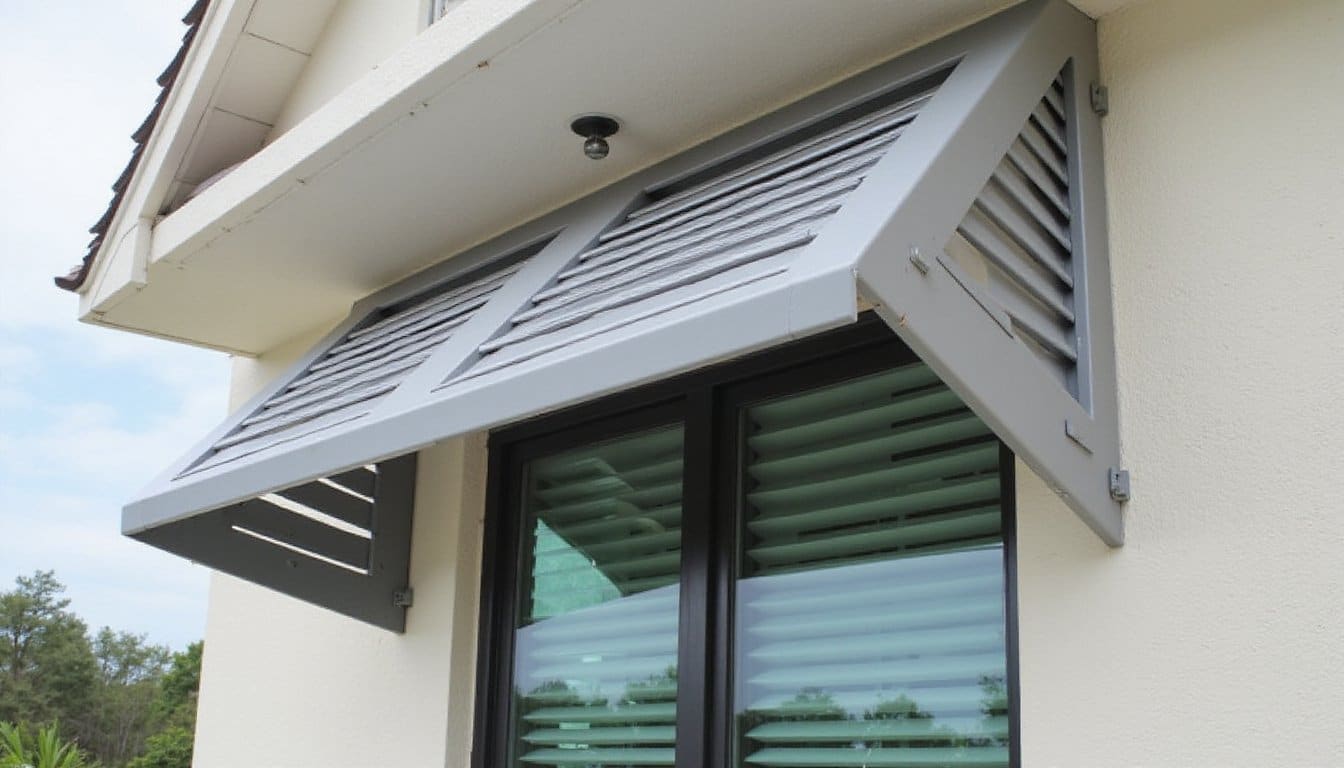
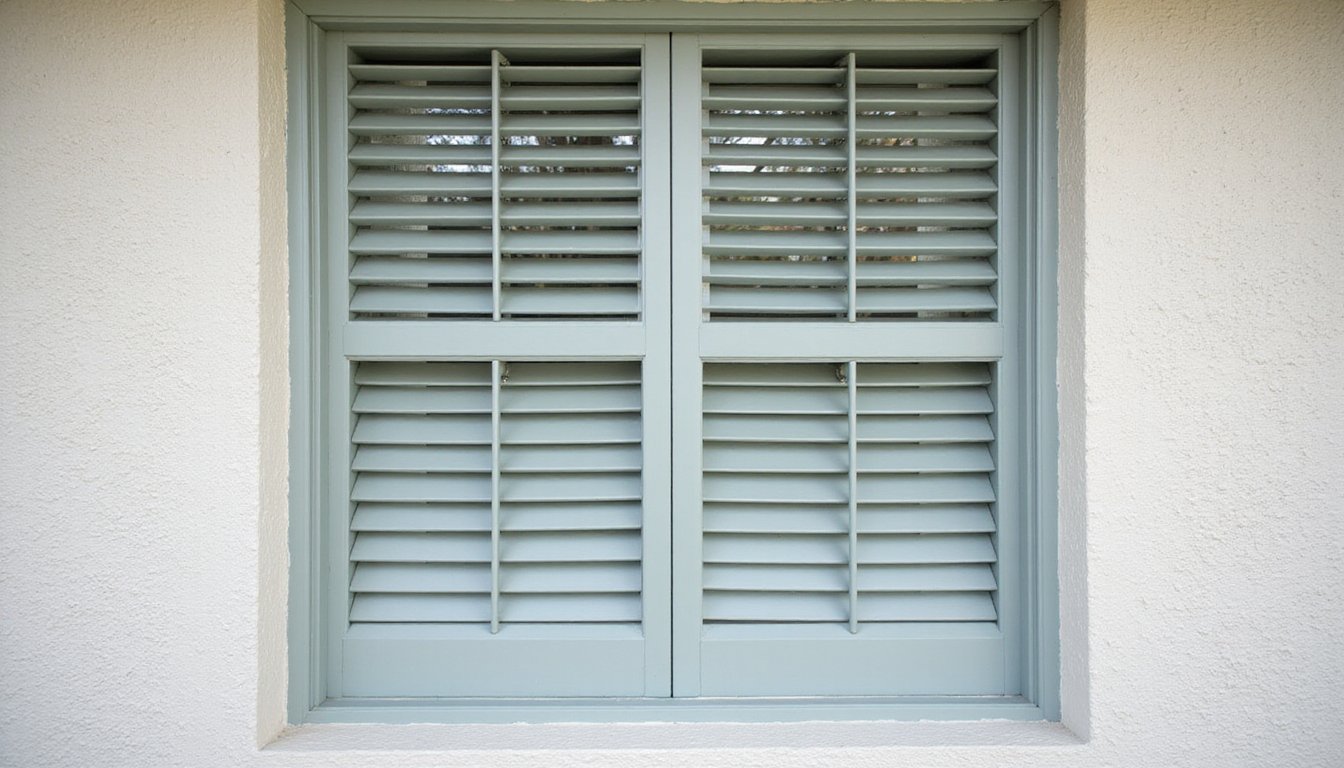
Once you’ve prioritized high-return exterior upgrades, you’ll want to integrate them into a coordinated defense rather than treating each as a standalone fix. Because one compromised opening can transfer wind load onto adjacent components, you’ll layer protection across every vulnerable point. Start with perimeter hardening: hurricane screens for spans of 40, 60+ linear feet, where single-panel barriers leave gaps. Add accordion, Bahama, Colonial, or motorized roll-down shutters over windows and doors, and consider impact-resistant windows and doors for permanent defense.
Next, reinforce structures, secure pergolas and gazebos with hurricane straps or anchors. Then address drainage with French drains, permeable paving, or rain gardens to prevent flooding. Finally, confirm code-compliant installation throughout. This integrated, multi-layer approach guarantees each component supports the others under sustained storm loads.
Get Outdoor Protection Built for Florida Weather
From hurricane garage doors to lanai enclosures, smart outdoor upgrades protect your investment and extend the life of your home. At Innovative Storm Defense serving Boynton Beach, FL, our experienced team delivers dependable Storm Protection Services built for Florida’s toughest weather. Call (561) 517-9399 today and protect what matters most.
Frequently Asked Questions
How Much Do Storm-Smart Outdoor Upgrades Typically Cost in Florida?
You’ll typically spend in the low-thousands for hurricane shutters, around $3,000 inland and $5,000 in suburban coastal Florida. Hurricane screens generally cost less than impact windows, while impact windows, doors, and roof upgrades represent higher-ticket categories. Your final price depends on home size, product type, installation complexity, and code-compliance level. Don’t forget you can offset costs through My Safe Florida Home grants, wind mitigation discounts, and financing options like 9.99% APR.
Do Impact Windows or Shutters Qualify for Insurance Discounts?
Yes, both impact windows and approved shutters qualify for Florida wind mitigation discounts, applied to your windstorm premium. You’ll need a wind mitigation inspection verifying that all glazed openings are protected, one unprotected window or glass door can reduce or eliminate your opening-protection credit. Reported savings range from 5% to 20% of annual premiums, though documented product approvals and updated inspection results must reach your carrier before premium reductions take effect.
Are Permits Required for Installing Hurricane Screens or Shutters?
Yes, you’ll almost always need a building permit. Most Florida jurisdictions require one before you install hurricane shutters or screens treated as opening-protection products. The permit process verifies your exact product approval, mounting method, anchors, and location, even when the product’s already code-approved. Rules vary by county, city, and hurricane zone, and you’ll typically need a final inspection. Assume a permit’s required unless your local building department confirms an exemption in writing.
How Long Does Professional Installation of Storm Protection Take?
You’ll typically see impact window installation finish in 1, 3 days for an average home, though custom sizing and standard production add 2, 4 weeks of lead time before crews arrive. Shutter timelines vary by type, opening count, and mounting conditions, complex roll-down or colonial systems take longer. Expect added time for structural reinforcement, code-compliant fastening, and post-installation testing. The more openings you’re protecting, the longer your project runs.
What Maintenance Do Motorized Screens and Shutters Need Over Time?
You’ll clean screen fabric with mild soap and water to remove salt and debris, then rinse thoroughly and avoid abrasive scrubbers. Inspect tracks, zippers, and grommets for corrosion or blockages, and apply non-oil-based or dry lube about every six months. Check for tears, fraying, or misalignment, and replace damaged mesh early. Schedule an annual professional inspection before hurricane season, since coastal salt and moisture accelerate wear on motorized systems.