



South-facing windows will give you the most abundant natural light throughout the day, making them ideal for main living spaces and indoor plants. North-facing windows provide consistent, diffused illumination without harsh glare, while east-facing windows deliver energizing morning light. West-facing windows offer intense afternoon sun but require careful heat management. You’ll optimize your home’s natural illumination by understanding how each window orientation uniquely impacts your interior spaces.
Understanding Window Direction Fundamentals
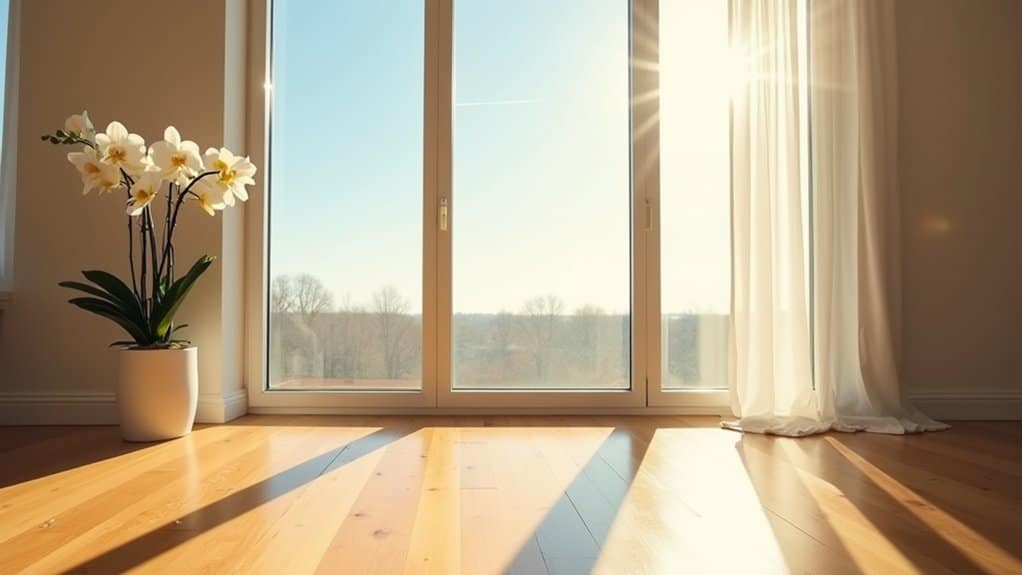
When planning the ideal layout for natural illumination, understanding how window orientation affects light quality and distribution is essential. Each window direction offers distinct lighting characteristics that you’ll need to contemplate for preferred natural light throughout your space.
South-facing windows deliver the most abundant sunlight during daylight hours, making them ideal for maximizing natural illumination. North-facing windows provide consistent, diffused light without harsh direct rays. If you’re seeking bright morning light, east-facing windows are your best choice, as they’ll flood your space with sunlight during early hours while keeping it cooler later. West-facing windows bring intense afternoon light but require careful deliberation due to potential heat gain. By strategically positioning windows based on their orientation, you’ll create spaces that harness natural light effectively while maintaining comfortable indoor temperatures.
The Unique Benefits of South-Facing Windows
Among all window orientations, south-facing windows stand out as powerhouses for natural illumination. These prime openings harness the sun’s trajectory to maximize your home’s energy efficiency through passive solar heating. You’ll benefit from consistent sunlight throughout the day, creating bright, inviting spaces that reduce your reliance on artificial lighting.
South-facing windows excel at natural lighting, using the sun’s path to boost energy efficiency while filling homes with welcoming daylight.
Consider these key advantages of south-facing windows:
- They provide ideal conditions for thriving indoor plants, transforming your living spaces into vibrant, natural environments
- You’ll capture maximum warmth during cooler months, substantially lowering heating costs through solar gain
- When properly shaded, they offer year-round comfort by allowing winter sun while blocking intense summer heat
To optimize these benefits, you’ll want to incorporate energy-efficient glazing and strategic window treatments, ensuring your south-facing windows work effectively in all seasons.
Maximizing North-Facing Window Performance
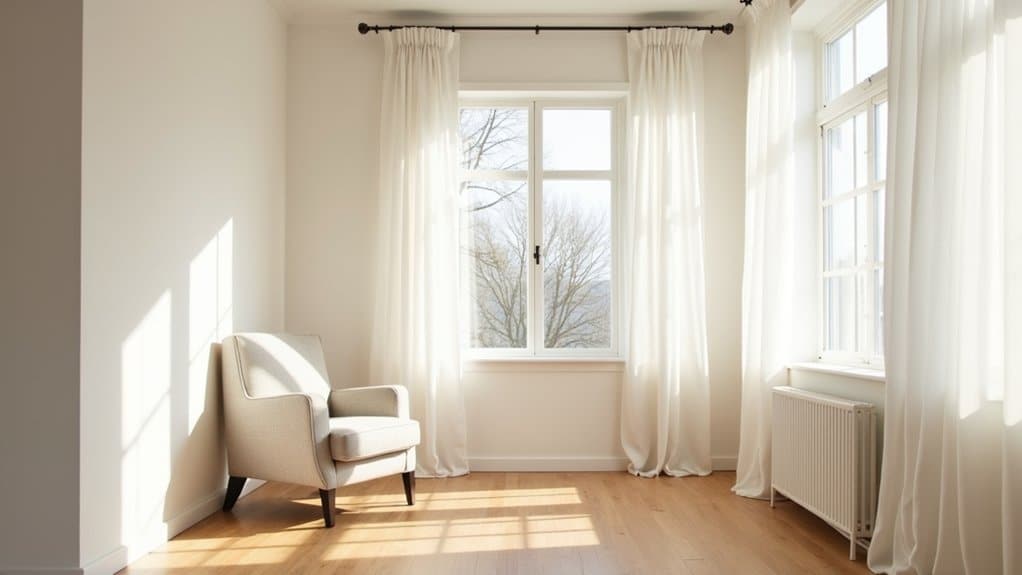
Although north-facing windows don’t receive direct sunlight, they’re invaluable assets for creating consistently illuminated spaces with minimal glare. You’ll find these windows particularly beneficial for displaying light-sensitive items like artwork and photographs, as the diffused light reduces UV damage and preserves their condition.
To optimize your north-facing windows’ performance, consider implementing energy-efficient treatments and proper insulation to counteract the cooler temperatures these spaces typically experience. Paint your walls in lighter colors and incorporate reflective surfaces to maximize the natural light distribution. If you’re setting up a home office or studio where consistent lighting is essential, position your workspace near these windows. The steady, indirect illumination they provide creates ideal conditions for detailed work while maintaining comfortable visual conditions throughout the day.
Harnessing Morning Light With East-Facing Windows
East-facing windows offer a distinct advantage in capturing the day’s first rays, providing an ideal balance of natural illumination and thermal control. You’ll find these windows particularly effective in breakfast nooks and living spaces where morning activities demand optimal best natural light.
To maximize the benefits of east-facing windows in your home:
- Position meal preparation areas and breakfast zones to harness the warm and inviting morning sunlight
- Complement the windows with light-colored walls to amplify the natural illumination throughout your space
- Utilize the strategic orientation to reduce afternoon heat gain while maintaining bright, energized interiors
The morning light streaming through east-facing windows creates an invigorating atmosphere perfect for start-of-day activities. This orientation minimizes the need for artificial lighting during early hours while naturally cooling your space as the day progresses.
Managing Heat and Glare in West-Facing Windows
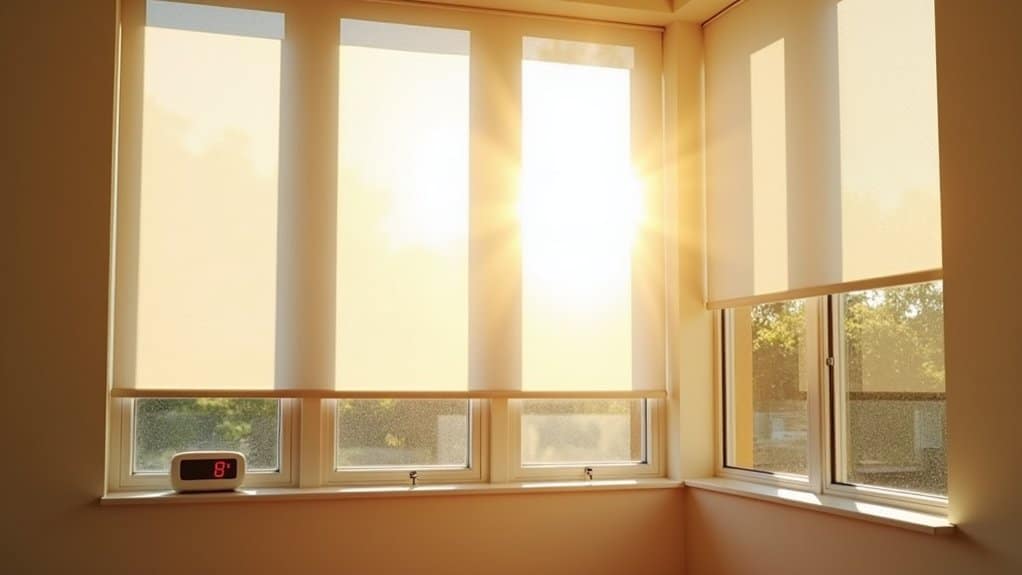
While east-facing windows welcome gentle morning light, west-facing windows present unique challenges that require careful management strategies. The intense, low-angle sunlight streaming through west-facing windows in late afternoon can create excessive heat and glare in your living spaces.
To optimize these challenging windows, you’ll want to implement multiple solutions. Start by installing energy-efficient windows with low-E coatings and double glazing to minimize heat transfer. Add exterior shading devices like awnings or strategically planted trees to block direct sunlight. Inside, use light-colored, reflective window treatments to control glare and manage temperature. You can further enhance comfort by positioning large potted plants near the windows or arranging furniture away from direct sunlight paths. These combined approaches will help you maintain comfortable, well-lit spaces despite western exposure.
Seasonal Considerations for Window Orientation
You’ll notice dramatic differences between summer and winter light patterns, with south-facing windows receiving up to three times more sunlight during winter months compared to summer. Peak solar hours shift considerably across seasons, requiring you to adjust your window treatments and shading strategies to maintain ideal indoor temperatures and comfort levels. Weather conditions like cloud cover and precipitation can impact the effectiveness of your window orientation strategy, making it essential to incorporate flexible solutions that adapt to both seasonal and daily variations in natural light.
Summer Light Vs Winter
The dramatic shift between summer and winter sunlight patterns creates distinct challenges for ideal window orientation in residential design. You’ll need to balance the benefits of south-facing windows’ winter warmth against their potential for summer overheating. Strategic window placement can help you optimize natural light while managing seasonal solar gain.
Consider these key orientation factors:
- South-facing windows provide maximum winter heat gain but require shading solutions for summer comfort
- North-facing windows deliver consistent, glare-free illumination year-round, ideal for workspaces and studios
- East and west-facing windows require different management approaches morning light from the east is gentler, while western exposure needs careful thermal control
To enhance your window’s thermal performance, complement orientation choices with energy-efficient windows featuring low-E coatings and multiple glazing layers. This combination optimizes both illumination and temperature control throughout changing seasons.
Peak Solar Hours
Successfully maximizing window placement requires a precise understanding of peak solar hours across seasons. During summer, you’ll find the most direct sunlight between 10 AM and 2 PM, making windows facing south your best choice for maximizing natural sunlight throughout the day. However, winter’s lower sun position shifts peak hours to 11 AM-3 PM, when east-facing windows capture ideal morning light.
Your latitude greatly impacts how sunlight enters your windows, with equatorial locations receiving more intense direct rays compared to higher latitudes’ oblique light patterns. To maximize natural sunlight year-round, consider a strategic mix of orientations. South-facing windows excel in summer illumination, while east and west exposures prove more effective during winter months, helping you reduce artificial lighting needs while maintaining consistent daylight levels.
Weather Impact Assessment
When planning ideal window placement, seasonal weather patterns greatly influence your orientation decisions. Understanding how different window directions affect your home’s natural lighting and heating and cooling costs throughout the year is pivotal for supreme design.
Consider these key factors when evaluating weather impact:
- South-facing Windows maximize sunlight exposure during winter months, providing passive solar heating when you need it most, but may require strategic shading in summer
- East and west-facing Windows deliver distinct lighting patterns morning freshness from the east and warm afternoon glow from the west affecting your home’s daily temperature fluctuations
- North-facing Windows provide consistent, diffused light ideal for temperature stability and protection of light-sensitive items, making them perfect for climate-controlled spaces
Your ideal window Direction depends on balancing these seasonal lighting patterns with local weather conditions.
Energy Efficiency Through Strategic Window Placement
Strategic placement of windows plays a pivotal role in optimizing your home’s energy performance. Window orientation directly impacts your space’s thermal efficiency, with south-facing windows providing maximum natural warmth during winter months in the northern hemisphere. You’ll find this direction is ideal for spaces requiring significant daylight and passive solar heating.
When choosing the right placement for new windows, consider that proper shading solutions are essential. Installing trees, awnings, or architectural overhangs will reduce heating costs while preventing summer overheating. The best direction for your windows depends on your climate zone in warmer regions, you’ll want to minimize unshaded southern exposure. To maximize efficiency, combine strategic orientation with high-performance windows that feature double or triple glazing, low-E coatings, and inert gas fills. This approach guarantees thermal regulation year-round.
Window Treatment Solutions for Each Direction
Your window treatment choices play a vital role in managing direct sunlight exposure throughout your home, with each orientation requiring specific solutions to optimize natural illumination. You’ll need to take into account seasonal sun patterns when selecting treatments, as south-facing windows demand different strategies in summer versus winter, while east and west exposures require adaptable solutions for varying light intensities. By matching each window’s orientation with appropriate coverings from light-filtering sheers for northern exposure to robust blackout options for western light you can create a balanced, comfortable interior environment that maximizes daylight while minimizing glare and heat gain.
Managing Direct Sunlight Exposure
Effectively managing direct sunlight through window treatments requires a tailored approach for each cardinal direction. The direction your windows face directly impacts how your home’s natural light flows through living rooms and other spaces. Windows receive varying intensities of sunlight throughout the day, making it essential to provide the right solutions for optimal illumination control.
- North-facing windows offer consistent, indirect light that’s easily managed with light-filtering shades to maintain comfort while preventing drafts.
- South-facing windows need robust exterior solutions like awnings to handle intense midday exposure.
- East and west-facing windows require different strategies solar screens for morning eastern light, and heavy-duty blinds for afternoon western glare.
Consider automated treatments to maximize efficiency across all orientations. These smart solutions adjust automatically throughout the day, ensuring your home maintains ideal light levels while managing heat gain.
Seasonal Adjustment Strategies
Adapting window treatments seasonally maximizes both comfort and energy efficiency throughout the year. When it comes to managing different areas of your home, each window orientation requires specific solutions.
For north-facing windows, you’ll want insulating curtains to retain natural heat in winter, while south-facing large windows benefit from adjustable awnings to keep rooms cooler in summer. Consider soft light management for east-facing windows using sheer draperies during morning hours, paired with cellular shades for afternoon protection. West-facing windows for your home need robust solutions like heavy draperies or motorized blinds to combat excessive heat and intense afternoon sun.
For ideal year-round control, implement reversible curtains or removable inserts that can adapt to changing seasonal needs while maintaining your desired light levels and temperature balance.
Direction-Specific Treatment Options
The selection of direction-specific window treatments plays a pivotal role in optimizing natural light and thermal comfort throughout your home. Each window’s unique characteristics require tailored solutions to manage light effectively in specific areas.
- North-facing windows are ideal for sheer curtains or light-colored blinds, as they don’t receive much sunlight but benefit from light-reflecting treatments to maximize warm light.
- South-facing windows, which receive intense heat throughout the day, work perfectly with blackout curtains or solar shades to regulate temperature and glare.
- East and west windows require distinct approaches: cellular shades or plantation shutters are ideal for morning eastern light, while thermal-lined draperies excel at managing western afternoon exposure.
For detailed control, consider motorized roller shades, making them ideal for automated adjustment as the sun moves across your home.
Frequently Asked Questions
What Is the Best Direction for Natural Light Windows?
You’ll get the most natural light through south-facing windows, making them your best window size choice. When planning window placement strategies, consider combining window glass selection with strategic orientation climate factors. You can enhance performance through window tinting options and window shading techniques. Don’t forget window insulation benefits, especially for temperature control. Your window location considerations should balance light needs with seasonal changes, ensuring year-round illumination and comfort.
Where Should Windows Be Placed for Natural Light?
For ideal daylight optimization, you’ll want to prioritize south-facing window placement as your primary natural illumination strategy. Consider room orientation when designing sun tracking window arrangements place living spaces on the south side. You can complement this with east-facing fenestration for morning light, while using architectural daylighting techniques like clerestory windows on west and north faces. This energy efficient approach guarantees balanced natural light throughout your space.
Why Are South Facing Windows Better Than North?
You’ll find south-facing windows superior because they maximize passive solar heating and optimize solar angle impact throughout the year. They’ll capture more direct sunlight, especially during winter when you need it most. While north-facing windows provide consistent but dim light, south-facing window placement considerations allow for better light quality control through strategic window design strategies. You can also harness thermal mass benefits and manage seasonal light changes through adjustable shading devices.
Which House Direction Is Best for More Natural Light?
You’ll get ideal natural light by choosing a house that faces south, as this window placement configuration maximizes your light reflection angles throughout the day. To enhance illumination, you should consider window size optimization on the southern facade while managing seasonal light variations. Don’t forget to factor in landscape shading effects and energy efficiency tradeoffs. You can further boost natural light with strategically positioned skylights, though you’ll want to evaluate window tinting benefits to control heat gain.