
Bahama shutters mount at the top of your window and prop outward at a 30 to 45-degree angle, giving you tropical curb appeal and storm protection in one panel. When you want hurricane-rated performance, you’ll need extruded 6063-T6 aluminum with reinforced louvers, mitered corners, and Miami-Dade or HVHZ approval. Lower them to form a closed barrier against debris and high winds. Below, you’ll find exactly how they protect, perform, and price out.
What Are Bahama Shutters, Really?
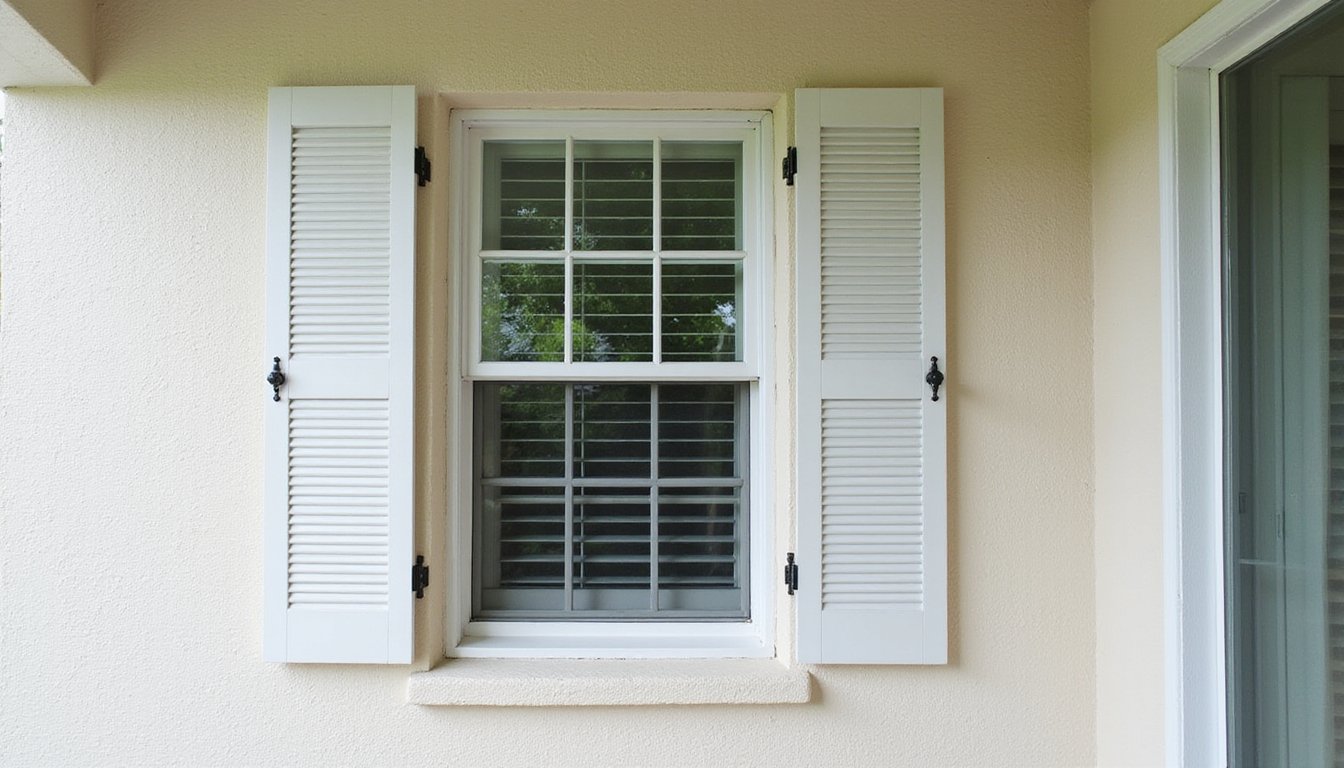
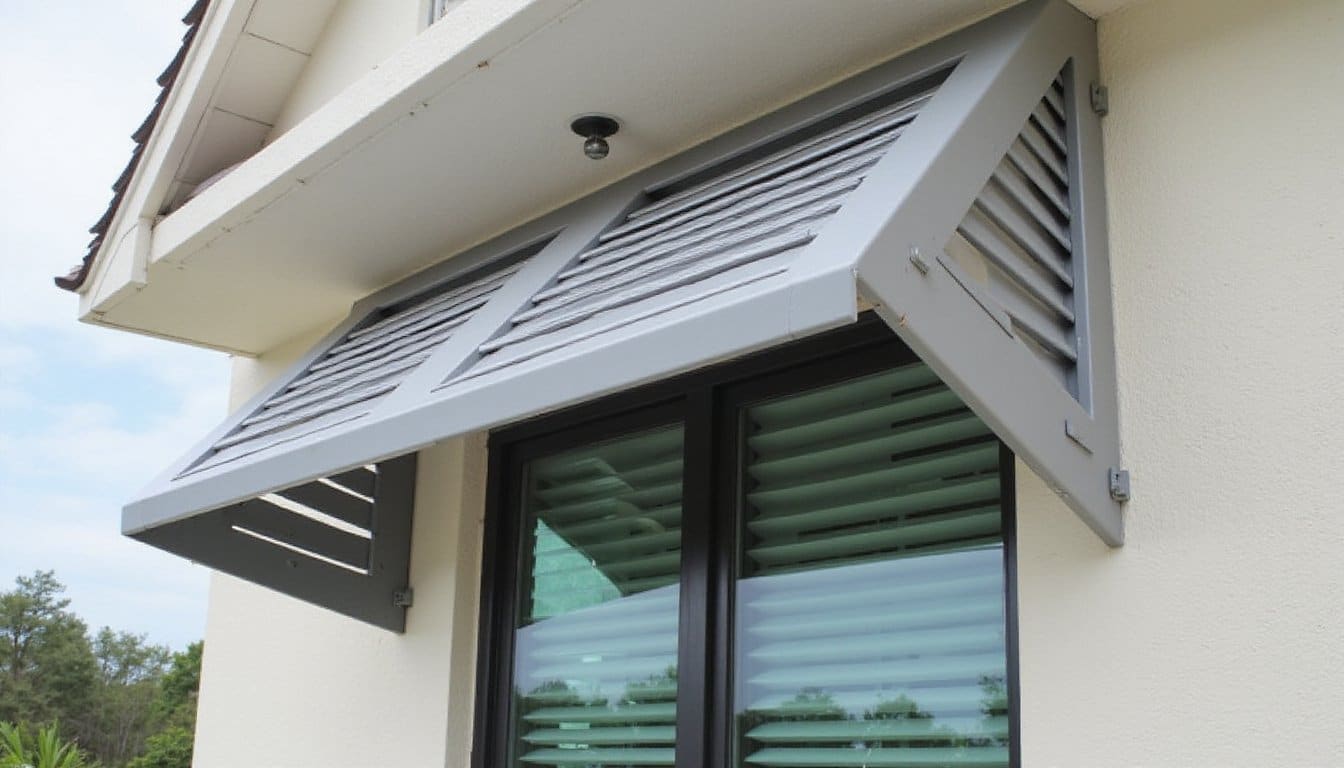
A Bahama shutter is a single-panel exterior shutter mounted at the top of a window and propped outward over the opening, usually at a 30 to 45 degree angle. A top hinge and support arms hold the panel in position, while horizontal louvers admit filtered light and airflow. You’ll size the panel slightly larger than the opening for full coverage. Bahama shutters, also called Bermuda shutters, differ from colonial shutters, which mount on the sides rather than above. The category spans simple decorative shade panels to code-compliant hurricane units, depending on material and hardware. If you need storm protection, specify aluminum construction with continuous hinges, lock-down systems, and reinforced support arms. Lower-grade versions deliver shade and privacy but won’t meet building-code impact standards. For heavy-duty options, a 40 x 40 Aluminum Hi-Visibility Impact Bahama Shutter is priced at $775.00 per unit. When considering your options for external window coverings, storm performance is a critical factor to keep in mind.
How Bahama Shutters Protect Windows in a Storm
When a storm approaches, you lower the shutter flat against the window, where it forms a closed protective barrier between the glass and windborne debris. Storm-rated versions use reinforced aluminum, stronger hinges, and secure locking hardware to resist the high winds and impacts that cause window failure. The top-hinged design also allows airflow while blocking direct sunlight, reducing cooling costs during everyday use. To confirm you’re getting real protection rather than decoration, you’ll want shutters approved to Florida Building Code or Miami-Dade requirements.
Closed Protective Barrier
Although Bahama shutters spend most of their life propped open as awnings, their real job starts when you release the prop arms, pull the panel flat against the window, and lock it down. In this closed position, bahama hurricane shutters form a one-piece exterior barrier over the entire glazing surface. That full coverage matters: it shields the whole window, not just part of it, from high winds and wind-driven debris.
Hurricane-rated models meet strict building codes and use reinforced locking and fastening systems to hold the panel under storm load. The closed barrier resists wind pressure and blocks airborne objects from striking or penetrating the glass. By reducing the chance of glass breakage and wind-driven intrusion, the closed shutter protects both your window and your home’s interior. Because Florida’s extensive coastline leaves homes vulnerable to tropical storms and hurricanes, this kind of full-window protection is valuable for residents across the entire state.
Durable Aluminum Construction
Material choice drives storm performance, and that’s why most hurricane-rated Bahama shutters use extruded aluminum. You get strength with low weight, which matters when the shutter has to transfer storm loads into your window framing. Many manufacturers specify 6063-T6 alloy for higher structural performance than softer tempers, and they finish it for coastal exposure. This durable aluminum construction resists the degradation salt air and moisture cause over time.
When you evaluate a product, verify these features:
- 6063-T6 alloy for structural-grade strength and load transfer
- Powder-coated finish for a weather-resistant, multi-color outer layer
- Corrosion resistance against rust, mildew, fading, and scratching
- Reinforced, storm-grade construction rated for impact deployment
Specify the right alloy and finish, and you’ll get lasting protection.
Code-Compliant Design
Strong aluminum alone won’t protect your windows unless the shutter carries a storm rating, so you need to verify code compliance before you buy. Code compliance depends on the specific model, not the Bahama style itself, because decorative versions often lack storm ratings. Hurricane awning shutters earn approval through testing for impact resistance, wind-load capacity, and water infiltration. Look for Florida Building Code, Miami-Dade Building Code, or Texas Department of Insurance benchmarks, which engineers reference for storm-rated assemblies.
Don’t take a salesperson’s word for it. Verify the claim against the exact product label, paperwork, and the certifying agency’s database before purchase or installation. Contractor documentation can also confirm compliance when product records aren’t immediately available. That verification protects your home, your investment, and your code approval.
The Tropical Curb Appeal of Bahama Shutters
Beyond their structural ratings, Bahama shutters give your façade a distinctive Caribbean look that reads as an intentional design feature rather than a bolt-on covering. The top-hinged profile and slanted louvers produce a tropical aesthetic that pairs well with coastal, Caribbean, and some modern exteriors. You can specify custom colors and finishes, black for a sleek modern variation, or vibrant tones to coordinate with your trim, siding, roofing, and entry door.
Distinctive Caribbean Aesthetic
Anyone who’s driven through the Florida Keys has seen the signature slant that sets Bahama shutters apart from every other code-rated opening protection. The top-hinged mounting projects each panel outward at forty-five degrees, creating shadow lines and depth that side-hinged colonial shutters can’t replicate. You get a built-in tropical feature rather than a formal decorative frame, and that distinction drives both bahama shutter cost and resale value in coastal markets.
What gives the style its Caribbean read:
- Top-hinged mounting above each window producing the signature slant
- Vertical sub-stiles allowing panels wider than colonial louvered shutters
- Uniform slant across openings for a cohesive elevation
- Outward projection casting visible shadowing for a layered facade
That consistency reinforces the resort-like, island-inspired aesthetic buyers want.
Custom Colors And Finishes
Once you’ve settled on a code-rated panel, the finish is where you control how the shutter reads on your facade. Powder coating is the standard system here, and it’s built as a tough, exterior-grade finish that holds up to sun, salt air, and repeated storm exposure. That durability matters because the finish has to survive the same coastal conditions the shutter’s hardware and frame do.
Custom colors and finishes don’t compromise the rating. You can specify decorative or hurricane impact-rated models and apply the same color strategy to both. Some manufacturers offer over 210 colors, including bold reds, blues, and greens.
Use those options to match trim, siding, or roof accents, coordinating multiple windows and elevations without sacrificing the panel’s storm-protection performance. Off-season storage solutions can help you keep your outdoor equipment safe and organized during the colder months.
How Bahama Shutters Block Heat and Glare
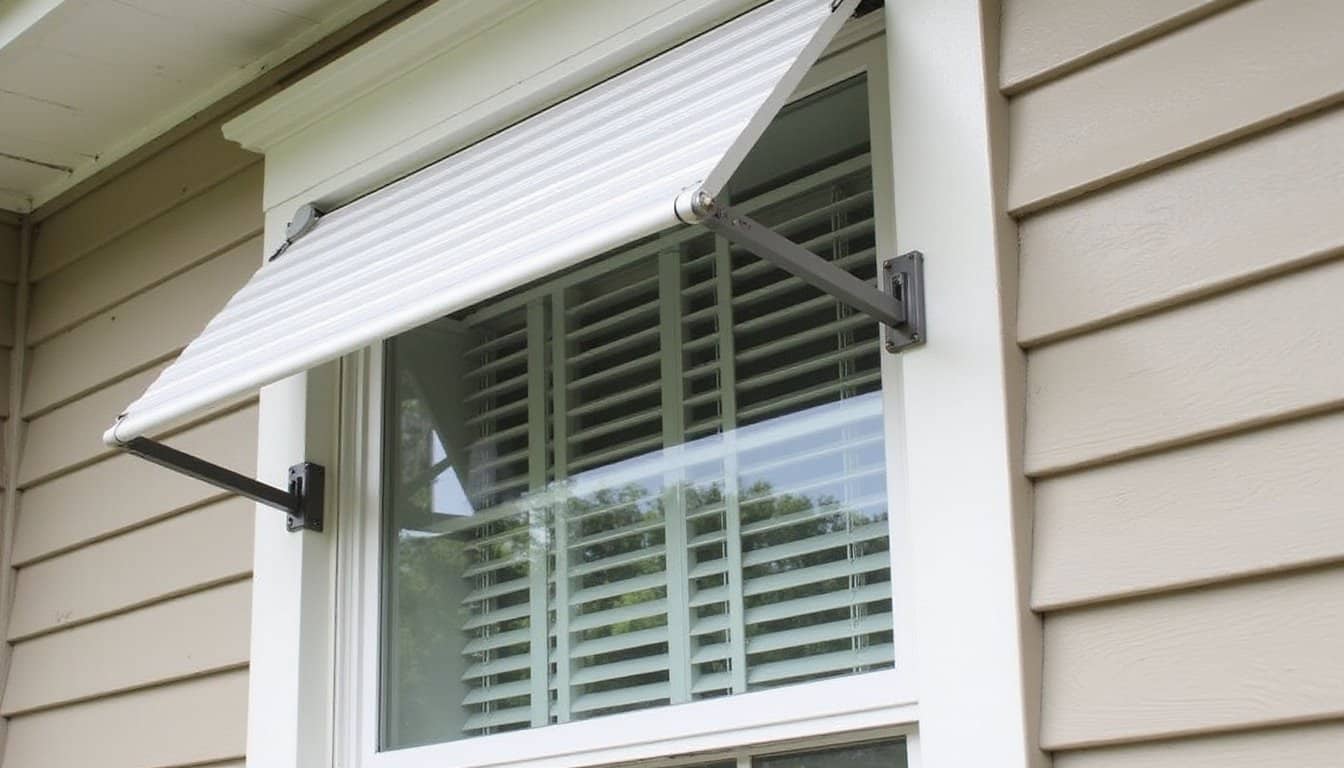
Because Bahama shutters mount outside the glass and prop open at an angle, they intercept solar radiation before it ever reaches the window. This exterior shading reduces solar heat gain more effectively than interior blinds, which only block light after it’s already penetrated the envelope. Proper bahama shutter installation positions the prop angle to shade west- and south-facing glass during peak sun.
The angled louvers deliver measurable performance:
- Block direct rays at the glass surface, lowering radiant heat transfer
- Diffuse harsh brightness to cut glare without closing the window
- Preserve daylight for reading, screens, and visual comfort
- Adjust sun control by changing the shutter opening angle
Lower heat transfer decreases air-conditioning use, reduces cooling costs, and protects interior furnishings from UV damage.
Built-In Privacy and Ventilation, No Blinds Needed
One product gives you three functions: shade, privacy, and light control. Bahama shutters mount top-hinged over the full opening, sized slightly larger than the window for proper coverage. The louvered design disrupts sight lines from neighbors and passersby while leaving interior spaces bright, so you skip the interior blinds.
Operable positioning matters here. Support arms hold the shutter open, halfway, or fully closed, letting you tune airflow and daylight. With the window open beneath the shutter, you get breeze intake even while the louvers provide shade and privacy.
Performance depends on closing position, louver angle, and how completely the shutter covers the glass. Hi-visibility versions exist where outward sight matters. The privacy-and-ventilation function stays tied to that fixed exterior, top-hinged form factor.
What Hurricane-Rated Bahama Shutters Are Made Of
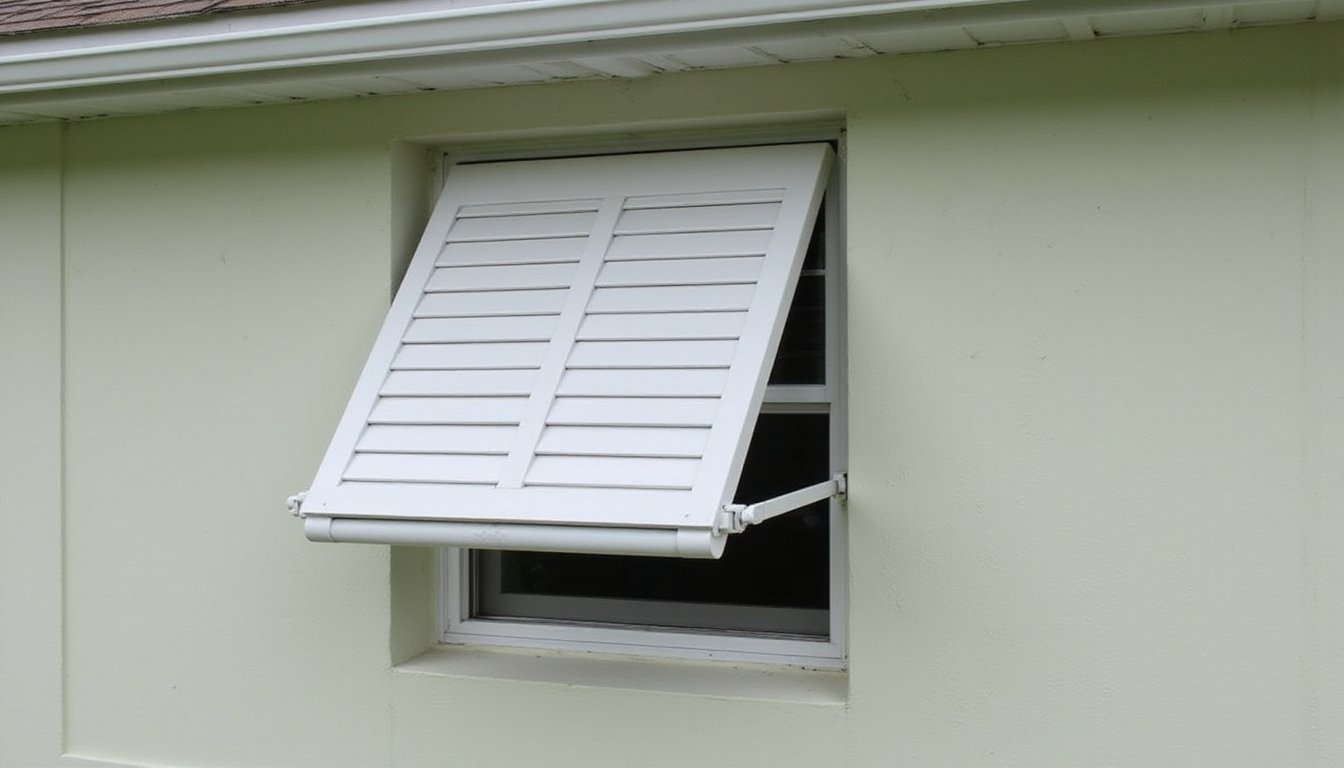
That same top-hinged form factor delivering shade and privacy has to survive a Category storm if you want code-compliant protection, and the material spec is what separates a decorative shutter from a rated one. Hurricane-rated Bahama shutters are built almost exclusively from aluminum, and the specifics matter for compliance:
The material spec is what separates a decorative shutter from one that actually survives a Category storm.
- Extruded 6063-T6 aluminum alloy or heavy extruded aluminum for structural strength
- Reinforced louvers with mitered corners, nylon inserts, aluminum keys, and structural adhesive
- Powder-coated finish that’s durable, weather-resistant, and corrosion-fighting in coastal climates
- Miami-Dade County approval or HVHZ ratings for high winds and flying debris
Wood versions exist, but they’re decorative, not rated. When you’re checking a spec sheet, the material designation tells you whether the shutter actually meets code.
What Bahama Shutters Cost and Who They Suit Best
Three numbers frame the cost conversation: $20 to $35 per square foot installed is the figure you’ll see most often, though Home Depot’s installation guide starts closer to $65, $75 per square foot, and entry-level products from specialty sellers can run as low as $166.86 for smaller configurations. Window size drives your total, since Bahama shutters price by square foot. Installation complexity, custom paint, and trim conditions push it higher. Across the broader hurricane-shutter market, projects average $3,653, ranging from $255 to $11,000.
These shutters suit coastal, single-family homes with standard rectangular windows and at least 2 inches of clearance above each opening for hinge mounting. They fit you best if you want storm protection, solar shading, and visible curb appeal, not the cheapest option available.
Conclusion: Why Bahama Shutters Combine Style and Protection
Bahama shutters offer a rare mix of storm protection, shade, and tropical curb appeal, mounting above a window and propping out to block sun and, when closed, help guard against wind and debris. They provide everyday shade and privacy along with hurricane readiness, which makes them popular in Florida. Choosing quality, code-rated shutters and installing them properly ensures they protect as well as they look. For many homes, they are a practical and attractive choice.
Find the Right Storm Protection for Your Home
Choosing the right hurricane shutters means balancing cost, looks, and storm performance, and the right team makes the choice easier. At Innovative Storm Defense serving Jupiter, FL, our experienced team provides trusted Storm Window & Shutter Solutions with expert installation and premium materials. Call (561) 517-9399 today and book your free consultation.
Frequently Asked Questions
How Long Do Bahama Shutters Typically Last Before Needing Replacement?
Quality aluminum Bahama shutters can last many years, often well over a decade, since aluminum resists corrosion and holds up to sun and weather. Hardware and hinges should be checked and maintained. Rinsing off salt in coastal areas and keeping the moving parts working helps them reach their full lifespan.
Do Bahama Shutters Require Permits for Installation in Florida?
Usually, yes. Because they attach to the structure and must meet wind-load and code requirements to count as storm protection, most Florida jurisdictions require a permit. Requirements vary locally. Checking with your building department first, or using a licensed installer who handles permits, ensures the shutters are properly rated and approved.
Can I Install Bahama Shutters Myself or Need a Professional?
Proper anchoring is critical for storm protection, so professional installation is strongly recommended. The mounting must meet wind-load requirements to hold in a hurricane, and improper installation can fail when it matters most. A professional ensures the shutters are securely and correctly attached and that they meet code.
How Do I Clean and Maintain Bahama Shutters?
Rinse the shutters periodically with water to remove dirt and salt, especially near the coast, and clean with mild soap and a soft brush as needed. Check and lubricate the hinges and support arms so they operate smoothly. This simple maintenance keeps them looking good and working reliably for years.
Will Bahama Shutters Lower My Homeowners Insurance Premiums?
They can, if they are code-rated for storm protection. Approved hurricane shutters often qualify for wind-mitigation discounts on Florida homeowners insurance. To claim the credit, the shutters usually need proper documentation and a wind-mitigation inspection. Ask your insurer what qualifies before installing, so you choose shutters that earn the discount.