
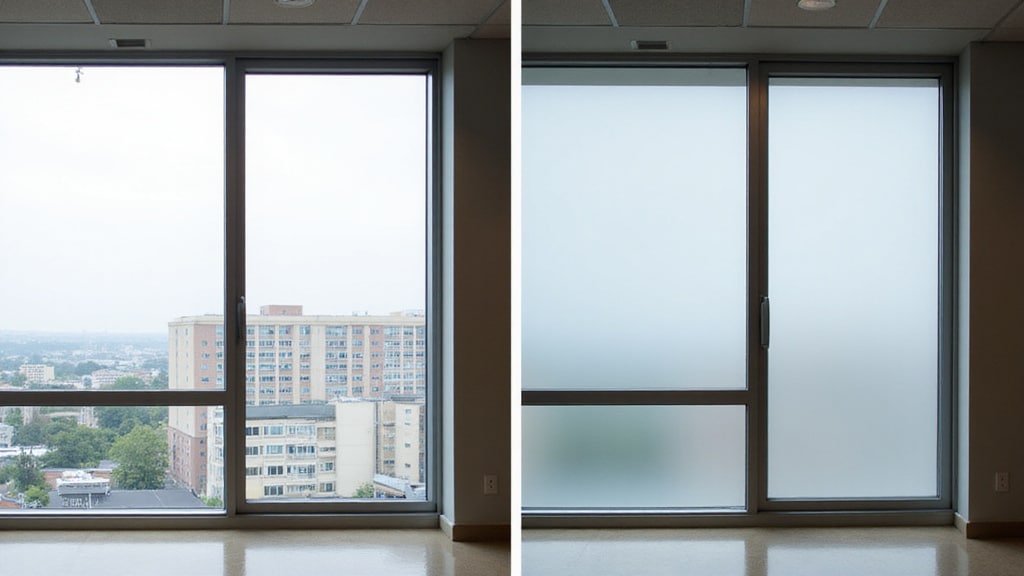
Window orientation directly drives your office cooling load through solar heat gain. East and west windows generate the highest loads from intense morning and afternoon sun, while north-facing windows yield the lowest cooling energy consumption in hot, semi-arid climates. Effective orientation delivers up to 16% energy savings, about 2627 Ton-hr in UAE conditions. You’ll cut loads further by targeting 20% WWR and specifying glazing with SHGC of 0.40 or less. Here’s how each façade compares.
Key Takeaways
- Window orientation strongly influences office cooling load by controlling how much solar heat enters conditioned spaces.
- West-facing windows create the highest cooling load from intense afternoon sun, while east faces peak in the morning.
- North orientation yields the lowest cooling energy consumption in hot, semi-arid climates; south falls in between.
- Optimal orientation in UAE conditions achieves 2627 Ton-hr, delivering about 16% energy savings.
- Reduce cooling load by prioritizing north glazing, limiting WWR to ~20% on south/east/west, and specifying SHGC ≤ 0.40.
Window Orientation and Office Cooling Load
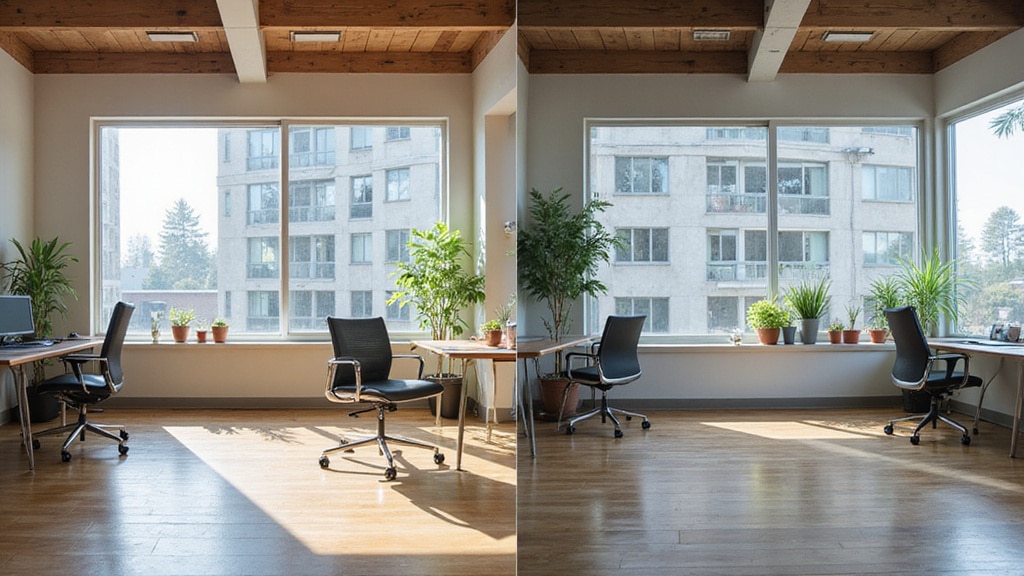
Window orientation directly governs solar heat gain, making it one of the most influential factors in determining an office building’s cooling load. When you orient windows north in hot, semi-arid climates, you’ll achieve the lowest cooling energy consumption while minimizing interior temperatures, discomfort hours, and total energy cost. Avoid east and west orientations. They generate the highest cooling loads due to intense morning and afternoon solar heat gain. Understanding window orientation cooling dynamics lets you optimize performance: south-facing windows with double-grayed glazing cut annual cooling consumption by 12% compared to other orientations. In UAE conditions, orienting toward the north-west yields a cooling load equivalent to 2627 Ton-hr, representing 16% energy savings. Prioritizing correct window orientation reduces your office cooling load substantially without sacrificing daylighting benefits. Adjusting window treatments can further enhance your ability to reduce office glare. Utilizing shades or blinds can help manage light levels and maintain comfort without completely sacrificing natural illumination.
What is cooling load and why does orientation matter
Cooling load is the total amount of heat that must be removed to keep a building comfortable, calculated by summing five distinct components: envelope gains, occupant heat, lighting, equipment, and ventilation. The envelope component depends heavily on your office windows, since glazing transmits solar radiation directly into conditioned spaces. Open-plan offices typically require 80, 150 W/m² (25, 48 BTU/hr·ft²) of cooling capacity, and window placement drives much of that demand.
Orientation matters because it determines how much solar heat gain reaches your interior. East and west orientations generate the highest cooling loads, absorbing intense morning and afternoon sun, while north-facing windows yield the lowest consumption in hot, semi-arid climates. In UAE conditions, ideal orientation delivers a building cooling load of 2627 Ton-hr, a 16% energy saving. You can’t ignore orientation when minimizing loads.
How does each window orientation affect heat gain

Window orientation affects heat gain based on the sun’s daily path, with each orientation delivering a distinct heat gain profile. North-facing windows yield the lowest cooling energy consumption, minimizing interior temperature and discomfort hours in hot, semi-arid climates. East and west orientations generate the highest cooling loads because intense morning and afternoon solar heat gain strikes glazing at low angles. South-facing windows fall between these extremes. With double-grayed glazing, you’ll cut annual cooling consumption by 12% compared to other orientations.
| Orientation | Heat Gain Profile | Cooling Impact |
|---|---|---|
| North | Minimal, diffuse | Lowest load |
| South | Moderate, midday | 12% reduction possible |
| East | Intense morning | High load |
| West | Intense afternoon | Highest load |
Match each façade’s glazing and shading to its solar exposure for best control.
How does the sun’s path change cooling demand
The sun’s daily arc translates into shifting cooling demand by driving distinct peaks across your building’s façades as it moves east to west. East windows absorb intense morning radiation, while west windows spike your afternoon cooling loads. North and south orientations respond differently, letting you optimize placement.
Track the sun’s arc across your façades to time cooling demand and place glazing where it counts.
- Morning (East): East-facing glass generates peak heat gain shortly after sunrise, forcing early cooling demand.
- Midday (South): South windows receive high-angle radiation; overhangs block summer sun while allowing winter gain.
- Afternoon (West): West facades experience the highest cooling loads during peak daytime heat.
- Overall (North): North orientation minimizes solar exposure, yielding the lowest cooling energy consumption.
You’ll cut loads meaningfully by aligning glazing with the sun’s predictable trajectory.
How can you reduce cooling load through window design

You can slash cooling loads by targeting three variables through strategic window design: orientation, window-to-wall ratio (WWR), and glazing properties. Orient primary glazing north, which yields the lowest cooling energy consumption in hot, semi-arid climates while minimizing interior temperature and discomfort hours. Avoid east and west exposures, which generate the highest loads from morning and afternoon solar gain. Control WWR carefully. It correlates directly with cooling loads, so target roughly 20% on south, east, and west facades and 20, 40% on north. Specify glazing with a low U-value and SHGC of 0.40 or less to cut solar heat gain. On east and west windows, use lower-SHGC assemblies. Heat-absorbing glass captures over 70% of incident radiation, transmitting only about 20% internally, further reducing cooling demand. Implementing energy efficiency solutions can significantly enhance the comfort levels within a building.
How do you plan window orientation for lower cooling costs
Plan window orientation for lower cooling costs by facing your primary glazing north. In hot and semi-arid climates, north-facing windows deliver the lowest cooling energy consumption while minimizing interior temperature and discomfort hours. Avoid east and west exposures, which generate the highest cooling loads from intense morning and afternoon solar heat gain. Tinted windows can also reduce glare and enhance privacy for those inside the home. Overall, the benefits of tinted windows make them a worthwhile investment for energy efficiency and comfort.
Face your primary glazing north to slash cooling costs, curb interior temperatures, and dodge harsh east-west solar gain.
Follow this priority sequence when siting glazing:
- North: Prioritize primary glazing here; sustain a 20, 40% WWR.
- South: Use double-grayed glazing plus roof overhangs to cut annual cooling ~12%.
- East/West: Minimize openings; specify SHGC ≤0.40 assemblies.
- Overall layout: In the UAE, orient office buildings north-west for 16% savings (2627 Ton-hr).
Combine correct orientation with external shading, and you’ll reduce cooling loads measurably before selecting mechanical systems.
Conclusion: Using Window Orientation to Cut Office Cooling Loads
Window orientation has a major effect on how much heat a building takes on and how hard its cooling system has to work. East and west windows catch the most intense low-angle sun, so they benefit most from low-SHGC glazing, shading, or film. Balancing window size, placement, and glass performance with the climate keeps cooling costs down and interiors comfortable. Thoughtful glazing choices are one of the most effective ways to manage an office’s cooling load.
Upgrade Your Office Windows Today
Better office windows mean better productivity, comfort, and energy savings for every business in Florida. At Innovative Storm Defense serving West Palm Beach, FL, our experienced team provides trusted Office Windows with expert installation and premium materials. Call (561) 517-9399 today and book your free consultation.
Frequently Asked Questions
What Is the Ideal Window-To-Wall Ratio for Compact Office Plans?
There is no single ideal, but many energy-efficient designs keep the window-to-wall ratio around 30 to 40 percent, balancing daylight and views against heat gain. More glass brings more light but also more cooling load, especially on sunny facades. High-performance glazing lets a design use more window area without a big efficiency penalty.
How Much Can Optimal Orientation Save on Cooling Costs?
Savings vary by climate and design, but orienting and glazing windows well can meaningfully cut cooling costs, often by a noticeable share of the cooling bill. Reducing solar gain on east and west faces has the biggest impact. Combined with low-SHGC glass and shading, smart orientation is one of the cheapest ways to lower energy use.
Which Glazing Type Absorbs the Most Incident Solar Radiation?
Heat-absorbing tinted glass takes in the most solar radiation, holding heat in the glass itself. Reflective and low-E coatings instead reject or re-radiate heat, which usually keeps interiors cooler. For controlling cooling load, low-E and reflective glazing generally outperform simple absorptive tints, since absorbed heat can still radiate indoors.
What SHGC Value Is Recommended for East and West Windows?
East and west windows catch strong, low-angle sun, so a low SHGC is recommended there, often in the lower part of the code-allowed range. Lower values let less solar heat through and ease the cooling load. A glazing professional can match the SHGC to the local climate and each facade’s exposure.
What Are the Main Components of a Cooling Load Calculation?
A cooling load calculation typically accounts for solar heat gain through windows, heat conducted through walls and roof, outdoor air and infiltration, internal gains from people and equipment, and lighting. Windows are a big and controllable part of that total, so improving glazing is often the most direct way to reduce the overall cooling load.