
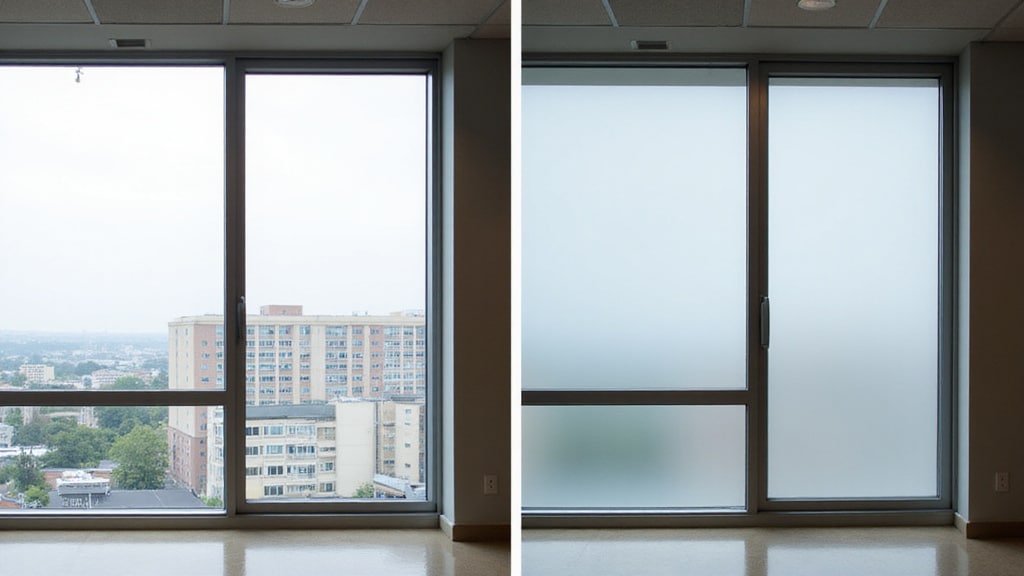
Salt air settles chlorides on your frames, combining with moisture to form an electrolyte film that drives electrochemical corrosion. On standard aluminum, you’ll see pitting that penetrates more than 50% of wall thickness, starting in crevices like tracks and hinge plates. Watch for rust on hardware, coating breakdown, and weatherstripping cracks. You can fight back by choosing corrosion-resistant materials and rinsing on a strict schedule. Here’s how to protect your investment.
Key Takeaways
- Airborne chlorides combine with moisture to form an electrolyte film that triggers electrochemical corrosion on aluminum window and door frames.
- Corrosion starts on fasteners and hardware, then spreads beneath finishes and concentrates in crevices like tracks and hinge plates.
- Warning signs include pitting, visible rust, surface staining, coating breakdown, and cracked or shrinking weatherstripping.
- Vinyl and fiberglass resist coastal corrosion far better than standard aluminum, which needs premium anodizing or Kynar/PVDF coatings.
- Rinse frames with fresh water quarterly (monthly during onshore winds) and specify 316 stainless hardware with EPDM or silicone weatherstripping.
Salt Air Damage to Window and Door Frames
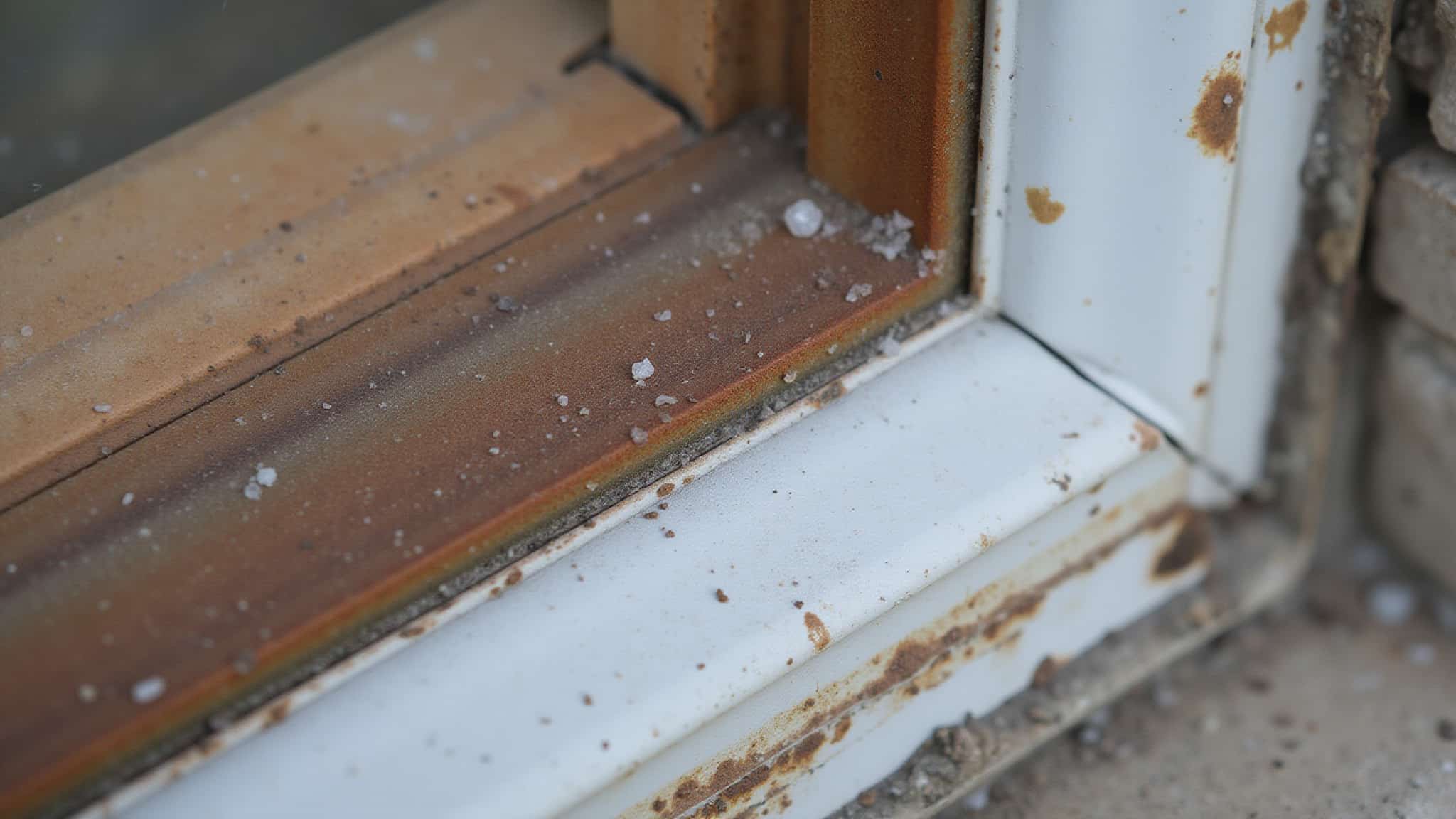
Salt air damages window and door frames by depositing airborne chlorides that combine with daily moisture to form an electrolyte film, driving corrosion that inland installations never encounter. These chlorides settle on hardware and fasteners, then trigger salt air corrosion. Windows suffer first, since crevices like tracks and hinge plates accelerate corrosion rates well beyond flat surfaces. Salt air door frames experience similar deterioration, with pitting penetrating more than 50% of aluminum wall thickness over time. This coastal window damage isn’t just cosmetic, it compromises structural integrity as it advances. Standard aluminum frames corrode markedly without premium anodizing, while vinyl and fiberglass resist far better. Understanding these mechanisms lets you target vulnerable materials, hardware, and finishes with the precise protections each installation demands. Solutions for foggy window issues can be addressed by applying specialized treatments that improve visibility while enhancing durability. Incorporating innovative designs can also help mitigate water accumulation, reducing the chances of moisture-related damage.
How does salt air corrode window and door frames
Salt air corrodes window and door frames when airborne chlorides settle on your frames and hardware, combining with daily moisture to form a thin electrolyte film that drives corrosion. This film accelerates salt air window damage by triggering electrochemical reactions across aluminum surfaces. On standard aluminum frames, you’ll see pitting corrosion that penetrates more than 50% of the wall thickness, compromising structural integrity. Crevices like tracks and hinge plates trap salt and moisture, so they corrode faster than exposed surfaces. This window frame damage isn’t just cosmetic, it degrades aesthetic appearance and weakens load-bearing components over time. Your fasteners and hardware suffer first, since chlorides settle there and concentrate. Once corrosion establishes itself, it spreads beneath finishes, so you’ll want protective coatings and consistent rinsing to interrupt the process early. Window damage from strong hurricane winds can exacerbate the effects of salt air corrosion. The intense pressure and debris can cause immediate compromise to the integrity of the frames, making them more susceptible to salt and moisture infiltration.
What are the signs of salt air damage
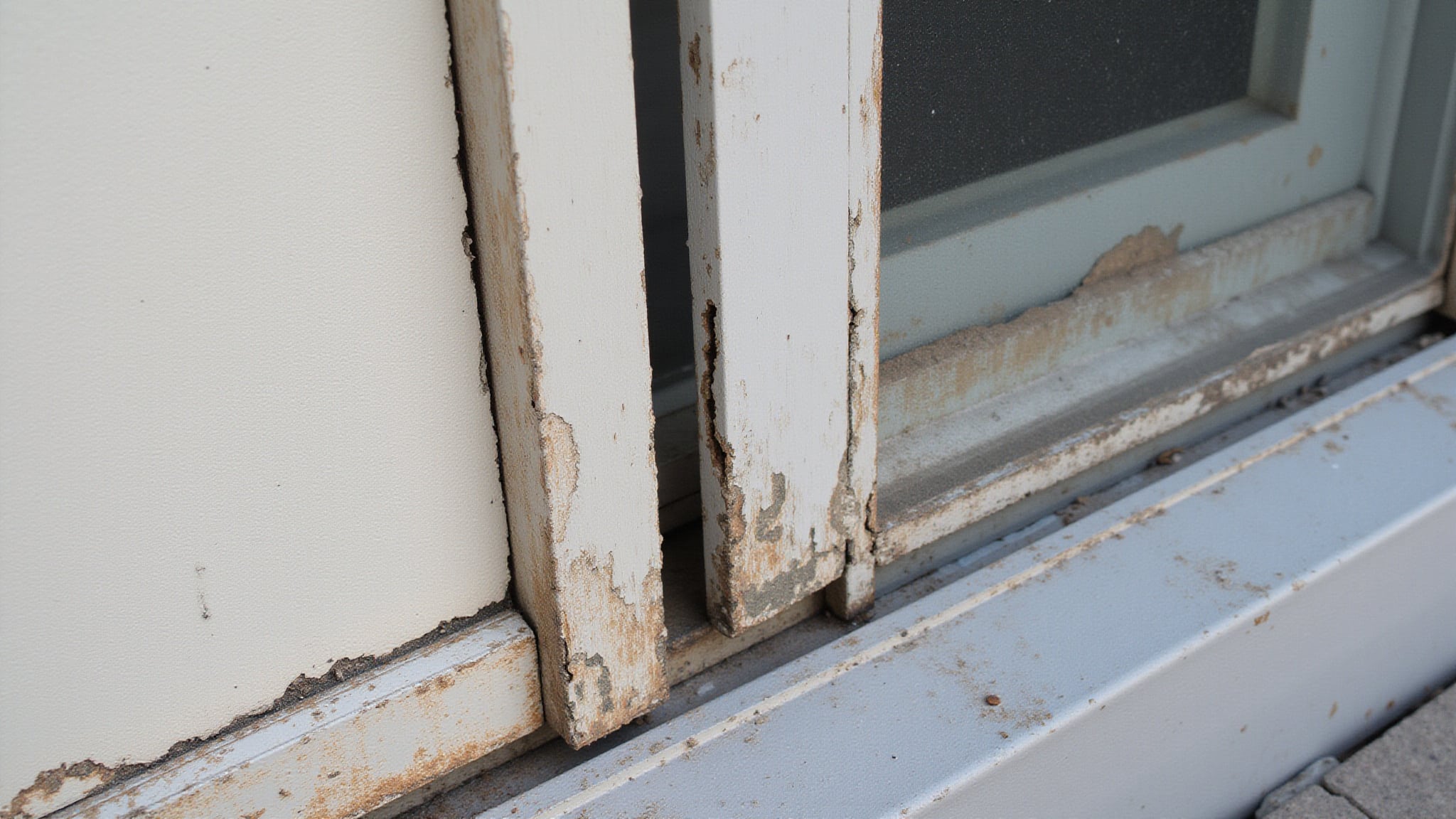
Salt air damage shows several telltale signs before it compromises your frames beyond simple repair. Look for pitting corrosion, which can penetrate more than 50% of your aluminum frame’s wall thickness, threatening structural integrity. Inspect crevices like tracks and hinge plates first, since these experience accelerated corrosion rates. Check whether airborne chlorides have settled on your hardware and fasteners, triggering visible rust or discoloration. Watch for degraded aesthetic appearance, including surface staining and coating breakdown. Examine your weatherstripping too: PVC-based seals harden faster than EPDM or silicone alternatives, so cracking, shrinkage, or gaps signal advancing damage. Notice electrolyte film buildup where daily moisture combines with salt deposits. Catching these indicators early lets you address corrosion before repairs become extensive and costly.
Which frame materials resist salt air best
Vinyl and fiberglass resist salt air best, corroding far less than standard aluminum, making them your safest coastal choices. If you prefer aluminum, you’ll need premium anodizing or Kynar/PVDF coating, as untreated frames corrode notably. Standard powder coat works only when you pair it with periodic maintenance. Exterior wood demands high-quality sealants rated for marine use.
| Material | Corrosion Resistance | Requirement |
|---|---|---|
| Vinyl/Fiberglass | Excellent | Minimal treatment |
| Aluminum | Poor untreated | Anodizing or PVDF |
| Wood | Moderate | Marine-rated sealant |
| Powder-coated | Adequate | Periodic maintenance |
Don’t overlook weatherstripping either: choose EPDM or silicone over PVC, which hardens faster in coastal conditions.
How do you clean and maintain frames in coastal areas
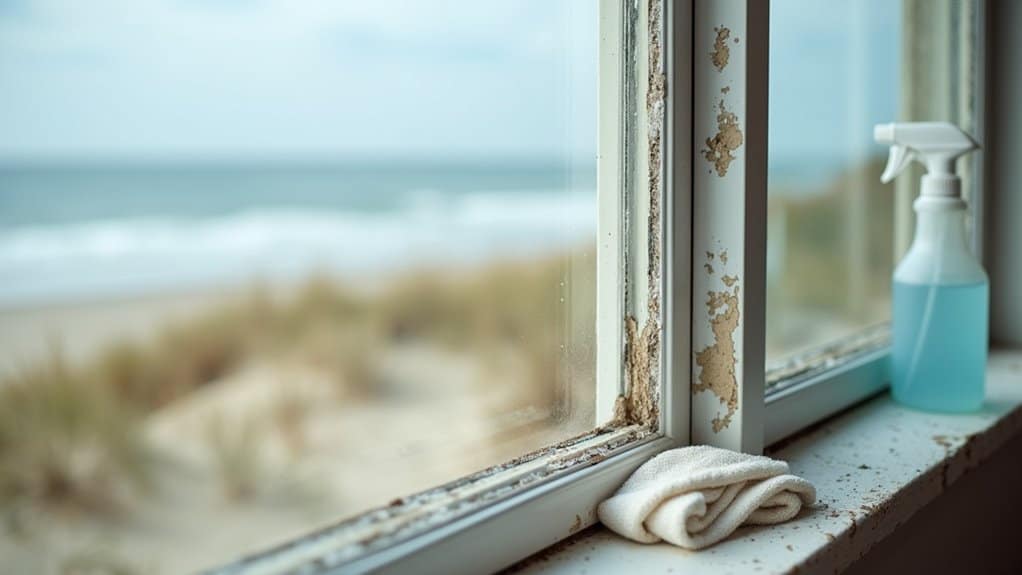
Rinse frames with fresh water on a strict schedule, because salt deposits build an electrolyte film that accelerates corrosion. Rinse all window and door frames quarterly at minimum, but if you live oceanfront, step that up to monthly during sustained onshore winds. Clean windows and sliding glass doors monthly using neutral detergents like mild soapy water, never strong acids or bleach, which damage finishes. Always rinse thoroughly with clean water afterward, then dry surface moisture to stop residue from evaporating and concentrating salt.
Don’t overlook drainage: vacuum tracks and weep holes regularly to keep them clear. Every six months, apply silicone-based spray lubrication to hinges and locking mechanisms. These crevices corrode fastest, so consistent attention here protects hardware and preserves your frames’ structural integrity.
How do you choose windows and doors for salt air
Choose frame materials that resist salt corrosion by design. Vinyl and fiberglass outperform standard aluminum, resisting corrosion far better without premium treatments. If you choose aluminum, insist on premium anodizing or a Kynar/PVDF coating. For untreated wood, specify marine-rated sealants. Then verify the hardware and sealing components before you buy:
In salt air, material choice is everything, specify corrosion resistance by design, not as an afterthought.
- Confirm 316 stainless steel fasteners and hardware throughout the installation.
- Require marine-grade rollers and operators to prevent premature failure.
- Specify EPDM or silicone weatherstripping, since PVC hardens faster.
- Add windproof screens to block salt spray and reduce sea breeze impact.
Match every material choice to your exposure level. Oceanfront homes demand the most corrosion-resistant combinations you can source and specify.
Conclusion: Protecting Windows and Doors From Salt Air
Salt air is one of the toughest challenges for coastal windows and doors, since it accelerates corrosion and wear on frames and hardware. Choosing corrosion-resistant materials like vinyl, fiberglass, or marine-grade finishes, and rinsing and maintaining frames regularly, goes a long way toward extending their life. For homes near the coast, building salt exposure into the decision from the start is far cheaper than replacing failed frames later.
Upgrade to Windows Built for Florida Weather
Florida’s salt air, sunshine, and storms are tough on windows, but the right glass technology handles it all with ease. At Innovative Storm Defense serving Boynton Beach, FL, our experienced team provides trusted Storm Windows with expert installation and premium materials. Call (561) 517-9399 today and protect your home for years to come.
Frequently Asked Questions
How Much Does Salt Air Damage Reduce a Window’s Lifespan?
It depends on the frame material and how close the home is to the water. In harsh coastal conditions, untreated aluminum or low-grade hardware can corrode within a few years, while vinyl, fiberglass, and marine-grade finishes hold up much longer. Regular rinsing and maintenance can add years, so the reduction varies widely based on materials and care.
Are Coastal Window Warranties Different From Standard Warranties?
Often, yes. Some manufacturers limit or void coverage for corrosion in coastal zones unless you choose products rated for salt exposure. It is worth reading the warranty carefully and asking specifically about coastal or salt-air coverage before buying, since a standard warranty may not protect against corrosion near the ocean.
Can Salt Air Damage Be Covered by Home Insurance?
Usually not. Home insurance covers sudden events like storm damage, while gradual corrosion from salt air is considered wear and maintenance, which is typically excluded. Keeping frames maintained and choosing corrosion-resistant materials is the practical way to manage the risk rather than relying on a claim.
How Far Inland Does Salt Air Corrosion Affect Frames?
Salt air has the strongest effect within the first few hundred yards of the coast, but measurable salt can travel a mile or more inland, especially with onshore winds. Homes closest to the water see the fastest corrosion, while the effect tapers off farther inland. Even a few miles from the coast, salt-resistant materials are a sensible choice.
What Is the Cost Difference Between Standard and Marine-Grade Frames?
Marine-grade or coastal-rated frames and hardware usually cost more upfront, since they use corrosion-resistant materials and finishes. The premium varies by product and manufacturer. For a coastal home, that added cost is often worth it, because it reduces the risk of early corrosion and the expense of premature replacement.