
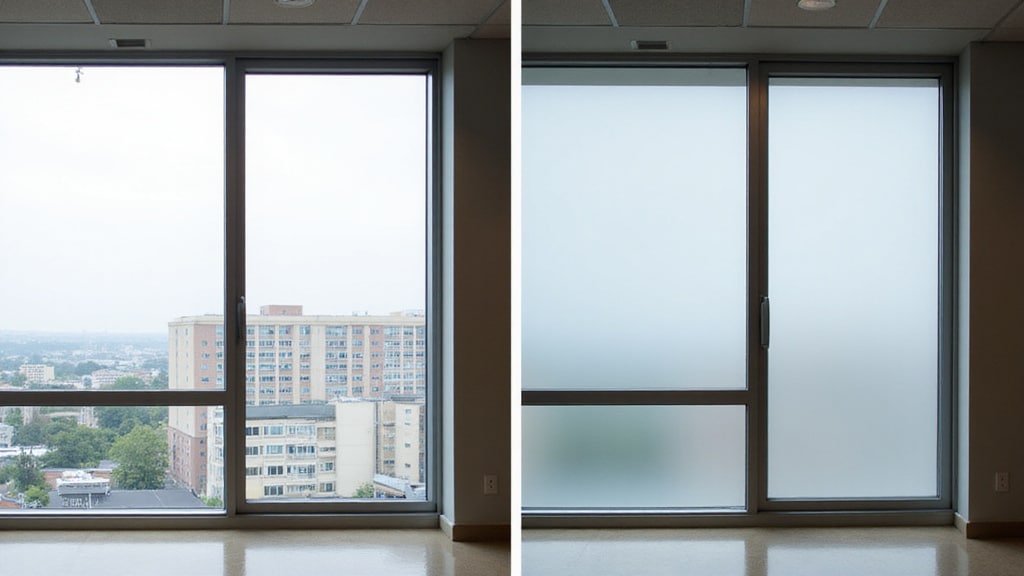
Your window seals break down because their materials degrade over time. Thermal expansion and contraction repeatedly stress the seal through temperature cycles. UV exposure hardens, shrinks, and dries the outer material, causing cracking and brittleness. Moisture pushes against the barrier, corroding components and promoting mold. Poor installation and manufacturing defects speed things up too. Quality seals last 15, 20 years, but budget vinyl often fails sooner. Below, you’ll uncover exactly how each factor works.
Key Takeaways
- Materials naturally degrade over time, with quality seals lasting 15, 20 years and budget vinyl seals often failing within 10, 15 years.
- Thermal expansion and contraction from repeated temperature cycles continuously stress the seal until it weakens.
- UV exposure hardens, shrinks, and dries the outer seal material, leading to cracking and brittleness.
- Moisture pushes against the barrier, corroding weatherstripping, promoting mold, and allowing inert gas to escape.
- Poor installation and manufacturing defects, like tainted sealant or insufficient curing, create stress points that trigger early failure.
Why Window Seals Break Down Over Time
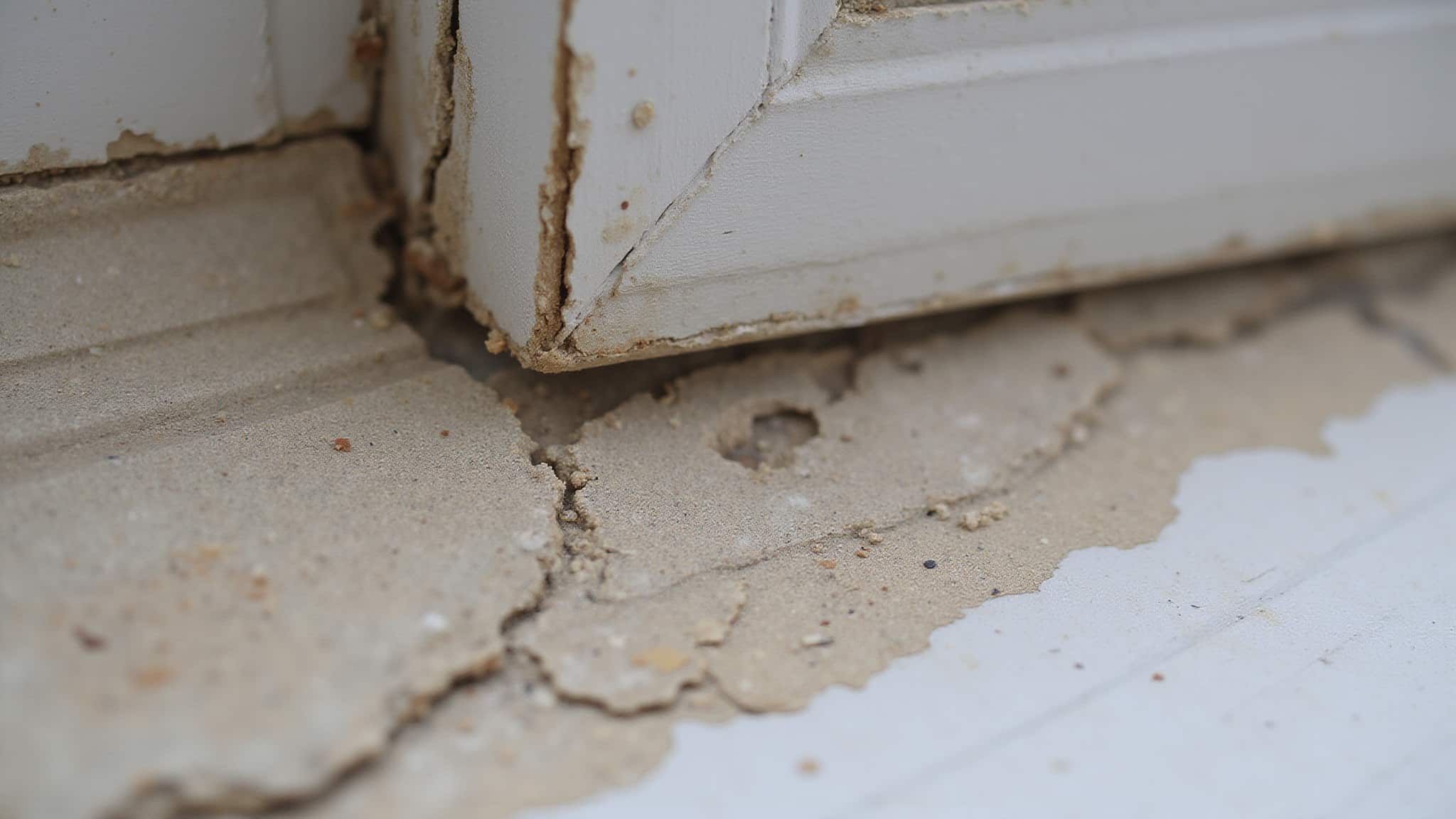
Window seals break down over time because the materials themselves degrade. Quality seals maintain integrity for 15, 20 years under normal conditions, while budget vinyl seals often fail within 10, 15 years due to lower-quality materials. Premium ENERGY STAR-rated windows with stainless steel spacers extend seal life to 25, 30 years.
The inert gas inside insulated glass units escapes at roughly 1% per year through microscopic pathways. As materials break down, seals deteriorate naturally after 10, 20 years even without external stressors. This gradual degradation leads to common window seal problems, including moisture penetration between panes. Once the hermetic seal breaks, you’ll notice foggy windows, a clear indicator that air and moisture have breached the barrier permanently.
What is a window seal and what does it do
A window seal locks the two or more glass panes of an insulated glass unit into an airtight, hermetic barrier. This barrier traps inert gas, typically argon or krypton, between the panes, preventing it from escaping through microscopic pathways. You rely on this sealed cavity to slow heat transfer, boost energy efficiency, and block moisture from infiltrating the space between panes.
The seal itself combines a spacer, desiccant, and sealant material that bonds the glass edges together. When this barrier holds, you get clear glass and stable insulation. When window seal failure occurs, the hermetic bond breaks, letting gas escape and moisture enter. Broken window seals reveal themselves through fogging or condensation between panes, a clear sign the airtight integrity you depend on has failed.
What causes window seals to fail
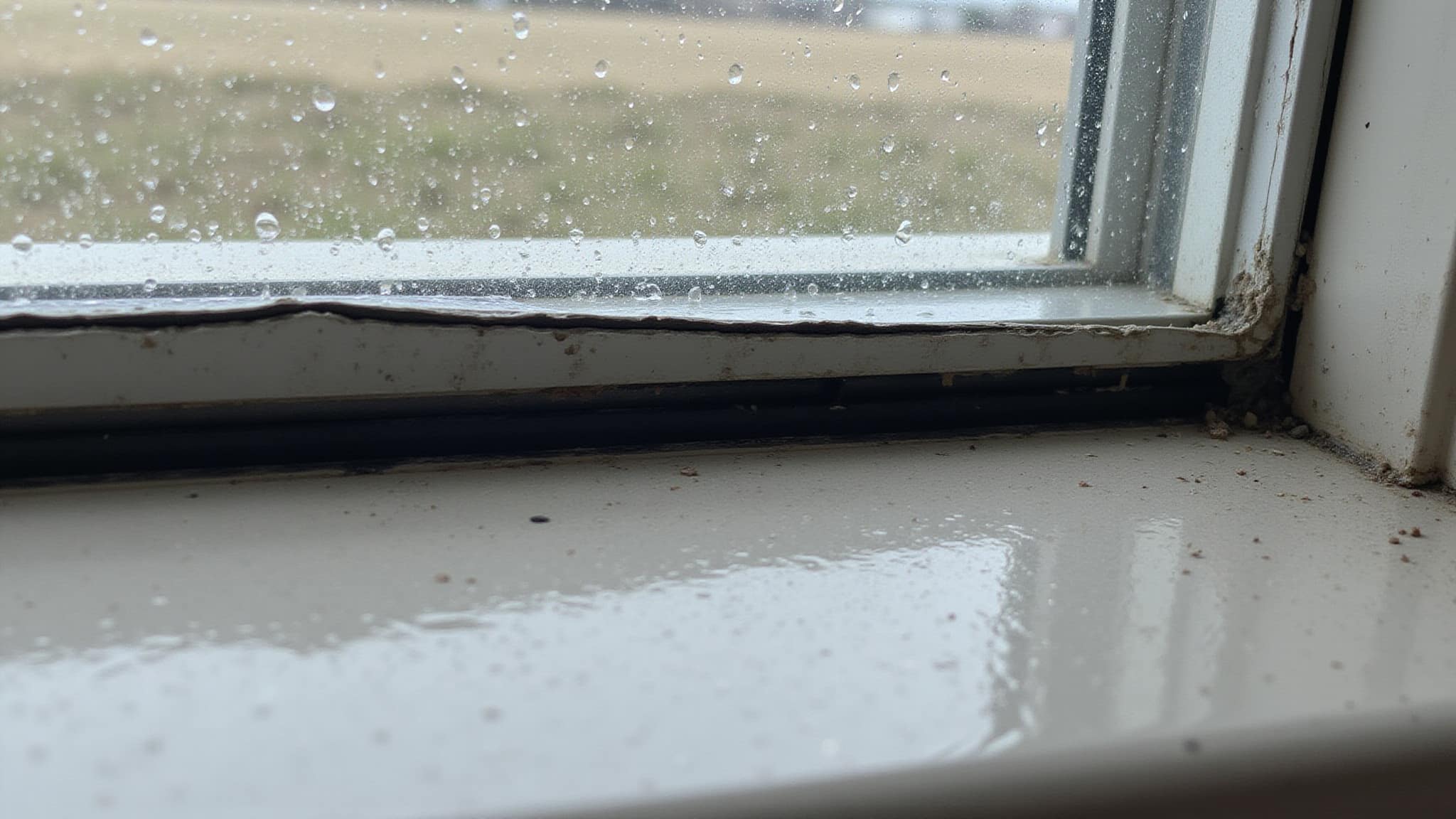
Window seals fail because so many forces conspire to break the hermetic bond. Thermal expansion and contraction leads the assault: every temperature swing forces glass and frame materials to expand and contract, stressing the seal through repeated cycles until it fails. UV exposure hardens, shrinks, and dries the outer seal material, cracking it over time. Moisture pushes against the barrier, corroding weatherstripping and fostering seal-damaging mold. Poor installation creates uneven pressure on the spacer, generating stress points that accelerate deterioration. Manufacturing defects, such as tainted sealant or insufficient curing, trigger early failure. Meanwhile, the inert gas escapes at roughly 1% per year through microscopic pathways. Add aging, and the materials simply break down after 10, 20 years regardless of external stressors.
What are the signs of a broken window seal
The signs of a broken window seal include specific physical indicators that appear as the hermetic barrier breaks down and the inert gas escapes through compromised pathways. Watch for these diagnostic signs:
- Moisture between panes, Condensation or fog trapped inside the insulated glass unit confirms air’s entered the sealed cavity, meaning the airtight barrier’s broken.
- Hardened or cracked seal material, UV exposure dries out and shrinks the outer seal, leaving visible cracking, brittleness, or shrinkage along the perimeter.
- Lifted or displaced weatherstripping, Water seepage lifts seals, while rust or corrosion signals moisture’s degraded the material.
These symptoms mean the seal’s integrity’s gone, and energy efficiency drops as gas escapes continuously.
Why does a failed seal cause foggy windows
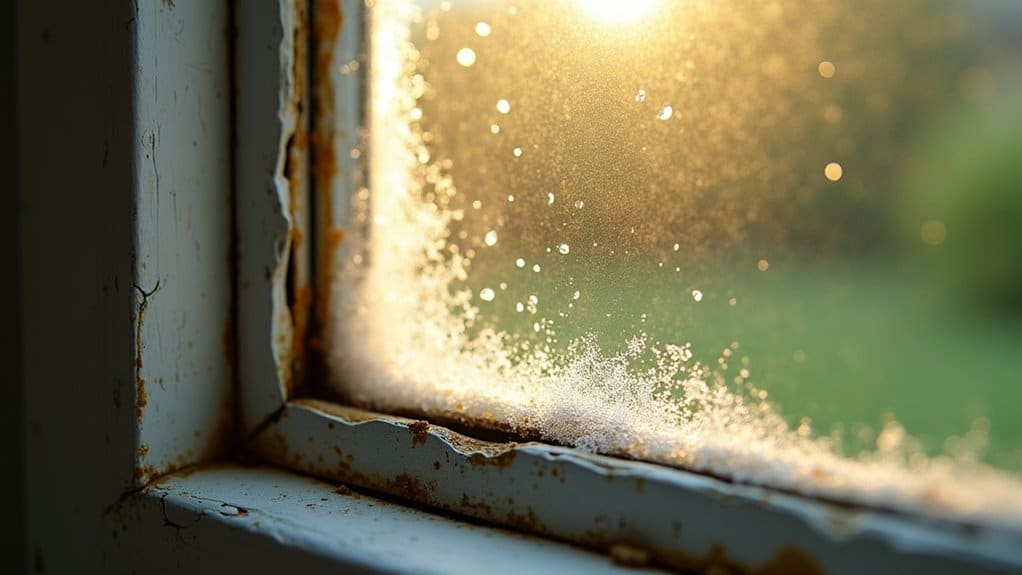
A failed seal causes foggy windows because it breaks the airtight barrier that keeps the insulated glass unit’s inner cavity dry and gas-filled. Once that barrier’s compromised, the inert gas escapes through the breach and outside air infiltrates the space between panes. This incoming air carries moisture, and here’s where the physics takes over. When warm, humid air enters the cavity and contacts the cooler interior glass surface, it reaches its dew point. Water vapor condenses into microscopic droplets across the glass, and you see fog. As temperatures shift throughout the day, this condensation cycles, forming, evaporating, and reforming. Over time, mineral deposits from repeated evaporation leave permanent haze or streaking between the panes. That trapped moisture confirms the seal’s failed, and you can’t clean it away.
How do you fix or replace a broken window seal
You can fix or replace a broken window seal three practical ways: defog treatment, insulated glass unit (IGU) replacement, or full window replacement.
- Defog treatment: A technician drills small holes in the glass, flushes out moisture, and installs a valve. This clears fog but doesn’t restore the hermetic seal or insulating gas fill.
- IGU replacement: You swap only the sealed glass unit while keeping the existing frame and sash. This restores the gas fill and spacer integrity at a moderate cost.
- Full window replacement: You replace the entire assembly, frame, sash, and glass. Choose this when frames are rotted, warped, or the units are aging past their service window.
Match your fix to the damage’s severity and your budget.
How do you prevent window seal failure
Prevent window seal failure through consistent maintenance and smart environmental management, which can extend seal life well beyond its baseline lifespan. Inspect your windows annually or semi-annually to catch hardening, shrinkage, or cracking before failure sets in. Reduce thermal stress by adding overhangs or shade to south and west-facing elevations, limiting UV degradation and solar pumping. Improve drainage and flashing to keep moisture from pooling against seals, preventing corrosion and mold growth on rubber-based materials. Skip pressure washing, which forces water into the sash, and avoid heat guns near seals during paint stripping. When you install replacements, verify correct fitment and even spacer pressure to eliminate stress points. Choose ENERGY STAR-rated units with stainless steel spacers for maximum durability, especially in Ohio’s demanding freeze-thaw climate. The impact of salt air on materials can significantly reduce the longevity of window seals, particularly in coastal regions. Regular inspections are crucial to identify early signs of deterioration caused by corrosive environments.
Conclusion: Understanding and Preventing Window Seal Failure
Window seals break down over time from constant expansion and contraction, sun exposure, and moisture, and Florida’s heat and humidity speed the process up. Once a seal fails, the window fogs, loses insulating gas, and becomes less efficient. Catching it early and replacing the glass unit, or the window, restores performance. Choosing quality windows and good installation is the best defense, since a well-made, well-fitted seal lasts far longer.
Upgrade to Windows Built for Florida Weather
Florida’s salt air, sunshine, and storms are tough on windows, but the right glass technology handles it all with ease. At Innovative Storm Defense serving Boynton Beach, FL, our experienced team provides trusted Storm Windows with expert installation and premium materials. Call (561) 517-9399 today and protect your home for years to come.
Frequently Asked Questions
How Much Does Professional Window Seal Replacement Typically Cost?
It varies by window size and whether the sealed glass unit or the whole window is replaced. Replacing just the insulated glass unit is usually cheaper than a full window. Because a true reseal of an existing unit is rarely reliable, most professionals replace the glass unit. A quote for your specific windows gives the clearest number.
Are Foggy Windows Covered Under Most Manufacturer Warranties?
Often, yes, if the window is still within its warranty period. Most manufacturers cover seal failure and fogging in the insulated glass unit for a set number of years. Coverage usually applies to the glass, not labor, and requires proof of purchase. Check your warranty terms, since length and conditions vary by brand.
Can a Broken Window Seal Increase My Energy Bills?
Yes. When the seal fails, the insulating gas escapes and moisture gets in, so the window loses efficiency and lets more heat through. One window has a small effect, but several failed seals across a home add up on cooling and heating bills. Replacing them restores the intended efficiency.
Should I Repair or Completely Replace a Failed Window?
It depends on the condition of the frame. If the frame and sash are sound, replacing just the insulated glass unit is a cost-effective fix. If the frame is old, damaged, or inefficient, a full window replacement makes more sense and improves performance. A professional can help you weigh the two.
Do Broken Seals Affect My Home’s Resale Value?
They can. Foggy, seal-failed windows look worn and signal deferred maintenance, which can put off buyers or lower offers. They also reduce energy efficiency, a common concern for homebuyers. Replacing failed units before selling is usually a worthwhile investment that improves both appearance and value.