
Your window’s edge zone covers just 10-15% of the glass area, yet it bleeds 30% or more of total heat loss. That’s because aluminum spacers conduct heat roughly 950 times faster than foam, creating thermal bridges that pull cold to your interior glass edge. Swapping them for warm-edge spacers, thermoplastic, structural foam, or stainless steel composites, cuts edge-of-glass loss by up to 70% and keeps that edge 6-8°F warmer. Here’s how they work.
Key Takeaways
- Aluminum spacer bars create thermal bridges that conduct heat roughly 950 times faster than foam alternatives, pulling cold to interior glass.
- Up to 80% of edge heat loss occurs at the perimeter where glass meets the spacer bar.
- Warm-edge spacers use low-conductivity thermoplastic, structural foam, or stainless steel composites to break the conductive path.
- Switching to warm-edge spacers cuts edge-of-glass heat loss by up to 70% and keeps inner glass 6, 8°F warmer.
- Verify spacer material isn’t aluminum, request whole-window U-value details, and choose an energy rating of C or above.
Reducing Edge Heat Loss With Spacer Bars
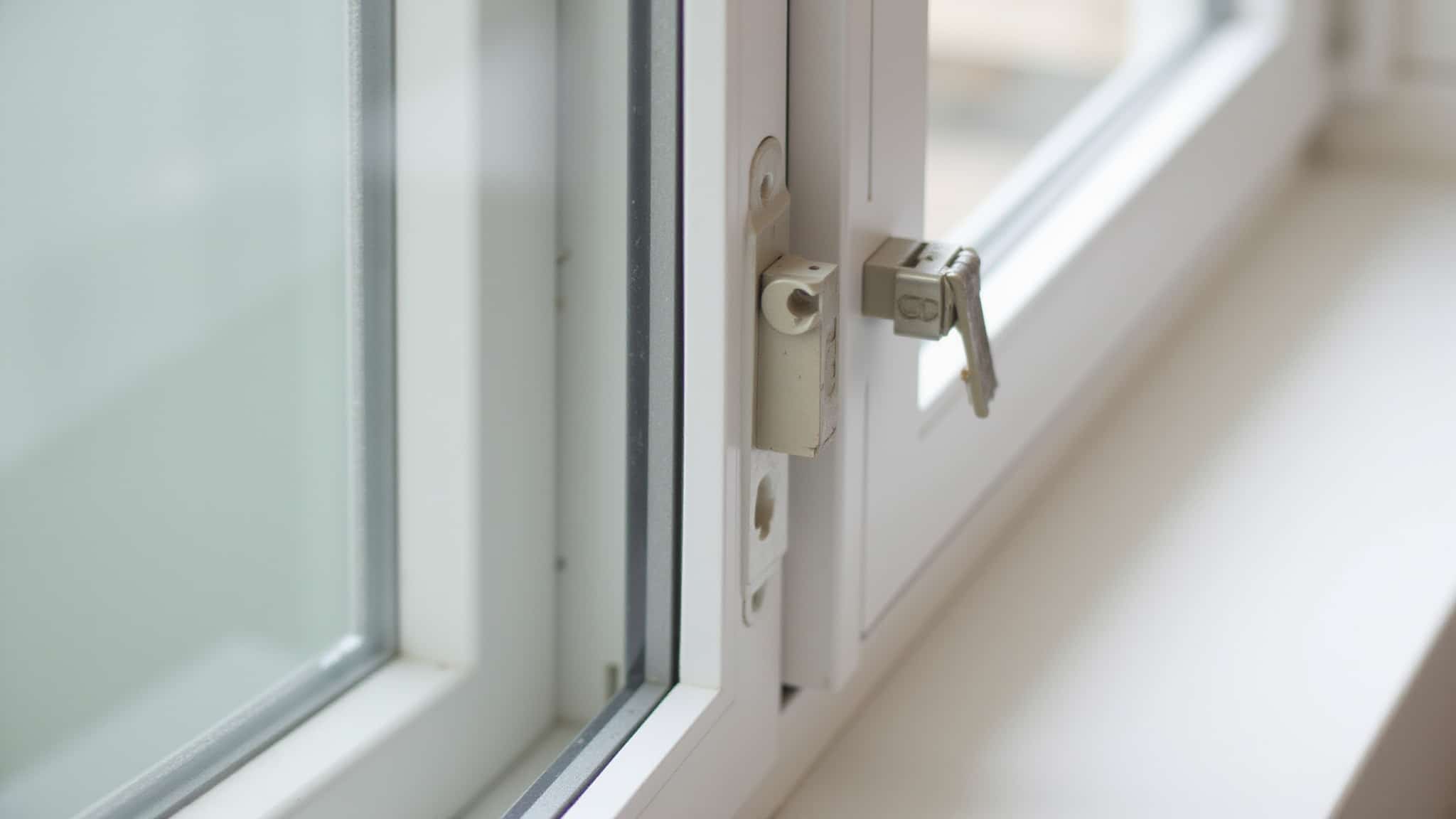
Spacer bars reduce edge heat loss by breaking the thermal path that traditional aluminum spacers create. Although the edge zone makes up just 10% to 15% of a window’s total glass area, it accounts for 30% or more of total heat loss. That imbalance stems from traditional aluminum spacers, which conduct heat roughly 950 times faster than foam and create thermal bridges that pull cold directly to the interior glass edge. Up to 80% of edge heat loss occurs where the glass meets the spacer. Switching to warm edge spacers breaks this thermal path, cutting edge-of-glass heat loss by up to 70%. Tackling edge heat loss windows improves whole-window U-values by 0.15, 0.2 W/m²K. Reducing window heat loss this way also keeps the inner glass edge 6 to 8°F warmer, minimizing condensation and cold-spot formation.
What is a window spacer bar
A window spacer bar is the structural component that separates the two or more glass panes in an insulated glass unit (IGU), holding them at a fixed distance to create the insulating cavity between them. Positioned around the perimeter, window spacer bars maintain the precise gap that determines the unit’s insulating performance. This edge zone constitutes only 10% to 15% of total glass area, yet it accounts for 30% or more of total heat loss. Traditional window spacers use aluminum, which conducts heat roughly 950 times faster than foam alternatives, pulling cold directly to the interior glass edge. That thermal bridge rapidly transfers heat between interior and exterior surfaces, and up to 80% of edge heat loss occurs where the glass meets the spacer. One effective way to enhance doublepane window energy efficiency is by choosing low-emissivity (low-e) glass, which minimizes heat transfer. Additionally, proper installation is crucial, as even the best windows can underperform if not sealed correctly.
How does heat escape at the edge of a window
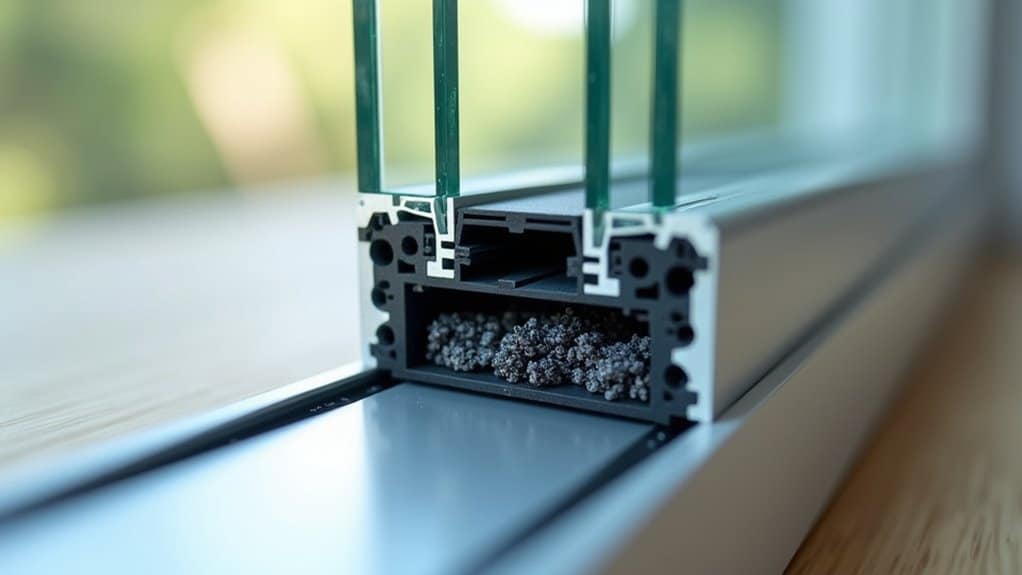
Heat escapes at the window edge primarily through thermal bridging, where the spacer bar creates a direct conductive path between the interior and exterior glass surfaces. Traditional aluminum spacers introduce a material that conducts heat roughly 950 times faster than foam alternatives, pulling cold straight to the interior glass edge.
Consider how significant this edge zone really is:
- The edge zone covers only 10% to 15% of the total glass area.
- Yet it accounts for 30% or more of total heat loss.
- Up to 80% of edge heat loss occurs at the critical perimeter where glass meets spacer.
- Aluminum spacers rapidly transfer heat between interior and exterior surfaces.
You’re losing considerable energy through this concentrated thermal weakness.
What makes spacer bars effective at cutting heat loss
Warm edge spacer bars cut heat loss because they replace high-conductivity aluminum with low-conductivity materials like thermoplastic, structural foam, or stainless steel composites, breaking the thermal bridge that pulls cold to the interior glass edge. Aluminum conducts heat roughly 950 times faster than foam, so it channels cold straight to the inner pane. When you switch to a warm edge spacer, you sever that path, reducing edge-of-glass heat loss by up to 70%. That matters because the edge zone covers just 10-15% of the glass area yet accounts for 30% or more of total heat loss. You’ll also keep the inner glass edge 6-8°F warmer, cutting condensation risk. Whole-window U-values improve by 0.15-0.2 W/m²K, delivering measurable gains across the entire unit.
How do warm-edge spacers compare to standard ones
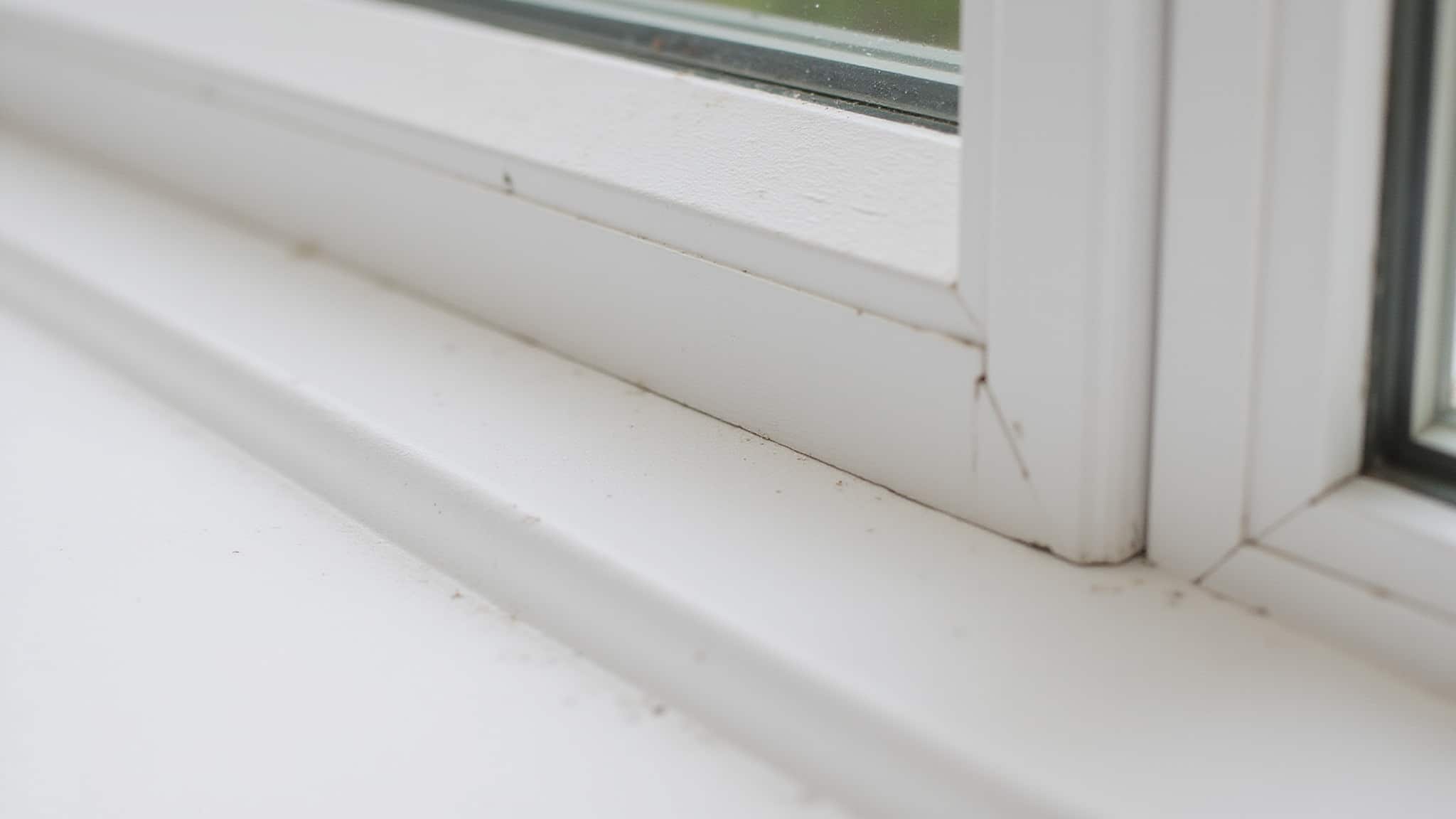
Warm-edge spacers outperform standard aluminum ones because of conductivity. Aluminum conducts heat roughly 950 times faster than foam, creating thermal bridges that pull cold straight to the interior glass edge. Warm-edge alternatives act as a thermal break, cutting edge-of-glass heat loss by up to 70%.
| Metric | Aluminum Spacer | Warm-Edge Spacer |
|---|---|---|
| Relative conductivity | ~950x foam | Low-conductivity |
| Edge heat loss | Baseline | Up to 70% lower |
| Inner edge temp | Colder | 6, 8°F warmer |
You’ll see the difference in whole-window U-values too, gaining 0.15, 0.2 W/m²K when you switch. That warmer perimeter keeps the inner glass closer to room temperature, reducing condensation risk. In short, you’re trading a thermal weak point for measurable, testable efficiency.
How do you choose windows with the right spacer bars
Choose windows with the right spacer bars by identifying what’s actually inside the unit, since the spacer material drives edge performance. Aluminum conducts heat roughly 950 times faster than foam, so material choice determines whether you’ll cut edge-of-glass heat loss by up to 70%. Ask the supplier for specifics and verify the numbers:
- Spacer material: Confirm thermoplastic, structural foam, or stainless steel composite rather than aluminum.
- Whole-window U-value: Look for a 0.15, 0.2 W/m²K improvement over aluminum-spaced units.
- Energy rating: Choose C or above under UK Building Regulations.
- Cost premium: Expect only £5, £15 per unit, or $10, $25 per window.
Prioritize warm-edge options that keep the inner glass edge 6, 8°F warmer, reducing condensation and cold spots near the perimeter. Lowe glass benefits for Florida homes include better energy efficiency and enhanced comfort throughout the year. Homeowners can enjoy reduced energy bills and a more consistent indoor climate thanks to these innovative glass solutions.
Conclusion: How Warm Edge Spacers Improve Window Performance
The spacer that separates the panes has a real effect on how a window performs at its edges, where heat loss and condensation are most likely. Warm edge spacers use low-conductivity materials to keep edge temperatures more even, which cuts heat loss and reduces condensation. Paired with low-E glass and a good gas fill, they help a window reach its full efficiency. For a comfortable, condensation-free home, the spacer is a small detail that makes a meaningful difference.
Upgrade to Windows Built for Florida Weather
Florida’s salt air, sunshine, and storms are tough on windows, but the right glass technology handles it all with ease. At Innovative Storm Defense serving Boynton Beach, FL, our experienced team provides trusted Storm Windows with expert installation and premium materials. Call (561) 517-9399 today and protect your home for years to come.
Frequently Asked Questions
Do Warm Edge Spacer Bars Affect Condensation on Windows?
Yes, in a good way. By keeping the glass edges warmer, warm edge spacers reduce the cold spots where condensation usually forms. That means less fogging and moisture around the perimeter of the glass, which also helps protect the frame and seal over time. They are one of the simplest ways to cut edge condensation.
How Much Does Upgrading to Warm Edge Spacers Cost?
The upgrade adds only a modest amount to the cost of an insulated window, since the spacer is a small part of the overall unit. Many quality windows already include warm edge spacers as standard. When comparing windows, it is worth asking whether the spacer is a warm edge type, because the efficiency gain is usually worth it.
What Materials Are Used to Make Warm Edge Spacers?
Warm edge spacers use low-conductivity materials such as stainless steel, tin-plated steel, structural foam, or thermoplastic, rather than traditional conductive aluminum. These materials slow heat transfer at the edge of the glass. The exact type varies by manufacturer, but all are designed to keep the edges warmer than a standard aluminum spacer.
Can Warm Edge Spacers Reduce My Home’s Carbon Footprint?
Indirectly, yes. By improving a window’s insulation and lowering heat loss, warm edge spacers help reduce the energy needed to heat and cool a home. Lower energy use means lower emissions over the life of the windows. On their own the effect is small, but combined with efficient glazing across a home, it adds up.
Do Warm Edge Spacers Work With Triple Glazing?
Yes. Warm edge spacers are used with double and triple glazing alike, and they are especially valuable in triple-glazed units where edge performance matters even more. Pairing them with multiple panes, low-E coatings, and gas fills produces a highly efficient window. They are a natural fit for high-performance glazing.